More patrols and stronger forces, within Malaysia's means
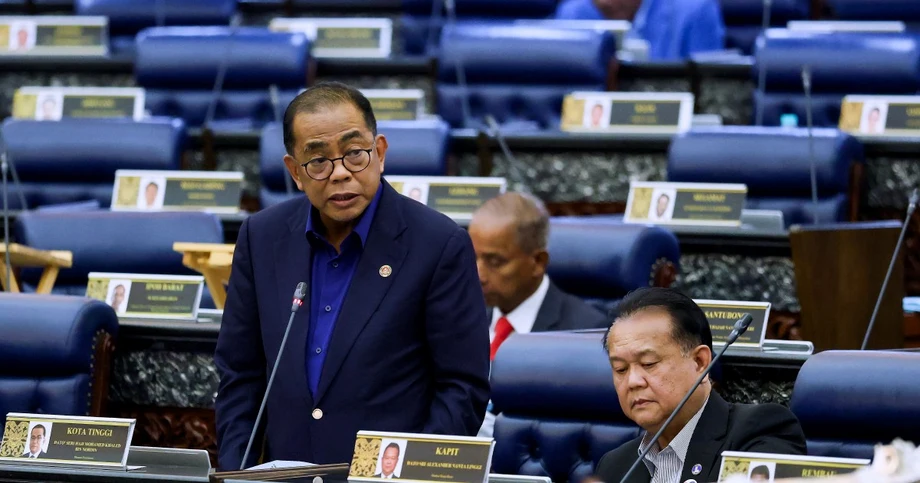
Malaysia is strengthening military readiness in the South China Sea while rejecting calls to raise defence spending to 5% of gross national product, Defence Minister Datuk Seri Mohamed Khaled Nordin told the Dewan Rakyat on November 4. The government will base military expenditure on national needs and financial capacity, he said, as growing regional tensions put maritime security and trade routes under pressure.
Contents
- More patrols and stronger forces, within Malaysia's means
- Why Malaysia is rejecting a spending target
- A defence doctrine built around protection
- What stronger readiness means at sea
- Two sources of tension require different responses
- Partners can help Malaysia see more at sea
- Regional forums bring rivals into the same room
- Why maritime stability matters beyond the military
- Key Points
Speaking in Kuala Lumpur in response to Selayang MP William Leong, Khaled outlined a strategy combining military modernisation, continuous patrols, personnel training and defence cooperation. Malaysia would maintain an independent and neutral position while preparing to protect its sovereignty.
Khaled identified two main sources of danger: overlapping territorial and maritime claims, including those involving Malaysia, and strategic competition between major powers, particularly the United States and China. Both make maintaining stability in the South China Sea increasingly difficult.
Leong's questions brought the issue beyond military equipment. He asked about the effects of rising military expenditure in East Asia on maritime security and trade routes such as the Strait of Malacca. For Malaysia, a regional confrontation would threaten economic interests as well as national security.
Why Malaysia is rejecting a spending target
Khaled said Malaysia respected other countries' decisions to increase military spending, but would make its own choices. He rejected the idea that a spending target proposed by others should determine the country's defence priorities.
Responding to Leong's supplementary question about rising military expenditure in East Asia, Khaled attributed the 5% proposal to other countries without naming them:
Some countries have suggested that we increase our defence spending to 5% of our GNP (gross national product)."
"The intention is for these major powers to have us at the forefront when confrontations, conflicts or wars break out.
The defence minister described independence from major powers as central to that position:
But we want to make it clear that we are not puppets of any major power. We are independent and neutral.
The proposed 5% target refers to gross national product, or GNP, a measure of income generated by a country's residents and businesses, including income from abroad. Linking a defence budget to that figure sets a spending benchmark. Khaled instead tied expenditure to what Malaysia needs and can afford.
His remarks set a direction rather than a detailed spending programme. He gave no new budget total, procurement timetable or numerical target for patrols in the measures outlined.
Khaled also warned that increasing military expenditure across the region could create more opportunities for misunderstandings, disputes and military confrontation. Malaysia could neither prevent other states from spending more nor interfere in their sovereign decisions, he said.
A defence doctrine built around protection
Malaysia's intended military role helps explain its spending position. Khaled said the armed forces should protect the country rather than acquire capabilities for attacking other states.
Explaining the government's defence doctrine, Khaled told lawmakers:
Our defence doctrine is to defend the country, not to attack other countries.
He cited missiles with ranges of 2,000km or 3,000km as examples of offensive capabilities Malaysia did not need. The example illustrated his argument that equipment purchases should follow a country's intended military tasks, rather than simply mirror purchases elsewhere.
"If we look at some countries, they may purchase missiles with ranges of 2,000km or 3,000km.
"We do not need those because we have no intention of attacking other countries.
"Our doctrine is to defend our own country," he said.
Malaysia would still strengthen what Khaled called credible deterrence. In plain terms, deterrence means having enough ability and readiness to persuade another country that threatening or attacking Malaysia would carry serious costs. His approach combines that military capacity with diplomatic engagement.
What stronger readiness means at sea
Malaysia's preparations begin with action it can take through its own institutions. Khaled described four priorities: modernising military assets and capabilities, improving personnel training, maintaining a stronger security presence in national waters, and developing public resilience.
The maritime effort includes continuous patrols and surveillance. Operations can be conducted by the Royal Malaysian Navy alone or jointly with the Royal Malaysian Air Force and the Malaysian Maritime Enforcement Agency.
Those services contribute different capabilities. Ships provide a presence at sea, aircraft extend observation from above, and the maritime enforcement agency contributes its enforcement role. Coordinating their work helps Malaysia monitor activity and organise a response when necessary.
Training is another part of readiness. Equipment must be supported by personnel who can operate it and work with other services. Khaled presented modernisation, training, patrols and public resilience as measures that together build a credible ability to deter threats.
Two sources of tension require different responses
Khaled separated the region's security challenges into overlapping claims and competition between major powers. Malaysia faces both, but each involves different relationships and risks.
Within Southeast Asia, he identified overlapping claims involving Malaysia, Vietnam and the Philippines. He also pointed to China's claims involving waters claimed by several ASEAN countries, including Malaysia. ASEAN is the Association of Southeast Asian Nations, the regional grouping through which its members pursue cooperation.
These overlapping positions make coordination more demanding. Malaysia must work with neighbouring governments on regional security while managing disagreements with some of those same governments over claims.
The United States and China create another layer of risk through their strategic competition. Khaled warned that rivalry between major powers increases the danger of miscalculation and a wider conflict. A miscalculation can occur when one government misunderstands another's intentions or response, allowing a confrontation to grow beyond what either side initially intended.
Malaysia's position is to respect other states' defence decisions while strengthening its own preparedness. Khaled said neutrality would be accompanied by practical steps to safeguard sovereignty and stability.
Partners can help Malaysia see more at sea
Japan, Thailand, Australia and Germany were among the trusted partners Khaled named for stronger bilateral defence diplomacy. Bilateral cooperation means work between two countries, allowing them to arrange activities around their particular needs.
The cooperation he described covers information sharing, the transfer of expertise, capacity building, and scheduled exercises and operations. A central aim is better maritime domain awareness, meaning a clearer understanding of what is happening at sea.
For a country monitoring its waters, useful information includes the location and activity of vessels and developments that may require attention. Sharing information and improving the skills needed to assess it can help authorities build a more complete picture.
Exercises also give participating forces opportunities to practise working together. Khaled's approach connects those relationships to practical tasks, including surveillance and operational readiness, while preserving Malaysia's ability to choose its own defence policy.
Regional forums bring rivals into the same room
Malaysia's third level of action is multilateral cooperation, which involves several countries. Khaled highlighted the ASEAN Defence Ministers' Meeting, its expanded ADMM-Plus format, and the Five Power Defence Arrangements.
The ASEAN Defence Ministers' Meeting provides a regional channel for defence cooperation. ADMM-Plus extends that engagement to eight partner countries, including the United States, China, South Korea, New Zealand and Russia.
The participation of both Washington and Beijing matters to Malaysia's stated concerns. The same major powers whose rivalry creates risks also take part in a forum through which Malaysia and its neighbours can maintain defence dialogue.
The Five Power Defence Arrangements connect Malaysia with the United Kingdom, Singapore, Australia and New Zealand. Together, these different arrangements give Malaysia channels for cooperation within Southeast Asia and with partners outside the region.
Khaled said no country could address the Asia-Pacific region's security challenges alone, particularly those in the South China Sea. He placed a peaceful, stable and united ASEAN at the centre of maintaining regional peace.
Why maritime stability matters beyond the military
Leong's reference to the Strait of Malacca underscored the economic concern behind the parliamentary exchange. Maritime routes connect producers, ports and customers. Disruption can affect the movement of goods as well as the security agencies responsible for protecting national waters.
Khaled said a conflict in the region would inevitably affect Malaysia and other countries, including their economic and security interests. His response therefore combined measures for protecting territory with cooperation intended to help preserve stability around it.
The government's approach rests on three connected levels: national preparations, cooperation with individual partners and engagement through wider defence arrangements. National forces provide Malaysia's own capacity to act. Partnerships support information, skills and joint activity. Regional forums keep communication open among countries with different interests.
Malaysia's stated choice is to strengthen that combination within its financial means. The practical priorities are continued modernisation, trained personnel, sustained maritime monitoring and defence relationships that support an independent policy.
Key Points
- Defence Minister Mohamed Khaled Nordin outlined Malaysia's readiness measures in the Dewan Rakyat on November 4.
- Malaysia will base military expenditure on national needs and affordability, rejecting calls from unnamed countries for spending of 5% of GNP; Khaled said major powers wanted Malaysia at the forefront of future conflicts.
- Preparations include military modernisation, personnel training, continuous maritime patrols and public resilience.
- Khaled identified overlapping claims and United States-China competition as major regional security challenges.
- Malaysia is pursuing cooperation with individual partners, ASEAN defence forums and the Five Power Defence Arrangements.
- The government says its doctrine centres on defending Malaysia while maintaining an independent and neutral position.