New Tamil Releases Get an Earlier Start
Tamil Nadu's Vijay-led government is restoring 6 am screenings for new Tamil films during their first week in cinemas, opening a longer daily screening window that runs until 2.30 am the following morning. Suriya's Scene and Nayanthara's Mookuthi Amman 2, both scheduled for November 6, are expected to be the first releases to benefit.
Contents
- New Tamil Releases Get an Earlier Start
- What the Screening Window Allows
- Why Early Shows Were Restricted
- Producers Want Tamil Nadu to Open Earlier
- Safety Remains Part of the Decision
- Theatre Owners Say Their Business Has Changed
- Streaming Adds Pressure to the Opening Weeks
- The Debate Over Who Benefits and Who Pays
- Key Points
The decision changes a system under which cinemas ordinarily screen four shows a day, with the first beginning at 9 am. Producers and theatre owners sought the change together, arguing that the later opening time put Tamil Nadu behind neighbouring states and limited earnings during the busiest days of a film's release.
The number of permitted screenings needs careful attention. The initial description of the decision gives five daily shows during the opening week and six on weekends and national or state holidays. The government order's quoted wording instead allows up to six daily shows during the opening week, as well as six on local festival days, public holidays, Saturdays and Sundays. Vettri Theatre owner Rakesh Gowthaman also describes the permission as allowing six shows.
For audiences, the immediate change is an opportunity to see a new Tamil release three hours earlier than the present 9 am start. For cinemas, six screenings instead of four would mean two additional shows a day, a 50% increase in the number of screenings available on a screen. Actual ticket sales would depend on attendance.
What the Screening Window Allows
The wording quoted from the government order covers cinemas throughout Tamil Nadu and applies the opening week permission from the day a new Tamil film is released. It also lists local festivals and public holidays alongside Saturdays and Sundays as occasions when six screenings are permitted.
The daily window stretches from 6 am to 2.30 am the next day, a span of 20 hours and 30 minutes. Cinemas would need to fit screenings, intervals and the time between audiences into that period. The permission sets a maximum number of shows; individual schedules will depend on film lengths and theatre arrangements.
The order also refers to a proposed amendment to the Tamil Nadu Cinemas (Regulation) Rules. Those rules govern cinema operations in the state. Changing the screening timetable through that framework matters to exhibitors seeking a regular arrangement for new releases.
No order number, commencement date or completed amendment text has been identified in the announcement described here. The detailed implementation terms, including the difference between the five show description and the quoted six show limit, are therefore important for cinemas preparing bookings.
Why Early Shows Were Restricted
The restrictions followed a fan's death during celebrations surrounding Ajith Kumar's Thunivu outside Rohini Silverscreen. Thunivu and Vijay's Varisu opened on the same day, when special early screenings drew large gatherings.
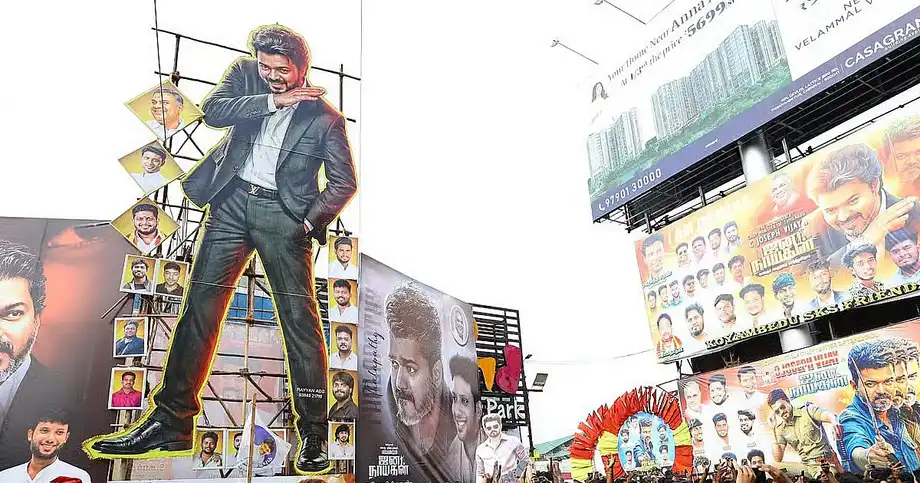
Producer Dhananjayan, treasurer of the Tamil Film Active Producers Association, said the death occurred during the period of 5 am screenings. He described fans gathering from 4 am and climbing large promotional cutouts as safety concerns behind the government's decision to impose a 9 am starting time.
Dhananjayan also recalled that the producers of Vijay's Leo went to court over screening times and that the court upheld the government's position. The new decision follows that period of tighter control.
The sequence leading to the change is:
- Special screenings accompanied the simultaneous release of Varisu and Thunivu, and a fan died during celebrations outside Rohini Silverscreen.
- The previous DMK government restricted early screenings, with the ordinary first show starting at 9 am.
- Producers and theatre owners jointly sought an earlier start and additional daily screenings.
- The new permission restores 6 am shows, with Scene and Mookuthi Amman 2 scheduled for November 6.
Producers Want Tamil Nadu to Open Earlier
The Tamil Film Active Producers Association, Tamil Film Producers Council and Tamil Nadu Theatre and Multiplex Owners Association jointly requested the change. Theatre owners submitted their requests to the government in the week before the decision.
Dhananjayan said the 9 am rule created a practical problem because screenings in Kerala, Karnataka, Andhra Pradesh and overseas markets could begin at 6 am. By the time audiences in Tamil Nadu entered cinemas, viewers elsewhere could already have posted reactions online.
Those first reactions matter to producers because they can influence whether other people buy tickets. Dhananjayan said some fans had also travelled to cinemas near the borders in neighbouring states to watch films earlier.
Moving Tamil Nadu's first screening to 6 am addresses that three hour gap where other markets also begin at 6 am. Producers expect the change to give local audiences earlier access and reduce the incentive to cross state borders for an opening show.
Dhananjayan said the associations explained these concerns to the chief minister and the information minister. He expects additional screenings on the first day to increase receipts for both producers and theatre owners.
Safety Remains Part of the Decision
Dhananjayan argues that a 6 am start offers a safer arrangement than the earlier 5 am screenings. He expects fans to arrive after 5.30 am, reducing gatherings in the middle of the night and allowing adequate police supervision.
His expectation places crowd management at the centre of the new timetable. The earlier fatality involved celebrations outside a cinema, so the practical challenge extends beyond seating people inside an auditorium. Arrivals, queues and activity around the entrance are part of the same opening day operation.
The longer operating window also gives cinemas a demanding schedule, with the final permitted screening period ending at 2.30 am and the next day's window opening at 6 am. How theatres organise their screenings will shape the workload for staff and the movement of audiences through the premises.
Theatre Owners Say Their Business Has Changed
Rakesh Gowthaman, owner of Vettri Theatre, said the four show restriction originated in a government order roughly 50 years ago. He argued that the rule reflected an era when films commonly lasted three hours and cinema operations depended on physical film reels.
Gowthaman said many current films are closer to two hours, while some English films run for about 90 minutes. Digital projection and automation have also changed staffing and operating needs. Theatre owners have asked the government to update other rules to reflect those changes.
Speaking in Tamil, Gowthaman welcomed the expanded screening window:
We are very happy that, as we requested, permission has been granted for six shows from 6 am to 2.30 am.
Gowthaman also described a shift in audience habits: fans increasingly want to watch a film within its first three days, while even major successes may have a strong theatrical run lasting only two or three weeks. From his perspective, more screenings at the beginning help cinemas serve demand when it is strongest.
Streaming Adds Pressure to the Opening Weeks
Gowthaman links the request for more shows to the short interval between cinema and streaming releases. He said films can reach streaming services four weeks after their theatrical opening, encouraging some viewers to wait rather than buy a cinema ticket.
Streaming services, often called OTT platforms, let people watch films through an internet subscription or payment. The release window is the period during which a film plays in cinemas before becoming available through those services.
Gowthaman said theatres reach a 50:50 revenue sharing arrangement in the third week of a film's run. In simple terms, that means half of the ticket revenue covered by the arrangement goes to the exhibitor and half to the other contracting side. He argued that an approaching streaming release weakens attendance just when that division becomes available to cinemas.
He contrasted the four week interval he described with an eight week practice in Hollywood and Bollywood. On those figures, four weeks gives cinemas half as much time before streaming availability. His argument is that extra opening week screenings help exhibitors capture demand before it falls.
The Debate Over Who Benefits and Who Pays
Director and cinema commentator Cable Shankar takes a narrower view of the likely benefit. He argues that special screenings primarily help major films and the producers behind them, because those releases are best placed to attract large audiences immediately.
Speaking in Tamil, Shankar described the commercial purpose of the change:
This is something that can benefit only big films and the producers who make those big films.
His assessment differs from the broader gains anticipated by producers and exhibitors. Additional screening slots give cinemas more capacity, while the distribution of that capacity among films determines which releases collect the extra revenue.
Ticket prices are another unresolved part of the industry's demands. Gowthaman said requests for higher prices remain pending. He argued that electricity, salaries and maintenance costs have risen while ticket prices have remained unchanged for five years.
Gowthaman believes cinema and streaming audiences are different enough that higher ticket prices would not reduce attendance. Shankar disagrees, opposing prices above Rs 250 and a proposal to allow automatic increases every two years. He argues that a higher price could make viewers reconsider a cinema visit.
The screening permission therefore answers one industry request while leaving the pricing debate open. For a viewer choosing between an early cinema visit and waiting for streaming, both timing and the cost of a ticket will matter.
Key Points
- New Tamil films can begin screening at 6 am during their opening week, with the daily window ending at 2.30 am the next morning.
- The quoted order permits up to six shows, while the initial description gives five on ordinary opening week days.
- Six shows are also permitted on specified holidays, local festival days and weekends.
- Scene and Mookuthi Amman 2, scheduled for November 6, are expected to benefit first.
- Producers want earlier local access and more opening day revenue; theatre owners also cite pressure from streaming releases.
- Requests for higher ticket prices remain pending, and industry figures disagree about their effect on attendance.