A huge damage bill meets a new test of financial protection
Bangladesh recorded an estimated $13.6 billion in economic losses from 134 major natural disasters between 2000 and 2023. Now a flood insurance pilot covering 100,229 families along the Jamuna River is testing how to get financial help to vulnerable households through rules agreed before a disaster strikes.
Contents
- A huge damage bill meets a new test of financial protection
- Flood losses are larger when the categories are combined
- The IMF identifies a gap for bigger disasters
- How the Jamuna insurance pilot works
- Why the first year brought no insurance payments
- IDRA wants common rules before wider expansion
- Coastal protection shows what prevention can deliver
- Families need both safer places and accessible money
- Key Points
The first year produced no insurance payouts because the required flood indicators did not reach their thresholds, according to project director Kamrul Hoque Maruf. A new insurance product is being developed for the programme's second year, while a separate community fund is intended to help eligible families whose losses fall outside the insurance triggers.
Those practical challenges sit at the centre of Bangladesh's push to prepare financially for disasters. The historical toll presented by disaster risk finance specialist Suman Ahsanul Islam includes 11,564 deaths and more than 129 million people affected. Tropical cyclones caused $6.10 billion in losses, while riverine floods caused about $4.15 billion.
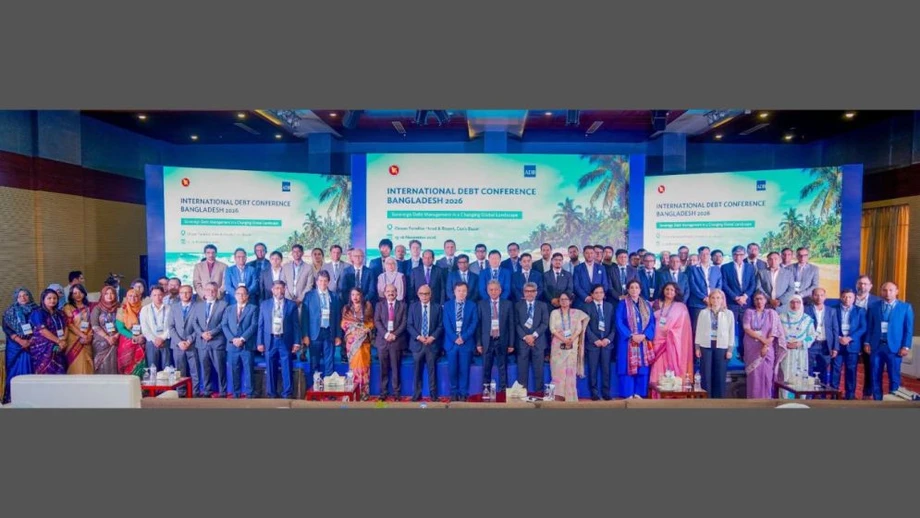
Suman presented the findings at a workshop jointly organised by the Insurance Development and Regulatory Authority (IDRA) and the Insurance Reporters' Forum. He drew on the International Monetary Fund's April 2025 work on disaster risk financing.
IDRA Chairman Mir Nadia Nivin said the regulator plans common standards for disaster insurance products, including the conditions that release payments and the data used to measure them. The aim is to help insurers, government agencies and development partners use a consistent framework, rather than build incompatible schemes.
Flood losses are larger when the categories are combined
Tropical cyclones were the largest single category of economic loss in the workshop figures, accounting for about 45 percent of the total. Cyclones and riverine floods together represented roughly three quarters of the damage bill.
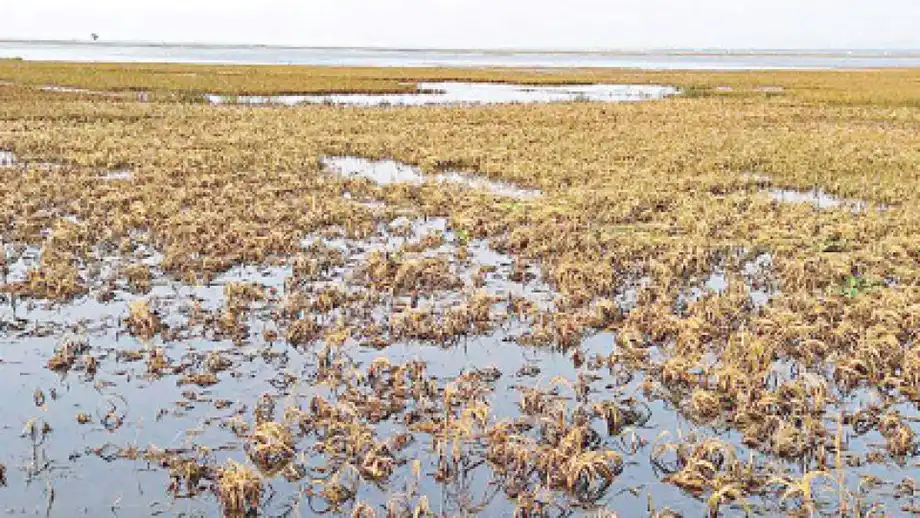
The detailed flood figures reveal another important part of the picture. Riverine flooding caused $4.152 billion in damage, general flooding $1.711 billion and flash flooding about $850 million. Combined, those three categories reached approximately $6.713 billion, exceeding cyclone losses by about $613 million.
Using the rounded $13.6 billion total, the three flood categories accounted for about 49 percent of recorded losses. Bangladesh therefore faces a financial challenge spread across several kinds of flooding, alongside the concentrated destruction caused by cyclones.
Riverine floods also affected the largest number of people in an individual category: 65,379,605, with 2,593 deaths. General flooding affected 29,131,015 people and killed 712, while flash floods affected 6,734,197 and killed 170.
For households, the economic damage can mean a lost crop, destroyed fishing equipment or days without wages. For the government, the same disaster creates demands for food, shelter, cash assistance and repairs to roads and public services.
The IMF identifies a gap for bigger disasters
The IMF's disaster risk financing report, dated April 4, 2025, says Bangladesh has adequate resources for recurrent disasters but faces a large financing gap for moderate and severe events.
The report, by Suphachol Suphachalasai, Barry Maher, Danielle N Minnett and Junko Mochizuki, recommends stronger fiscal mechanisms, social programmes that can expand when disasters strike, and greater use of financial sector instruments. In simple terms, Bangladesh needs several ways to pay for emergencies, with each suited to a different scale of damage.
An estimate attributed to the IMF study puts combined response, early recovery, rehabilitation and reconstruction needs for a disaster of a scale expected once every two years at approximately $4.7 billion. Such estimates describe the likelihood and possible cost of an event, rather than a fixed timetable.
Suman called for a disaster risk financing strategy that arranges money in advance. Proposed priorities include fiscal reserves, stronger social assistance, wider insurance participation, better institutional capacity and investment in reducing damage before it happens.
Advance financing matters because emergency spending otherwise competes with regular budgets. Money needed for reconstruction may come from development projects, leaving communities waiting longer for other public investments.
How the Jamuna insurance pilot works
The three year pilot under the Jamuna River Sustainable Management Project-1 covers 100,229 families in Sirajganj, Kurigram, Gaibandha and Jamalpur, according to Kamrul. The workshop presentation described around 100,000 households in Kurigram, Gaibandha and Sirajganj; Kamrul's fuller coverage figure also includes Jamalpur.
Day labourers and families dependent on farming are prioritised. Project documents say each eligible household is expected to receive assistance equivalent to one month's livelihood expenses. State owned Sadharan Bima Corporation provides the insurance, and the World Bank supports the pilot.
The scheme uses parametric insurance. Instead of inspecting each household's damage before deciding on a payment, the policy uses a measurement agreed in advance. For flooding, that measurement can be a river reaching a specified water level.
The Jamuna project uses water level data from the Bangladesh Water Development Board. When the policy's conditions are met, payments can be released without waiting for individual loss assessments. That structure is designed to make assistance faster and the payment rules easier to apply.
Why the first year brought no insurance payments
Kamrul Hoque Maruf, project director of the disaster risk financing component, explained that the first year ended without a payout because the agreed conditions were not met.
"Under the scheme, eligible households will receive financial assistance if pre-defined flood indicators, including river water levels, reach specified thresholds. However, no payouts have been made in the first year because the required conditions were not met," he said.
A family can suffer flood damage even when a policy's chosen measurement stays below its trigger. For example, the financial protection depends on the specified indicator, while actual damage depends on what happens at a household's location. This gap between the measurement and a family's loss is a central design problem for parametric insurance.
The project's Community Protection Fund is intended to assist eligible affected households when insurance conditions are not met. Together, the insurance and the fund provide two possible routes to support.
Kamrul said a new product is being developed for the second year. The payout amount in cash, revised thresholds and a launch date for that product were not specified. Limited resources have restricted initial coverage, although the project plans to reach more families and areas.
IDRA wants common rules before wider expansion
Nadia said the pilot's experience should guide common standards for product design, payment triggers and data sources. Such standards would give private insurers a framework for introducing products and could also support government programmes under the Ministry of Disaster Management.
Consistent data are especially important when payments depend on measurements. A policy needs to specify which institution supplies the figures and which conditions activate compensation. Households also need an explanation they can understand before flooding begins.
IDRA plans to test other products, including parametric heat insurance, through its regulatory sandbox. A sandbox is a supervised setting in which a regulator allows new financial products to be tried before broader use.
Nadia also called for IDRA to build its own technical capacity so work can continue after World Bank assistance ends. The regulator's plans extend beyond approving individual policies to developing the skills needed to assess and oversee them.
The sequence of work is:
- 2000 to 2023: Bangladesh recorded the disasters underlying the $13.6 billion damage estimate.
- April 4, 2025: The IMF report identified the financing gap for moderate and severe disasters.
- Pilot's first year: No insurance payments were made because trigger conditions were not met.
- Pilot's second year: A new insurance product is being developed, alongside plans for broader coverage.
Coastal protection shows what prevention can deliver
Bangladesh's financing debate also has a physical side: reducing the damage that will need to be paid for. The Global Facility for Disaster Reduction and Recovery (GFDRR), in its coastal resilience account, describes the $400 million first phase of the Coastal Embankment Improvement Project, supported by GFDRR and the World Bank.
The project improved 10 polders, protecting more than 65,000 hectares and helping more than 720,000 people. A polder is land enclosed by embankments that separate it from surrounding rivers or tidal water.
Workers raised embankments, strengthened slopes and repaired or upgraded drainage and flushing systems. The work addressed structures weakened by cyclones, poor maintenance and inadequate management.
The benefits reached agriculture as well as household safety. Rehabilitation reduced the intrusion of salty water, and GFDRR says the area used to grow watermelons in rehabilitated polders is twice that in areas where polders were not repaired. The project also supported tree planting across 700 hectares to complement flood protection.
GFDRR puts the number of people affected by Bangladesh's disasters between 2000 and 2023 at about 130 million, alongside the same $13.6 billion damage estimate. Its coastal project results show a practical connection between stronger protective structures and the ability to keep earning a living.
Families need both safer places and accessible money
Bangladesh's 19 coastal districts face overlapping hazards, including cyclones, storm surges, flooding, river erosion and salinity. Damage can continue to affect income after the water retreats, especially when families lose land, equipment or access to work.
The World Bank's 2025 report From Risk to Resilience describes a survey across 250 coastal villages in which 57 percent of households cited inadequate disaster protection infrastructure and 56 percent cited limited financial resources as major barriers to adaptation.
Those figures help explain why insurance and embankment investment address different household needs. Protective infrastructure can reduce exposure to flooding. Insurance and social assistance can provide money for eligible families to meet expenses and restart work after a shock.
Affordability and clear terms will matter as coverage expands. Families need to know what they will pay, what activates assistance and how much support they can expect. People unable to afford commercial coverage will continue to need public protection.
Bangladesh's immediate task is to connect these parts: reserves for public spending, social programmes that can expand quickly, insurance with understandable rules, community support for gaps in coverage and maintained infrastructure. The Jamuna pilot's second year will provide another practical test of how those arrangements work for vulnerable families.
Key Points
- Bangladesh recorded about $13.6 billion in losses and 11,564 deaths from 134 major disasters between 2000 and 2023.
- Three flood categories together caused approximately $6.713 billion in losses, compared with $6.10 billion from cyclones.
- The IMF says financing gaps remain large for moderate and severe disasters.
- The Jamuna insurance pilot covers 100,229 families in four districts; its first year produced no payouts because triggers were not met.
- A community fund is intended to help eligible households when insurance conditions are not met.
- IDRA plans common insurance standards and tests of new products, including heat insurance.
- Coastal embankment improvements have protected more than 65,000 hectares and benefited over 720,000 people.