Fuel payments widen the gap between bank and cash dollar rates
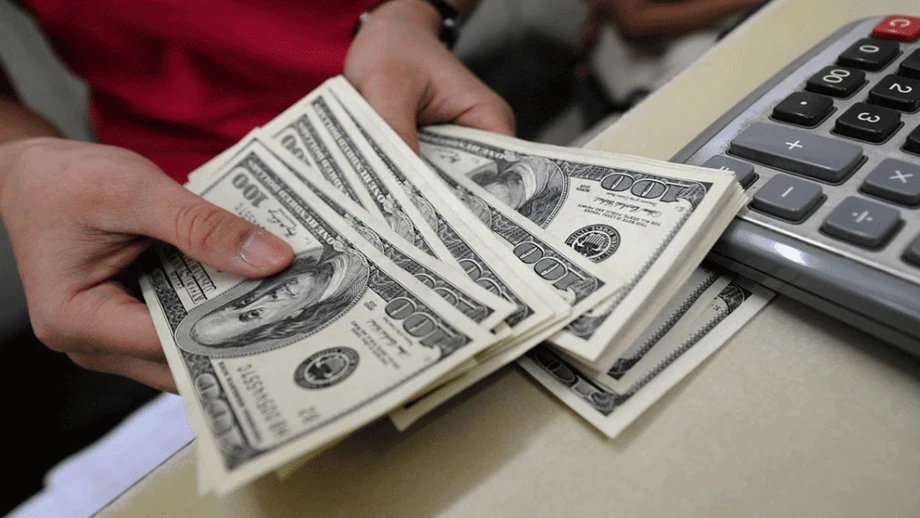
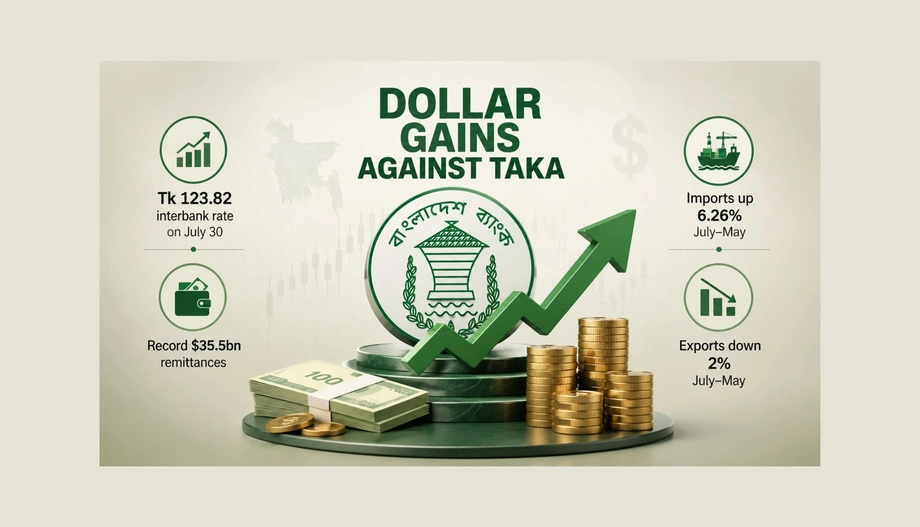
Bangladesh's cash dollar rate has climbed to Tk127 to Tk129 as fuel import payments and demand for foreign currency for medical treatment, education and travel put renewed pressure on the taka. Bangladesh Bank's exchange rate page dated November 12, 2026, lists Tk124.75 per dollar, leaving cash buyers paying as much as Tk4.25 more for each dollar.
Contents
- Fuel payments widen the gap between bank and cash dollar rates
- What the official exchange rate shows
- Why fuel is absorbing more dollars
- Food purchases add to the payment burden
- Import relief changes when businesses must pay
- Why cash dollars cost more
- The auction brought immediate relief to banks
- What the reserve figures tell households and businesses
- A fuel financing problem with an earlier warning
- Key Points
The biggest pressure is coming from energy purchases. Petroleum product imports reached $4.2 billion in July to September, up 105 percent from $2 billion a year earlier, according to central bank figures. The extra $2.2 billion needed for those purchases helps explain why banks are competing for dollars even as remittances remain steady and exports grow.
Bangladesh Bank has already stepped in. Its November 12 dollar auction supplied $205 million at Tk124.74 per dollar, although three bankers familiar with the transaction put the amount at $201 million. Rates offered by remittance houses fell below Tk125 afterward, easing some immediate pressure on commercial banks.
For households, the cash market is still more expensive. Someone buying $1,000 at Tk129 would spend Tk129,000, compared with Tk124,750 at the central bank's listed rate, a difference of Tk4,250 before fees. The listed interbank rate describes transactions between banks; the dollars available at a retail counter depend on the seller's cash supply and applicable rules.
What the official exchange rate shows
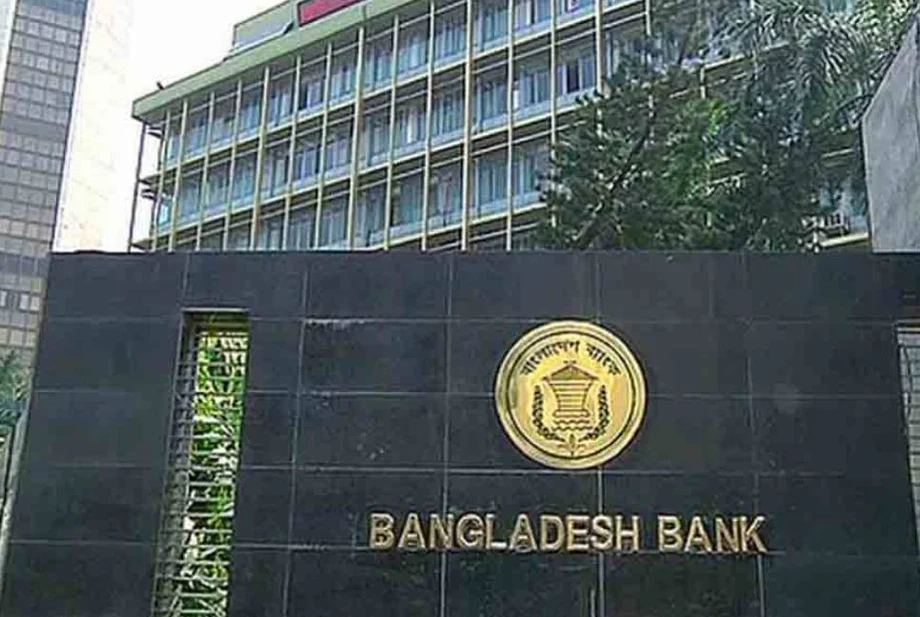
Bangladesh Bank's exchange rate table lists the dollar bid rate, ask rate and weighted average rate at Tk124.7500 on its November 12 page. The bank explains that the displayed dollar rates reflect interbank trading at Dhaka's close on the previous business day.
A weighted average gives larger transactions more influence than smaller ones. It helps describe the price across a market where individual banks can complete deals at slightly different rates.
Other market figures put the interbank average at Tk124.65, following Tk124.42, while an earlier November 11 snapshot gave Tk124.35. The official page's stated reference period is therefore essential when comparing its Tk124.75 figure with transaction quotes carrying other dates.
Commercial banks were also quoting about Tk124.98 to sell dollars and Tk123.98 to buy them in spot transactions, which are deals for prompt settlement. Those prices sit below the Tk127 to Tk129 being charged for physical dollars in the open market.
Why fuel is absorbing more dollars
Petroleum imports more than doubled in value during the first quarter of the fiscal year. The increase from $2 billion to $4.2 billion means Bangladesh needed $2.2 billion more foreign currency for this category alone than it did in the same three months a year earlier.
Earlier figures for July and August showed energy import costs nearly doubling while total import spending rose 12 percent to $12 billion. The figures cover different periods, but both show energy purchases placing a large demand on foreign currency.
Import businesses have linked higher fuel costs partly to rising international prices and conflict in the Middle East. Shipping disruptions can also raise the cost of moving oil. For a bank arranging payment, a more expensive shipment means finding more dollars unless the importer buys less fuel.
Bangladesh Bank Executive Director and spokesperson Arif Hossain Khan said remittances remained steady and exports had grown by 6 percent. He attributed the immediate pressure on dollar liquidity to heavy government fuel subsidies and said the central bank would intervene whenever necessary to stabilise the market. Subsidies affect the financing of fuel purchases at home, while overseas suppliers still require payment in foreign currency.
Food purchases add to the payment burden
Edible oil imports rose 54 percent and wheat imports increased 66 percent in July to September. Banks were also preparing to finance essential food purchases ahead of Ramadan, when demand for several staples increases.
Bangladesh's trade deficit widened 31 percent to $7.48 billion during the first quarter of the fiscal year. A trade deficit means the country spent more on imported goods than it earned from goods exports. Remittances and other foreign currency inflows help meet that gap, alongside borrowing and reserve use.
October's financing figures show more import commitments entering the pipeline. Banks opened letters of credit worth $7.32 billion and settled import bills worth $5.95 billion. The difference was $1.37 billion, although the two totals include transactions with different payment schedules.
A letter of credit, commonly called an LC, is a bank's promise to pay an overseas supplier when agreed conditions are met, such as the presentation of shipment documents. Opening an LC creates a payment commitment; settlement is when the bill is paid. That timing means import activity can create demand for dollars both now and in later weeks.
Import relief changes when businesses must pay
Bangladesh Bank has asked commercial banks to keep cash margins for LCs covering 10 essential food items at the minimum level appropriate to their customer relationships. A cash margin is the money an importer deposits with a bank before it issues the payment promise.
A lower margin reduces the amount of cash a business must provide at the start. The central bank has also allowed these commercial imports to use deferred payment terms of up to 90 days through suppliers' or buyers' credit, giving importers more time to pay.
The measures aim to keep essential goods arriving and help contain prices during Ramadan. They spread payment obligations over time, while banks still need to arrange the foreign currency when those obligations fall due.
Food production has also received targeted financing support. A November 4 decision opened a Tk3,000 crore loan route for five City Group firms to finance imported raw materials. That facility addresses access to business credit, another part of the process of getting edible oil, sugar, lentils and flour into shops.
Why cash dollars cost more
People travelling abroad need physical currency or other usable foreign payment facilities. Medical patients, students and travellers have continued seeking cash dollars at a time when dealers describe limited supplies, pushing retail prices above bank market rates.
At Tk127 to Tk129, the cash market premium over the official Tk124.75 figure is Tk2.25 to Tk4.25 per dollar. The upper end matters especially to families making larger purchases for treatment or education, because each additional taka in the exchange rate adds Tk1,000 to the cost of buying $1,000.
The Money Changers Association of Bangladesh has warned dealers about financial penalties and legal action for charging above fixed limits. Dealers nevertheless continued selling above those limits, keeping attention on supervision and informal trading.
Commercial banks had earlier been buying remittance dollars at up to about Tk124 and settling import LCs at similar levels. More recent transactions above Tk125 before the central bank's auction show how quickly wholesale prices can change when several banks seek foreign currency at once.
The auction brought immediate relief to banks
Bangladesh Bank's November 12 dollar auction gave commercial banks another source of foreign currency. Before the intervention, some banks bought dollars from remittance houses at Tk125.30 to Tk125.32. Afterward, several purchases were completed at Tk124.90 to Tk124.95, with some below Tk124.90.
For a bank buying $1 million, the decline between those transaction ranges amounts to roughly Tk350,000 to Tk420,000. Lower purchase costs can make it easier to meet an import payment without bidding still more aggressively for remittance dollars.
The central bank instructed participating banks not to resell the auction dollars in the interbank market and warned that doing so could disrupt trading. The restriction directed the additional supply toward payment needs rather than another round of transactions between banks.
The intervention came alongside a rise in the weighted average interbank rate to Tk124.75 from Tk124.65. Some remittance purchase prices eased during the day even as the broader average recorded a weaker taka.
What the reserve figures tell households and businesses
Bangladesh Bank's monthly reserve table records $36.01 billion in gross foreign exchange reserves for September 2026 and $31.20 billion under BPM6, the International Monetary Fund's international accounting framework for external transactions and positions.
The table shows both measures falling from August, when gross reserves were $37.35 billion and the BPM6 figure was $32.44 billion. The monthly declines were about $1.34 billion and $1.24 billion respectively.
Compared with November 2025, however, September's position was stronger. Gross reserves had increased from $31.09 billion to $36.01 billion, while the BPM6 measure rose from $26.40 billion to $31.20 billion. Bangladesh therefore entered the latest pressure with larger reserves than in that earlier month, despite the more recent decline.
A November 10 snapshot put gross reserves at about $34 billion and described a second figure of about $30 billion as net reserves under an IMF calculation. The official monthly series labels its second measure as reserves under BPM6. Net international reserves are a separate calculation that also takes account of specified liabilities. The monthly table runs through September 2026, so it gives an earlier reference point for the November figures.
A fuel financing problem with an earlier warning
Bangladesh Petroleum Corporation faced a similar shortage in June 2024. Between June 10 and 12, it requested $25 million a day but received less than half that amount. Its overdue payments to foreign suppliers reached about $250 million by June 13.
The corporation, which then imported oil worth about $7 billion annually, sought to resume opening fuel LCs through private banks alongside government banks. Bangladesh Bank had stopped supplying it with dollars from mid May as the central bank worked to preserve reserves.
Energy Secretary Md Nurul Alam explained at the time that the difficulty was obtaining foreign currency, even when the corporation had domestic funds:
The BPC does not have a shortage of funds. However, despite having money, foreign currency is not always available.
Alam said spreading payments across several banks could reduce pressure on individual lenders and help suppliers receive their money on time. The corporation was expected to import about 6 million tonnes of fuel in 2024. Its financing difficulties led it to request that two cargoes arrive in July rather than June, while Director of Operations and Planning Anupam Barua said supplies and stocks remained sufficient.
Reserve requirements also shaped the 2024 response. The IMF reduced Bangladesh's reserve target for the end of June from $20.19 billion to $14.75 billion under the country's $4.7 billion loan programme, which was arranged in seven instalments. The episode shows the practical tension facing the central bank: selling dollars helps pay current bills, while retaining them preserves funds for later external payments.
The main developments span several periods:
- June 2024: BPC struggled to obtain its requested dollars and accumulated about $250 million in overdue supplier payments.
- July to September 2026: Petroleum imports reached $4.2 billion and the trade deficit widened to $7.48 billion.
- October 2026: Banks opened $7.32 billion in LCs and settled $5.95 billion in import bills.
- November 12, 2026: Bangladesh Bank's exchange rate page listed Tk124.75, while a dollar auction eased remittance purchase rates.
No timetable has been announced for bringing cash dollar prices back toward bank rates. The immediate tasks are paying for fuel and food, keeping imports moving and managing the reserves needed for future bills.
Key Points
- Cash dollars cost Tk127 to Tk129, compared with Tk124.75 on Bangladesh Bank's November 12 exchange rate page.
- Petroleum imports rose 105 percent to $4.2 billion in July to September, adding $2.2 billion to demand compared with a year earlier.
- The first quarter trade deficit widened 31 percent to $7.48 billion as fuel and food purchases increased.
- Bangladesh Bank eased food import financing terms and sold dollars to reduce immediate pressure on banks.
- Official September reserves stood at $36.01 billion gross and $31.20 billion under BPM6.
- Families buying cash dollars for treatment, education and travel continue to face higher retail costs.