A rescue proposal with an ownership price
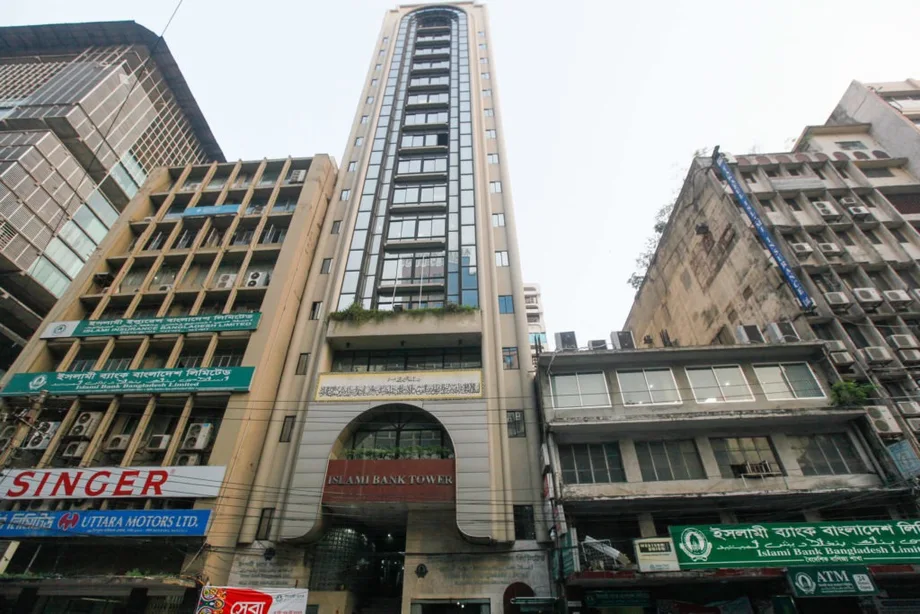
Islami Bank Bangladesh has asked for Tk6,000 crore in investment from the government or state institutions through a share issue that could put 78.8% of the country's largest private commercial bank under public ownership. The request comes as more than half its loans have fallen into default and its shortfall in funds set aside for potential losses has reached Tk85,886 crore.
Contents
- A rescue proposal with an ownership price
- How Tk6,000 crore would buy control
- A larger share ceiling is a separate step
- Losses accelerated during 2026
- More than half the loan book is in default
- The loss cushion is much smaller than required
- Depositor support faces renewed pressure
- Ownership safeguards divide opinion on the rescue
- The decisions and dates that matter
- Key Points
Bangladesh Bank's Banking Regulation and Policy Department wrote to the Financial Institutions Division on 9 November 2026, asking whether the government would support the proposed investment. The request follows the bank's submission on 4 April of its Capital Restoration Plan 2027-2033.
Under the proposal, Islami Bank would issue 600 crore ordinary shares at Tk10 each through private placement, a sale to selected investors rather than the public. Its paid-up capital, the money shareholders have contributed for issued shares, would rise from Tk1,609.99 crore to Tk7,609.99 crore.
The transaction would change both the bank's finances and who controls it. Government participation could supply fresh capital while sharply reducing the ownership percentage held by shareholders linked to S Alam Group, whose shares are frozen under court orders.
The central bank has left the investment decision to the government. An official of the Financial Institutions Division confirmed that the proposal was being examined. The participating institutions, funding source, final valuation, ownership arrangement and implementation timetable have yet to be confirmed.
How Tk6,000 crore would buy control
The proposed ownership percentage follows directly from the share issue: Tk6,000 crore divided by the enlarged paid-up capital of Tk7,609.99 crore equals about 78.8%. Existing shareholders together would retain about 21.2%, assuming the entire issue goes to the government or state institutions.
Share dilution works by increasing the total number of shares. Existing investors can keep the same number of shares while owning a smaller percentage of the bank. Here, the new shares would outnumber all the shares already issued by more than three to one.
S Alam Group and 24 affiliated entities acquired between 131.35 crore and 131.89 crore shares, representing 81.59% to 81.92% of the existing total. If those holdings remained unchanged after the proposed issue, their combined stake would fall to roughly 17.3%. Other existing investors would hold about 3.8% to 3.9%.
A senior Islami Bank official said seeking state investment was intended partly to prevent previous owners from regaining influence by buying newly issued shares. The official said the government could later sell its shares to general investors if the bank recovered. No sale schedule or exit terms were given.
A larger share ceiling is a separate step
Islami Bank is also seeking to raise its authorised capital from Tk2,000 crore to Tk10,000 crore. Its board approved that proposal on 4 November, and the decision was disclosed on 5 November. Bangladesh Bank has issued a no-objection certificate.
Authorised capital is the maximum share capital a company is permitted to issue under its governing documents. Raising that ceiling creates room for future share sales. Paid-up capital increases when investors actually pay for issued shares.
The bank must amend its memorandum and articles of association and obtain the required approvals, including shareholder approval at an extraordinary general meeting. The Registrar of Joint Stock Companies and Firms and the Bangladesh Securities and Exchange Commission are also involved in the approval process.
Additional Managing Director Kamal Uddin Jasim said the increase would help address the capital shortfall caused by non-performing loans. A Bangladesh Bank official said the proposed Tk10,000 crore authorised capital would require subscribed capital of at least Tk5,000 crore and paid-up capital of Tk2,500 crore.
The proposed government share purchase would take paid-up capital above that minimum. The wider authorised capital ceiling would leave capacity for further issues, subject to the necessary decisions and approvals.
Losses accelerated during 2026
Islami Bank's unaudited results show a consolidated loss of Tk3,286 crore for January-September 2026, compared with a consolidated profit of about Tk100 crore a year earlier. Consolidated figures include subsidiaries; standalone figures cover the bank itself.
On a standalone basis, the nine-month loss was Tk3,302.57 crore, compared with a profit of about Tk79 crore in the corresponding period of 2025. Financial disclosures put the July-September loss at Tk1,970.18 crore, while the capital proposal coverage gives Tk1,976 crore for that quarter.
The bank attributed its worsening performance to lower income from investments, higher profit payments to depositors and a large stock of non-performing investments. In Islamic banking, financing is commonly described as investment, while returns paid to depositors are described as profit.
Islami Bank said connected parties had embezzled funds against large exposures inherited from earlier years, leaving investments unpaid and restricting the income it could recognise. Those explanations place recovery of old financing at the centre of the bank's financial repair.
The bank also said deposit costs increased even as its deposit base declined by the end of the reporting period. That squeezes earnings from both sides: less income comes in from financing, while payments to depositors remain costly.
More than half the loan book is in default
Bangladesh Bank data cited in the restoration proposal put outstanding loans at Tk1,81,860 crore at the end of September, including Tk1,00,600 crore in default. Coverage of the authorised capital increase gives a higher default total of Tk1,06,000 crore for the same month.
Using the figure cited in the restoration proposal, about 55.3% of outstanding loans were in default. The higher figure would put the share at about 58.3%. Either calculation means that more than half of the bank's loan book was classified as non-performing.
A defaulted loan is financing that a borrower has failed to repay under the applicable rules. For the bank, it means expected cash may not arrive, income becomes harder to recognise and money must be set aside against possible losses.
The deterioration has been steep. Auditors recorded Tk65,715 crore in classified loans at the end of 2024, an increase of 849% from the previous year. The September 2026 figure of Tk1,00,600 crore is another Tk34,885 crore higher, or about 53% above the end of 2024.
The bank said many loans classified in 2024 had gone bad earlier and were formally identified by auditors and Bangladesh Bank inspectors after the political change in August that year. The figures therefore reflect both troubled lending and the recognition of earlier damage.
The loss cushion is much smaller than required
Islami Bank's latest reported provisioning shortfall of Tk85,886 crore is more than 14 times the proposed Tk6,000 crore investment. Provisions are amounts charged against earnings to cover expected losses on loans and other assets.
Capital and provisions serve related but different purposes. Share capital supplies an ownership cushion that can absorb losses. Provisions record the expected cost of troubled assets. Raising share capital can improve the bank's resilience while the work of recognising losses and collecting unpaid loans continues.
Auditors Mahfel Huq & Co Chartered Accountants and A. Wahab & Co Chartered Accountants found that the bank needed Tk76,715 crore in provisions at the end of 2024 but had maintained Tk6,945 crore. The resulting gap was Tk69,770 crore.
The 2025 annual report showed required provisions of Tk92,537 crore against Tk7,922 crore maintained, leaving Tk84,615 crore uncovered. The latest Tk85,886 crore shortfall is Tk16,116 crore, or about 23%, above the end of 2024.
Auditors said incomplete provisioning overstated assets, profit and equity while understating liabilities. The bank acknowledged that its reported profit looked higher because full provisions had not been made, and said Bangladesh Bank had allowed time to close the gap gradually.
The capital measures were also below regulatory requirements. The 2025 annual report put the capital-to-risk-weighted-assets ratio at 6.42% for the bank and 6.60% including subsidiaries, against a 12.50% requirement. This ratio compares a bank's capital cushion with its assets after allowing for their risk.
Depositor support faces renewed pressure
Islami Bank reported progress during 2025, including about Tk20,000 crore in bad-loan recoveries and deposit growth of Tk18,200 crore in the first eight months. It also said it had added 30 lakh depositors, or 3 million, in the year through August 2025.
The bank described a customer base of 2.5 crore, or 25 million, with 90% of deposits coming from retail customers and less than 2% from corporate customers. Its ability to retain ordinary savers therefore matters directly to daily banking operations.
By the first nine months of 2026, operating cash flow per share had fallen to negative Tk36.54. The bank attributed the decline mainly to unusual deposit withdrawals during July-September and said it was working to attract deposits and maintain adequate liquidity.
Liquidity means having cash or readily usable assets available when customers need payment. Capital concerns the bank's ability to absorb losses. A lender needs both: enough money available for withdrawals and enough financial strength to carry losses.
Consolidated net asset value per share, the reported assets remaining after liabilities divided by the number of shares, fell from Tk44.52 at the end of December 2025 to Tk23.64 at the end of September 2026. That is a decline of about 47%, showing how quickly the reported shareholder cushion shrank.
Ownership safeguards divide opinion on the rescue
S Alam Group controlled Islami Bank from 2017 until August 2024. A Bangladesh Financial Intelligence Unit investigation found that the group acquired 72% of the shares during 2016-17 through 22 proxies and suspected shell companies. The larger current ownership estimates cover direct and affiliated holdings.
The bank's governance has shifted again since then. Individuals linked to Jamaat-e-Islami returned to its board during the interim government, but the then chairman and managing director were forced to resign following the February elections. A Bangladesh Bank-appointed administrator now performs the board's functions.
Former Bangladesh Bank governor Ahsan H Mansur opposed the state investment proposal. He argued that the record of state banks showed weaknesses in government ownership and warned that the investment could be spent within a few years, leaving the bank needing further public support.
Mansur proposed seeking money from former foreign shareholders, including the Islamic Development Bank, Dubai Islamic Bank and Kuwait Finance House, or attracting new foreign investors. He also supported domestic private investment backed by stronger regulatory oversight.
Fahmida Khatun, distinguished fellow at the Centre for Policy Dialogue, called for careful consideration based on the bank's capital position and asset quality. She said Bangladesh Bank would need an active role in restoring and sustaining its financial strength.
The competing approaches address the same immediate problem from different directions. State investment offers a way to supply capital while diluting frozen legacy holdings. Private investment would require investors willing to accept the financial risks, alongside checks designed to prevent former controllers from returning through proxies.
The decisions and dates that matter
The government's next decision is whether to participate as an owner. Bangladesh Bank's correspondence asks for that policy choice, while the authorised capital process concerns the bank's legal capacity to issue more shares.
The main developments span several years:
- 2016-17: The financial intelligence investigation identified the acquisition of 72% of shares through proxies and suspected shell companies.
- August 2024: S Alam Group's period of control ended after the political change.
- End of 2024: Auditors recorded a Tk69,770 crore provisioning shortfall.
- 4 April 2026: Islami Bank submitted its Capital Restoration Plan 2027-2033.
- End of September 2026: The bank recorded heavy losses, widespread loan defaults and further erosion of net asset value.
- 4-5 November 2026: The board approved and disclosed the proposed increase in authorised capital.
- 9 November 2026: Bangladesh Bank asked the Financial Institutions Division whether the government would support the equity proposal.
For depositors, the practical priorities are reliable access to money and a bank able to keep operating. For public finances, the decision involves taking ownership risk in a lender with substantial unrecovered loans. For existing shareholders, the proposed issue would sharply reduce their percentage ownership.
The scale of the provisioning gap means the recovery programme will also depend on collecting unpaid financing, recognising losses and controlling future lending. The proposed investment would change who owns the bank immediately; rebuilding its finances would require work throughout the restoration period.
Key Points
- Islami Bank seeks Tk6,000 crore from the government or state institutions through 600 crore new shares.
- Full subscription would give public investors about 78.8% ownership and sharply dilute existing shareholders.
- The bank recorded a standalone loss of Tk3,302.57 crore in January-September 2026.
- Defaulted loans exceeded half the loan book, while the reported provisioning shortfall reached Tk85,886 crore.
- Bangladesh Bank has cleared a higher authorised capital ceiling, with further approvals required.
- The government is considering the investment proposal; final funding and transaction terms remain undecided.