Foreign mining agreements face an extra review
Tajikistan is adding anti-corruption checks to draft agreements with foreign partners involving precious metals and stones, while extending state regulation of artisanal mining and directing illegally mined or confiscated valuables into a national reserve fund.
Contents
- Foreign mining agreements face an extra review
- What the new checks cover
- Foreign investors already operate major mines
- Production figures show the scale at stake
- Artisanal mining enters the law's regulatory scope
- Small miners have operated under permits since 2019
- Thousands of miners, modest recorded state purchases
- Seized valuables will go to the state fund
- How the changes reached the statute book
- Key Points
President Emomali Rahmon signed the amendments to the Law on Precious Metals and Precious Stones on October 21, 2026. The lower chamber of parliament adopted them on June 15, and the upper chamber approved them on October 17. The changes take effect after official publication.
The central change is in Article 23. Draft international treaties and agreements with foreign states, their administrative territories and foreign legal entities will require an anti-corruption review alongside the economic and legal reviews already required. The provision covers extraction, production, use and circulation of precious metals and stones, reaching beyond gold mining alone.
The changes matter in an industry where foreign companies and the Tajik government share ownership of major mines. They also affect a much smaller form of mining: individuals and businesses extracting minerals from river deposits and other areas whose reserves have not been formally calculated.
What the new checks cover
Article 23 adds another stage to the assessment of proposed agreements. Economic reviews examine financial and economic considerations, while legal reviews examine an agreement's compatibility with the law. An anti-corruption review adds scrutiny focused on corruption risks in the proposed arrangements.
The authorized state body will organize the reviews under procedures established by the government. Related amendments to Article 11 update the government's powers in this area. International treaties concerning precious metals and stones will continue to require ratification, the formal approval needed to make a treaty binding through the country's legal process.
The provision concerns draft agreements. The amendment's description does not specify whether existing contracts will be reopened, which review standards will apply or how long an assessment will take. Those details matter for companies negotiating investments and for officials responsible for approving them.
Foreign investors already operate major mines
The United States Geological Survey's 2023 Minerals Yearbook identifies several gold mining ventures involving foreign investors and the Tajik state. Its ownership figures provide a picture of the industry before the 2026 amendments.
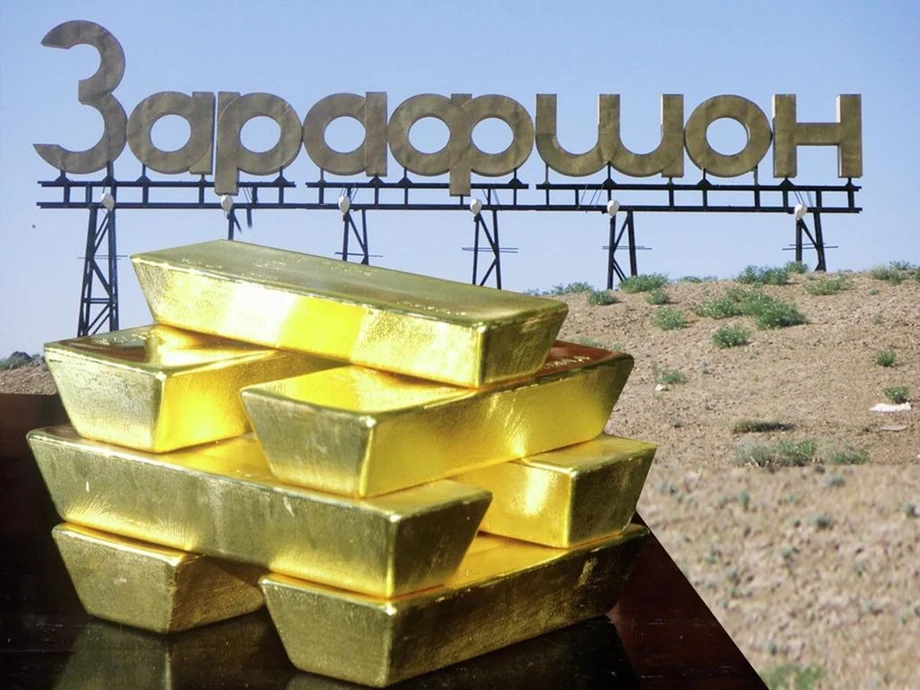
JV Zeravshan was listed as 70% owned by China's Zijin Mining Group and 30% owned by the Tajik government. It operated the Jilau and Taror mines in the Zarafshon valley in Sughd Province. JV Aprelevka was listed as 51% owned by the government, with the remaining 49% held by Gulf International Minerals, identified in the yearbook as owned by Vast Resources.
The same yearbook listed Pakrut LLC as wholly owned by China Nonferrous Gold. Darvaz LLC, another producer, was listed as 51% owned by the government and 49% by Gold and Mineral Excavation Co.
These ownership structures show why the rules for foreign agreements carry practical weight. The government can be both a regulator, setting and enforcing mining rules, and a shareholder with a financial interest in a mining business. The added review becomes another part of the approval process for proposed agreements involving foreign partners.
Production figures show the scale at stake
The USGS 2022 Minerals Yearbook records gold production of 6,456 kilograms at the Jilau and Taror mines that year. Pakrut produced 1,451 kilograms, with China Nonferrous Gold operating the mine through its wholly owned subsidiary.
Together, those operations produced 7,907 kilograms, or about 7.9 metric tons, of gold in 2022. Jilau and Taror produced about 4.4 times as much as Pakrut, based on the two figures. This comparison concerns those operations, rather than all gold produced in Tajikistan.
The yearbook also identifies Aprelevka, Arteli Odina, Darvaz, Tilloi Tojik, Takom Gold and artisanal miners among the country's producers. The legal changes therefore enter a sector containing large industrial operations, ventures with state ownership and small individual miners, each working at a different scale.
Artisanal mining enters the law's regulatory scope
Article 10 previously covered geological study and exploration, extraction, production, use and circulation of precious metals and stones, as well as the collection of scrap and waste. It now explicitly extends state regulation to minerals extracted through artisanal and what the law calls free-carried mining methods.
The law defines this activity as extraction of placer minerals by authorized individual entrepreneurs and legal entities in areas where reserves have not been calculated or entered on the state balance. Placer minerals are valuable particles accumulated in loose material, often after water has carried them away from their original rock.
Entering reserves on the state balance means formally recording the assessed mineral resource in the government's inventory. The artisanal provisions concern places where that assessment and registration have not taken place.
State regulation will include licensing, recordkeeping, reporting and government oversight. The state will also have a preferential right to buy extracted material for the State Fund of Precious Metals and Precious Stones and the country's gold reserve. In practical terms, miners must account for their activity, while the state has priority in purchasing the resulting valuables.
Small miners have operated under permits since 2019
Tajikistan allowed private individuals to conduct artisanal mining of placer deposits from November 27, 2019, according to both USGS yearbooks. The permitted minerals included gold, silver, platinum, antimony, fluorite, tin, tungsten, titanium, rare earth minerals, and precious and semiprecious stones.
The Ministry of Finance issued the required permitting documents. The Main Directorate of Geology selected mining locations in river valleys, tributaries and accumulations of loose rock on mountain slopes. The permits allowed extraction in areas with undetermined reserves and resources.
Under that earlier arrangement, permit holders were required to sell extracted precious metals and stones to the state depository of valuables under the Ministry of Finance. The 2026 amendment builds explicit coverage of artisanal extraction into the precious metals law, alongside the licensing, reporting and purchasing provisions.
The difference in wording matters for understanding the change: the earlier permit system described by USGS imposed a sales obligation, while the amended law describes the state's preferential purchasing right. Miners and purchasing authorities will need to apply the relevant rules governing their transactions.
Thousands of miners, modest recorded state purchases
By 2023, about 7,000 individuals were involved in artisanal mining in Tajikistan, according to the USGS yearbook. It recorded sales to the government of more than 34 kilograms of gold over three years, together with precious and semiprecious stones worth $58,065.
The figures describe a substantial number of participants but a modest recorded volume of gold entering government purchases. The 34 kilograms was accumulated over three years, whereas the thousands of kilograms produced by the major industrial mines were recorded for a single year.
For small miners, the amendments put permits, records and official supervision at the center of their dealings with the state. For the government, those records provide a way to follow material from an authorized extraction site toward purchase and storage. The value of that process depends on how consistently activity and sales are recorded.
Seized valuables will go to the state fund
Article 3 now requires precious metals and stones that are illegally mined, seized from illegal circulation or confiscated to be transferred to Tajikistan's State Fund of Precious Metals and Precious Stones.
The previous wording stated that illegally mined precious metals and stones belonged to the Republic of Tajikistan. That provision has been removed and replaced with a requirement directing the material into a specific state fund. The change makes the destination of those valuables explicit in the law.
The fund forms part of Tajikistan's gold and foreign exchange reserves. The president decides on its replenishment and use. It therefore sits within the country's reserve arrangements, alongside the state's purchasing role in legally extracted precious materials.
The amendments connect two routes into state holdings: purchases of extracted material under the applicable rules, and transfers of valuables obtained through illegal mining, illegal circulation or confiscation. Keeping records of those routes is part of administering the fund and the regulated market.
How the changes reached the statute book
The Law on Precious Metals and Precious Stones dates to May 12, 2001, when it was adopted as Law No. 21. It has been amended several times. The October package follows an earlier set of amendments adopted in February 2026.
The main dates show how the latest changes moved through the legislative process:
- May 12, 2001: Tajikistan adopted the Law on Precious Metals and Precious Stones.
- November 27, 2019: The government permitted private artisanal extraction of placer minerals under a permit system.
- February 2026: The law received an earlier round of amendments.
- June 15, 2026: The lower chamber adopted the latest amendments.
- October 17, 2026: The upper chamber approved them.
- October 21, 2026: President Emomali Rahmon signed the law.
- After official publication: The latest amendments take effect.
Other changes are mainly technical, including replacing the phrase "specially authorized executive authority" throughout the law with "authorized state body." The substantive changes concentrate on scrutiny of proposed foreign agreements, regulation of artisanal extraction and the destination of seized or illegally mined valuables.
Key Points
- Draft foreign agreements involving precious metals and stones will require anti-corruption, economic and legal reviews.
- The government will set review procedures, and international treaties will still require ratification.
- Artisanal extraction is explicitly covered by state regulation, including licensing, records, reporting and oversight.
- USGS recorded about 7,000 artisanal miners in 2023 and government purchases of more than 34 kilograms of gold over three years.
- Illegally mined, seized or confiscated precious metals and stones must enter the State Fund of Precious Metals and Precious Stones.
- President Rahmon signed the amendments on October 21, 2026; they take effect after official publication.