80 Servers, a Malaysian Warehouse and a Route Through Hong Kong
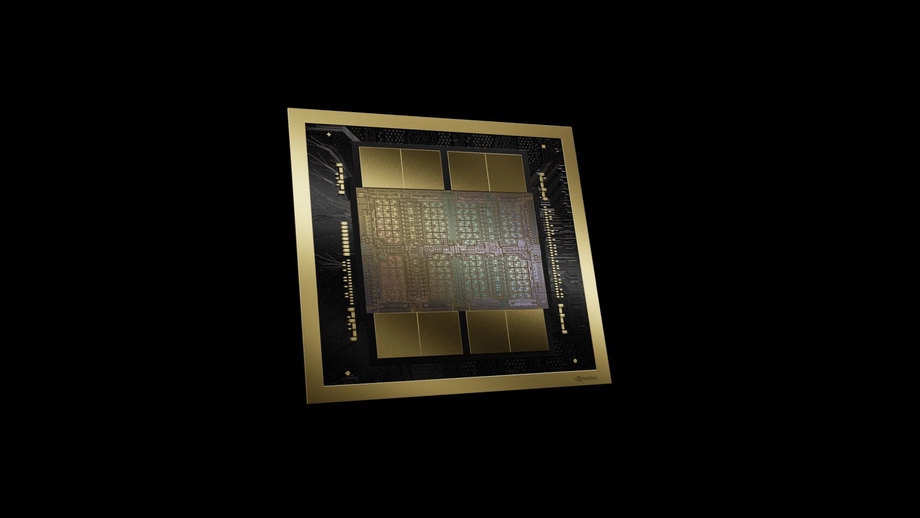
On October 12, a distributor registered in Foshan, in China's Guangdong province, advertised 80 servers built around Nvidia's HGX B300 on a Telegram channel in Russian. The company, Runli Tech, founded in 2017, told buyers the machines were stored in Malaysia and would be moved through Hong Kong to Russia. The B300 sits at the top of Nvidia's Blackwell line, and American rules require a licence to export it to China as well as to Russia.
Contents
- 80 Servers, a Malaysian Warehouse and a Route Through Hong Kong
- Dozens of Storefronts and One Obvious Gap
- In Shenzhen, a Forbidden Machine Sells for Three Million Dollars
- Why Moscow Wants the Same Chips
- Washington's Answer: A Rule That Reaches Rented Computing Power
- Five New Countries and a Deadline in February
- What Sellers Admit, and What Nobody Has Proved
- Timeline: From a Telegram Offer to a New Rule
- Key Points
The offer is one of dozens set out in a new investigation by Bethany Allen, a reporter at the corporate intelligence platform WireScreen. Her report describes Chinese dealers openly selling Nvidia H100, H200 and Blackwell chips that Washington restricts, often claiming the goods are held in warehouses in Hong Kong or elsewhere outside the mainland.
Runli Tech stands out for its customers. Trade records reviewed by WireScreen show the company exported semiconductors and servers to Russian buyers over the past three years, including PSK Patriot, an electronics supplier in St Petersburg that says it provides equipment under Russian state defense orders. In October, the European Union placed PSK Patriot on its sanctions list, citing its role in Russia's defense industry.
The company also markets hardware for hard conditions. In July it announced a rugged laptop built around Nvidia's GeForce RTX 4090 graphics card, pitched at settings where ordinary laptops fail, including military and special projects.
Nvidia has faced questions in recent weeks over its failure to keep restricted chips out of China. WireScreen reports that Tsinghua University, an institution with close ties to the defense sector, has obtained controlled chips, and that some Chinese companies advertise restricted products in their own catalogues and on their own websites.
Dozens of Storefronts and One Obvious Gap
On AliExpress, the shopping site owned by Alibaba, dozens of Chinese merchants list H100, H200 and Blackwell GPUs in plain view. Most are registered in China and say their stock is held in Hong Kong or another overseas warehouse. Buyers seldom learn who owns the hardware, where it was made or where it goes next. That gap in traceability is what turns resale into a route around export controls.
A graphics processing unit, or GPU, is a chip that performs enormous numbers of calculations at once, which makes it the workhorse for training and running artificial intelligence models. Export controls are government rules that decide who may receive or use sensitive technology. Once a chip is resold two or three times across borders, the paper trail that regulators rely on thins out quickly.
Hong Kong has been treated as a major transshipment point for illegal chip shipments to Russia since Moscow's 2022 invasion of Ukraine, when Washington cut Russia off from advanced semiconductors. About 600,000 H200 chips waiting in Hong Kong have been described in recent weeks, a stockpile Beijing has not cleared for large scale import, which shows how much advanced hardware now sits in the free port's warehouses.
In Shenzhen, a Forbidden Machine Sells for Three Million Dollars
China's grey market does not hide. At the Huaqiangbei electronics market in Shenzhen, a seller named Wu quoted about $3 million for a server carrying eight Blackwell B300 chips after a few phone calls, according to a separate investigation. Comparable hardware sells for roughly $500,000 to $600,000 in the United States, a markup of five to six times. Other sellers offered machines carrying eight GPUs at $3 million to $3.4 million.
Wu said his cards come from Hong Kong, though he did not appear to know where they were produced. Another seller, Jason Cheng, said his clients include buyers from Russia and Iran, both covered by US controls on AI chips.
The premium holds because nothing Chinese firms can buy legally matches Blackwell for training frontier models, the heavy computation that teaches a system to write, code and reason. Kyle Chan of the Brookings Institution called Nvidia hardware a "decisive factor" in a Chinese market where demand for computing power runs far ahead of supply. A consultant in Shenzhen put the choice plainly: anyone who wanted to start an AI company could go to Huaqiangbei and work out a deal.
Procurement records for Chinese public institutions reportedly show purchase orders for the same restricted hardware, a sign the trade reaches beyond private buyers.
Why Moscow Wants the Same Chips
Russia's own chip manufacturing and AI industry lag well behind those of the United States and China. The point of acquiring the most advanced processors is less about commercial AI products than about the defense industrial base: simulating weapons, running intelligence analysis and training models for military use. One estimate puts chips supplied by China at 88% of Russia's chip supply by value.
That figure explains why a distributor in Foshan bothers with a Telegram channel in Russian. A customer that cannot buy directly from Nvidia, and cannot buy through approved channels, will pay a large premium to a middleman who promises delivery. WireScreen reports that Chinese state intelligence began a covert campaign for restricted chips at least two years ago, with a task force set up under the Ministry of State Security to organize acquisition and smuggling networks.
The concern in Washington is straightforward. The same chip that trains a chatbot can help design missiles, plan military logistics or run cyber operations. Control the supply, the argument goes, and you slow a rival's ability to build the most capable systems.
Washington's Answer: A Rule That Reaches Rented Computing Power
The Commerce Department's Bureau of Industry and Security published the interim final rule with an effective date of November 19, 2026. It adds a licence requirement for advanced AI chips sent to Indonesia, Malaysia, Singapore, Thailand and Brazil, five countries the bureau describes as presenting a higher than normal risk of diversion.
The rule also closes a route that involves no shipment at all. Overseas data centers that rent out large amounts of computing power to companies headquartered in China, Russia or Macau need a licence, because a firm no longer has to import a chip to use one. It can rent time on a machine hosted abroad.
The cut-off is measured in aggregate TPP, or total processing performance, the yardstick regulators use to grade computing power. A data center that gives entities in Country Group D:5, the US list covering China, Russia and other countries under arms embargoes, access to more than 12,000,000 aggregate TPP, alone or through linked facilities, needs authorization. Commercial recommender systems, the software retailers and social networks use to suggest products and posts, are excluded.
The same document formally rescinds the AI Diffusion Rule, the framework published in January 2025 that the bureau suspended in May 2025 and never enforced. Comments are due by January 19, 2027, under docket number 261116-0005.
Five New Countries and a Deadline in February
Data centers already serving Chinese or Russian clients at the scale the rule covers must obtain a licence within 90 days of November 19, which falls in mid February 2027, or face future export restrictions. Chips going to US headquartered buyers can escape the licence requirement if the exporter files the reports the rule sets out.
The bureau listed the penalties it will weigh for countries that tolerate evasion: import restrictions, new licence requirements, a downgrade of a country's standing in the US export control system, and Entity List designations, which cut a named company off from American suppliers.
Malaysia, Singapore and Thailand had become the quiet middle of the chip trade, the stops where cargo changes hands before heading north. When the rule was announced on November 16, sellers began listing unusually large volumes of Nvidia GPUs, including thousands of B300 chips, a surge of B300 listings that marketplace operators tied to the new controls. Malaysia's role has also drawn scrutiny on the data center side, met by YTL Power's denial that its Johor facilities helped route Nvidia processors to Chinese customers. The company said its business there is colocation, meaning it supplies buildings, power, cooling and cables while customers bring and run their own servers.
What Sellers Admit, and What Nobody Has Proved
Runli Tech's tone changed once the rule landed. In a post on November 19, the company wrote that even with GPU inventory held overseas, it could no longer guarantee a lawful reexport. WireScreen said Runli Tech declined to comment on the findings.
Trade records do not name the processor manufacturer inside the servers that moved. That means it cannot be confirmed that restricted Nvidia chips reached Russia, and the final use of any equipment delivered is also unestablished. The records show the shipments and the customers, not the silicon.
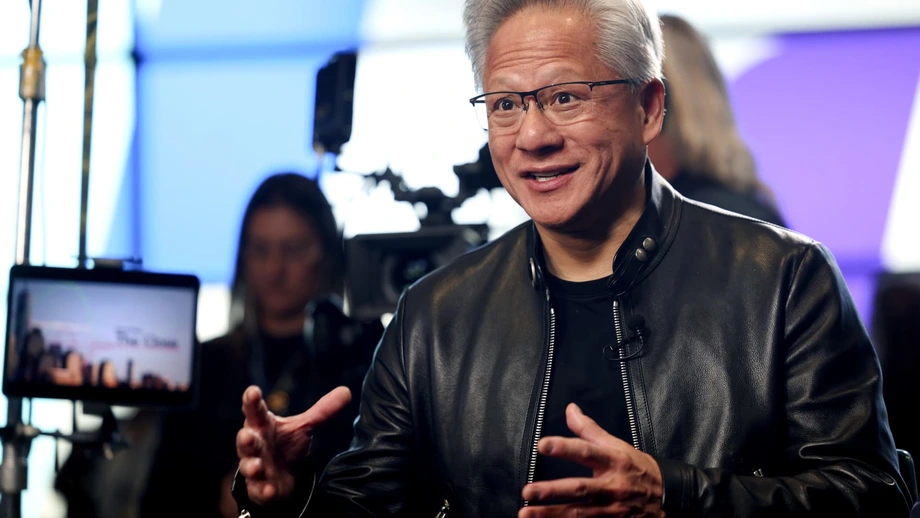
Enforcement has its own complications. The Treasury Department and the Commerce Department have been described as at odds over how far to pursue violations of the chip trade, even as public procurement records in China show orders for restricted hardware. Nvidia chief executive Jensen Huang has said he would prefer the controls gone and hopes to sell more advanced chips in China.
Timeline: From a Telegram Offer to a New Rule
- October 2022: the United States restricts advanced chip exports to China, months after Russia's invasion of Ukraine.
- July 2026: Runli Tech advertises a rugged laptop built on Nvidia's RTX 4090 for military and special projects.
- October 12, 2026: Runli Tech offers 80 HGX B300 servers stored in Malaysia for delivery through Hong Kong to Russia.
- October 2026: the European Union sanctions PSK Patriot over its role in Russia's defense industry.
- November 16, 2026: the Bureau of Industry and Security announces licence requirements for five additional countries.
- November 19, 2026: the rule takes effect, and Runli Tech says it can no longer guarantee lawful reexport.
- January 19, 2027: deadline for public comments on the rule.
- Mid February 2027: the 90 day window closes for data centers already supplying covered customers.
Key Points
- A WireScreen investigation found Chinese dealers openly selling restricted Nvidia H100, H200 and Blackwell chips, some offering delivery to Russia through Malaysia and Hong Kong.
- Runli Tech of Foshan offered 80 HGX B300 servers on October 12, saying the machines were in Malaysia and would transit Hong Kong.
- Its Russian customer PSK Patriot, a St Petersburg electronics supplier working on state defense orders, was sanctioned by the European Union in October.
- Sellers in Shenzhen quote about $3 million for a server with eight Blackwell B300 chips, against $500,000 to $600,000 in the United States.
- China supplies an estimated 88% of Russia's chips by value, according to one estimate.
- The Bureau of Industry and Security rule took effect on November 19, 2026, adding licence requirements for Indonesia, Malaysia, Singapore, Thailand and Brazil and covering remote access through overseas data centers.
- Existing data centers serving covered customers have 90 days to obtain a licence, a deadline in mid February 2027, and comments close on January 19, 2027.
- Trade records do not identify the chipmaker inside the servers, so delivery of restricted Nvidia hardware to Russia has not been confirmed.