A Weekend Rule Aimed at Rented Computing Power
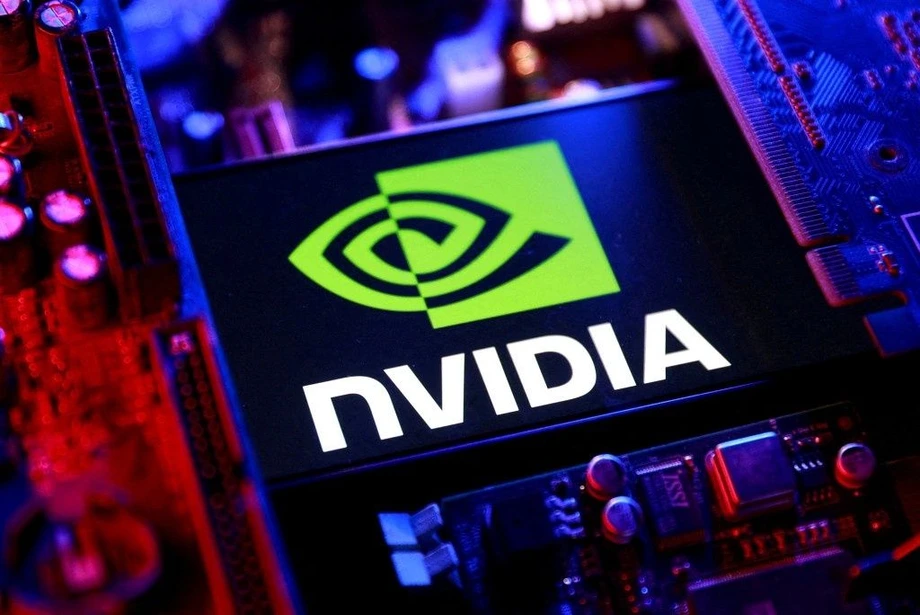
The first sign of trouble for some buyers came in the market, not in a courtroom. After Washington announced new restrictions on November 16, 2026, sellers began offering an unusually large number of Nvidia graphics processing units for sale, including thousands of B300 chips, one of the company's most advanced products. Three people familiar with the matter said the hardware had been intended for data centers where Chinese companies would rent computing power.
Contents
- A Weekend Rule Aimed at Rented Computing Power
- Why Washington Treats a Chip Like a Weapon
- The Singapore Company at the Center of the Storm
- The Subsidiary Loophole and the Shell Game
- What Nvidia Is Allowed to Sell
- The Scandal That Moved Congress
- The Cost for Asia's Data Centers
- China's Fallback: Homegrown Chips
- What Is Still Unclear
- Key Points
The Commerce Department's Bureau of Industry and Security published the remote access rule as an interim final rule written by and at the direction of the Treasury Department and the National Security Council. It requires licenses for overseas data centers that provide advanced computing at a set scale to Chinese firms, with a 90 day transition for qualifying existing business. The rule took effect on November 19.
The measure added license requirements for five countries, including Malaysia, Singapore and Thailand, and it covered non-US data centers that supply large amounts of computing power to firms headquartered in China. Before the change, chip license requirements generally applied to countries such as Russia and to companies headquartered in countries under US arms embargoes. The new rule extended them to Southeast Asian countries seen as transshipment points with a high risk of diversion to China.
"Rapid advancement in cloud computing and SI infrastructure have made it increasingly possible to access advanced American computing capabilities remotely, including through data centers located outside countries subject to U.S. export restrictions," the bureau said.
SI stands for super intelligence, the term Washington uses for the most powerful AI hardware and the systems it enables. The wording matters because a company no longer needs to import a chip to use it. It can rent time on a machine hosted abroad. The remote access workaround was well known for nearly two years before the November rule. The Trump administration left it open while the AI Diffusion Rule was suspended and only closed it amid pressure from the Nvidia scandal. Jack Duhamel, president of AI infrastructure marketplace GPU Mart, said the surge in GPUs for sale was directly tied to the rule. One company told his marketplace that its sale was related to the new controls.
Why Washington Treats a Chip Like a Weapon
AI chips are the engines of modern artificial intelligence. They run the calculations that train models on vast amounts of text, images and code. The most advanced Nvidia chips, such as Blackwell and its successor Rubin, pack enormous computing power into a small package. Washington calls the top tier super intelligence technology because it can be used for military planning, weapons design and intelligence analysis as well as commercial products. Control the chips, the theory goes, and you slow a rival's ability to build the most capable AI systems.
The US started with broad restrictions in October 2022, the biggest shift in US technology export policy toward China in decades. A year later it tightened performance thresholds and extended the rules to the Middle East and to overseas firms headquartered in China. The 2023 step also stopped Nvidia from designing products just below the performance thresholds. The January 2025 AI Diffusion Rule created a three tier system for chip exports worldwide, with different rules for different countries. The Trump administration stopped enforcing that rule in May 2025, then formally rescinded and replaced it only in November 2026. That gap let data center capacity grow in countries such as Singapore, where Chinese companies could rent computing power remotely to train and deploy AI models.
- October 2022: Washington imposes sweeping restrictions on advanced chips to China.
- October 2023: Rules tighten, covering more chips, the Middle East and firms headquartered in China.
- January 2025: The AI Diffusion Rule adds a worldwide license requirement.
- May 2025: The Trump administration stops enforcing the AI Diffusion Rule.
- May 31, 2026: BIS guidance says the 2023 headquarters rule still applies.
- November 16, 2026: The remote access rule is issued and takes effect on November 19.
The Singapore Company at the Center of the Storm
Megaspeed International sits in a curved glass skyscraper overlooking Marina Bay in Singapore. In three years, the corporate entity went from an inactive Chinese gaming subsidiary to one of Asia's biggest buyers of cutting edge semiconductors from the US. It was incorporated in 2015 as 7Road International, an offshoot of a Chinese gaming company, and renamed Megaspeed in March 2023. Trade records show it has purchased more than $4 billion in chips and equipment from Nvidia since 2023.
Alice Huang, also known as Huang Le, a 43 year old Chinese executive, became a director through November 2023 and played an integral role in establishing the company, corporate documents show. She left on August 30, 2025, the company said, and holds no role there. US officials believe Alice Huang, who is no relation to Jensen Huang, is a Chinese intelligence asset. Beijing has called the claim a "groundless" attempt to smear China. Singapore's Ministry of Home Affairs said there was insufficient evidence she had committed any related offense, but barred her from re-entering the country after she provided inaccurate information "to downplay her role" at Megaspeed. Other investigations are ongoing.
The affair allegations involving Nvidia chief executive Jensen Huang turned Megaspeed into a Washington story. Jensen Huang resigned in November 2026 after admitting to an affair, and Nvidia's board reinstated him days later. President Donald Trump said he "convinced" the board to bring him back. Huang is due to testify before the House Foreign Affairs Committee, the House Intelligence Committee and the House Select Committee on the Chinese Communist Party on December 1, and before the Senate Banking Committee on December 3.
Megaspeed chief executive Tan Yong Pong said the company had cooperated with inspections by the Commerce Department and retained a US law firm to verify its compliance. "Megaspeed takes its compliance obligations under US export control laws extremely seriously," he said in a statement. The company said recent media reports contained assertions "not supported by verifiable evidence." Corporate filings show connections between Megaspeed subsidiaries and Alibaba, including pledged collateral.
Commerce Secretary Howard Lutnick had declined to label Megaspeed a national security threat or limit its chip purchases, a decision that led Treasury Secretary Scott Bessent to confront him, two people familiar with the matter said. This week the Commerce Department added Megaspeed and its Thai and Malaysian subsidiaries to the Entity List, which blocks shipments without a license. Before that step, the administration had not added a single new individual or business to the Entity List in 2026. Nvidia said it had cut off sales to Megaspeed in June 2025. US authorities had investigated the company for more than two years over whether it diverted chips to China.
The Subsidiary Loophole and the Shell Game
On May 31, 2026, BIS issued the May 31 guidance, which said a license is required for advanced computing items sent to entities headquartered in Country Group D:5, a US list that includes China and countries subject to arms embargoes, or Macau, even when the entity is located elsewhere. The rule covers chips classified as 3A090.a and .b and 4A090.a and .b, export control codes for the most powerful accelerators. In plain terms, a Chinese company could no longer buy through a Malaysian or Singapore subsidiary without a license.
The guidance arrived on a Sunday, a sign of urgency. It said a company's headquarters in China, not just the shipping address, would determine whether a license is needed. The chips explicitly covered include Nvidia's Blackwell and Rubin families and AMD's MI350x. Industry sources estimated that hundreds of thousands of advanced processors may have flowed through the subsidiary gap over about a year. BIS described the move as a clarification of requirements in place since November 17, 2023, not a new law. The agency said bona fide data center operators would not have to stop using, storing or servicing advanced computing items already in place. Nvidia said the guidance did not change its own licensing obligations because Commerce had already imposed letter requirements on the company. The fix targeted buyers who could purchase without a license.
Trade lawyer Chris McGuire called the earlier gap a "HUGE problem" and said another gap may remain at foundries such as TSMC, which must judge whether chips are bound for Chinese front companies. His warning points to a harder problem: a chip can be legal at the point of sale and illegal at the point of use.
Two California customers illustrate the pattern. RiCloud AI is owned by Shenzhen based Yuxing InfoTech Investment Holdings. Yuxing's chief executive, Cong Yu, reportedly holds a degree in National Defense Mobilization from the People's Liberation Army Command College. One RiCloud customer, Agencia Comercial Spirits, began as a whisky importer and has committed to AI data center deals worth up to $598 million. Airvres, formerly called Inspur, was renamed after its Chinese parent was added to a federal blocklist in March 2023. It reportedly exported at least $5.6 billion of chips to Southeast Asia between April 2024 and February 2026, including Blackwell silicon. One of the Malaysian recipients was Megaspeed.
In March 2026, US prosecutors charged three people associated with California AI server maker Super Micro Computer, including its co-founder, in a scheme to divert about $2.5 billion of US technology into China, including AI servers packed with Nvidia chips. Nine people were indicted earlier over illegal GPU exports. Illegal Nvidia Blackwell Ultra B300 GPUs have been found inside China Telecom's network.
The scale is disputed but large. The research institute Epoch AI estimates that 290,000 to 1.6 million H100 equivalents of compute reached China in violation of export controls through the end of 2025. A May analysis from short seller Culper Research claimed Chinese end users still account for about 20% of Nvidia chip sales through illegal diversion and intermediaries in Southeast Asia. Epoch AI also estimated that up to a third of China's AI computing power may come from smuggled chips.
Blacklisted buyers keep finding ways in. Northwestern Polytechnical University in Xi'an, on the Entity List since 2001, bought four H200 chips last month for $250,000, according to procurement records published on its own website that have since been deleted. The university did not respond to a phone call seeking comment.
The Entity List has been a central tool. The March 2025 Entity List action added 80 entities from China, the UAE, South Africa, Iran and Taiwan. BIS said 27 Chinese entities were tied to military modernization, hypersonic weapons and the design of hypersonic vehicles. The Entity List identifies companies and institutions that face special license requirements for US items.
"We will not allow adversaries to exploit American technology to bolster their own militaries and threaten American lives," Commerce Secretary Howard Lutnick said.
Under Secretary Jeffrey I. Kessler said the list sent a message that Washington would prevent US goods from being misused for high performance computing, hypersonic missiles and military aircraft training. "American technology should never be used against the American people," he said.
What Nvidia Is Allowed to Sell
Nvidia's legal sales to China are narrower than the smuggling debate suggests. The company cannot simply ship chips to Chinese companies that pay. It must apply to Commerce for licenses, which have been issued case by case since spring 2025. In December 2025, the Trump administration allowed Nvidia to sell the H200, a powerful chip that is not the company's top model. The administration first prohibited sales of the H20, a chip built for China, then reversed course. The government approved several buyers and collected a quarter of the revenue. The H200 is two generations behind top US chips but remains superior to anything China can produce.
Licensing numbers are large. The House Foreign Affairs Committee released data showing the administration approved shipments of nearly 900,000 advanced AI chips made by Nvidia and AMD for Chinese companies from December 2025 through May 2026. A November House Foreign Affairs Committee investigation described more than 800,000 H200 and MI325X chips approved over the same period, including sales to companies the Pentagon has linked to the Chinese military.
Nvidia has argued that selling its third or fourth best chips keeps China dependent on American technology. Critics say the H200 is still better than anything China can make and helps its military modernization. Nvidia chief executive Jensen Huang has said there is no evidence of smuggling. He once noted that the Grace Blackwell platform weighs nearly two tons (1.8 metric tons) and cannot fit in a pocket or backpack. Critics reply that servers are not smuggled in backpacks; they move through third countries and intermediary companies. Supporters say Nvidia may not have had verified evidence of diversion and cannot track every product after it is sold.
Nvidia confirmed in December 2025 that it had built location verification technology that can indicate which country its chips are operating in. It offers the feature as a software option. The company has opposed legislation that would require location verification and diversion reporting for advanced AI processors. A measure known as the Chip Security Act is among several export control bills that gained momentum after the Nvidia scandal.
The Scandal That Moved Congress
The affair scandal changed the political math. Huang's resignation and Trump's role in his reinstatement left Congress reeling, and lawmakers moved to attach chip controls to the year end defense bill. The episode brought congressional scrutiny of Commerce Secretary Howard Lutnick's enforcement of export controls and gave new life to three bills: the AI Overwatch Act, the Chip Security Act and a requirement for a location verification mechanism. The National Defense Authorization Act is the annual defense policy bill that often carries unrelated national security measures.
Senate Minority Leader Chuck Schumer said the Senate should act. "We urgently need to pass the bipartisan export control bills to start to cut off the flow of AI chips and manufacturing equipment to China once and for all," he wrote on X.
"Congress has much to investigate and we will pass overwhelmingly bipartisan chip export-control bills, including my Chip Security Act, one way or the other," Senator Tom Cotton wrote on X.
Senator Elizabeth Warren, a lead sponsor of the AI Overwatch Act, said Huang's return "only increases the urgency of passing bipartisan export control bills into law." Senate Majority Leader John Thune said Congress would use "vigorous oversight and adoption of strong, bipartisan export-control measures" to protect national security. House Foreign Affairs Committee Chair Brian Mast said export controls on the most advanced AI chips "have been a top priority."
The House passed the Remote Access Security Act in January 2026, but the Senate has not. Nvidia has warned customers that the bill would give the government broader authority over cloud services and could expose both parties to "legal action." The House's version of the defense bill, passed in July, did not include chip export controls; the Senate version's manager's amendment did.
Lawmakers return after Thanksgiving with about three weeks to reconcile the bills before a December 11 government funding deadline. A separate proposal, the MATCH Act, would address chipmaking tools made by US allies. The three measures in the defense bill fight would let Congress block advanced AI chip exports to adversaries, bar sales of essential chipmaking tools to countries of concern and require location verification on restricted chips. Owen Tedford, a senior research analyst at Beacon Policy Advisors, wrote that some measures could be included in the final defense bill, likely in a weaker form than the current drafts. The final language will probably be one of the last pieces congressional leaders settle.
The Cost for Asia's Data Centers
The new rule landed on a region that had built much of its AI boom around Chinese demand. Nvidia told manufacturing partners including Dell and Supermicro to stop shipping servers with its chips to Malaysia, Singapore, Thailand and Indonesia. The halt's duration is unclear while the companies work out compliance. Nvidia booked $104 billion in revenue through its Singapore subsidiary in 2025, a 72% increase in 12 months. It also records some Taiwan and China revenue through that unit.
Cloud providers have 90 days to obtain licenses by proving their end users do not include restricted entities. An executive at a cloud provider described the confusion. "There's this new rule but no guidance on execution," the executive said. "No one knows how to apply for this licence while the 90-day clock is ticking. It's causing sheer chaos in the region."
Projects are already shifting. Singapore based cloud company Aolani planned to lease advanced computing power to ByteDance, the Chinese owner of TikTok. Bankers stopped about $500 million in credit for the project, and ByteDance may drop the deal. Moonshot AI canceled a $150 million computing lease in Indonesia after the rule. The Chinese lab had been negotiating in Europe to rent at least 8,000 Blackwell chips, with some proposals asking Chinese customers for 30% to 50% more prepayment than other clients.
In July, White House technology policy official Michael Kratsios publicly named Moonshot AI, saying the lab used Nvidia GB300 chips in Thailand that could have trained models. Moonshot's K3 model depended heavily on Nvidia compute from overseas data centers. MiniMax used thousands of Blackwell chips remotely in Australia. Its chief executive, Yan Junjie, told staff the company would accelerate adoption of Huawei and Alibaba chips. The rule also reaches foreign firms that sign contracts and then sublet capacity, because enforcers are looking at the actual customer and control relationships.
Chip sellers have told neoclouds, the newer cloud providers that rent out GPU capacity, that they will not supply Nvidia chips if any of that capacity will be rented to Chinese companies. Before the rule, Nvidia had said it would not sell to customers renting more than 50% of their GPUs to Chinese companies. The stricter stance is part of why so many GPUs are now looking for new homes. On Nvidia's November 17 earnings call, then interim chief executive Colette Kress said the company was still studying the controls but expected strong performance because demand for chips far exceeded supply.
China's Fallback: Homegrown Chips
Chinese AI developers are responding by testing domestic hardware. Huawei engineers have been embedded at DeepSeek to optimize the next generation of Ascend chips. DeepSeek's V5 model has been reported to be training on Ascend chips. Huawei plans to give DeepSeek priority access to most of its 960DT chips when they launch next year. The Ascend 950DT has 144GB of memory and 4TB/s of bandwidth, close to Nvidia's H200 on those measures. The 960DT, planned for the first quarter of next year, is expected to double FP8 computing power.
Meituan said in June that its LongCat-2.0 model, with 1.6 trillion parameters, was pretrained from scratch and then run for inference on a cluster of 50,000 domestic chips. Game company miHoYo is preparing to adapt Huawei computing, according to people familiar with the work.
Chinese companies also used adversarial distillation, training their models on the outputs of top US models at a fraction of the compute. That technique does not require smuggling a single chip, and it shows how export controls can be sidestepped by software.
Huawei's progress does not close the gap. Nvidia's top Blackwell chips are nearly seven times better than Huawei's Ascend equivalents, and by the end of 2026 Huawei will likely have produced less than 4% of the compute Nvidia will have over the same period. China's top AI models are now months behind the US frontier, a gap that reflects genuine innovation as well as access to smuggled hardware. The founder of DeepSeek said in 2024 that the company's problem had never been money; it was the embargo on high end chips.
What Is Still Unclear
Several questions remain open. The exact number of chips diverted to China is not known; Epoch AI's range runs from 290,000 to 1.6 million H100 equivalents. Investigators have not said how many of the GPUs offered for sale after November 16 were originally bound for projects tied to China.
The Senate has not voted on the Remote Access Security Act. The final defense bill language is still being negotiated, and the White House has sent feedback on the chip bills. The foundry question is unresolved: Chris McGuire said TSMC and other foundries may still face uneven due diligence over whether chips are bound for Chinese front companies.
Commerce's 90 day licensing window gives cloud providers little time to prove who their customers are, and no public guidance on how to apply. Nvidia, Dell, Supermicro, ByteDance and Aolani did not respond to requests for comment on the shipment halt.
Dates ahead are firm. Jensen Huang is scheduled to testify on December 1 and December 3. Congress must reconcile the defense bill before December 11. The 90 day cloud licensing window runs into February 2027.
Key Points
- US Commerce issued a remote access rule on November 16, 2026, effective November 19, requiring licenses for overseas data centers serving Chinese firms.
- Nvidia sellers began offering thousands of B300 GPUs for sale after the rule, according to people familiar with the market.
- Megaspeed, a Singapore cloud company that bought more than $4 billion in Nvidia chips, was added to the Entity List with its Thai and Malaysian subsidiaries.
- BIS guidance on May 31, 2026 closed a subsidiary loophole for buyers headquartered in China of Blackwell, Rubin and MI350x chips.
- The House Foreign Affairs Committee said nearly 900,000 Nvidia and AMD chips were approved for Chinese companies from December 2025 through May 2026.
- Nvidia halted server shipments to Malaysia, Singapore, Thailand and Indonesia as cloud providers faced a 90 day licensing deadline.
- Chinese AI labs are testing Huawei Ascend chips, but Nvidia's top Blackwell chips remain about seven times better than Huawei's equivalents.
- Congress is weighing the AI Overwatch Act, the Chip Security Act and location verification rules in the year end defense bill.