A Subterranean Giant in Hangzhou
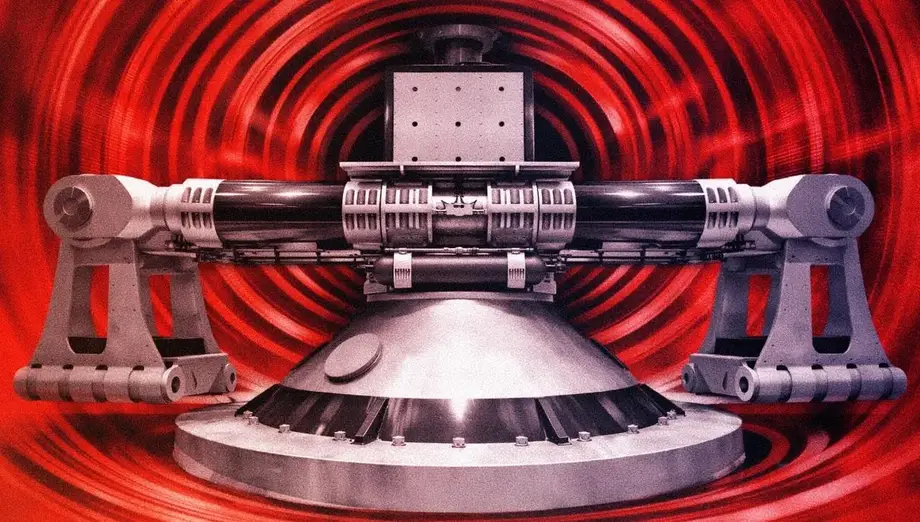
Deep beneath the eastern Chinese city of Hangzhou, engineers have completed the installation of the most powerful research centrifuge ever built. Operating approximately 49 feet (15 meters) underground, the machine is designated as the CHIEF1900. It forms a central component of the Centrifugal Hypergravity and Interdisciplinary Experiment Facility, known as CHIEF, which is being developed under the leadership of Zhejiang University. The underground siting is a deliberate engineering choice designed to minimize the transmission of the extreme vibrations generated by the machine to the surrounding urban environment.
Contents
Manufactured by Shanghai Electric Nuclear Power Group, the CHIEF1900 follows the earlier CHIEF1300 machine that entered operation in September 2025. The entire complex represents a major national science infrastructure project funded by an investment of more than 2 billion yuan (approximately $285 million). The project received official approval in 2018 from the National Development and Reform Commission. Construction of the facility began in November 2019, and the complete site is expected to be fully operational by the end of next year. The research infrastructure includes three main centrifuges, six specialized experimental chambers, and 18 onboard devices intended to reproduce extreme physical conditions.
Understanding Hypergravity and Capacity
A centrifuge is a device that spins a test chamber at high speed, producing an outward acceleration that is many times stronger than normal gravity. Scientists express this acceleration in multiples of g, where 1 g corresponds to the gravitational acceleration experienced at Earth's surface. For comparison, astronauts re-entering Earth's atmosphere experience about 4 g, and a typical household washing machine reaches approximately 2 g during its spin cycle. Large research machines measure their output in g-tonnes, a combined metric of the acceleration applied and the mass of the test payload. This combined rating does not mean every experiment runs at the maximum acceleration limit.
The CHIEF1900 provides a capacity of 1,900 g-tonnes and can accommodate payloads weighing up to 32 tonnes on its rotating arm, which features a 6.4-meter radius. This performance surpasses the previously reported capacity of approximately 1,200 g-tonnes for a major centrifuge operated by the U.S. Army Corps of Engineers in Vicksburg, Mississippi. The new Chinese machine also expands capacity by about 46 percent over its predecessor, the CHIEF1300, which held a record rating of 1,300 g-tonnes. Building upon China's CHIEF1900 Pushes Hypergravity Research, the installation establishes a new benchmark for global testing capabilities.
Compressing Space and Time
The core scientific principle behind the facility is physical modeling under hypergravity. By increasing acceleration, researchers can reproduce the gravitational forces acting on enormous real-world structures using much smaller laboratory models. For example, a model measuring 3.3 feet (1 meter) and subjected to 100 g can reproduce aspects of the gravitational stress experienced by a structure approximately 328 feet (100 meters) tall. This scaling approach relies on geotechnical centrifuge modeling principles to ensure that the physical response of a small model mimics full-scale behavior under field conditions.
This method also accelerates slow environmental and geological processes without altering time itself. When researchers subject a soil sample to 100 g, they can observe pollutant migration processes that normally take 100 years unfold in just 3.65 days, provided the model satisfies relevant physical scaling conditions. Chen Yunmin, chief scientist of the facility and an academician of the Chinese Academy of Sciences, explained the experimental goals of the installation.
We aim to establish experimental environments for studying the motion of multiphase substances by adjusting centrifugal acceleration and load. These environments will cover timescales from brief moments to 10,000 years, spatial scales from the atomic level to kilometers, and environmental conditions from normal to high temperature and pressure.
Engineering Challenges of High-Speed Rotation
Operating a massive rotating arm at extreme speeds introduces severe mechanical and thermal challenges. High-speed rotation generates substantial aerodynamic drag and mechanical friction, which create thermal stress that can distort equipment and compromise experimental data. Ling Daosheng, chief engineer of the facility and professor at Zhejiang University, described the technical solutions implemented by the development team.
To ensure the facility delivers a stable and high-quality hypergravity environment that meets the needs of different disciplines, we adopted a series of measures, including deep excavation, low-pressure chambers, and liquid-cooled wall technology.
Engineers combined these methods into an advanced temperature-control system that uses vacuum operation alongside coolant circulation and forced air ventilation. The system dissipates heat effectively while preserving the structural balance of the rotating components. The underground location inside a 230-square-meter circular chamber provides the stable foundation necessary to support these heavy, fast-moving parts.
Applications Across Multiple Scientific Fields
The facility is designed to support research across six distinct disciplines, including slope and dam engineering, seismic geotechnics, deep-sea engineering, deep underground environments, geological processes, and advanced material manufacturing. In civil engineering, researchers can test how massive dams and bridge foundations respond to active earthquakes by placing scaled models inside the hypergravity chambers. Prior pilot tests using the CHIEF1300 successfully simulated strong earthquakes to evaluate hydropower dam foundations and reproduced 2,000-meter deep-sea water pressure to assess the safety of methane hydrate extraction from the ocean floor.
Environmental scientists can investigate how contaminants move away from underground waste deposits over long periods. In materials science, the extreme inertial conditions inside the centrifuge can refine metallic alloys, alter crystal growth patterns, and synthesize nanoparticles with fewer defects. The facility is intended to operate as an open global research platform, allowing domestic and international teams to book operational time.
The Bottom Line
- China activated the CHIEF1900 centrifuge, achieving a record capacity of 1,900 g-tonnes.
- The machine is housed 49 feet underground in Hangzhou and developed under Zhejiang University.
- A vacuum-based cooling system manages the extreme heat generated during high-speed rotation.
- Experiments under 100 g can simulate a century of pollutant movement through soil in 3.65 days.
- The facility supports research in dam safety, earthquake engineering, deep-sea resource extraction, and materials science.