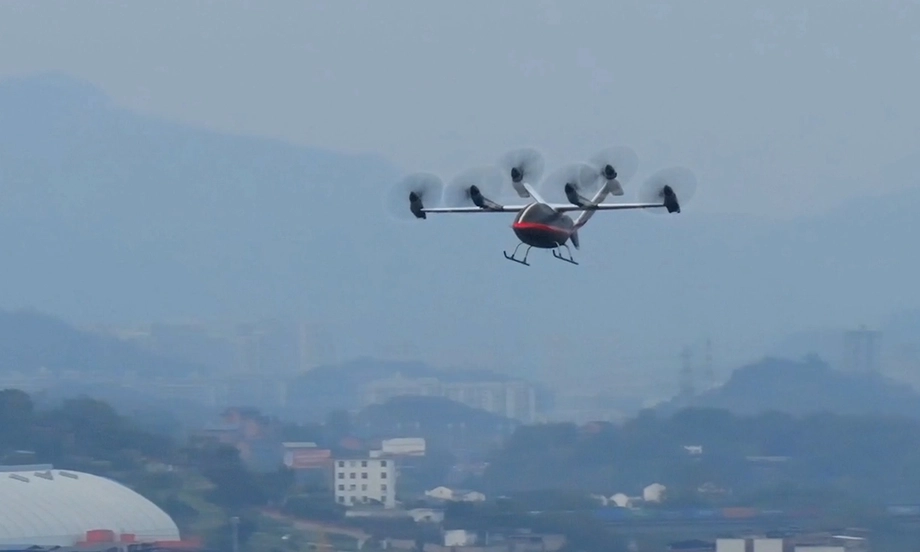
A New Milestone for Electric Flying Vehicles
Guangzhou based company Xpeng Aeroht announced on November 22, 2026, that its A868 electric flying vehicle has successfully completed a tilt transition flight test. This achievement makes the company the first in China to perform this complex maneuver using a full scale prototype. The aircraft first lifted off in November 2025 at Xpeng Tech Day. Over the following twelve months, the engineering team moved from basic vertical takeoff verification to complete tilt transition capability.
Contents
A tilt transition requires the aircraft to shift from vertical lift to high speed wing borne cruise in a single, continuous, and controlled sequence. During this moment, the rotors that hold the vehicle aloft become the propellers that drive it forward. This technical phase is widely regarded by aerospace engineers as the most difficult step in developing electric vertical takeoff and landing aircraft, often called eVTOLs.
Understanding the All Tilt Configuration
The A868 uses a six rotor all tilt fixed wing layout alongside a Kunpeng super range extender architecture and a self developed aviation grade hybrid electric core. In the electric vertical takeoff and landing sector, the tiltrotor configuration combines the flexibility of vertical takeoff and landing with the cruise efficiency of a fixed wing. This design makes medium and long distance travel possible.
Industry designs divide tiltrotors into two main categories. In an all tilt configuration, every rotor switches between vertical and horizontal positions through a mechanical tilt mechanism. This approach leaves no redundant dead weight in level flight and delivers optimal aerodynamic efficiency, but it requires a complex coupling of the tilt mechanism and the flight control system. Because of this high technical threshold, all tilt vehicles are frequently nicknamed electric Ospreys.
In a partial tilt configuration, only some rotors pivot while the rest provide fixed vertical lift. While the engineering threshold for partial tilt is lower, drag and dead weight cannot be fully eliminated during cruise, meaning efficiency falls short of the all tilt design. Very few companies worldwide have successfully chosen and mastered the all tilt route. United States based Joby Aviation is the global benchmark, having been the first to complete tilt transition flight validation, while other competitors like Overair have yet to complete the maneuver.
Design Specifications and Performance Goals
The A868 prototype has a 1:1 scale weight of 2.4 tons and features a 2+2+2 six seat layout. The cockpit is designed for simplicity, containing only one screen and one control stick to support single hand flight operations. Engineers built the aircraft to target multi passenger, medium and long haul business travel within city clusters.
Technical metrics for the aircraft include a design range of over 500 kilometers and a maximum speed exceeding 360 kilometers per hour. The vehicle is part of a broader commercial strategy by Xpeng Aeroht, which also develops a modular personal travel product called the Land Aircraft Carrier. The Land Aircraft Carrier has accumulated global orders exceeding 7,000 units, with a planned mass production factory capacity of 10,000 units per year.
Key Development Timeline
- November 5, 2025: The A868 makes its public debut at Xpeng Tech Day and completes its first vertical takeoff and landing test.
- November 22, 2026: Xpeng Aeroht announces the successful completion of the full scale tilt transition flight test.
The successful transition marks a key flight validation milestone for a Chinese aerospace company on this demanding technological route. The milestone brings the firm into direct competition with leading global players in the advanced air mobility sector. Company representatives noted that the vehicle aims to provide a workable product for efficient mobility within city clusters.
What Remains Unknown
Technical success in flight testing represents a major breakthrough, but commercial deployment requires further regulatory approval. Airworthiness certification schedules, official commercial launch dates, and specific ticket pricing structures have not yet been disclosed by the manufacturer. Regulatory bodies must also establish comprehensive low altitude airspace rules and operational support systems before passengers can book commercial flights.
The Bottom Line
- Xpeng Aeroht became the first Chinese company to complete a full scale tilt transition flight test with the A868 aircraft.
- The vehicle features a six rotor all tilt layout, a six seat passenger cabin, a range of over 500 kilometers, and a maximum speed of over 360 kilometers per hour.
- The successful test moves Chinese electric aviation technology into the global top tier alongside international benchmark companies like Joby Aviation.