A discount rate with a signature attached
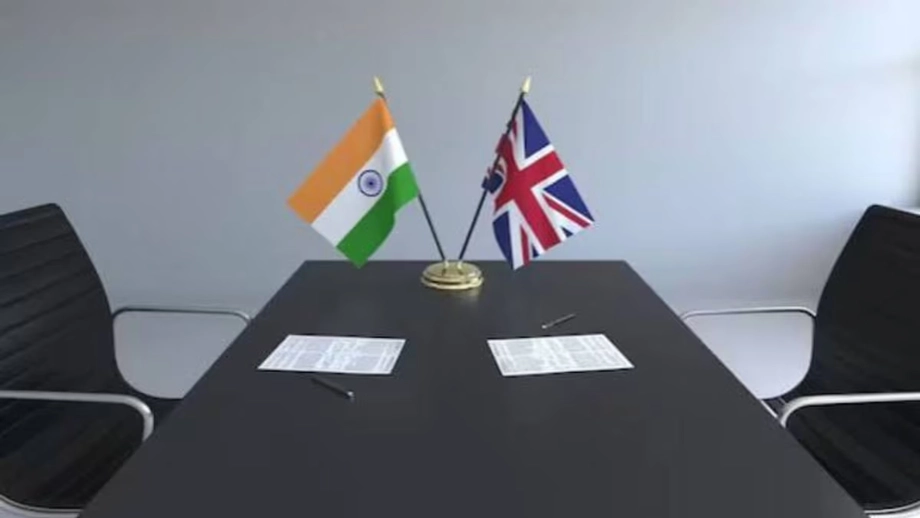
Washington has proposed a tariff of up to 25 per cent on Indian goods, with a lower rate of 17 per cent available if New Delhi signs a trade agreement with the United States. The Office of the United States Trade Representative published the proposal on Wednesday and grounded it in a finding that India's policies on structural excess capacity in manufacturing are unreasonable and burden American commerce.
Contents
- A discount rate with a signature attached
- What Washington investigated
- How the rates would reach a port
- Which exports are spared and which are exposed
- How India compares with its competitors
- What India would have to change
- India's answer: we make what we consume
- Exporters want certainty more than a one point edge
- A trust problem underneath the deal talks
- Oil, a ship off Oman and an unclaimed ceasefire
- What happens next
- Key Points
India's trade ministry said late on Wednesday that it was examining the notice. It added that India had told Washington during the investigation that it has no structural excess capacity in any sector.
The gap between the two rates matters because of who sits where. Bangladesh, Cambodia and Indonesia face 18 per cent in the sectors that compete most directly with India. Vietnam faces 20 per cent if it finalises a deal. China faces 20 per cent on goods already carrying duties from Trump's first term. At 17 per cent, an Indian exporter of shirts or frozen shrimp would hold a small edge over almost every rival in its market.
That edge is thinner than it looks. India and the US agreed an 18 per cent rate in a framework for an interim deal in February, before the Supreme Court struck down Trump's use of emergency powers under the International Emergency Economic Powers Act to impose tariffs across the world. That ruling collapsed the framework back to a 10 per cent baseline and sent both sides back to the table.
The proposal is not final. Whether it lands at 17 or 25 per cent depends on an agreement that has not been signed, and on which products end up covered.
What Washington investigated
The rates flow from investigations opened under Section 301(b) of the Trade Act of 1974, which lets the US trade representative examine whether a foreign government's acts and policies are unreasonable or discriminatory and burden US commerce. The trade representative may start such a case without a complaint from industry, under Section 302(b) of the same law.
Sixteen economies were named last March, according to USTR's March 2026 announcement: China, the European Union, Singapore, Switzerland, Norway, Indonesia, Malaysia, Cambodia, Thailand, Korea, Vietnam, Taiwan, Bangladesh, Mexico, Japan and India. Consultations were requested with all sixteen governments. The docket for comments opened on 17 March 2026, written submissions and requests to appear were due by 15 April 2026, and hearings began on 5 May 2026.
US Trade Representative Jamieson Greer framed the cases as a defence of American factories:
The United States will no longer sacrifice its industrial base to other countries that may be exporting their problems with excess capacity and production to us. Today's investigations underscore President Trump's commitment to reshore critical supply chains and create good-paying jobs for American workers across our manufacturing sectors.
The agency has since concluded that 14 of the economies it examined have built up structural excess capacity in manufacturing.
How the rates would reach a port
Most Indian goods have faced an extra 10 per cent US duty since 24 July, imposed after a separate Section 301 investigation into forced labour. The new tariff would be calculated net of existing Section 301 duties rather than stacked on top of them, and a senior US trade official said importers would pay whichever rate is higher. The practical effect is a rise of seven percentage points at 17 per cent, or 15 points at 25 per cent.
Goods already covered by national security tariffs under Section 232 keep their current treatment. Steel, aluminium, copper, cars, auto parts and heavy vehicles are on that list, so those consignments would not meet the new rate.
The proposal now enters a comment period. Written submissions and requests to appear at a hearing are due on 5 January 2027, and public hearings open on 25 January 2027 at the US International Trade Commission in Washington. The same official said the tariffs are unlikely to take effect before January.
Which exports are spared and which are exposed
An exemptions annex published with the proposal decides the product question, and measured against US import figures for 2025 it spares India's two largest categories: generic pharmaceuticals and smartphones. India says both are already outside the current 10 per cent levy, and they are the categories that have kept its export numbers up.
Sectors that employ large numbers of workers are not spared. Jewellery, apparel, shrimp and solar modules face rates of up to 25 per cent. Medical devices, which the investigation named as one of India's problem sectors, are also missing from the exemptions list, as are most engineering goods that fall outside the Section 232 categories.
The trade representative is also asking for views on a mechanism that would admit a set volume of textile and apparel imports at a reduced rate, a detail that matters to clothing and home textile exporters.
How India compares with its competitors
Rates proposed for the economies that compete with India in the most exposed sectors:
- Apparel and textiles: Bangladesh and Cambodia 18 per cent; Vietnam 20 per cent with a deal, up to 35 per cent without one.
- Shrimp and seafood: Indonesia and Thailand 18 per cent; Vietnam 20 per cent.
- Solar: Cambodia, Malaysia and Thailand 18 per cent.
- European Union, Japan and Switzerland: 15 per cent including existing most-favoured-nation duties, rising to as much as 20 per cent.
- South Korea and Taiwan: 15 per cent, with a ceiling of 25 per cent.
- China: 20 per cent on top of duties imposed in 2018, rising to 40 per cent if a trade truce expiring on 10 January comes apart.
Without a deal, India's 25 per cent ceiling matches Cambodia, Indonesia, Malaysia and Thailand. At 17 per cent, the advantage is one to three percentage points, which a buyer comparing three quotes on the same afternoon will notice.
What India would have to change
The US trade representative says any agreement must be "responsive to the determinations" in the investigation. Those determinations name India's industrial plans, including Make in India and the Production Linked Incentive scheme, its labour protections, "financial repression" through directed lending, barriers to market access, and imports and investment coming from China.
Greer put the wider case in terms of industrial strategy:
For decades, many of our trading partners have adopted industrial strategies built on targeting manufacturing, wage and labour suppression, financial and other support, non-market economy inputs, and other market-distorting practices that tilt the trade balance in their favour while eroding America's manufacturing base.
The agency's report on India's practices, titled India's Acts, Policies, and Practices Relating to Structural Excess Capacity and Production in Manufacturing Sectors, says India generates trade surpluses in pharmaceuticals, steel and ICT goods, which it reads as a dependence on Indian manufacturing in key sectors. The agency is also consulting on whether countries should negotiate a plurilateral agreement on excess capacity.
India's answer: we make what we consume
In comments summarised in the notice, India argued that Make in India and the Production Linked Incentive schemes aim at self-reliance and at cutting dependence on a few countries for inputs, and "should not be viewed through the lens of creating manufacturing capacity untethered from demand".
Abhik Sengupta, a task force observer on the Committee on Strategic Trade and Market Access at the Helsinki Geoeconomics Society, said the diagnosis does not fit the economy it has been applied to:
USTR is applying to India a diagnosis built for a very different economy. India consumes most of what it produces and buys more goods from the world than it sells, so it is not exporting a domestic glut.
Sengupta said India's reliance on Chinese inputs points to gaps in its industrial base rather than a surplus, and that penalising India for closing those gaps risks pushing supply chains back toward the economies Washington is most worried about.
Exporters want certainty more than a one point edge
Pankaj Chadha of the Engineering Export Promotion Council of India said shipments from India take up to 60 days to reach the US, which raises the risk that consignments dispatched under the current regime arrive after a higher rate takes effect.
It has to be decided between the buyer and seller, to what extent each would bear the burden of the additional tariff.
Textile exporter Sanjay Jain said the duty now stands at 10 per cent and any increase hurts, even if India negotiates the 17 per cent rate.
Any increment is a clear negative for an exporter. These everyday ups and downs make business very difficult as the buyer is not certain about his landed cost, and he sort of delays his buying decisions till the last moment. This definitely disturbs trade and the flow of trade.
Jain said stability counts as much as a competitive rate, and that the government would have to weigh the concessions Washington wants against the advantage India could win over competing suppliers. Kumar Duraiswamy, joint secretary of the Tiruppur Exporters' Association, said the announcement landed just as exporters were seeing some stability after disruptions from tariff uncertainty, container shortages, higher freight and tension in West Asia, and that the US allegations did not reflect conditions on the ground.
A trust problem underneath the deal talks
Ajay Srivastava, founder of the Global Trade Research Initiative, called the two rates a bargaining device rather than an assessment of capacity.
Offering India a 17 per cent deal rate (versus 25 per cent without a pact) is a calculated bait designed to show a marginal 1-3 per cent tariff edge over rivals like Bangladesh, Vietnam, and China rather than an objective assessment of overcapacity.
Biswajit Dhar, a trade expert and former professor at Jawaharlal Nehru University, said the finding raises questions about the trust the talks rest on.
There is a fundamental lack of trust that the US demonstrates towards India. We have gone through all procedures during the Section 301 investigation. The government has given evidence that there is no excess capacity. Even after that, the US government doesn't want to listen.
Dhar said India should seek a commitment that Washington will not impose further duties through other instruments, and asked what guarantee exists that new allegations will not follow.
The Global Trade Research Initiative's own report says the proposal recreates the reciprocal tariff regime under a new name, with two rates that reward countries which sign. It flags possible excess capacity in seven Indian sectors: solar modules, petrochemicals, steel, textiles, health related goods, construction materials and automotive products. India's solar module capacity, it says, is nearly three times domestic demand. The report calls "tariff relief without reform" the central flaw, since a country could win lower duties without changing the industrial conditions the investigation cited, and urges India to answer the allegations sector by sector, defending expansion on domestic demand, export customers and future needs.
Oil, a ship off Oman and an unclaimed ceasefire
The tariff file is not the only weight on the relationship. A new US law opens the way to duties of up to 100 per cent on Indian goods over New Delhi's purchases of Russian crude. Those purchases have fallen in recent months as global crude prices dropped and supplies from Saudi Arabia increased.
Bilateral ties carry scars from the past year. A US military attack on a ship off Oman killed three Indian seafarers, and India rejected Trump's repeated claim that he brokered a ceasefire between India and Pakistan.
Trade has held up regardless. India's goods exports to the United States rose 14.5 per cent to $59.5 billion between April and October, and the US remains India's largest export market. The rupee, though, fell close to record lows in October, and analysts say a failure to reach a deal could hurt businesses, dent market sentiment and weaken the currency further. India's red line in the talks is farm goods: dairy, poultry, rice and wheat should stay outside any commitment to open its market.
Narendra Modi is expected to meet Trump at the G20 leaders' summit in Florida next month, a meeting that could decide whether the 17 per cent rate becomes real.
What happens next
- 17 March 2026: the docket for the excess capacity investigations opens.
- 15 April 2026: written comments and requests to appear at the first hearing are due.
- 5 May 2026: hearings in the investigations begin.
- 25 November 2026: the 25 per cent and 17 per cent rates are proposed.
- 5 January 2027: comments on the proposal are due.
- 25 January 2027: public hearings open at the US International Trade Commission in Washington.
- Next month: Modi and Trump are expected to meet at the G20 summit in Florida.
No date has been set for a final determination, and no text of a trade agreement has been published. The trade representative will consider comments before any final action, and officials say the tariffs are unlikely to take effect before January.
Key Points
- The US has proposed tariffs of up to 25 per cent on Indian goods, or 17 per cent if India signs a trade agreement.
- Most Indian goods already pay an extra 10 per cent, and importers would pay whichever rate is higher, a rise of 7 or 15 percentage points.
- Generic drugs and smartphones are exempt; jewellery, apparel, shrimp and solar face up to 25 per cent.
- Bangladesh, Cambodia and Indonesia face 18 per cent; Vietnam and China 20 per cent; the EU, Japan and Switzerland 15 per cent.
- The rates follow Section 301 investigations opened in March 2026 into 16 economies, including India.
- India says it has no structural excess capacity and is examining the notice.
- Comments are due 5 January 2027 and hearings start 25 January 2027; tariffs are unlikely before January.
- Exports of Indian goods to the US rose 14.5 per cent to $59.5 billion from April to October.