A Closed Briefing and No Smoking Gun
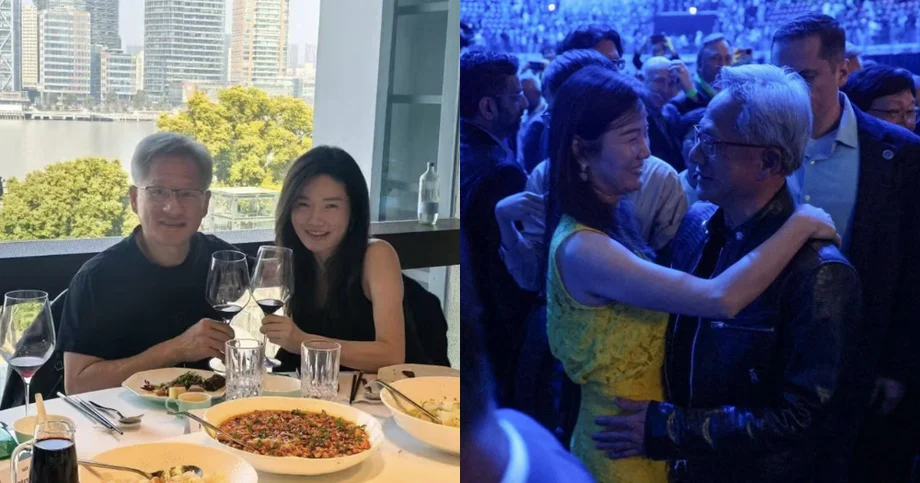
Alice Huang may not have been a Chinese spy sent to cultivate Jensen Huang after all. US officials told congressional staffers at a confidential briefing on Nov. 24 that the intelligence gathered so far holds no "smoking gun" proving she was a genuine agent of China's Ministry of State Security, and that her relationship with the Nvidia chief executive may have been genuinely romantic. The two Huangs are not related.
Contents
- A Closed Briefing and No Smoking Gun
- What US Intelligence Says About Alice Huang
- Rubio's Memo and the Warnings Set Aside
- How the Chip Investigation Began
- Singapore: A Held Passport, a Ban and a Missing Answer
- The Blacklist, Alibaba and a 4.2 Billion Dollar Prepayment
- A Paper Trail of Servers Inside China
- The Hong Kong Trading Company
- Why an Affair Became a Compliance Problem
- Huang's Return and the Questions Still Pending
- Key Points
The session ran about two hours for staff of the House and Senate intelligence committees, a day after Nvidia's board put Jensen Huang back in charge. Officials said the assessment rests on present information and could change as more is collected. They called her suspected links to Chinese intelligence "circumstantial", and some noted that Chinese business leaders are often required to remain in contact with state officials, a habit that can resemble espionage when viewed from Washington.
The criminal investigation that grew out of the affair concerns chips rather than romance, and it remains open. On the same day the board restored Huang, the Commerce Department added Alice Huang's former employer, Singapore based Megaspeed International, and several companies tied to it to a trade blacklist.
What US Intelligence Says About Alice Huang
Alice Huang, also known as Huang Le, was a senior executive and later chief executive of Megaspeed International, a Singapore registered cloud computing company that rents out data centre capacity across Southeast Asia and became one of Nvidia's largest customers in the region. Corporate records place her earlier in a career as a television reporter in China.
US intelligence agencies established that she was in contact with an officer of the Ministry of State Security, China's main civilian spy service, from at least spring 2025 into autumn 2026, a span that overlapped her relationship with Jensen Huang. Kang Wei, described in corporate filings as her husband, had more extensive ties to the same agency, and the Nov. 24 briefing confirmed an earlier finding that he was an MSS asset. Congressional staffers were also told the MSS may have surveilled Alice Huang and sought information from her once the affair began.
What the agencies have not established is that she was given the job of collecting information on Jensen Huang, or that she handed over material of real value. Chinese law complicates the picture for investigators: citizens are obliged to assist intelligence services when called upon, so an executive can be useful to Beijing without ever being formally recruited. Officials have described the practical difficulty as separating a trained espionage agent from an asset who does not know what he or she is doing.
Rubio's Memo and the Warnings Set Aside
Concerns about Alice Huang were written up this spring in a classified memo drafted by Secretary of State and National Security Adviser Marco Rubio, which summarized intelligence that included intercepted communications involving her. Its purpose was to make sure senior officials deciding policy knew about the counterintelligence risk created by her contact with the head of the world's most valuable chipmaker.
The distribution list was short and senior: Vice President JD Vance, Treasury Secretary Scott Bessent, Commerce Secretary Howard Lutnick, US Trade Representative Jamieson Greer, then Director of National Intelligence Tulsi Gabbard, CIA Director John Ratcliffe and senior White House staff. Trump was briefed separately at least twice, according to people familiar with the matter, and declined to act on either occasion.
Lawmakers on the intelligence committees asked to see the memo during the Nov. 24 briefing and did not receive it, people familiar with the session said. The gap between what the executive branch knew in the spring and what it did in November is now part of the argument on Capitol Hill about why Huang was allowed back so quickly.
How the Chip Investigation Began
The export case against Megaspeed predates the espionage story by more than a year. The Commerce Department's Bureau of Industry and Security, which polices who may receive sensitive American technology, opened its inquiry in 2024 after monitoring for the diversion of advanced semiconductors turned up suspicious activity. Export controls are rules that limit which buyers, and which countries, may receive particular technology without a government licence; for AI chips, the licence is usually the whole point of the transaction.
- 2024: Commerce opens a probe into Megaspeed over possible export control violations.
- May 2025: Investigators ask Nvidia for records of direct and indirect sales to Megaspeed.
- June 2025: Nvidia places Megaspeed on its "no sell" list.
- June 24, 2025: BIS agents and Singapore law enforcement conduct an on site end use check at Megaspeed and interview Alice Huang; Singapore police question her the same day and impound her passport.
- August 2025: She leaves Megaspeed, the company says.
- Oct. 29, 2026: The first spy allegations become public, naming her and Megaspeed.
- Nov. 12, 2026: Jensen Huang resigns as Nvidia's chief executive after acknowledging infidelities.
- Nov. 23, 2026: The board reinstates him; Commerce blacklists Megaspeed and affiliates.
- Nov. 24, 2026: Intelligence officials brief congressional staffers.
Megaspeed bought more than US$4.8 billion of Nvidia chips over two years, according to figures reported at the time. The Justice Department's National Security Division has since taken the lead in the criminal investigation, and a second buyer of Nvidia hardware, Super Micro Computer, has been under FBI scrutiny for more than a year over suspected export violations.
Jay Clayton, the Director of National Intelligence, was asked on ABC News whether Alice Huang had passed information to the Chinese government. He said an investigation exists, without predicting its result.
There is an investigation ongoing into her firm and into her.
Singapore: A Held Passport, a Ban and a Missing Answer
Singapore opened its own inquiry after the June 2025 visit, when it learned for the first time that Washington was interested in Megaspeed and its chief executive, according to the Ministry of Home Affairs. Police concluded that there was insufficient evidence Alice Huang had committed any offence, but barred her from re-entering the country for giving inaccurate information that played down her role at the company, a formal warning the ministry disclosed on Nov. 12.
Prime Minister Lawrence Wong set out both the limits of that inquiry and his frustration with the American side during a visit to Australia from Nov. 23 to 25. Singapore, he said, had done what it could with the woman in front of it.
We took her in, we investigated her, but we eventually released her because there was no basis for further prosecution.
Wong said Singapore had asked Washington for details about the chips and the buyers, with limited success. "We did ask for some information. Not all of it was forthcoming." He also corrected a common assumption about the shipments.
The chips that they bought from NVIDIA did not even enter Singapore. The chips were routed through Singapore to other countries.
Wong drew a careful line on enforcement. "America has export controls on its chips. We do not enforce America's export controls. But we do not want Singapore to be used and abused as a conduit by companies who circumvent America's export controls." His government said it would keep investigating Megaspeed and would act firmly if Singaporean law had been broken.
The Blacklist, Alibaba and a 4.2 Billion Dollar Prepayment
The Entity List entry on Nov. 23 means Megaspeed needs a US licence to receive American exports, and such licences are likely to be refused. Five other companies connected to the cloud firm joined it, including its owner Swiftdata and its Malaysian subsidiary Speedmatrix, which listed assets of about 8.8 billion ringgit (US$2.14 billion) at the end of 2024 and pledged its entire business as collateral in the Alibaba deal.
Commerce also added Apex Enterprise Solutions, Alibaba's Singapore subsidiary, to the list. Apex had paid roughly US$4.2 billion to Megaspeed and other companies as a prepayment to rent computing capacity in Southeast Asia, and in return secured some of their assets as a pledge, according to a person familiar with the arrangement. Alibaba rejected the designation and said it would fight it.
Adding Apex Enterprise Solutions to the Entity List is erroneous because Apex has never diverted advanced computing chips subject to US export restrictions.
Lawmakers from both parties used the moment to attack the Commerce Department's pace. Senator Pete Ricketts, a Nebraska Republican, wrote on X that the department "still needs to explain to Congress why this took so long", and Senator Maria Cantwell, a Washington Democrat, said the blacklisting "does not absolve Commerce from answering to Congress". Treasury Secretary Bessent had made the same case earlier, pressing the department over what Nvidia knew about its customer.
The real story here should be: Did Nvidia know their client and was there a robust effort at Nvidia to make sure that there was no leakage and that they were selling to what were obviously pass-through shell companies?
A Paper Trail of Servers Inside China
Filings in a Chinese central bank credit registry, which tracks equipment pledged to secure loans, identify up to 764 AI servers and modules worth US$270 million, along with US$31 million of networking gear used to link them into large computing clusters. Much of the hardware is listed at a vast data centre in Shanghai developed by gaming company Century Huatong, which counts Tencent as a roughly 10 per cent shareholder.
One borrower stands out. Century Litong, an Nvidia preferred cloud partner that rents servers by the hour, recorded five leasing arrangements covering up to 512 servers with a declared value of 1.42 billion yuan (US$200 million) between May and December 2024. A separate transaction covered 128 servers worth US$57 million, financed by an arm of AVIC, the state backed aviation and defence group, and leased to Century Litong. Another deal described 128 servers holding eight graphics processors each, 1,024 chips in total, valued at up to US$450,000 apiece.
Corporate records connect Century Litong and its relatives to Alice Huang's family. Her sister, Huang Yu, and Kang Wei held shares in Century Longteng, which founded Century Litong, and Kang was named its executive director in a 2022 government announcement. A site in Wuhu, about 300 km inland from Shanghai, pledged 252 AI computing modules against a US$70 million loan in April 2026. Inventories at the Shanghai facility listed more than 10,000 Nvidia ConnectX-7 networking cards and 730 BlueField-3 units.
Tencent denied any involvement in the arrangements. A spokesperson said the company never owned or operated the Yangtze River Delta data centre project, that its investment in Century Huatong was for gaming, and that "Tencent has never entered into or otherwise had any commercial relationship with Megaspeed or any of its subsidiaries". The registry filings do not show that the servers contained chips barred from export to China, or how and when the equipment entered the country.
The Hong Kong Trading Company
A second set of records traces goods moving between companies Alice Huang was involved in on both sides of a transaction. VFO International Group, a Hong Kong company she owned, supplied Nvidia branded networking equipment and computer components. Trade data identifies 105 deals linked to VFO, 90 of them naming PT Megaspeed International Indonesia as buyer, with movements logged from May 2024 to February 2026, plus ten naming Speedmatrix between June and August 2025. Thirteen entries run the other way, with VFO as the buyer from the Indonesian unit.
Huang transferred her VFO shares to a British Virgin Islands company, Linden Vale, on April 10, 2025, and resigned as a director on June 23, 2025, the day before US officials arrived at Megaspeed and Singapore police interviewed her. The company was renamed Pine Vale (HK) on Aug. 11, 2025. The filings do not disclose the price paid for her shares or whether she remains the ultimate owner.
Themin Suwardy, an associate professor of accounting at Singapore Management University, said such dealings inside a corporate group are routine and not illegal in themselves. Where one person holds senior roles in separate businesses with different shareholders, he said, disclosure and arm's length pricing become the safeguard, and private firms rarely publish either.
Why an Affair Became a Compliance Problem
Chip sellers depend on assurances from buyers about who will use their hardware and where. Dan Fisher-Owens, an attorney at the firm Berliner Corcoran & Rowe, explained what investigators would want to establish once those assurances are in doubt.
Government investigators likely would want to know, notwithstanding whatever formal assurances were exchanged between the parties, what anyone at Nvidia actually knew about the end use and end users of the chips.
That is why the relationship, rather than the spying label, created the sharper problem for Nvidia's board. If the chief executive knew more about Megaspeed's business than the compliance file reflected, the company's legal exposure grew. The FBI had delivered at least two "defensive briefings" to Nvidia leadership on Chinese espionage methods, according to a law enforcement official, though it is unclear whether those sessions were routine for large technology firms or specific to this case, and whether Jensen Huang attended.
Kevin Carroll, a former undercover CIA operations officer, said such briefings exist chiefly to protect national security and can turn into a criminal inquiry if warnings go unheeded. Steve Cash, a former CIA officer who now heads an association of former national security officials, argued that the response went around normal practice.
No formal Justice Department investigation into the national security allegations has been reported. That's alarming, if unsurprising.
Nvidia's board opened its own review. A committee of independent directors, assisted by outside counsel, was given the task, and the board said it had no reason to believe company secrets or national security had been compromised. Company spokesperson John Rizzo put the position in one line.
We trust that if we were the target of a genuine threat, the U.S. government would have notified us.
Huang's Return and the Questions Still Pending
Jensen Huang admitted the affair in a message to employees before he left. "I was unfaithful to my wife," he wrote. "There is no excuse for what I did. I am deeply sorry." He resigned on Nov. 12, and the board ruled out his return during an earnings call five days later before reversing itself on Nov. 23, after what it described as input from senior levels of the US government.
Attorney-General Todd Blanche concluded there was no evidence Huang had broken any law, a judgment drawn from the department's investigations into Nvidia's customers rather than from any inquiry into the executive himself. No counterintelligence investigation of Jensen Huang was opened. At a press conference on Nov. 24, Blanche defended the company and refused to explain the reasoning.
I have no reason to stand up here and say Nvidia is anything other than a good corporate citizen.
Vance, speaking in Ohio on Nov. 25, said the administration had been told the chief executive was in the clear. "We were told that he was under no investigation," he said, adding that he had seen no evidence of a crime and that no pardon would be needed. Trump had earlier described Huang as "a very high quality person" and, asked about Alice Huang, said: "I don't know that she is a spy."
Congress is not satisfied. Huang and Nvidia general counsel Tim Teter are due to give transcribed interviews to three House committees on Dec. 1 and Dec. 2, and Huang is scheduled to appear at a public Senate Banking Committee hearing on Dec. 3. The Republican chairs of the House foreign affairs, intelligence and China committees said they remain committed to getting answers on "the mass smuggling of Nvidia products", while Representative Brian Mast has demanded Commerce hand over data from its chip smuggling inquiry. Senator Elizabeth Warren framed the question the administration has not answered.
Mr. Huang, Nvidia executives, and the company's board still owe Congress answers about the company's compliance with U.S. export controls.
Other authorities are moving in parallel. California Attorney General Rob Bonta has opened an inquiry tied to the company's disclosures, the Securities and Exchange Commission is reportedly investigating, and short sellers have complained that Nvidia stopped breaking out its Singapore exports in financial filings after journalists raised questions about diversion. Nvidia reported quarterly profit of US$59.69 billion in August, and has said it will stop selling licensed chips to China, hire its first compliance officer and form a board committee on export controls. New US rules now bar large data centres that buy American chips from serving customers in China.
What remains undecided is the central question of intent. No document made public shows Alice Huang was assigned to target Jensen Huang, no charge has been filed against her in the United States, and her whereabouts are unknown. Megaspeed denies wrongdoing and says its business complies with US export rules, and Beijing has rejected the espionage claims through foreign ministry spokesman Guo Jiakun, who called them "entirely baseless" and "slander and smear". The Nov. 3 Senate hearing and the House interviews in the first two days of December are the next scheduled moments when the company and its chief executive will have to answer in their own words.
Key Points
- US officials told congressional staffers on Nov. 24 that intelligence holds no "smoking gun" showing Alice Huang was a Chinese spy, and that her relationship with Jensen Huang may have been genuinely romantic.
- Agencies did establish her contacts with a Ministry of State Security officer from at least spring 2025 into autumn 2026, and that her husband, Kang Wei, was an MSS asset.
- Marco Rubio's classified memo this spring went to Vance, Bessent, Lutnick, Greer, Gabbard and Ratcliffe; lawmakers asked for it at the Nov. 24 briefing and did not get it.
- Commerce opened its Megaspeed inquiry in 2024, sought Nvidia sales records in May 2025, and joined Singapore in an on site check and interview with Alice Huang on June 24, 2025.
- Singapore found insufficient evidence to prosecute her but banned her re-entry for playing down her role; Prime Minister Lawrence Wong said US information was only partly forthcoming and that the chips never entered Singapore.
- Commerce blacklisted Megaspeed, Alibaba's Singapore subsidiary Apex Enterprise Solutions, Swiftdata, Speedmatrix and others on Nov. 23; Apex had prepaid about US$4.2 billion for computing capacity.
- Chinese central bank registry filings list up to 764 AI servers and modules worth US$270 million, plus US$31 million of networking gear, tied to companies linked to Alice Huang's family.
- Jensen Huang resigned on Nov. 12 and was reinstated on Nov. 23 after the board said it had input from senior US officials; Attorney-General Todd Blanche said there was no evidence he broke the law.
- Huang faces House interviews on Dec. 1 and 2 and a public Senate Banking Committee hearing on Dec. 3, alongside inquiries from California's attorney general and reportedly the SEC.