A vote after midnight, and an argument that did not end
Bangladesh's garment workers will be paid at least Tk 17,000 a month from 1 December, after the Minimum Wage Board fixed the sector's new pay structure by four votes to two in the early hours of 25 November. The lowest grade gains Tk 4,500 on the Tk 12,500 set in 2023, a rise of 36 percent in an industry that the World Bank counted at 84.6 percent of the country's exports in the 2022-23 fiscal year.
Contents
- A vote after midnight, and an argument that did not end
- Tk 17,000 against the cost of living
- Why a wage bill turns into a price tag
- A sector losing ground on price and volume
- Inside the factory: diesel, interest and idle machines
- The small factories that carry half the trade
- Workers take the money and keep marching
- The fixes that go beyond the wage
- The inflation and exchange rate roots
- Key Points
The vote was close. Employers held at Tk 17,000 and workers at Tk 18,000 shortly before 1am, and the board's chairman, Syed Azad Subhani, put both figures to the six members. The two representatives of workers voted for Tk 18,000. The other four, among them the neutral member, voted for Tk 17,000. Two days earlier the two sides had been Tk 6,300 apart.
Subhani described a slow, separate track of talks. "During the discussions, I spoke separately at times with the employers' side and at times with the workers' side, and even created opportunities for employers and workers to hold separate talks between themselves," he said.
The board worked to a month:
- 1 November: the government forms the six-member Minimum Wage Board.
- 4 November: first meeting.
- 9 November: workers open at Tk 32,000.
- 23 November: employers open at Tk 15,000. Workers cut their demand to Tk 25,000, employers move to Tk 15,500, workers to Tk 22,000, and employers close the day at Tk 15,700.
- 24 November: talks start at 3.15pm and run into the night. Employers reach Tk 17,000, workers Tk 18,500, then Tk 18,000.
- 25 November: the vote settles the minimum at Tk 17,000. The new rates apply from 1 December, with revised pay reaching workers from January.
Every grade rises by more than a third, and by about 40 percent on average:
- Grade 1: Tk 21,500, up 43 percent from Tk 15,035.
- Grade 2: Tk 20,000, up 40 percent from Tk 14,273.
- Grade 3: Tk 19,200, up 42 percent from Tk 13,550.
- Grade 4: Tk 17,000, up 36 percent from Tk 12,500.
One clause protects individual workers from the averages. Anyone whose current pay, increments included, already matches the new grade rate must still receive at least Tk 2,000 more a month. A Grade 3 worker on Tk 18,000 would otherwise have gained Tk 1,200 from the move to Tk 19,200, and will now gain Tk 2,000. Fewer than four weeks separated the board's creation from its verdict.
Tk 17,000 against the cost of living
Centre for Policy Dialogue research puts the poverty line wage for a family of four at Tk 18,578 a month and a minimal decent living wage at Tk 24,204. The new minimum is Tk 1,578 short of the first and Tk 7,204 short of the second. It clears the Tk 16,351 needed to restore the purchasing power of Tk 12,500, and little more than that.
The 36 percent step is also the smallest in the published series of revisions, which began with 48 percent in 1994 and reached 56 percent in 2023. The minimum moved from Tk 930 in 1994 to Tk 1,663 in 2006, Tk 3,000 in 2010, Tk 5,300 in 2013, Tk 8,000 in 2018 and Tk 12,500 in 2023.
Md Rubaiyath Sarwar, managing director of Innovation Consulting and a trustee of the Panama Institute, used the Anchor Living Wage, an international method for pricing what a worker needs to live on in each country, to show the distance left to travel. At Tk 12,500 a worker earned 56 percent of that benchmark without overtime and 69 percent with it. At Tk 17,000 the shares become 76 percent and 100 percent.
Taslima Akhter, president of Bangladesh Garment Sromik Samhati, separated three ideas that the debate often mixes. "There is a difference between a minimum wage, a living wage and a dignified wage," she said, adding that dignity depended on nutritious food, decent housing, healthcare and schooling for children. "If I have to eat only taro leaves to get iron, that is one thing. But we should be able to determine a food basket that meets a worker's nutritional and balanced dietary needs."
Nazma Akter, founder and president of the Sommilito Garments Sramik Federation, which counts more than 70,000 members, said workers were becoming "poorer and poorer" under the pay structure, and asked the government to steady the prices of goods and services and widen social protection.
Why a wage bill turns into a price tag
Mohammad Abdur Razzaque, chairman of Research and Policy Integration for Development, brought a number to the Voice for Reform dialogue at BDBL Bhaban in Karwan Bazar: at a Tk 17,000 minimum, garments must sell for 4 to 5 percent more to absorb the extra cost. In plain terms, for every $100 of garments a buyer now orders, the factory needs about $104 or $105 just to stand still. Manufacturers should carry that calculation into price talks. "An important opportunity for Bangladesh's future success will be securing better prices for its products through negotiations with buyers," he said.
Fahim Mashroor, co-coordinator of Voice for Reform, framed the same problem in currency. A factory sells in dollars and pays wages in taka, so the exchange rate decides how far a dollar of export earnings stretches. His model assumes wages take half of export revenue and profit runs at 5 percent: a 50 percent wage rise then needs a 25 to 29.5 percent adjustment in the value of the taka, which works out at about Tk 158.3 to the dollar against Tk 124.4 now. Paying the full added cost without other help would take an adjustment of 18 to 20 percent, to roughly Tk 147 to Tk 150.
The 2023 round shows the mechanism at work. The entry wage rose 56 percent, from Tk 8,000 to Tk 12,500, while the dollar rose about 15 percent between January 2023 and June 2024. Much of the extra taka cost was covered by the extra taka earned on each export dollar. In the past 12 months the taka has slipped only about 1.7 percent, so that cushion is gone.
The dialogue, titled Workers' Wages and the Sustainability of the Industry: Where Is the Balance, What Are the Solutions, drew economists, garment entrepreneurs and labour activists, among them BGMEA director Faisal Samad.
A sector losing ground on price and volume
Mashroor's figures on trade are blunt. Net garment exports fell 2.5 percent in 2025-26, with woven down 0.6 percent. Total exports rose 1.5 percent in three years on revised numbers, from $38.14 billion in 2022-23 to $38.70 billion. In July to September, Europe's apparel imports grew 9.8 percent while Bangladesh's shipments to Europe fell 2.5 percent, a decline larger than the growth of the market.
Price is not buying market share either. Bangladesh earns $3.07 a unit in the United States against $3.59 for Vietnam, and €13.70 a kilogram in Europe against a market average of €19.59 and €28.58 for Vietnam. Even at those lower prices, volume to the United States fell 3.65 percent.
Over a longer stretch export earnings rose from $4.8 billion in 2000 to $38.82 billion in 2025, a compound annual growth rate of 8.72 percent, according to a 2026 sector study. Since the 2022 peak the same data show a compound annual decline of 5.29 percent. The baseline projection puts exports at $48.61 billion by 2030, with an optimistic path above $53 billion and a weak one near $44 billion. The study also records that the share of garment jobs held by women has fallen from 80 percent to about 60 percent, with roughly half a million women leaving the sector.
BGMEA's comparison of statutory minimums puts Bangladesh at about $137 a month, above Pakistan at $130, India at $113 and Myanmar at $97, and below Vietnam at $149, Indonesia at $139, Cambodia at $210 and China at $277. The same trade body calculates that the minimum has risen 221 percent from the Tk 5,300 base, against 54 percent in Vietnam, 50 percent in Cambodia and 59 percent in India.
Inside the factory: diesel, interest and idle machines
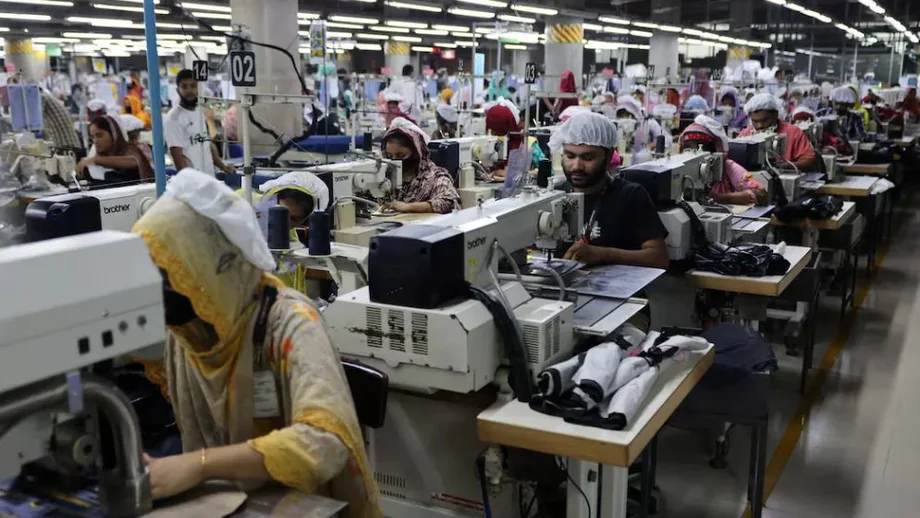
Faisal Samad, a BGMEA director, put monthly payroll costs on the table. From December, a small factory's wage bill rises by Tk 20 lakh to Tk 25 lakh, some by Tk 1 crore to Tk 1.5 crore, and large factories by Tk 4 crore to Tk 5 crore. A lakh is 100,000 and a crore is 10 million, so the largest of those increases is Tk 40 million to Tk 50 million a month. He cited direct labour of about 42 cents a garment in Bangladesh, against 31 cents in Vietnam, 36 in Pakistan and 38 in India.
Mijanur Rahman, a BGMEA vice president for finance, said the Tk 4,500 rise understates the bill, because overtime, attendance bonuses and other benefits could lift a worker's monthly earnings to Tk 25,000. The industry already carries more than Tk 2,400 a worker in added expense under the old structure, by the association's count.
Mohammad Akhtaruzzaman, a former chairman of BGMEA's compliance committee, estimates that a 40 percent average rise could push factory overheads up by as much as 60 percent once overtime and bonuses are counted. A worker on Tk 17,000 can earn another Tk 8,000 in overtime, taking the monthly cost to the factory to about Tk 26,400. He estimates that at least 20 percent of the industry's $40 billion annual turnover, some $8 billion, goes to wages, about Tk 99,800 crore at Tk 124.75 to the dollar.
The association's cost model shows why productivity matters as much as pay. Making a garment that takes 15 standard minutes of work costs $0.416 in labour in Bangladesh, against $0.378 in India, $0.364 in Pakistan, $0.314 in Vietnam, $0.542 in China and $0.624 in Cambodia. The model assumes production lines run at 45 percent efficiency. At 60 percent, the same garment would cost $0.312, close to Vietnam.
Md Shehab Udduza Chowdhury, a BGMEA vice president, put the survival question directly. "Who will pay workers their fair wages? Many people talk about it, but neither the government nor anyone else pays these wages. The owners have to bear the cost. Considering workers' expenses and the industry's costs, the condition of garment factories is not good. The question now is whether this industry will survive," he said. He asked for the central bank's support circulars to be carried out and for an orderly way out for factories that cannot keep going.
The small factories that carry half the trade
Rubana Huq, a former BGMEA president who joined the dialogue by video link, said the recent unrest shut many factories for 20 to 23 days with no relief on the wage bill, and that the current cost structure leaves many units unprofitable. She warned that closures of small and medium factories would add to unemployment.
Her figure on concentration matters most. Factories exporting less than $5 million a year account for 51 percent of the country's total garment exports. A wave of closures among them would take out half the trade.
Mahmud Hasan Khan, the BGMEA president, told a webinar organised by the Power and Participation Research Centre that 669 factories were affected by the recent protests, some closed for 21 days, and that 287 factories have shut in the past three years. Only about 2,200 of BGMEA's 7,163 member factories are exporting at present, he said. "If someone says wages should be equal to Vietnam's, I have no problem paying the same as Vietnam. But you have to give me infrastructure like Vietnam."
BGMEA fears that 500 to 600 factories could run into difficulty within a few months without policy support. Its survey of 317 factories that halted production for one to 16 days in November put losses at $428 million in free on board value, with $254 million of confirmed orders moved to other countries and 59 million pieces diverted. More than 600 factories were affected, the survey ran while the unrest continued, and the association said the true figure was higher.
Workers take the money and keep marching
Babul Akhter, one of the two worker members of the board, asked workers to return to their factories. "Although we are not completely satisfied, the outcome is not entirely bad either. Previously, workers used to get a wage revision every five years, but this time they are getting a revised wage after three years," he said.
Others rejected the figure. IndustriALL Bangladesh Council, a platform of 17 federations, said Tk 17,000 did not reflect what workers expected and that its own bargaining had fallen short, while urging members back to work. Mushrefa Mishu, a labour leader, rejected the wage outright.
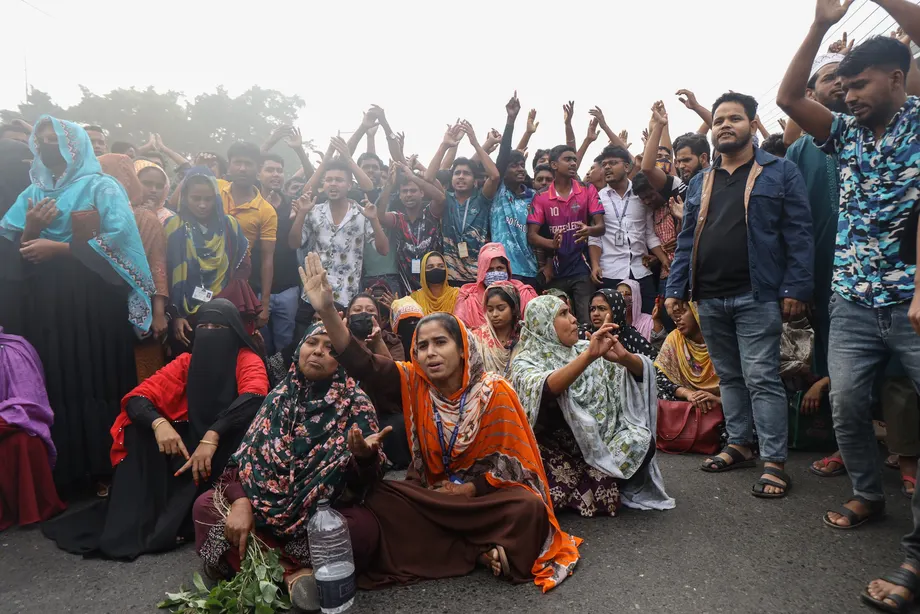
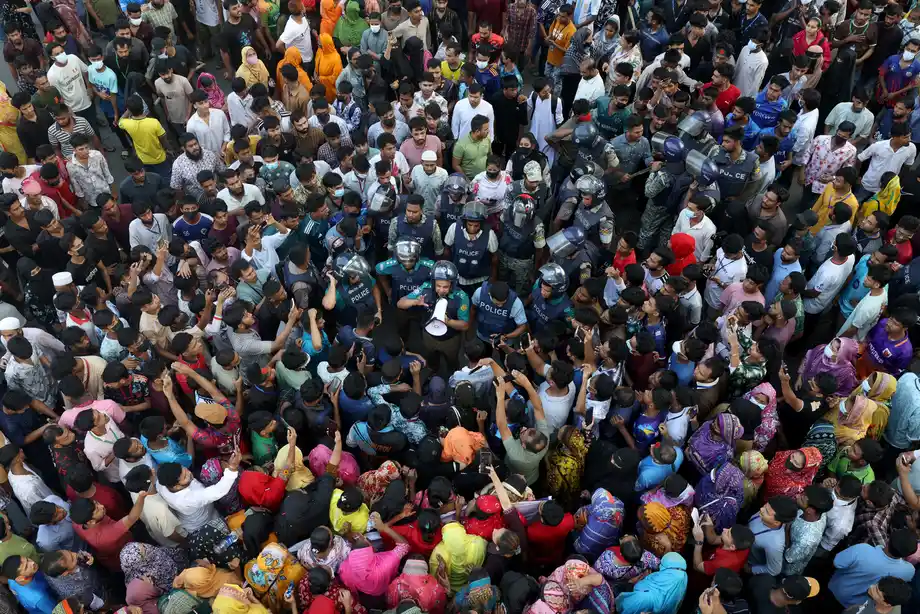
The streets did not empty. Industrial police reported holidays declared at 70 factories around Gazipur's Bhogra Bypass, Chowrasta and Konabari areas, 32 of them shut indefinitely, and 24 in Ashulia, of which 20 closed under Section 13(1) of the Bangladesh Labour Act, a provision employers use to suspend work. Protesters pulled furniture from a police box at Gazipura on the Dhaka to Mymensingh highway and set it alight. Around 400 factories in Savar and Gazipur did not restart the day after the announcement. Home Minister Salahuddin Ahmed said a political conspiracy was feeding the unrest and that genuine workers were not involved.
The Bangladesh Garment Workers' Industrial Unity accepted the structure as a compromise and asked its members to do the same, while calling for rent controls in industrial areas, affordable electricity and gas, at least 30 kilograms of subsidised rice a month for each household, dormitories, factory ration shops and diagnostic centres.
Firoz Ahmed, a labour rights activist, said fair wages needed action from employers and government alike. After more than four decades of growth, he said, many workers still cannot keep their children with them and send them back to their villages.
The fixes that go beyond the wage
Voice for Reform built its case on the claim that the wage dispute is not a fight between owners and workers, since the crisis has cornered the whole industry. Mashroor set out seven proposals for the government:
- A phased adjustment of the taka, so that higher wages are paid out of export earnings rather than subsidy.
- Easier yarn imports, by removing land port restrictions, bank guarantee requirements and the requirement to buy local yarn.
- Regular gas and electricity for industrial zones, so fewer factories run generators on diesel and the savings can go into wages.
- Special arrangements to restructure loans when factories are sold or merged, to clear the backlog in the banking sector.
- Formalising the trade in jhut, the scrap fabric left over from cutting, where extortion is common. Mashroor puts the gain at up to 1 percent of total export value, plus lower fuel costs.
- Wage reviews every year, adjusted in line with inflation.
- Handling disputes with skill and empathy rather than police action, without blaming the movement.
On exit, his arithmetic explains why weak factories stay open. Closing a factory with 5,000 to 10,000 workers would cost more than Tk 100 crore in compensation alone, and rescheduled bank loans tip into default when a factory shuts. More than 2,000 factories chase shrinking orders, many taking work below cost, so excess capacity never clears and the price war continues. He urged an exit policy with a clear legal and financial route to closure, loan restructuring for sales and mergers, and transfers of weak factories into stronger hands without job losses.
Rubana Huq and Nazneen Ahmed, executive director of the Centre for Policy Dialogue, converged on a standing wage council that would adjust pay every year by a fixed formula rather than reopening the whole argument at intervals. Nazneen Ahmed noted that the board was formed on 1 November and had to deliver by 25 November, too short a window to head off the unrest, and that neither side was satisfied with the result. She asked the government to cut the costs that bureaucracy, corruption and extortion add to doing business.
Razzaque argued for benefits beyond the payslip. He called for the existing pilot scheme that compensates workers injured or killed at work to be strengthened, and for a social insurance system funded jointly by employers and workers covering workplace accidents, illness, involuntary unemployment and maternity protection. "Wages are not the only way to provide benefits to workers," he said. He also warned against shaping all economic policy around one industry, saying the focus on garments had left leather and leather goods and other export sectors short of attention.
The inflation and exchange rate roots
The World Bank's April 2024 update traces the squeeze. Real wages had fallen since mid-2022 as headline inflation stayed above 9 percent from August 2022, pushed by food and fuel prices, a weaker taka and higher administered prices for gas, electricity and petroleum. Industrial growth slowed from 9.9 percent in FY22 to 8.4 percent in FY23, and the index of industrial production, which includes textiles, contracted 3.7 percent in the first half of FY24.
The same update records how the foreign exchange shortage reached the factory floor. A multiple exchange rate system introduced in September 2022 discouraged inflows, rationing cut supplies of gas, energy and key inputs, and imports of intermediate goods fell 19.9 percent and capital goods 17.2 percent in FY23. The central bank raised its repo rate by 325 basis points to 8 percent by March 2024 while real rates stayed negative, and reserves stood at $20.8 billion in February 2024, or 3.3 months of import cover. The bank said it was considering a crawling peg, without a timeline.
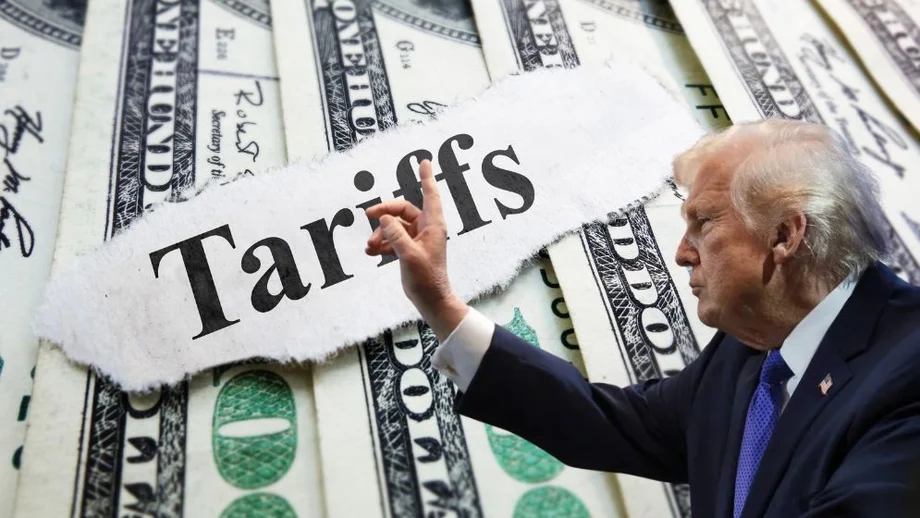
Razzaque's reading of the record is that Bangladesh let inflation run above its competitors for four consecutive years while holding the exchange rate, and paid for it in market share. "Bangladesh has paid a heavy price for losing its competitiveness under inflationary pressure. The huge volume of orders that shifted away from China after the United States imposed additional tariffs could not be captured by Bangladesh. Vietnam and Cambodia took advantage of the opportunity," he said. Weakening the taka before inflation is under control, he argued, would simply push prices up and cut real wages further, and the country has lost ground to Vietnam, Cambodia, Indonesia and India.
The International Labour Organization, in a statement on the unrest, asked all parties to use dialogue and peaceful means and to let the wage board finish its work. It cited its Minimum Wage Fixing Convention, No. 131, which calls for wage setting that is transparent and grounded in evidence, weighing the cost of living and inflation alongside productivity and the sustainability of enterprises, and offered support for a National Wage Policy.
Mahdi Amin, the prime minister's adviser for labour and employment, had set out what he expected from the board before it voted. "We hope that based on consensus among all parties on the Wage Board, a fair, rational wage aligned with workers' living needs will be fixed. Hopefully this will be done taking into account inflation, workers' living costs, industrial capacity, wages in other sectors, and the wage structures of competing countries in the international market," he said.
What remains undecided is how the extra cost is shared. No one at the board, in the factories or in government has said who absorbs it: buyers through higher prices, the exchequer through subsidies, or the currency through depreciation. Guidelines for applying the Tk 2,000 floor and placing workers in grades have not been published, and the first pay packets under the new rates are due in January.
Key Points
- Bangladesh's Minimum Wage Board fixed the garment minimum at Tk 17,000 a month by four votes to two on 25 November, effective 1 December.
- The lowest grade rises 36 percent from Tk 12,500, and Grade 1 rises 43 percent to Tk 21,500, an average increase of about 40 percent.
- The Centre for Policy Dialogue puts a living wage for a family of four at Tk 24,204, leaving the new minimum Tk 7,204 short.
- Research and Policy Integration for Development calculates that garment prices must rise 4 to 5 percent to absorb the increase.
- Voice for Reform proposes a phased taka adjustment, easier yarn imports, steady energy, loan restructuring, a formal jhut trade, yearly wage reviews and an exit policy.
- Net garment exports fell 2.5 percent in 2025-26, and Bangladesh's shipments to Europe fell 2.5 percent in July to September while the market grew 9.8 percent.
- BGMEA's survey of 317 factories put November unrest losses at $428 million, with $254 million in confirmed orders moved abroad.
- The ILO urges dialogue and backs a National Wage Policy under Convention No. 131.