A New Duty Built on One Already Being Paid
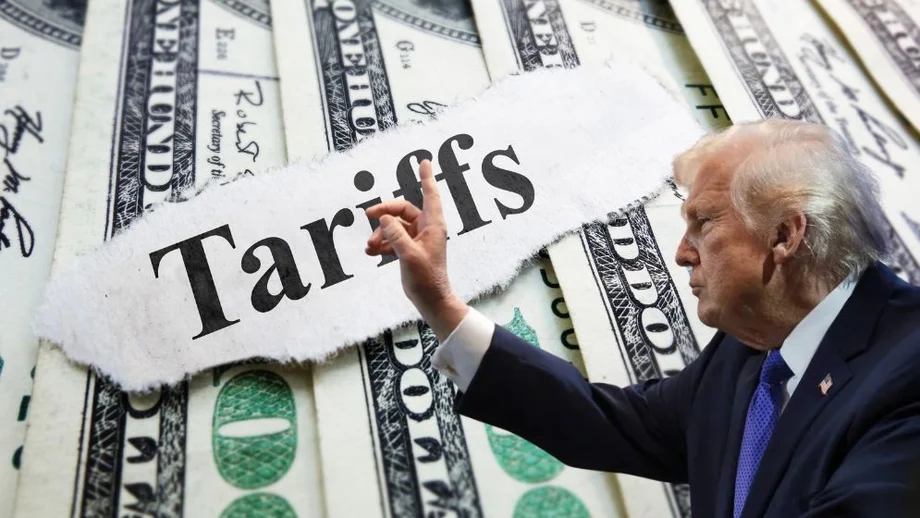
The Office of the United States Trade Representative proposed on 25 November 2026 to charge duties of up to 18 percent on goods from Bangladesh, one of 16 trading partners named in a Section 301 investigation into excess industrial capacity. The proposal exempts certain products and is open for public comment, so the rate can still change and no date has been fixed for collecting the money. Duties under the package are not expected to be charged before January or February.
Contents
- A New Duty Built on One Already Being Paid
- Why Washington Says Bangladesh Has Too Much Factory Capacity
- What 18 Percent Would Actually Add
- Bangladesh's Government Calls It Nothing New
- Where the Other Trading Partners Land
- A Legal Patchwork Rebuilt After the Supreme Court
- What US Shoppers and Voters Are Being Told
- The Dates That Decide What Happens Next
- Key Points
Bangladesh already pays an extra 10 percent on its exports to the United States under a separate Section 301 case about forced labour. That measure was announced on 23 July 2026 and took effect the next day, replacing a temporary 10 percent global tariff imposed after the US Supreme Court struck down President Donald Trump's earlier reciprocal tariffs in February. Added to the 15.62 percent most favoured nation rate that applies to Bangladeshi goods, the extra 10 percent took the total on many garment shipments to 25.62 percent.
The new proposal sits on top of that structure rather than wiping it out, and the way the two combine is the part exporters in Dhaka are watching most closely.
Section 301 comes from the Trade Act of 1974. It lets the US trade representative investigate a foreign government's policies and, if they are judged unreasonable or a burden on American commerce, answer with tariffs or import restrictions without approval from the World Trade Organization or Congress. The excess capacity case was opened in March 2026 against China, India, Japan, South Korea, Mexico, Vietnam, Taiwan, Thailand, Malaysia, Indonesia, Switzerland, Norway, Singapore, Bangladesh, Cambodia and the European Union. Britain is not on the list.
Why Washington Says Bangladesh Has Too Much Factory Capacity
The trade representative's assessment of Bangladesh lists five areas of concern. The first is industrial planning meant to keep and expand manufacturing. The second covers incentives that promote production and exports. The third is inadequate labour protections. The fourth is a group of financial repression policies, meaning rules that steer cheap credit towards favoured industries instead of letting market rates decide. The fifth is a failure to deal with global excess capacity and production, including through imports and investment from economies the US calls non-market.
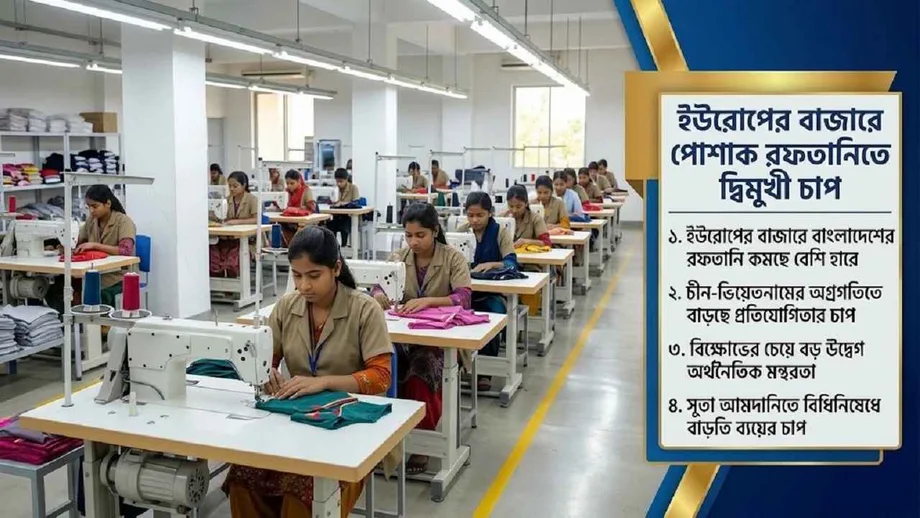
The agency said these practices fall hardest on the readymade garment and apparel sector. In its reasoning, they shrink opportunities for US producers and exporters both inside Bangladesh and in third country markets, add to lost output, exports, jobs and investment in US manufacturing, and raise economic security risks for Washington, partly by tying supply chains to inputs from non-market economies.
Garments are the goods most exposed to the rate change, since they are the sector the investigation singles out and the one where ordinary US duties are already highest. Washington's wider case is that too many countries have built plants aimed at export markets, holding down prices and squeezing producers elsewhere. China rejected that framing, saying its exports reflect competitive advantages.
What 18 Percent Would Actually Add
Abdur Razzaque, chairman of the Dhaka research group Research and Policy Integration for Development, worked through the arithmetic. The 18 percent figure is net of the tariffs Bangladesh already pays, he said, meaning it describes the combined extra duty rather than a fresh charge piled on the old one.
"Since Bangladesh already faces a 10 percent tariff under Section 301, the most likely interpretation is that the new proposal would effectively raise the additional tariff by 8 percentage points," he said.
Ordinary most favoured nation duties, the standard rate the US applies to imports from countries with normal trade relations, keep applying on top of any Section 301 charge. Razzaque put the average most favoured nation rate on garments at about 16 percent.
"With MFN duty on garments averaging about 16 percent, the overall tariff could reach about 34 percent, compared with around 26 percent now," he said.
US Trade Representative Jamieson Greer made the same point about stacking in a CNBC interview, describing the proposed rates as a top up rather than a pile on.
"When you look at these rates, which may range from 15 percent to 20 percent, those are not, with one exception I will talk about, really additive. It will actually look more like a top-up," he said.
"So, when you see us proposing a rate of 15 percent or 18 percent, it's not like 18 percent on top of an existing 18 percent, where you have all these crazy numbers. That's not the situation. When it all nets out, it really will just top up a few percentage points," he added.
For a Bangladeshi shirt that costs a US importer 10 dollars at the factory gate, the difference between a 26 percent and a 34 percent duty is about 80 cents on a single item, and importers usually pass much of that on to the store and the shopper. Multiplied across the millions of pieces shipped each year, it is the kind of gap that decides whether a buyer keeps a programme in Dhaka or moves it to a country with a lower rate.
Bangladesh's Government Calls It Nothing New
Commerce Minister Khandakar Abdul Muktadir told reporters the move was nothing new, noting that Washington had already given the trade representative authority to raise the tariff by 18 percent while the duties themselves had not gone up in practice.
"We hope that the US would not do anything that risks affecting our bilateral trade," he said.
The comment period is the first opening for Dhaka and for Bangladeshi factory groups to argue that their industry does not fit the case Washington has built. Under the proposal, rates can be lowered for a partner that signs a reciprocal trade agreement addressing the findings of the investigation, and that route is already written into the numbers offered to India and Vietnam.
Where the Other Trading Partners Land
The proposed ceilings vary sharply by country. China, which Washington blames for flooding world markets with cheap steel, aluminium, electric vehicles, appliances and solar products, is set at up to 20 percent in the proposal, while figures as high as 40 percent for Chinese goods were also attached to the announcement. Vietnam faces up to 35 percent and India up to 25 percent, with Vietnam and India offered lower rates of 20 percent and 17 percent if they reach trade agreements with Washington that answer the investigation's findings. Cambodia shares Bangladesh's 18 percent ceiling, while Thailand sits with India at up to 25 percent.
The administration is expected to honour caps agreed in completed trade deals, including 15 percent on goods from the European Union, Japan and South Korea and 19 percent for Malaysia. The European Union says the duty on its goods will stay at the previously agreed 15 percent. Mexico and Norway are unlikely to face any immediate levies, according to people briefed on the plan.
China's position is the most entangled. A trade truce due to expire on January 10 caps Trump's second term tariffs on Chinese goods at 20 percent, on top of duties of about 25 percent from his first term. Because a 12.5 percent anti-forced labour duty already covers all Chinese imports, only 7.5 percentage points remain before that ceiling is reached, which is why officials describe the new proposal as mostly filling a gap that already exists. The two countries are also negotiating cuts to tariffs on 30 billion dollars of non-strategic imports in each direction.
A Legal Patchwork Rebuilt After the Supreme Court
The February ruling that struck down the broad reciprocal tariffs, the ones Trump presented as Liberation Day duties, forced the administration to rebuild its trade wall from narrower legal parts. Section 301 became the main tool, and it now carries two separate investigations: the excess capacity case against 16 partners and a forced labour case covering 59 countries plus the European Union. Both can produce duties on the same goods, which is why Bangladesh's rate is described as one charge laid over another.
Other legal routes are being tested in parallel. Twenty-five US states have sued over the forced labour tariffs, and Section 338 of the Smoot-Hawley Act of 1930 has been floated as another basis for action against countries that discriminate against American commerce.
The earlier Section 301 work already reached beyond factories. A third Section 301 inquiry opened this month into digital trade rules in South Korea, the EU and Australia, the third such action aimed at Seoul in a single year.
What US Shoppers and Voters Are Being Told
The tariffs have fed into higher consumer prices in the United States, a link the administration accepts only in part as it argues that the duties buy leverage in negotiations. Public opinion has moved against the charges. A Reuters/Ipsos poll conducted after November's midterm elections found 62 percent of respondents supported efforts to repeal the tariffs.
Ryan Majerus, a former senior trade official at the Commerce Department who is now a partner at the law firm King & Spalding, said he expected a long report with different measures for each of the 16 partners and tariffs of 15 percent to 25 percent on imports from countries judged to hold excess capacity. He also raised the prospect of lower opening rates with escalation clauses, which would let duties climb over time unless a country reduces excess production.
That structure would matter more to Bangladesh than the headline number. A duty that starts near 18 percent and rises on a schedule gives factories a moving target for the price of an order placed months ahead, the kind of uncertainty that shapes whether a buyer signs a two year contract or a single season one.
The Dates That Decide What Happens Next
Several steps sit between the proposal and any money being collected, and the order matters for importers planning shipments.
- February 2026: the US Supreme Court strikes down the reciprocal tariffs, and the administration begins rebuilding duties case by case.
- March 2026: the trade representative opens the excess capacity investigation into 16 partners, including Bangladesh.
- 23 July 2026: a 10 percent forced labour duty on Bangladeshi goods is announced.
- 24 July 2026: that duty takes effect, replacing a temporary 10 percent global tariff.
- 25 November 2026: the proposed excess capacity rates are published, with a public comment period open.
- January 10: the US-China trade truce expires, which could lift the Chinese rate above its current 20 percent cap.
- January to February 2027: the earliest window for the new duties to be charged.
What the proposal does not settle is the final rate, the exact list of exempt products and the day collection begins. Nothing has been decided on whether Bangladesh's rate lands at the full 18 percent or below it, and the government's appeal rests on the comment period and on the possibility of a negotiated deal.
Key Points
- The US trade representative proposed duties of up to 18 percent on Bangladeshi goods as part of a Section 301 case against 16 trading partners.
- Bangladesh already pays an extra 10 percent under a separate forced labour case that took effect on 24 July 2026, taking the total on many garment exports to 25.62 percent.
- Abdur Razzaque of the Dhaka group RAPID says the 18 percent is net of that existing duty, so the real increase is about 8 percentage points.
- With an average most favoured nation rate of about 16 percent on garments, the combined tariff would reach about 34 percent, against around 26 percent now.
- US Trade Representative Jamieson Greer said the rates are not additive and would top up existing duties by a few percentage points.
- The trade representative cited five concerns about Bangladesh, including industrial planning, export incentives, weak labour protections and financial repression policies.
- Commerce Minister Khandakar Abdul Muktadir called the move nothing new and said Dhaka hopes bilateral trade will not be put at risk.
- Other proposed ceilings reach 20 percent for China, 35 percent for Vietnam, 25 percent for India and Thailand and 18 percent for Cambodia, with 15 percent caps honoured for the EU, Japan and South Korea.
- A public comment period is open, and duties are not expected before January or February.