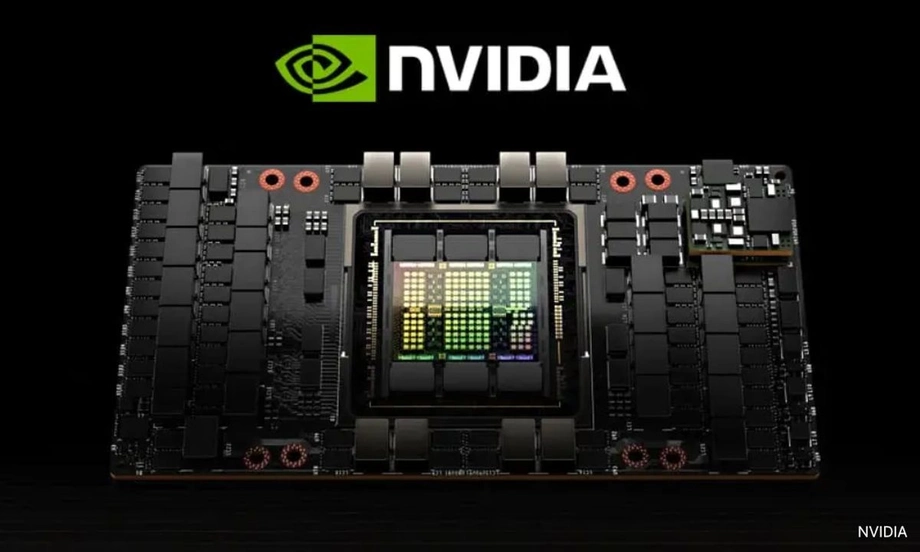
The Claim at the Centre of a Chip and Data Centre Dispute
YTL Power International said on Friday that reports linking its Johor data centres to the transfer of Nvidia processors to Chinese customers were false, as Washington tightened rules on remote access to advanced artificial intelligence chips. The utility, listed in Kuala Lumpur and controlled by the Yeoh family behind YTL Corporation, said its facilities provide space, power, cooling and network connections to global customers, including US hyperscalers. It said the arrangements follow Malaysian law and US trade controls. The denial came after an account published on 18 November 2026 said that Speedmatrix, the Malaysian subsidiary of Megaspeed, operated Nvidia chips at a YTL facility in Johor for Alibaba. Megaspeed is based in Singapore.
Contents
- The Claim at the Centre of a Chip and Data Centre Dispute
- What YTL Says Its Johor Sites Actually Do
- Why the US Rule Changes the Risk for Data Centres
- How the Alleged Alibaba Arrangement Worked
- A Short Timeline of the Johor Dispute
- What It Means for YTL's AI Cloud and Kulai Expansion
- Why Investors Reacted so Strongly
- The GDS Question and Other Johor Operators
- Where the Nvidia Scandal Fits
- What Malaysia Must Balance Next
- Key Points
A data centre is a building filled with computers that need power, cooling and cables. A graphics processing unit, or GPU, is a chip that can do many calculations at once, which makes it useful for training and running AI models. Remote access means a customer can use the chip over a network without owning the machine. A hyperscaler is a large technology company that runs computing infrastructure at enormous scale. Export controls are government rules that limit who can receive or use sensitive technology. The dispute matters because Malaysia is trying to become a major computing hub while the United States is trying to stop advanced chips from reaching customers it says pose security risks. It also explains why a data centre in one country can be drawn into another country's security rules.
What YTL Says Its Johor Sites Actually Do
YTL Data Centers, the digital infrastructure arm of YTL Power, said its Johor business is mainly colocation. In plain terms, the company acts like a carefully controlled landlord for computer equipment: it provides building space, electricity, cooling systems and connectivity, while customers bring or operate the servers. The company said those services are offered to multiple global customers, including large US technology companies, and that it has worked closely with Malaysia's Ministry of Investment, Trade and Industry on reporting and import requirements.
Radio Televisyen Malaysia published the YTL Data Centers statement on November 21. The statement said all operations comply with local law and US trade controls, and that the new US interim rule does not affect colocation. YTL Power said in its own statement that reports implying its data centres had helped transfer Nvidia GPUs to Chinese customers were baseless. YTL Data Centers, the digital infrastructure arm of YTL Power, said the claims were untrue:
These speculative and unsubstantiated reports are completely untrue.
YTL also said demand for colocation infrastructure in Malaysia will keep growing because global demand, including demand from the United States, remains strong. That statement is important for investors because colocation is different from selling computing power. A colocation provider rents the physical home for servers. A computing service provider lets a customer actually use the chips to train or run AI systems, an activity watched more closely under US rules.
Why the US Rule Changes the Risk for Data Centres
The United States Commerce Department's Bureau of Industry and Security issued an interim final rule titled Addressing Remote Access to Advanced Semiconductors. It took effect on 19 November. The rule requires licences for certain transactions involving advanced chips used to provide remote computing access above a set threshold. It also calls on foreign data centres to check whether customers are directly or indirectly owned or controlled from jurisdictions covered by the rule.
The rule's scope reaches beyond China. It covers companies headquartered in Brazil, Indonesia, Malaysia, Singapore and Thailand, as well as Macau and countries in the Commerce Department's Country Group D:5, a list of destinations subject to strict US export controls. YTL said its colocation services fall outside the new obligations because the rule focuses on importers of GPUs and providers of computing services to D:5 customers.
Johor's campus design makes the distinction important. One company may import chips. Another may own the servers. A data centre operator may supply power and floor space. A cloud company may sell access to the computing power. The US rule looks at the full chain that makes advanced computing usable by restricted customers, from chip imports to remote access. A licence is permission from the government, and the threshold is the set amount of computing access that triggers the rule.
How the Alleged Alibaba Arrangement Worked
The account published on 18 November said Speedmatrix operated Nvidia chips inside the YTL facility for Alibaba. It cited five people familiar with the project and an analysis by Infrawatch that found computer systems on YTL's network at the site carried Alibaba's name, including software used to monitor data centre equipment remotely. The account said YTL did not respond to requests for comment before publication.
According to the account, the commercial pattern began with a promise from Alibaba to become a customer of a regional firm such as Megaspeed. Megaspeed could use that commitment to raise money from investors, buy Nvidia chips and then deal with operators such as YTL to house and run the equipment. Once the facility was live, Alibaba and its own customers could reach the chips remotely. Data travelled by fibre optic cable from Malaysia to an internet hub in Singapore, then onward to China through undersea cables.
The account also said some chips meant for overseas data centres were at times smuggled into China. Megaspeed bought more than US$4 billion (RM17.6 billion) of Nvidia chips over several years, and Alibaba was described as its main customer and financial backer. The account said Megaspeed sourced Nvidia servers from Aivres, a US subsidiary of Inspur, a Chinese technology firm. Engineers from a Shanghai company linked to former Megaspeed executive Alice Huang carried out repairs and installation at a new Megaspeed data centre under construction in Johor.
A business agreement between an Alibaba subsidiary and Megaspeed said servers, chips, intellectual property and other equipment would revert to Alibaba if Megaspeed failed to meet its obligations.
A Short Timeline of the Johor Dispute
The dates show how a project first presented as part of Malaysia's AI build out became a test of export rules, investor confidence and government oversight.
- April 2022: YTL Power and China's GDS Holdings announced plans for eight facilities with 168MW of combined capacity at the Kulai park, with a first phase due in 2024.
- December 2023: The Johor AI project was announced when Nvidia chief executive Jensen Huang met Prime Minister Anwar Ibrahim. Huang said Malaysia could become a global AI manufacturing hub.
- October 2025: YTL's AI data centre in Kulai went live with NVL72 Grace Blackwell (GB 200) processors sold as a service.
- 18 November 2026: The account alleging Alibaba's access through Megaspeed and Speedmatrix was published.
- 19 November 2026: The US remote access rule took effect. Malaysia also said it would review AI chip shipments for unlawful exports out of the country.
- 20 November 2026: YTL Power issued its denial. A market report said DayOne had put its planned US initial public offering on hold.
- 21 November 2026: Radio Televisyen Malaysia published the statement saying YTL's colocation services were unaffected.
What It Means for YTL's AI Cloud and Kulai Expansion
YTL Power also sells computing power through YTL AI Cloud, alongside its landlord role for other people's servers. The first phase sits at YTL Green Data Center Park in Kulai, Johor, built on a former oil palm plantation, where the company runs Nvidia Blackwell processors. The 10MW GPU service disclosed after an analysts' briefing is limited to a deployment for Nvidia's DGX Cloud supercomputer, and Nvidia fully underwrites that deployment. Management said the group does not serve Chinese customers in its GPU service business.
The company's latest quarterly filing shows how quickly the business has grown. YTL Power said it has invested MYR 13.5 billion (US$3.3 billion) in data centres and plans to double Kulai park capacity to 1,200 megawatts from 600MW. Megawatts measure how much power a facility can draw at one moment. An adjoining solar project meant to help power the campus has finished its first phase with 215MW of generating capacity. At the park, YTL had contracted 298MW, of which 160MW was operational at the end of September. It is seeking customers for another 200MW due to be completed in the second half of 2027.
For the three months to September, data centre revenue rose to MYR 329.4 million from MYR 55.7 million a year earlier. Profit before tax climbed to MYR 139.5 million from MYR 1.05 million as more data halls were completed and occupancy increased. YTL said the data centre unit is now the group's third largest earnings contributor, after power generation and water. The company also announced a proposed development with capacity measured in gigawatts at Sedenak Tech Park West in August with JLand Group to complement Kulai.
Why Investors Reacted so Strongly
YTL's shares fell about 20% over two weeks as scrutiny of Megaspeed's operations in Malaysia grew. Investors were weighing three questions: whether YTL's own computing service could be caught by US rules, whether customers would delay colocation commitments, and whether Malaysia's data centre boom would face tighter political and regulatory checks.
Research houses kept positive ratings after the analysts' briefing. HLIB Research kept a buy call and a target price of RM8.08 a share, against an estimate of RM8.98 based on valuing separate parts of the business. RHB Research kept a buy rating and RM7 target. MBSB Research kept a buy call and RM5.98 target, saying that even if the data centre value of RM1.40 a share were removed, the utilities would still be worth RM4.58 a share, above the recent trading price. CGS International kept an add rating with a RM5.70 target and said the share price discounted disruptions to the data centre business while giving too little value to cash flows from power and water utilities.
CGS International also cut its long term colocation capacity assumption to 500MW from 850MW because of export control uncertainty. RHB pointed to bank guarantees stretching over many years from colocation tenants as a way to reduce the risk of early exits. HLIB pointed to YTL's land, water infrastructure, electricity supply from Tenaga Nasional and its own gas power assets.
The GDS Question and Other Johor Operators
The Kulai park has another unresolved chapter. YTL Power and GDS Holdings announced plans in April 2022 for eight facilities with a combined 168MW, due to enter service in 2024. The announcement also described a separate 72MW development already under construction for other hyperscale customers. GDS called the proposed arrangement a signed partnership in August 2022, then said in November that the project was still under negotiation.
GDS's March 2023 update set out Johor plans at Nusajaya Tech Park and omitted Kulai. DayOne, formerly GDS International, said in an October listing filing in the United States that it had built Johor campuses at Nusajaya Tech Park and Kempas Tech Park. YTL's latest annual report does not mention GDS in its Kulai plans. YTL and GDS representatives did not respond to enquiries at publication.
The account about Alibaba's chip access also named DayOne, Bridge Data Centres and Aolani as operators providing computing power to customers based in China in Southeast Asia. DayOne and Bridge Data Centres did not respond, while Aolani declined to discuss customers. A Friday market report said DayOne had put its planned US initial public offering on hold. Those open questions sit beside YTL's stronger claim that its own GPU service does not serve Chinese customers and that management had no involvement with Megaspeed or Speedmatrix.
Where the Nvidia Scandal Fits
The Johor dispute sits inside a wider Nvidia controversy. Jensen Huang, Nvidia's chief executive, resigned earlier this month after revelations involving personal relationships, including one with Alice Huang, a former Megaspeed director, and another with an employee. US officials allege Alice Huang is a Chinese intelligence asset. The Chinese embassy in the United States rejected the spying claim as an unsubstantiated smear. Singapore has barred Alice Huang from returning in connection with the Megaspeed probe.
Megaspeed, an Nvidia partner, is under US investigation over whether it exploited a loophole in export rules to send chips to China. Megaspeed chief executive James Tan said in the account that the company had not reached conclusions and stressed that compliance with US law was extremely important. He said the matter:
remains under independent review
Alibaba said suggestions that it provides services to the military were groundless, and said its cloud service agreement bars military use. Nvidia said it works across the industry to comply with changing cloud service rules. The account also said Alibaba co-founded Zhejiang Lab, an AI research facility in Hangzhou with military links. US officials believe China's military uses overseas data centres to train AI models before running AI operations from facilities inside China. Officials have not said whether any chips supplied by Megaspeed reached Zhejiang Lab, and no completion date has been published for the review.
What Malaysia Must Balance Next
Malaysian police have been probing alleged Nvidia chip diversion since April 2025, and the government said on 19 November 2026 that it would review AI chip shipments for unlawful exports out of the country. No timetable for those inquiries was given.
The YTL case lands on top of a broader push to make data centre growth benefit Malaysia. Parliament has examined the industry's jobs, tax receipts, water use, electricity demand and local contracts. The government forecast 4,053 jobs from 27 data centre projects worth RM225.97 billion, with a minimum 30% local content condition for new approvals. It has also moved toward a data centre disclosure law covering electricity use, imported GPUs and the identities of operators and hyperscalers.
Energy policy is part of the same story. Malaysia set a 30% renewable energy rule for data centres and introduced reserved power charges for electricity capacity that operators book but do not use. Those measures were designed around grid pressure and local resources. The Nvidia dispute adds another layer: who imports the chips, who controls the customer and who can use the computing power from abroad.
Key Points
- YTL Power denied that its Johor data centres helped transfer Nvidia GPUs to Chinese customers and called the claims completely untrue.
- The US rule Addressing Remote Access to Advanced Semiconductors took effect on 19 November and targets GPU importers and computing service providers to D:5 customers.
- YTL says its colocation business supplies space, power, cooling and connectivity, serves global customers and complies with Malaysian law and US trade controls.
- YTL AI Cloud runs Nvidia Blackwell processors in Kulai, with 160MW operating, 298MW contracted and another 200MW due in the second half of 2027.
- Data centre revenue rose to MYR 329.4 million in the quarter to September, while profit before tax rose to MYR 139.5 million.
- Malaysian police have investigated alleged chip diversion since April 2025, and the government said it would review AI chip shipments on 19 November 2026.