What Japan Is Changing in Company Filings
Japan's Financial Services Agency is preparing to make company executives take responsibility for more than the final text of an annual securities report. Under the plan, a company representative, and a chief financial officer where one is appointed, would still confirm that the report is properly prepared under securities law. The new part is a statement that the company has built a process for gathering, checking and approving the information in the report, and that the process actually works.
Contents
- What Japan Is Changing in Company Filings
- Why the Confirmation Letter Matters to Investors
- The Legal Path to a Spring 2027 Change
- What Executives Would Have to Confirm
- Why the Process Matters More Than the Wording
- How Disclosure Control Differs From J-SOX
- The Nonfinancial Information Challenge
- How Japan's Plan Differs From the United States
- What Companies Can Do Before the Rules Are Final
- Where Companies Are Likely to Struggle
- What Investors and Employees Should Watch
- Key Points
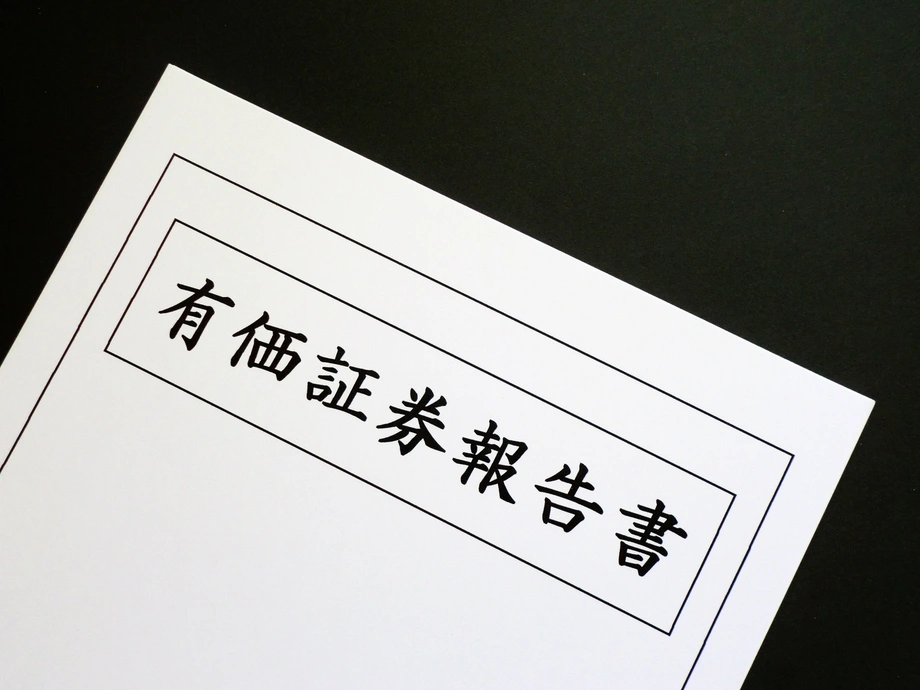
The change concerns the confirmation letter, a document submitted at the same time as the annual securities report, known in Japanese as yuka shoken hokokusho. The annual report is a statutory filing by listed companies and some unlisted companies. It contains financial results, business conditions, risks, governance, executive pay, sustainability and human capital information. The filings go through EDINET, the electronic disclosure system operated by the Financial Services Agency, and are open to the public.
The push follows a series of accounting misconduct cases with wide effects. Such cases can hurt shareholders, investors, business partners, banks and employees, and can weaken trust in the securities market. The proposed change expands an existing confirmation system. Companies can treat the move as a practical test of their internal disclosure machinery.
Why the Confirmation Letter Matters to Investors
An annual securities report is one of the main documents investors use to judge a company. It is more detailed than a simple earnings release. It explains how the business makes money, what could go wrong, who makes key decisions and how management handles people, risks and strategy over many years.
The confirmation letter is much shorter. Its role is to put named executives behind the filing. The current version usually says the representative has checked that the contents are appropriate under the Financial Instruments and Exchange Act. Ryo Yasuda, a certified public accountant and tax accountant at the Yasuda Certified Public Accountant and Tax Accountant Office, published Ryo Yasuda's explanation on Sept. 21 and updated it on Oct. 10. He wrote that many actual confirmation letters stay formulaic.
Ryo Yasuda, the certified public accountant and tax accountant, described the common wording with a short Japanese phrase.
定型的な文章にとどまる
The phrase means that the statement stays in fixed wording. The proposed change is meant to push executives beyond that habit. In plain language, the executive would also say that the company has a working system for making the report right.
The Legal Path to a Spring 2027 Change
The confirmation letter has a clear legal base. It rests on Article 24-4-2 of the Financial Instruments and Exchange Act and the form set by the Cabinet Office Order on Disclosure of Corporate Contents. Under current practice, the company representative confirms the report, and a chief financial officer also does so where the company has that position.
The policy trail runs through several dates.
- Dec. 26, 2025: The Disclosure Working Group of the Financial System Council said the confirmation letter should include both the preparation of disclosure procedures and confirmation that those procedures work.
- February 2026: The Financial System Council's full body was briefed on the working group's findings, moving the issue toward formal rule work.
- July 15, 2026: The Act on Partial Amendment of the Financial Instruments and Exchange Act and the Payment Services Act was passed, linking the disclosure review to a wider legislative package.
- Aug. 29, 2026: The plan for a Cabinet Office Order amendment around spring 2027 became public.
- Sept. 21 and Oct. 10, 2026: Ryo Yasuda's legal and practical explanation was published and updated.
The plan remains subject to formal rulemaking. By Sept. 28, 2026, the exact Cabinet Office Order wording, the companies covered, the first applicable financial year, the method for checking effectiveness and any transitional measures had not been published. No date was given for the draft text. The next concrete steps would be government orders, the revised form, official explanations and any public comment process.
What Executives Would Have to Confirm
The proposed confirmation has two added ideas. The first is that the company has prepared procedures for creating and disclosing the annual securities report. The second is that executives have checked whether those procedures work in practice.
A procedure is the route a piece of information travels inside a company. A human resources team supplies personnel data, the legal team flags litigation risks, the finance team checks accounting figures, investor relations staff review market communication, and senior management decides what must be disclosed. The report is then checked, corrected where needed, approved and filed.
The new confirmation would make executives answer a basic question: can the company explain that route, and can it show that people followed it? That changes the job from reading a finished document to understanding the system that produced it. Executives would not be expected to recalculate every number by hand. They would need a reliable report on how information was collected, reviewed and approved.
Why the Process Matters More Than the Wording
Changing the text of the confirmation letter would be easy. Making the statement true would take more work. An annual securities report draws from many departments. Human capital figures often sit with human resources. Legal risks sit with lawyers. Sustainability data may sit with a dedicated team or with business units. Overseas subsidiaries may hold facts about accidents, contracts or compliance problems.
A report can look clean at the final stage while the route that produced it has gaps. If a department sends incomplete information, if nobody knows who must approve a figure, or if errors are found only after the draft is finished, the filing process has a weakness. The proposed confirmation letter would bring that weakness into view.
Companies therefore need checks at several stages. A mistake found while information is being gathered can be corrected before the report is filed. A correction trail also helps managers see how the process performs from one year to the next.
How Disclosure Control Differs From J-SOX
The change is about disclosure control. Disclosure control is the internal system for collecting, checking, approving and releasing information that must be made public. It covers financial information and also nonfinancial information such as human capital, sustainability, business risks and governance.
Internal control is broader. It includes the systems a company uses to run business properly, obey laws, protect assets and make operations efficient. J-SOX is the Japanese system for evaluating internal control over financial reporting. Its main aim is reliable financial statements.
J-SOX leaves other questions open. It does not settle who gathers cyber risk data, how overseas incidents are reported, or who approves a human capital measure. The confirmation letter review asks companies to examine that wider disclosure route.
The Nonfinancial Information Challenge
Nonfinancial information is one reason the review matters. Annual securities reports now carry more detail about sustainability, human capital, governance and risks. These subjects do not always live in accounting systems. They depend on estimates, internal surveys, business unit reports and judgments about what investors need to know.
A sales figure follows accounting rules. Cyber risk descriptions rarely arrive in an equally neat form. They may come from an information technology team, an overseas office, a customer contract or an incident report. A sustainability estimate may rely on assumptions about future energy prices or supply chains. Human capital data may depend on how a company counts employees, training hours or turnover.
The Financial System Council's work also connects to a safe harbor rule being considered for statements about the future and for estimates. A safe harbor is a rule that can limit liability when a company makes a reasonable forecast using proper procedures, even if the forecast later proves wrong. The idea is to avoid pushing companies to publish only vague sentences because they fear being punished for an honest miss.
That link explains why process matters. Regulators want companies to prepare useful information with care. If a company follows a sound process, keeps records and explains assumptions, investors can judge the quality of the disclosure and the reasoning behind it.
How Japan's Plan Differs From the United States
Japan's review draws on the model of sworn statements used in the United States, where senior executives attest to reports and false statements can lead to criminal responsibility.
Ryo Yasuda's explanation says Japan is not planning criminal penalties for a false confirmation letter itself. The emphasis is on making executives responsible for disclosure controls and for explaining the process behind the filing.
The difference matters. Japan's step keeps the focus on management responsibility and internal work. Preventing misconduct also depends on company culture, board oversight, internal audit, internal reporting and early work with audit firms.
What Companies Can Do Before the Rules Are Final
Companies do not need to wait for the final form to examine their own systems. The practical work starts with a map of the annual report. The map should show who supplies each piece of information, who checks it, who approves it and when it reaches the representative or chief financial officer.
Four checks are especially useful. First, the company should confirm that it can collect the information it needs from every relevant department. Second, it should make sure the rules for review and approval are clear. Third, it should test whether those rules are actually used. Fourth, it should update the process when laws, structures, acquisitions or business lines change.
Evidence will matter. Useful records include disclosure checklists, department responses, minutes of disclosure committee meetings, accounting judgment papers, reports to management, audit firm discussions, correction histories and final approval records. These records let an executive ask what was checked and receive an answer that can be verified.
Management reports may also need to improve. Handing a senior executive the finished annual report is a weak form of review. A stronger report would summarise the timetable, major accounting estimates, changes from the previous year, important audit firm discussions, open issues, errors found in internal review and items still unresolved.
Where Companies Are Likely to Struggle
Some companies will find it hard to carry out this work with existing staff. Disclosure practice requires knowledge of securities rules, accounting, internal control and the business itself. A company may understand the new policy but still struggle to decide which department owns a risk or how much checking is enough.
Another problem is coordination. The annual report touches finance, legal, human resources, investor relations, corporate planning, internal audit and business units. Each team may keep information in a different way. Without a common rule, one department may assume another has checked a fact, and nobody sees the gap.
Companies with overseas subsidiaries, repeated acquisitions or fragmented systems face a tougher task. Financial numbers can be consolidated through accounting systems, but bad news may travel slowly. Outside specialists can help map the process and train staff. The audit firm audits the financial statements; the company builds and runs disclosure controls.
What Investors and Employees Should Watch
Investors will get more value from the evidence after the letter is signed. Useful signals include repeated revisions to annual securities reports, material weaknesses in internal control reports, delayed filings, frequent changes in finance leaders and explanations of how problems were investigated.
Employees also have a role in the system. A disclosure process only works when uncomfortable information can move upward. Internal reporting channels, internal audit and board oversight are part of the chain. If a manager blocks a report from a business unit or a subsidiary hides an incident, the executive confirmation may rest on a false picture.
For ordinary readers, the change can be understood through a simple image. The annual report is the final picture of a company. The confirmation letter used to say that the picture looked right. The new plan asks the company to show that the camera, the lighting and the people taking the picture all worked properly.
Key Points
- Japan plans to amend a Cabinet Office Order around spring 2027 to expand the confirmation letter filed with annual securities reports.
- Executives would confirm that disclosure procedures exist and that those procedures work, in addition to confirming the report's accuracy.
- The legal base includes Article 24-4-2 of the Financial Instruments and Exchange Act and the form under the Cabinet Office Order on Disclosure of Corporate Contents.
- The change follows a Dec. 26, 2025 Financial System Council working group report and a July 15, 2026 amendments law.
- Nonfinancial information, including human capital, sustainability and cyber risk, is a major focus because it often sits outside finance teams.
- Formal rulemaking will set the final wording, covered companies, start date and transition rules.