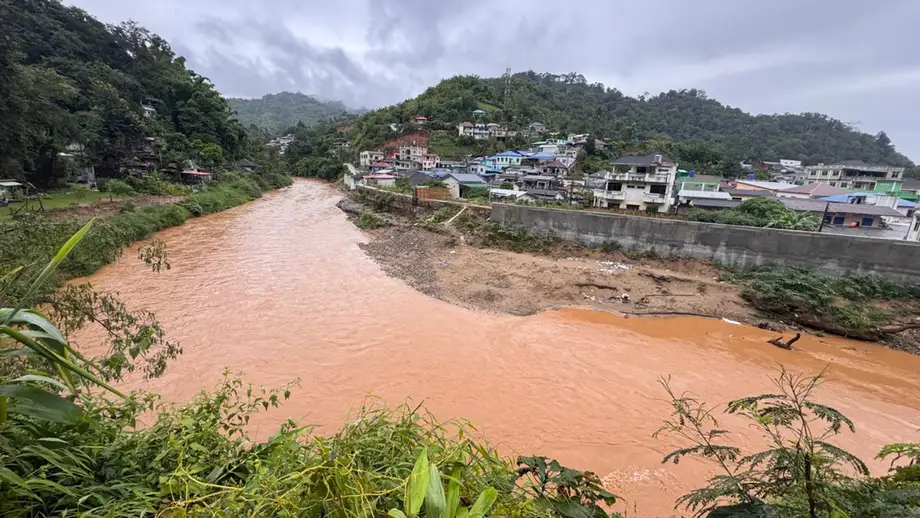
Ten species trigger new eating advice along the Kok
The Department of Fisheries has told people in Chiang Mai and Chiang Rai provinces to avoid eating bottom feeders and shellfish from contaminated stretches of the Kok River, after random tests of 300 aquatic samples found 10 species above safety limits. The warning covers freshwater prawns, snails, mussels, clams, several catfish and several small river fish that live close to sediment, the mud and sand at the bottom of the river.
Contents
- Ten species trigger new eating advice along the Kok
- Which species are on the warning list
- What people can still eat
- How the evidence built up
- Why mining upstream matters downstream
- What elemental fingerprints add
- How the alert system would work
- The catfish sores that caused alarm
- Rice fields and the wider food supply
- Border talks and what remains unknown
- Key Points
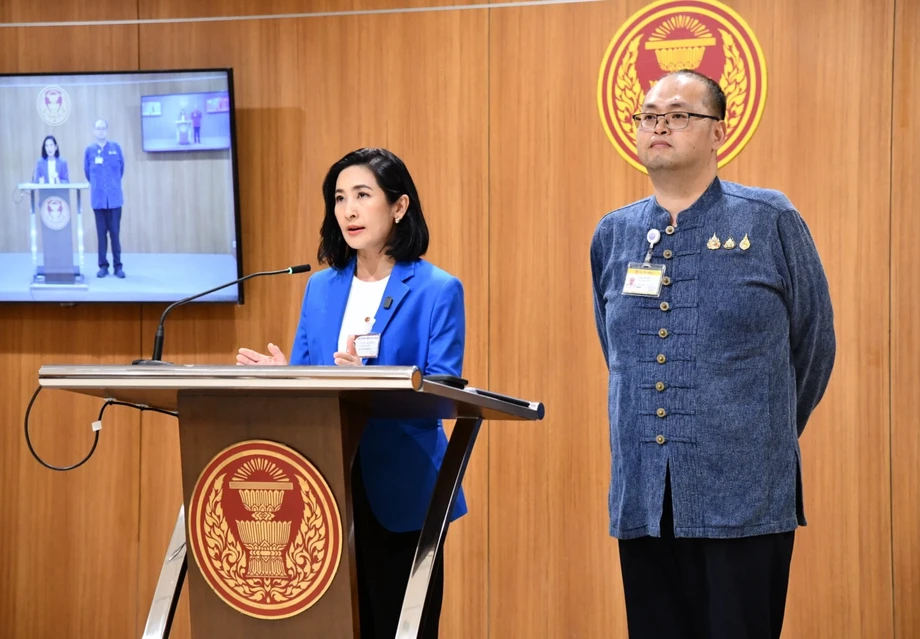
Officials from three agencies met on Monday, November 23, 2026, at the Department of Marine and Coastal Resources (DMCR) at the Government Complex on Chaeng Watthana Road in Bangkok. Pinsak Suraswadi, the newly appointed director-general of the Department of Fisheries, joined Surin Worakijthamrong, director-general of the Pollution Control Department, and Phadet Laithong, deputy permanent secretary for natural resources and environment and acting director-general of the DMCR. Their aim was to share water quality and aquatic animal test results and coordinate a response to contamination arriving from across the border.
Pinsak said the main exposure is in riverbed sediment. Animals that feed there take in pollutants settled in mud; fish swimming higher in the water are less exposed. Aquatic animals can convert some arsenic into organic forms and pass it out over short periods, but repeated exposure can still lead to build up in the body. The advice therefore focuses on riverbed feeders and on avoiding the organs of fish that people may otherwise eat.
Which species are on the warning list
The 10 species above the limits were named by the Fisheries list with Thai names, while related English names are also used for some of the same animals. The full list is:
- Freshwater prawns, also called freshwater shrimp
- Pond snails (hoi khom), also listed as river snails
- Golden apple snails (hoi cherry)
- Freshwater clams (hoi krapong), also described as freshwater bivalves (hoi kraphong nam chuet)
- Freshwater mussels (hoi kab; hoi kap nam chuet), also called horse mussels
- Pangasius catfish (pla pho), also called basa fish
- River carp (pla takok), also listed as soldier river barb
- Yellow mystus (pla kot lueang), also called green catfish
- Northern black sheatfish (pla khao dam nuea), also called helicopter catfish
- High fin barb (pla kramang khrib sung), also listed as sicklefin barb
The department said the common feature is where and how these animals feed. Prawns, snails, clams and mussels live in or on sediment. Bottom feeding fish root around the same material, which can hold arsenic and other metals long after a flood or mine discharge has passed.
What people can still eat
Pinsak Suraswadi said people should avoid the listed species for a period and take extra care with other fish from affected areas. He explained that organs are the part most likely to hold metals, so the safer choice is to eat the flesh and leave the organs aside.
We have recommended not eating them for a while; otherwise, people should eat only fish's meat, not its organs as it is a dangerous part prone to collecting dangerous heavy metals,
Officials said fish living in midwater or near the surface may still be eaten, provided their organs are avoided. For a household, the practical change is simple: skip prawns, snails, mussels and clams from high risk stretches, and clean and cook other fish with the organs removed. The department did not say that every part of the Kok River is closed to fishing.
How the evidence built up
Several official datasets and university findings were already in place before Monday's meeting. Thai records use the Buddhist year 2569 for 2026, so key dates appear below in both forms.
- July 7, 2568 (2025): Evidence connecting contamination in the Kok River with rare earth mining was already public.
- March 2025: Testing along the Kok was under way, and arsenic and cadmium were found at all Kok testing sites in Chiang Rai province.
- February 2569 (2026): Mae Fah Luang University researchers reported arsenic in hair and nail samples from people living along the Kok. Health ministry surveillance expanded after that finding.
- July 7 to 10, 2569: Pollution Control Department sediment test No. 12 found arsenic above limits at some Kok River points.
- October 26 to 30, 2569: Pollution Control Department water test No. 24 collected samples to track where contamination appeared and when.
- November 12, 2569: Naresuan University's AI-CARE team estimated that rare earth mining explained 33% to 58% of contamination in the Kok and 27% to 38% in the Sai, using samples from where the rivers first enter Thailand.
- November 22, 2569: A Mae Fah Luang University forum drew more than 250 participants and presented 77 datasets from 40 agencies covering 5,872 sampling points. Officials selected 10 knowledge packages to begin within seven days.
- November 23, 2026: Fisheries, pollution control and marine officials met in Bangkok to coordinate testing, alerts and support for affected communities.
- November 24 and November 25 and 26: Ministerial talks and working group meetings with Myanmar and China were set to follow.
Water tests, sediment tests and animal tests answer different questions. Water can carry dissolved pollution, sediment stores it, and aquatic animals show what has entered the food web. The latest fish and shellfish results turn that evidence into direct eating advice.
Why mining upstream matters downstream
The Stimson field note, published on September 22, 2025, said its team identified 60 rare earth mines in Myanmar's part of the Mekong Basin between 2015 and 2025, including 31 in Wa State and 26 in National Democratic Alliance Army territory. It said three mines were active upstream on the Kok, with at least two more possibly under development. Rare earth elements are metals used in electric vehicles, wind turbines, phones and medical equipment.
The mining process explains how pollution reaches rivers. Water mixed with fertilizer or acid is injected into cleared hillsides to make a slurry that separates the metals. The liquid left behind can carry arsenic, cadmium, manganese and mercury into streams. The field note cited an estimate that one ton of processed rare earth minerals produces 2,000 tons of toxic waste.
Dr Wan Wiriya of Chiang Mai University's Environmental Science department applied a Heavy Metal Pollution Index to water, soil and sediment. The field note said all tested sites in the Kok, Sai-Ruak and Mekong mainstream exceeded medium heavy metal pollution limits. Pollution near Mae Sai and Tachilek was nearly 100 times the threshold set for high pollution, while Thaton and Sob Ruak also exceeded high thresholds. Chiang Mai University DNA studies found that more than 60% of heavy metals in flood mud came directly or indirectly from upstream mining.
The same field note described Thaton, the Chiang Mai subdistrict where the Kok enters Thailand. About 20,000 people and 12 indigenous groups live there. A September 2024 flood raised the Kok six meters in some places and changed its course. Flood mud damaged fields and homes, boat trips and homestays stopped, and the annual Loi Kratong river festival was no longer held there. Crops from Thaton were shunned by local buyers, and fishing along the Kok stopped.
What elemental fingerprints add
An elemental fingerprint works like a chemical barcode. Instead of looking only at how much arsenic is present, researchers compare the mix of elements around it. Different mines leave different traces, much as different paints leave different colour mixes.
Naresuan University's AI-CARE work pointed to rare earth mining as a major source for the Kok, with a smaller share for the Sai. At the Mae Fah Luang forum, scientists presented a separate fingerprinting result: the Kok was linked about 60% to 75% to rare earth mining and about 26% to gold mining, while the Sai was linked about 63% to gold mining and about 29% to rare earth mining. The work used 2008 geochemical data, Sentinel-2 satellite images and a sediment movement model.
Prof Dr Yothanan Wongsa, deputy prime minister and minister of higher education, science, research and innovation, told the forum that scientific test results must be binding and that officials needed a precise elemental fingerprint. He said accusations alone were not enough for negotiations.
The forum was also told that the Sai receives an average of 143 kilograms of arsenic a day at the border, above the 0.01 milligram per litre standard each day. That standard equals 10 micrograms per litre. Researchers proposed a total maximum daily load (TMDL), a pollution budget, of about 39 kilograms a day. That would cut the load by 104 kilograms a day, about 73%. The proposed budget was split into no more than 27 kilograms from mines, 8 kilograms from natural sources and 4 kilograms as a safety margin.
How the alert system would work
The Department of Fisheries plans to expand testing to fish raised in cages, particularly along the Mekong River, and to fish from aquaculture ponds. The aim is to identify safe farms and high risk areas, then warn residents before they harvest or buy aquatic animals.
A green, yellow and red flag system will be used. Green will mark areas where tested products are safe. Yellow will mark areas needing caution or repeat checks. Red will mark areas where contamination levels make products unsafe. The department also plans a risk map showing which species can be eaten and where food safety concerns remain.
The response includes help for affected farms. If a farm has used polluted river water, authorities plan to help the operator change farming methods, shift to a suitable form of aquaculture or find another livelihood. Officials also discussed alerts for coastal aquaculture farmers when monitoring shows a potential risk. No start date was given for the flag system.
The catfish sores that caused alarm
Goonch catfish, known in Thai as pla khae, showed skin inflammation and sores in the Mekong basin, including tributaries. Pinsak said flukes, which are parasitic flatworms, caused the inflammation and sores. He ruled out toxic substances in the water as the cause of those lesions.
He said people should still avoid regularly eating pla khae because it lives on the riverbed and can carry parasites. Lab findings discussed at the Mae Fah Luang forum found that lumps on catfish were infection and inflammation, not cancer, and that fish meat remained safe. For consumers, the practical advice is to treat the sores and the contaminant limits as separate reasons for caution: one concerns parasites and fish health, the other concerns pollutant levels in species that feed on sediment.
Rice fields and the wider food supply
Concern has spread from rivers to farms, especially where floodwater and sediment enter fields. A total of 140 rice samples were tested, and none had inorganic arsenic above the standard. Inorganic arsenic is the form of the element that is more harmful to people than some organic forms found in food.
A risk map built with data from more than 15 agencies put moderate to critical risk in Chiang Rai at about 81 square kilometres, or 0.7% of the province. Root and tuber crops were placed in the high risk group at 55%, so officials are focusing on soil, produce and water management in those areas. The Office of Atoms for Peace said monitoring for radioactive substances in northern risk areas remained within safety levels.
A pilot project called SAI-CLEAR is planned for the headworks of the Mae Sai irrigation system, where sediment can be trapped before river water enters about 27,000 rai of rice land. One rai equals 0.16 hectares, so the area is about 4,320 hectares. The 18 month pilot is set to run from the rainy season of 2570 (2027). Models estimate that the system could remove 94.6% of arsenic and meet the water standard on 91% of simulated days. Those figures are projections before the system starts; the pilot will test how it performs in real conditions, including heavy flows of sediment.
Authorities are also preparing turbidity sensors, which measure how cloudy water is, for late November. Turbidity has been linked to arsenic at about 90% in the monitored setting, so cloudiness can serve as an early warning signal. A LINE official account called RAG AI has been used to answer public questions around the clock; officials said it restored fish eating confidence by more than 80%.
Border talks and what remains unknown
Thailand has coordinated with Myanmar and China as it prepares talks. Minister level discussions were set for November 24, with working group meetings on November 25 and 26. The agenda includes identifying sources and setting reduction targets that can be checked at the border. Officials also plan to ask the National Security Council to consider pausing exports of chemicals used in mining while the Commerce and Industry ministries study controls.
Thailand and Myanmar agreed in late August 2025 to joint monitoring of the Kok, Sai and Ruak rivers. The Mekong River Commission, a regional body representing Thailand, Cambodia, Laos and Vietnam, held a consultation with Chiang Rai officials and community groups on August 20. Those steps create a channel for shared data, though the mines sit in areas beyond the day to day control of Myanmar's central government.
What is still unknown is whether contamination is affecting whole aquatic food chains, reproduction or offspring. No start date was given for the flag system. The next dated steps are the November 24 ministerial talks, working group meetings on November 25 and 26, village water safety training on November 27, turbidity sensors by late November and the SAI-CLEAR pilot from the 2027 rainy season. Civil society and public health groups have also called for testing soil and produce seven days before harvest and wider urine arsenic screening to map health risks.
Key Points
- Random tests of 300 aquatic samples found 10 species above safety limits in the Kok River.
- People are advised to avoid bottom feeding fish and shellfish from contaminated stretches and to avoid the organs of other fish.
- Officials from fisheries, pollution control and marine agencies met in Bangkok on November 23, 2026, to coordinate testing, alerts and farm support.
- Sediment is the main concern because arsenic and metals settle there and are taken up by animals that feed on the riverbed.
- Fieldwork identified 60 rare earth mines in Myanmar's Mekong Basin from 2015 to 2025, including three active mines upstream of the Kok.
- Element fingerprinting linked the Kok mainly to rare earth mining and the Sai mainly to gold mining.
- Authorities plan risk maps, green yellow and red flags, more farm testing and help for affected aquaculture operators.
- Rice samples were within standards, while风险 mapping found 81 square kilometres of moderate to critical risk in Chiang Rai.
- Border talks, new sensors and a sediment trap pilot are the next steps, while food chain and reproduction effects remain under study.