A Blacklist Decision at the Center of a Chip Case
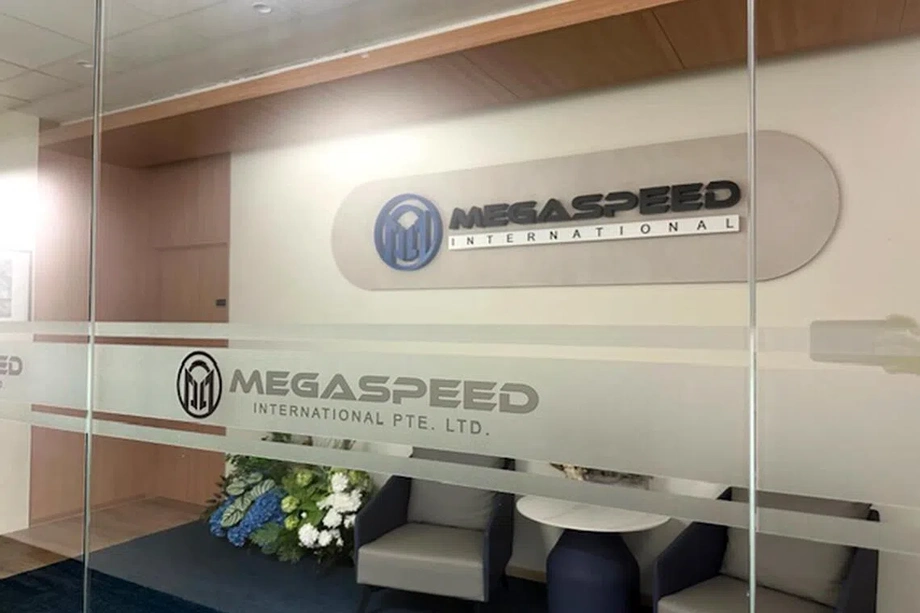
The Commerce Department is expected to add Singapore based Megaspeed International to its trade blacklist as soon as Nov. 23, placing a cloud computing company at the center of the biggest national security question to emerge from Nvidia's AI chip boom. Megaspeed is the company where Alice Huang worked before her relationship with Nvidia cofounder Jensen Huang became public. The planned listing was described by people familiar with the decision.
Contents
- A Blacklist Decision at the Center of a Chip Case
- Who Is Alice Huang and Why Megaspeed Matters
- What Investigators Say Happened to the Chips
- A Short Timeline of the Case
- The White House Clash Over the Blacklist
- Congress Wants to Know Who Knew
- The Political Fight Over Nvidia's Return
- The Money Trail and Military Links
- What Singapore Found and What Li Ming Faces
- What Changes for Companies, Customers and Investigators
- Key Points
A blacklist entry would mean U.S. companies need government permission before selling products, software or technology to Megaspeed. Licenses are likely to be refused. Export controls are rules that limit who can receive sensitive technology. The processors in this case are AI accelerators, chips that perform the heavy calculations behind systems that can recognize patterns, generate text and support new weapons research.
The expected move follows Jensen Huang's reinstatement on Nov. 23, when Nvidia's board said it had received input from senior U.S. government officials and was confident his return posed no national security risk. Huang had resigned on Nov. 12 after disclosures about extramarital relationships, including his relationship with Alice Huang, a Chinese national who is not related to him.
Who Is Alice Huang and Why Megaspeed Matters
Alice Huang, also known as Huang Le, was an executive director at Megaspeed and has been described as a controlling shareholder. Megaspeed said she left in August 2025 and has called the business legitimate and lawful. The company operates data centers in Southeast Asia and rents computing capacity, a service that lets customers use powerful processors without owning them.
U.S. intelligence officials suspected that Alice Huang worked as a source for China's Ministry of State Security, the country's main civilian intelligence agency. People briefed on intelligence reports said she was in contact with a Ministry official from spring 2025 into fall 2026, a period that overlapped her relationship with Jensen Huang. People familiar with the matter said Kang Wei, her business partner often introduced as her husband, worked with the same agency. China has denied the espionage allegation.
President Donald Trump, asked last week whether he trusted the intelligence view of Alice Huang, rejected a firm label. He described claims about Chinese women entering the United States in broad terms and then gave his own answer.
I don't know that she is a spy.
Trump's public stance set up a clash with aides who viewed the intelligence warnings as serious.
What Investigators Say Happened to the Chips
The Commerce and Justice departments said in a joint public statement that the Megaspeed investigation began in 2024 over possible export control violations. Commerce's Bureau of Industry and Security, or BIS, which enforces export rules, and Singapore law enforcement interviewed Alice Huang during an on site check in June 2025. Justice later took the lead in the criminal inquiry.
People familiar with the purchasing put Megaspeed's Nvidia chip buys at $4.8 billion over two years. People tracking the wider network use a figure of about $12 billion in chip sales facilitated in breach of export controls. The gap reflects the difference between chips bought by one company and a broader measure of sales linked to the network around it.
Director of National Intelligence Jay Clayton said the case was live and that the chips themselves were central to the concern. He spoke about Alice Huang, her company and the value of Nvidia processors in the contest over artificial intelligence.
There is an investigation ongoing into her firm and into her."
"Nvidia chips, they are the jewel. They are the absolute top that everybody wants, that's why we're focusing on this.
Attorney General Todd Blanche said the Justice Department was examining whether restricted chips were sold and that the outcome could take more than one form.
It could potentially be a violation of our export laws, and that could be civil, regulatory."
"It could also be criminal, depending on the case. And that investigation is ongoing.
Blanche's comments left open both regulatory and criminal paths, which is why the Commerce listing matters even if prosecutors choose a different route.
A Short Timeline of the Case
The Megaspeed case runs through export enforcement, intelligence warnings, corporate governance and a market rout. The dates below show how the threads joined.
- 2024: Commerce and Justice opened an investigation into Megaspeed over possible export control violations.
- May 2025: Commerce investigators asked Nvidia for sales records tied to Megaspeed.
- June 2025: BIS and Singapore law enforcement checked Megaspeed and interviewed Alice Huang.
- August 2025: Nvidia removed Megaspeed from its sales list, according to the company. Megaspeed said Alice Huang left that month.
- Nov. 5: Bessent questioned Lutnick in the White House Situation Room about the missing Megaspeed listing.
- Nov. 12: Jensen Huang resigned as Nvidia chief executive.
- Nov. 17: Nvidia reported quarterly revenue of $115.8 billion and said it was not planning to bring Huang back.
- Nov. 19: House Foreign Affairs records disclosed license applications for more than 40,000 H200 chips tied to a company connected to Alice Huang.
- Nov. 22: Treasury and intelligence officials called for answers from Nvidia as new details emerged about Alice Huang's alleged intelligence contacts.
- Nov. 23: Nvidia reinstated Huang, and Megaspeed was expected to be added to the trade blacklist.
The sequence explains why lawmakers now want records from both Nvidia and the Commerce Department. The same people who questioned the company's compliance culture are also asking why the administration moved slowly on a list that agencies had discussed for months.
The White House Clash Over the Blacklist
The push to list Megaspeed became a public fight inside the Trump administration. On Nov. 5, Treasury Secretary Scott Bessent questioned Commerce Secretary Howard Lutnick in the White House Situation Room about why Megaspeed was still absent from the trade restriction list. Defense Secretary Pete Hegseth, Trade Representative Jamieson Greer and Secretary of State Marco Rubio sided with Bessent, according to people familiar with the meeting. Lutnick initially said he did not know and would review the matter.
Bessent has argued that other agencies wanted action and that Commerce, which controls the list, was the obstacle. He made the point in a television interview in words that became the clearest description of the disagreement.
Many other departments were pushing for this, and Commerce had the pen.
Commerce has not added companies to the blacklist since October 2025. In June, the administration held back listings for about 100 Chinese companies seen as national security risks, including DeepSeek and ChangXin Memory Technologies, as it tried to avoid a sharper confrontation with Beijing.
Congress Wants to Know Who Knew
Congressional pressure has two tracks. Lawmakers want to know how Megaspeed obtained advanced chips and whether Nvidia, as a company, understood where its products could go. They also want to know whether the administration delayed action after being warned. Senator Tim Scott asked Huang and Lutnick to testify before the Senate Banking Committee, saying the public deserved answers.
Representative Gregory Meeks and Representative Sydney Kamlager-Dove sent Lutnick a letter on Nov. 20 seeking records by Dec. 1. Their questions include whether Nvidia was allowed to contact BIS investigators, whether the company received private investigative information and why the case shifted from Commerce to Justice. Nvidia and BIS say contacts were routine and proper. No confirmed finding has shown improper influence by Nvidia.
Representative Richard Neal and Senator Ron Wyden separately wrote to Lutnick that the administration had been briefed about the intelligence before allowing H200 sales to China in December 2025, and they called for scrutiny of that decision. Bessent said answers from Nvidia had not reached the administration by Nov. 22. He described contacts with interim management, lead directors and lawyers, and said officials needed to learn who oversaw compliance and how far awareness might have reached inside the company.
His earlier Bessent's compliance demand set a deadline of 10 days for the company. In a television interview, he used sharper language about the pace of the response.
It behooves Nvidia to move quickly on this because we want to know what the culture was.
Jensen Huang and Nvidia general counsel Tim Teter agreed to closed door, transcribed interviews with three House committees on Dec. 1 and Dec. 2. Teter is also scheduled to brief the House Foreign Affairs Committee privately on Dec. 2. The House Energy and Commerce Committee has asked interim chief executive Colette Kress to explain Nvidia's export control compliance and its Megaspeed transactions.
The Political Fight Over Nvidia's Return
Nvidia's board moved from rejecting Huang's return to embracing it in less than a week. On Nov. 17, after quarterly revenue of $115.8 billion, up 103% from a year earlier, the board said it was not considering a comeback. Chairman Harvey C. Jones said directors had accepted Huang's resignation and did not plan to reappoint him.
Hours before the Nov. 23 announcement, President Donald Trump called into a board meeting to argue for reinstatement, according to people familiar with the discussions. Trump also said publicly that he had spoken to directors. The market reaction was immediate: Nvidia shares rose 33% after the decision, recovering part of a steep decline tied to the scandal and a wider technology selloff. The earlier Trump's board intervention turned a corporate discipline question into a test of political influence and national security judgment.
Lawmakers from both parties objected to the speed of the reversal. Senator John Kennedy, a Louisiana Republican, said the personal relationship had become a national security issue because of Nvidia's place in the AI industry. In a television interview, he used a blunt phrase in describing the affair.
It was the most expensive sex since Helen of Troy.
The board's decision followed White House assurances to directors that Huang's return posed no national security risk. Those assurances did not end the export control inquiry, and they left Congress asking why the administration moved quickly on the chief executive while the Megaspeed listing was still being debated.
The Money Trail and Military Links
A corporate intelligence report prepared by Strider Technologies examined companies linked to Alice Huang, her sister Huang Yu and Kang Wei. It found about $3.6 billion in Chinese government funding moving through businesses tied to those people. Some of the money supported technology projects that included data centers equipped with Nvidia chips.
The corporate map includes a cybersecurity venture jointly owned with an arm of China Electronics Technology Group, a state owned defense electronics company. Other companies in the network lease servers powered by Nvidia chips through financing connected to a business affiliated with China's largest military aircraft maker. One company shares a parent with a maker of radar and missile components.
Greg Levesque, chief executive of Strider Technologies, said the funding paths often led toward China's military industrial system. He was describing why the corporate links mattered to investigators tracking advanced technology.
When you follow the money, far too often you find the Chinese military at the end of the trail.
House Foreign Affairs Committee records disclosed on Nov. 19 showed Nvidia license applications for more than 40,000 H200 chips to a subsidiary of Century Litong, a Chinese company connected to Alice Huang. Nvidia said it had received some licenses, had stopped shipping H200 chips to China and had never supplied the Century Litong subsidiary in question. The records made the corporate links public but left the question of end use at the center of the inquiry.
What Singapore Found and What Li Ming Faces
Singapore's Ministry of Home Affairs said police found insufficient evidence that Alice Huang committed offenses connected to possible inaccurate declarations under investigation. The ministry said she received a stern warning for information police assessed as knowingly inaccurate and for downplaying her role at Megaspeed. Singapore did not investigate her for espionage.
Li Ming, a Chinese national described by people familiar with the matter as deeply involved in Megaspeed, faces five charges in Singapore. They include two counts of fraud by false representation, allegations involving the operation of a company he controlled, unauthorized bank account access and another company director's duties.
Prosecutors allege Li told Super Micro Computer that his company would hold and lease servers it bought. Super Micro is a U.S. server maker with known links to Nvidia. The charges do not name Megaspeed, and Li's case is ongoing. He was offered S$1 million bail in March 2025 and is out on bail.
The Justice Department is separately examining whether entities linked to Alice Huang helped move Super Micro products into China. That inquiry is part of the same question at the heart of the Megaspeed case: whether U.S. technology moved through paperwork, cloud contracts and data centers to buyers that export rules were meant to restrict.
What Changes for Companies, Customers and Investigators
A Megaspeed listing would be an administrative step with real commercial force. U.S. firms could not export products, software or technology to the company without a license, and approval would be unlikely. That would make it harder for Megaspeed to obtain American hardware or support. It would not, on its own, answer the criminal questions about who knew what and when.
A rule introduced last week aims at remote access, an area the Treasury Department has pressed. Under such a rule, a customer in a restricted country could be blocked from leasing computing capacity that runs on advanced chips, even if the chips physically remain outside that country. Bessent said this kind of rule may matter more than a direct shipment ban because it closes a route around ownership.
Officials have not said whether the blacklist addition was completed by late Nov. 23, whether investigators proved that Alice Huang passed information to Chinese intelligence, or whether any Nvidia processors reached Chinese military projects. The next known dates are Dec. 1 and Dec. 2, when House interviews and briefings are set. Dec. 1 is also the date in the House letter to Lutnick for written answers and documents.
For Nvidia employees and investors, the immediate change is that the company's founder is back at the helm while its compliance system faces congressional and criminal scrutiny. For U.S. agencies, the case is a test of how export rules work when chips are sold through cloud providers, leased servers and companies that may sit far from the final user. For China, a Megaspeed listing would tighten access to one route for advanced computing at a time when both countries are racing to build AI systems.
Key Points
- The Commerce Department is expected to add Megaspeed to its trade blacklist, which would require U.S. companies to seek licenses before selling to it.
- Federal investigators opened the Megaspeed case in 2024; Commerce and Justice said BIS and Singapore police interviewed Alice Huang in June 2025.
- Jensen Huang resigned on Nov. 12 and returned as Nvidia chief executive on Nov. 23 after the board received senior government input.
- Treasury Secretary Scott Bessent said other agencies pushed for the Megaspeed listing while Commerce held the authority.
- Congressional committees are seeking records and interviews on Dec. 1 and Dec. 2, including from Huang and Nvidia lawyer Tim Teter.
- Singapore issued Alice Huang a stern warning but said there was insufficient evidence to establish offenses connected to inaccurate declarations.
- The case includes estimates of $4.8 billion in purchases and about $12 billion in facilitated sales, along with alleged intelligence links and questions about end users.