Nvidia Reverses Course in Dramatic Reinstatement
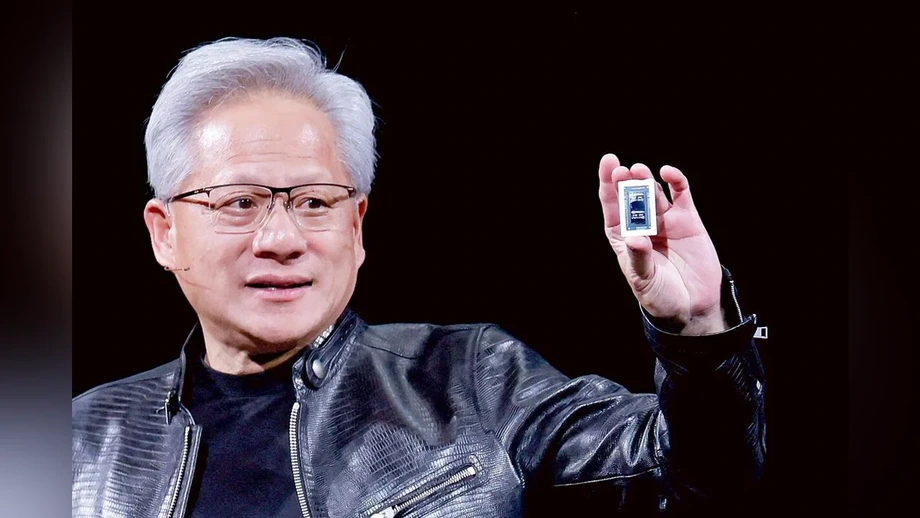
Nvidia announced on November 23, 2026, that cofounder Jensen Huang returned as president, chief executive officer, and member of the board of directors. That unanimous board decision reversed a formal exit announced just 11 days earlier and came 12 days after directors initially accepted his departure on November 11.
Contents
- Nvidia Reverses Course in Dramatic Reinstatement
- How President Trump Intervened to Secure the Deal
- Why Silicon Valley, Employees, and Taiwan Rallied Behind Huang
- Espionage Suspicions and Workplace Conduct Behind His Exit
- How Advanced Chips Flowed Through Southeast Asia to China
- A Timeline of the Leadership Crisis
- Bipartisan Pushback in Congress and Active Inquiries
- What Happens Next on Capitol Hill
- The Bottom Line
Board chairman Harvey C. Jones, a director since 1993 who had stepped into the chairmanship when Huang stepped down, had stated as recently as November 17 that the company had no plans to bring its founder back. Nvidia ruled out his return during an earnings call that day while Chief Financial Officer Colette Kress served as interim chief executive and executive search firm Heidrick and Struggles evaluated replacements.
Directors said their reversal followed multiple meetings with Huang regarding his candor and leadership alongside direct input from senior United States government officials. In an official statement, the company explained the reasoning behind the unanimous vote.
In the process of reaching its decision, the Board received input from senior levels of the United States government, and based on that input, the Board is confident that Mr. Huang's reinstatement poses no national security risk.
Jones added in the announcement that the board believed Huang remained the right leader for shareholders, employees, partners, and customers. Financial markets reacted immediately to the news on November 23. Nvidia shares surged more than 30 percent in early trading, briefly climbing past 36 percent in the largest single trading rally for the chip designer in more than two decades. That rebound recovered a portion of roughly $2.7 trillion in market value lost between an October 6 peak near $4.5 trillion and November 20 amid scandal, regulatory probes, and a broader decline across semiconductor stocks.
How President Trump Intervened to Secure the Deal
President Donald Trump played a direct role in persuading directors to restore Huang to the top job. Hours before Nvidia issued its public announcement, Trump personally dialed into a late board meeting by telephone to argue for the reinstatement, according to people familiar with the deliberations.
White House communications director Steven Cheung confirmed the president had stepped directly into the corporate dispute.
President Trump was totally involved and this is a great decision by the NVIDIA board. We have to protect our geniuses.
Trump told interviewers on November 23 that he spoke both directly and indirectly with Nvidia directors and convinced them to approve the return, stating that he made the deal before calling Huang late on November 22 to tell him to work hard. Trump had publicly urged a second chance for the executive days earlier, and on Monday he wrote on Truth Social that the board made the right decision while praising Huang as a great patriot and national treasure. Trump also posted an altered version of a 2024 rally photograph showing Huang raising a red bra and an Nvidia flag.
Attorney General Todd Blanche confirmed that the federal government held no evidence showing Huang engaged in unlawful conduct, according to Trump. The president added that losing Huang would pose a far greater danger to the United States than keeping him, suggesting Chinese President Xi Jinping might even recruit Huang if Nvidia pushed him aside.
Federal financial disclosures added another layer of scrutiny to the White House intervention. Reviews of Trump financial filings showed he held between $13 million and $62 million in Nvidia stock at the end of August and purchased up to $380,000 in shares in September, weeks before Huang resigned. White House officials stated that independent financial institutions manage the portfolio and that neither Trump nor his family directs individual trades.
Why Silicon Valley, Employees, and Taiwan Rallied Behind Huang
Corporate governance specialists had warned that Nvidia faced severe key man risk because Huang maintained an unusually flat management structure with about 60 direct reports. That concentration of relationships left few obvious internal replacements, and a leading external candidate disappeared when Arm chief executive Rene Haas signed a new contract extending his employment until 2033.
Supporters organized rapidly to press for Huang to return before outside investigators completed their work. An online campaign called Stand With Jensen gathered more than 180,200 signatures by November 17, up from 36,000 three days earlier. Organizers reported that more than 8,800 signers identified themselves as current Nvidia employees and over 94,000 identified as shareholders, though the campaign noted those affiliations were self-reported and unverified.
Prominent technology executives joined the appeal, including Tesla and SpaceX chief executive Elon Musk, Epic Games chief executive Tim Sweeney, Replit chief executive Amjad Masad, YouTube cofounder Steve Chen, and former Uber chief executive Travis Kalanick. Kalanick argued in a public statement that personal errors should not sever the founder from the enterprise he spent 33 years building.
Jensen is one of the great builders of our time. We cannot starve the future of his innovation and industrial breakthroughs.
Institutional shareholders Brad Gerstner of Altimeter Capital Management and Gavin Baker of Atreides Management sent a joint letter urging the board not to rush into hiring a replacement. Independent technology researcher Richard Windsor noted that large institutional investors often avoid legal risk while probes remain open, yet argued shareholders stood to gain from Huang keeping close supply chain ties with Taiwan Semiconductor Manufacturing Company, known as TSMC, which manufactures Nvidia artificial intelligence chips.
Taiwan celebrated the possibility of a comeback well before the vote. Born in Tainan before moving to the United States as a child, Huang enjoys celebrity status on the island, where Taipei 101 displayed messages reading Taiwan Loves Jensen on November 16. Marketing worker Jimmy Yang, aged 42, compared Huang to Apple cofounder Steve Jobs and credited him with boosting local businesses and tourism alongside the technology sector.
Espionage Suspicions and Workplace Conduct Behind His Exit
Two separate controversies drove Huang from office on November 12. Inside the company, Huang admitted in a message sent across the company that he had been unfaithful to his wife, while employee accounts revealed an extramarital relationship with Kimberly Powell, an Nvidia vice president of healthcare who reported directly to him. Several associates noted privately that romantic involvement with a direct subordinate violates standard corporate rules.
National security alarms centered on a second relationship with Alice Huang, a 43-year-old Chinese national named Huang Le who shares no family relation with the Nvidia chief. Corporate databases and travel records from United States Customs and Border Protection show Alice Huang worked for four years as a journalist at Chinese state television before spending eight years in finance, including roles at HSBC and Citic Securities.
Travel records show Alice Huang entered the United States 10 times since 2017. Photographs placed her with Jensen Huang at a California golf resort in September 2024, at Nvidia headquarters in Santa Clara during the company annual conference in March 2025, and leaving a group dinner together in Taipei in May 2025.
United States intelligence officials suspected Alice Huang acted as an intelligence asset for China and maintained contact with an officer in the Ministry of State Security from spring 2025 through autumn 2026. Federal Bureau of Investigation officials first raised concerns with lawmakers nearly a year ago, and Secretary of State Marco Rubio issued a classified memo dated March 30, 2026, warning about the relationship. President Trump received intelligence briefings in 2025 and May 2026, though United States officials never gave Jensen Huang a defensive warning.
China rejected the espionage accusations. On November 16, China Ministry of Foreign Affairs officials called the allegations groundless speculation and an attempt to smear and malign China. Nvidia stated it had no reason to believe corporate secrets or national security information had been compromised.
How Advanced Chips Flowed Through Southeast Asia to China
United States export controls restrict sales of advanced artificial intelligence chips to China so military and technology rivals cannot easily obtain top computing hardware. Investigators examining Alice Huang focused on whether companies based in Southeast Asia helped bypass those rules, a practice known as Singapore washing in which Chinese firms establish operations in Singapore to access global trade networks.
Alice Huang served for eight months in 2023 as managing director of Megaspeed International, a Singaporean data center company originally incorporated in 2015 as Chinese video game developer 7Road International. After changing its name in March 2023, the firm was sold to Huang Le Limited and later sold again in October 2023 to a Singaporean company owned by Tan Yong Pong. Four days after that sale, Megaspeed became an Nvidia Cloud Partner, granting it priority hardware access.
Reporting indicated Nvidia sales staff twice introduced Alice Huang to Chinese technology giant Alibaba in 2022 before export limits took effect, helping her secure backing for a chip rental business. Megaspeed received funding from Alibaba and purchased more than $4 billion worth of Nvidia chips by analyst estimates. Subsequent investigations examined allegations that billions of dollars in restricted chips reached China through licensed intermediaries and Cambodian criminal networks, alongside separate espionage and export investigations tracking at least $300 million in hardware sent through Malaysia to a firm called Novagate Cloud in early 2026.
Singapore authorities examined Megaspeed for potential false declarations in server purchases rather than espionage. Singapore Ministry of Home Affairs officials said investigators lacked sufficient evidence on the server declaration offenses, though police issued Alice Huang a stern warning and barred her from returning to Singapore after determining she knowingly gave inaccurate information about her role at Megaspeed. Megaspeed denied wrongdoing, stated she left in August 2025, and described media claims as unsupported by verifiable evidence. Separately, short seller Muddy Waters alleged potential diversion links involving a former Nvidia executive and a former Supermicro employee, an unproven claim that Supermicro disputed.
A Timeline of the Leadership Crisis
Events spanning several years of regulatory scrutiny came to a head across 12 turbulent days in November 2026.
- March to October 2023: Chinese gaming firm 7Road rebrands as Megaspeed International under managing director Alice Huang before changing ownership and becoming an Nvidia Cloud Partner.
- February to August 2025: Singapore authorities investigate server fraud involving Megaspeed, and Alice Huang leaves the firm before being barred from reentering Singapore.
- March 30, 2026: Secretary of State Marco Rubio writes a classified memo warning about the relationship between Jensen Huang and Alice Huang.
- October 29, 2026: Public reports reveal United States intelligence surveillance regarding the suspected spy plot targeting the Nvidia chief.
- November 11 to 12, 2026: Following revelations about his relationship with subordinate Kimberly Powell, Nvidia directors accept Jensen Huang resignation and appoint Colette Kress as interim chief executive.
- November 16 to 17, 2026: Taipei 101 displays messages supporting Huang and petitions surpass 180,200 signatures, yet board chairman Harvey C. Jones rules out bringing him back.
- November 20 to 22, 2026: Trump calls for Huang to receive a second chance as Nvidia market losses since October reach roughly $2.7 trillion.
- November 23, 2026: Trump dials into the Nvidia board meeting, and directors unanimously reinstate Huang as chief executive.
Bipartisan Pushback in Congress and Active Inquiries
Reinstatement ended the boardroom standoff without halting multiple government and corporate inquiries. Nvidia confirmed that its independent investigation led by outside law firm Wachtell, Lipton, Rosen and Katz alongside former acting United States attorney Joon H. Kim remains open, with Huang pledging full cooperation.
California Attorney General Rob Bonta office stated that the return of Huang changed nothing for its ongoing state Department of Justice inquiry, which is examining whether Nvidia misled investors or allowed confidential technology and restricted chips to reach China. Federal export regulators also tightened rules on November 16 to require permits for certain data centers in Southeast Asia.
Democratic lawmakers condemned both the board reversal and Trump lobbying. Senate Banking Committee ranking member Elizabeth Warren of Massachusetts criticized the board for acting before answering congressional inquiries.
The reckless decision to bring Jensen Huang back as CEO does not change the fact that Mr. Huang, NVIDIA executives, and the company's board still owe Congress answers about the company's compliance with U.S. export controls.
Senate Democratic leader Chuck Schumer, Senators Adam Schiff, Ruben Gallego, Andy Kim, and Ron Wyden, and Illinois Governor JB Pritzker demanded investigations into export enforcement and stock trades preceding the announcement. Schumer vowed strong legislative oversight once Democrats take control of Congress in January 2027.
Democrats will wield their full power to investigate any wrongdoing by the Trump Administration, Jensen Huang, other NVIDIA executives, and anyone selling out our national security for financial gain.
Republican lawmakers voiced skepticism as well. Senator John Cornyn of Texas demanded to know on what basis directors ruled out security risks, Representative Don Bacon of Nebraska asserted Huang had been compromised by a Chinese spy, and Senator John Curtis of Utah pressed the administration for clarity.
Nvidia's board says it relied on input from senior U.S. officials to conclude that bringing Jensen Huang back posed no national security risk. Who in our government weighed in? What did they tell the board? And on what basis did the board conclude there was no risk?
House Foreign Affairs Committee Chairman Brian Mast of Florida echoed those concerns, stating Americans deserve clear answers regarding Nvidia role in potential smuggling. Even inside the administration, Treasury Secretary Scott Bessent had earlier urged Nvidia to appoint an outsider and said officials were seeking answers about the company compliance culture.
What Happens Next on Capitol Hill
Lawmakers have already set firm dates requiring Huang and senior company lawyers to answer questions under oath. On December 1, 2026, Huang is scheduled to appear behind doors closed to the public for a transcribed interview conducted jointly by the House Intelligence Committee, the House Foreign Affairs Committee, and the House Select Committee on China.
Nvidia general counsel is scheduled to appear before those same three House committees for a transcribed interview on December 2. A House Intelligence Committee spokesperson said the sudden return of Huang to the executive suite altered none of those oversight plans.
Public testimony will follow on December 3, when Huang is scheduled to appear before the Senate Banking Committee in an open hearing titled Protecting America's AI Advantage: Oversight of the US Export Controls. Once Democrats assume majority control in January 2027, Warren is set to chair that committee, signaling sustained legislative scrutiny over chip exports and White House involvement.
The Bottom Line
- Nvidia board directors unanimously reinstated cofounder Jensen Huang as chief executive on November 23, 2026, just 11 days after publicly announcing his resignation.
- President Donald Trump personally joined a board call to urge the reinstatement, while Nvidia cited input from senior United States officials concluding Huang posed no national security risk.
- Nvidia stock jumped more than 30 percent in early trading on November 23 after losing roughly $2.7 trillion in market value between October 6 and November 20.
- Independent corporate probes, a California state inquiry, and federal investigations into alleged chip diversion through Singapore firm Megaspeed remain active.
- Huang faces a closed House transcribed interview on December 1 and an open Senate Banking Committee hearing on December 3 regarding relationships with suspected Chinese asset Alice Huang and United States export controls.