Court Strips Local Councils of Veto Power Over Public Rallies
Malaysia's Court of Appeal in Putrajaya has ruled that local councils do not own or legally occupy public parks and squares under their care, stripping them of any authority to veto peaceful assemblies in those spaces. The decision resolves an appeal brought by the Malaysian Bar and four of its former office bearers over a June 2022 march by lawyers in Kuala Lumpur.
Contents
- Court Strips Local Councils of Veto Power Over Public Rallies
- How the Ruling Separates Caretakers From Legal Occupiers
- Damages Raised From One Ringgit to Nearly Sixty Thousand
- Why Police Conditions on the March Were Ruled Unlawful
- Why Lawyers Marched for Judicial Independence in 2022
- Why False Imprisonment and Misconduct Claims Failed
- Timeline of the Padang Merbok Dispute
- Legal Teams and What Changes for Future Assemblies
- Key Points
Justices Datuk Dr Choo Kah Sing, Datuk Faizah Jamaludin, and Datuk Dr Lim Hock Leng sat on the panel of three judges that issued the judgment spanning 43 pages. Justice Choo, who chaired the panel, explained why Kuala Lumpur City Hall (DBKL) had no legal power to block or approve gatherings at Padang Merbok under the Peaceful Assembly Act 2012 (PAA).
Writing for the court, Justice Choo drew a sharp distinction between managing public land for the community and holding legal possession over it like a private landlord or tenant.
The mere statutory duty to control, which corresponds to 'regulate', and care for, which corresponds to 'maintain', a public place cannot equate to the legal status of an occupier.
By overturning a High Court finding that DBKL permission was required, the appellate bench handed the Malaysian Bar and its leaders a partial victory and awarded RM59,449 in compensation for constitutional violations committed by the police.
How the Ruling Separates Caretakers From Legal Occupiers
Under the Peaceful Assembly Act 2012, rally organisers face different obligations depending on who owns or occupies a chosen venue. Sections 10(c) and 11 of the PAA require organisers to obtain consent from the owner or occupier of a meeting place, a rule built to protect people who hold private or exclusive rights over property.
Local councils draw their authority over parks, roads, and public squares from a separate law, the Local Government Act 1976. That statute tasks municipalities such as DBKL with keeping public grounds clean, orderly, and safe for everyday visitors.
Justice Choo and his fellow judges found that DBKL acts solely as a caretaker of Padang Merbok, not as its owner or legal occupier. Councils keep everyday regulatory powers over public grounds, including setting restrictions on loud music or smoking, yet those routine management duties do not trigger the consent requirement under Sections 10(c) and 11 of the PAA.
Organisers therefore do not need approval from a local council before submitting a mandatory assembly notice to police under Section 9(1) of the PAA. Justice Choo warned in the judgment that forcing rally organisers to secure municipal permission first would create a "backdoor" capable of weakening the constitutional right to assemble peacefully.
Damages Raised From One Ringgit to Nearly Sixty Thousand
Alongside clarifying local council powers, the Court of Appeal raised the financial payout owed by the government from the nominal RM1 granted by the High Court to RM59,449 in special damages. Special damages compensate plaintiffs for actual, documented expenses caused by an unlawful act.
The appellate bench ordered the government to pay RM19,449 to the Malaysian Bar and RM10,000 each to four former Bar Council office bearers who held posts when the lawsuit began: Karen Cheah Yee Lynn, Mohamad Ezri Abdul Wahab, B. Anand Raj, and Murshidah Mustafa (the Bar's share was also stated as RM19,499 for a total of RM59,499).
On March 20 of the preceding year, the High Court had ruled in favour of the Bar regarding police overreach, yet granted only RM1 in nominal damages after counsel for the Bar proposed that token sum. The Court of Appeal added annual interest of 5% on the new damages award, running from the date of the High Court decision until full settlement, with no order as to legal costs.
Why Police Conditions on the March Were Ruled Unlawful
Police restrictions imposed on the June 2022 gathering failed in court because officers missed a strict legal deadline written into the PAA. Under Section 9 of the Act, organisers must notify police ahead of a planned assembly, and the Malaysian Bar filed its formal notice on June 3, 2022.
Section 14 of the PAA gives police three days to respond if they intend to place restrictions or conditions on a gathering. Instead of replying within three days, the Dang Wangi district police chief sent a letter imposing conditions only on June 16, 2022, less than 24 hours before the march was set to begin.
Because that police response arrived after the statutory limit of three days had expired, the Court of Appeal declared the letter invalid and confirmed that the Malaysian Bar had submitted a valid notice. In its earlier March 20 decision, the High Court had similarly found that police acted ultra vires, a Latin legal term meaning beyond their lawful authority, when banning participants from marching.
Why Lawyers Marched for Judicial Independence in 2022
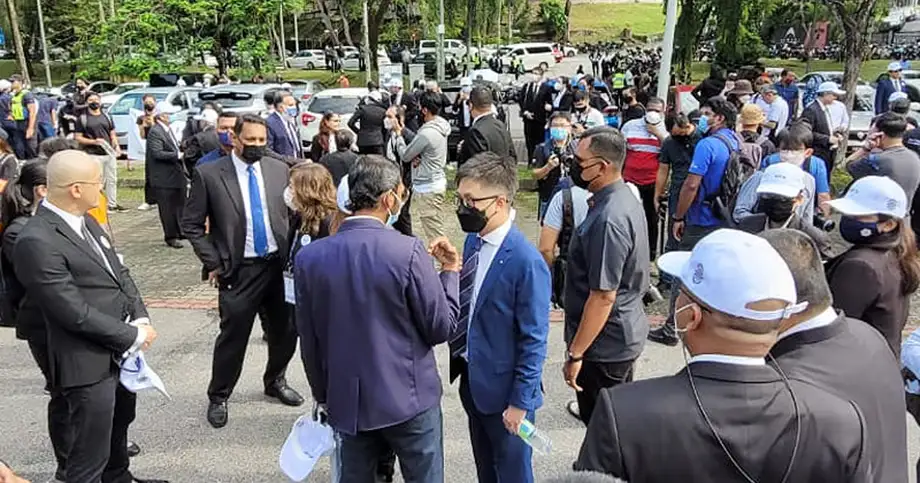
On June 17, 2022, roughly 500 lawyers and legal trainees gathered at the Padang Merbok parking area along Jalan Parlimen in Kuala Lumpur for the Walk for Judicial Independence. Their goal was to walk to the main gate of Parliament House to hand a memorandum urging protection for judicial independence to then Prime Minister Datuk Seri Ismail Sabri Yaakob or his representative.
The Malaysian Bar organised the procession to protest what it viewed as intimidation of the courts and a breach of the separation of powers. Specifically, the Bar objected to an announcement by the Malaysian Anti-Corruption Commission regarding an investigation into Datuk Mohd Nazlan Mohd Ghazali, who served as a Court of Appeal judge at the time and now sits on the Federal Court.
On October 20, 2022, after police blocked the walk to Parliament, the Malaysian Bar and its four office bearers sued six defendants. The named defendants included former Dang Wangi police chief ACP Noor Dellhan Yahaya, the Inspector-General of Police, the Home Minister, and the Government of Malaysia, while the identities of the other two defendants were not disclosed.
Why False Imprisonment and Misconduct Claims Failed
Although the Court of Appeal confirmed that police breached the constitutional rights of the marchers, the judges dismissed several broader claims and declined to award general, aggravated, or punitive damages. Plaintiffs had also sought court declarations that their detention was unlawful, alongside claims for false imprisonment, misfeasance in public office, and misconduct in public office.
False imprisonment in civil law requires proving that authorities completely deprived people of their physical freedom to leave a place. Delivering the judgment for the panel, Justice Choo explained why the police blockade along the march route did not meet that legal standard.
While participants were prohibited from marching to Parliament House, they were not physically restrained from leaving the area.
The bench also upheld the High Court ruling that police were not liable for misfeasance in public office, and rejected the related claim of misconduct in public office. Judges noted that misconduct in public office carries a high subjective legal threshold, meaning plaintiffs must prove deliberate bad faith by officials rather than an error of law or procedure.
Timeline of the Padang Merbok Dispute
The legal dispute over the Walk for Judicial Independence unfolded over several stages from the initial assembly notice to the appellate verdict, though the exact calendar date of the latest Court of Appeal ruling and the calendar year of the March 20 High Court judgment were not given.
- June 3, 2022: The Malaysian Bar submits its assembly notice to police under Section 9 of the Peaceful Assembly Act 2012.
- June 16, 2022: The Dang Wangi district police chief sends a letter imposing march conditions, less than 24 hours before the event and past the limit of three days.
- June 17, 2022: About 500 lawyers and trainees gather at Padang Merbok for the Walk for Judicial Independence and are barred from marching to Parliament.
- October 20, 2022: The Malaysian Bar and four office bearers file a civil lawsuit against six government and police defendants.
- March 20 (preceding year): The High Court rules police acted beyond their powers and grants RM1 in nominal damages while finding DBKL consent was required.
- Court of Appeal verdict: Judges overturn the DBKL consent ruling, uphold the dismissal of false imprisonment and misconduct claims, and award RM59,449 in special damages.
Legal Teams and What Changes for Future Assemblies
Lawyers New Sin Yew, Nur Izni Syazwani Ahmad, and Abhilaash Subramaniam represented the Malaysian Bar and its former leaders at the appeal. Senior Federal Counsel Al-Saifi Hashim and Federal Counsel Ashraf Abd Hamid appeared on behalf of the government.
For municipalities across Malaysia, the ruling establishes that managing parks, squares, and roads does not give local councils legal standing to block peaceful gatherings under the PAA. Councils may still enforce local bylaws on noise or smoking, while assembly organisers can notify police directly without first seeking municipal consent.
For police commanders, the judgment reinforces that any restrictions placed on a peaceful assembly under Section 14 of the PAA must be issued within three days of receiving an organiser notice, or those conditions lose legal force.
Key Points
- The Court of Appeal ruled that local councils such as DBKL are caretakers, not owners or legal occupiers, of public spaces under the Local Government Act 1976.
- Organisers do not need local council consent before notifying police of a peaceful assembly under Section 9(1) of the Peaceful Assembly Act 2012.
- Local authorities can still regulate everyday public conduct, including loud music and smoking.
- Police conditions on the June 17, 2022 Walk for Judicial Independence were invalid because officers missed the statutory limit of three days to respond.
- The Malaysian Bar and four former office bearers were awarded RM59,449 in special damages plus 5% annual interest, though claims for false imprisonment, misfeasance, and misconduct in public office failed.