Parliamentary Opposition Seeks Writ of Mandamus From Top Courts
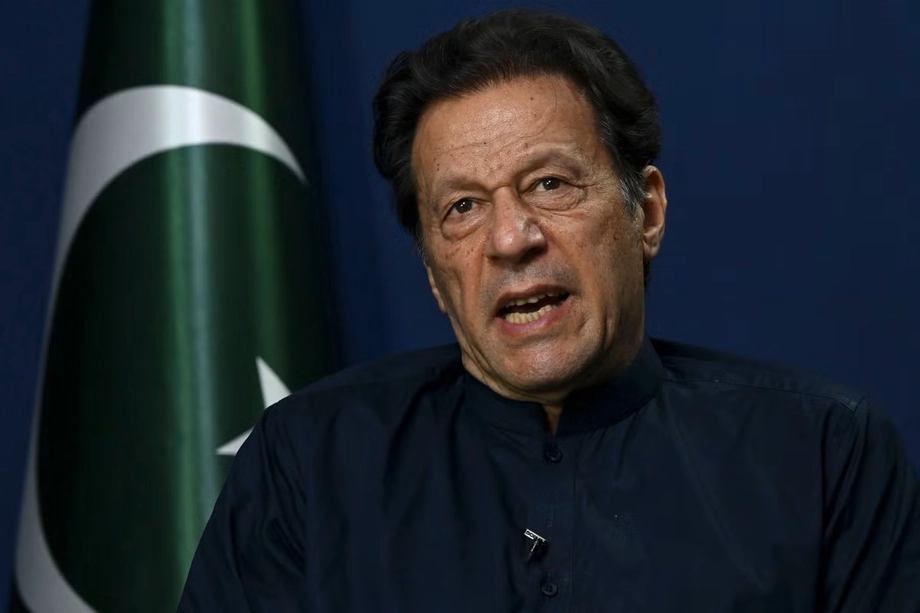
National Assembly opposition leader Mahmood Khan Achakzai and Senate opposition leader Allama Raja Nasir Abbas wrote to Pakistan's top three courts on Monday, November 23, 2026, warning that the life of jailed former prime minister Imran Khan is in danger in state custody. Their joint letter, spanning seven pages, asks the chief justices of the Federal Constitutional Court, the Supreme Court, and the Islamabad High Court to intervene urgently over the health and detention conditions of Khan, aged 74, and his wife, Bushra Bibi.
Contents
- Parliamentary Opposition Seeks Writ of Mandamus From Top Courts
- Why the August Hospital Order Remains Unfulfilled
- Heart Strain and Blood Pressure Warnings for Imran Khan
- Failing Eyesight and Urgent Surgical Needs for Bushra Bibi
- The Battle Over Solitary Confinement and Family Access
- How the Government Defends Its Prison Care
- International Pressure and Constitutional Warnings
- Key Dates in the Custody and Medical Dispute
- Political Stakes and Upcoming Court Hearings
- The Essentials
Advocate Khalid Yousuf Chaudhry, legal counsel for the Pakistan Tehreek-e-Insaf (PTI) founder, said the opposition leaders submitted the letter in their constitutional capacity to invoke the jurisdiction of the higher judiciary. They urged the Supreme Court to convert the application into a formal petition for the enforcement of fundamental rights and issue a writ of mandamus, a judicial order that compels government officials to carry out duties required by law. The requested directives name the federal government, the Islamabad chief commissioner, the Punjab inspector general of prisons, and the superintendent of Adiala Jail in Rawalpindi.
Achakzai and Abbas, both nominated and supported by the PTI in Parliament, argued in the document that constitutional protections remain binding even after a criminal conviction. Setting out that legal principle, the two opposition leaders wrote:
The rights at stake are not privileges of a prisoner. They are guarantees the Constitution makes to every person, which no conviction and no executive convenience can suspend.
Why the August Hospital Order Remains Unfulfilled
Central to the petition is an August 18, 2026 ruling by the Supreme Court that ordered authorities to transfer Khan within two days from Adiala Jail to Shifa International Hospital, a private facility in Islamabad, and keep him there until September 16. That ruling followed an August 10 cardiac board review submitted by the jail superintendent, after which the judges noted that Khan's pulse and heart condition were abnormal and that his vital organs had started being affected. The court also instructed officials to form a medical board including his sister, Dr Uzma Khan, and his personal physician, Dr Faisal Sultan.
Opposition leaders stated in their letter that the August 18 directive was defeated within 72 hours. On the night of August 20 and 21, authorities instead drove Khan to the government hospital, the Pakistan Institute of Medical Sciences (PIMS), and returned him to Adiala Jail before dawn without constituting the ordered medical board. Information Minister Attaullah Tarar blamed a security risk created by PTI workers gathering along the route and outside the hospital for the diversion, an allegation the PTI denied as an excuse to defy the judges. Challenging the substitution of a government facility, Achakzai and Abbas argued in their letter:
The hospital and the independent doctors were the substance of the order. An order to provide independent care is not implemented by providing care that is not independent.
Three months after the ruling was issued, the letter states, the Supreme Court order remains unfulfilled while the threat to Khan's life has grown. The opposition leaders demanded Khan's transfer to Shifa International Hospital within 24 hours, the immediate formation of a medical board comprising a cardiologist, a retina specialist, and a general surgeon, and continuous supervision by Dr Faisal Sultan and Dr Uzma Khan. They also cited his earlier medical appeal on November 16, prepared by lawyer Barrister Salman Safdar after a meeting lasting three hours at Adiala Jail on November 11, alongside a request for a court officer or local commission to report on compliance within seven days.
Heart Strain and Blood Pressure Warnings for Imran Khan
Imran Khan, who has been imprisoned since August 5, 2023 and occupies a cell measuring 1.8 metres by 2.4 metres in Adiala Jail, wrote in his November 16 plea that his blood pressure climbed to 192 and 193 on November 10. Doctors had warned him that those readings left him vulnerable to a brain haemorrhage, which is bleeding inside or around the brain, and cardiac arrest, when the heart suddenly stops pumping blood effectively. Former president Arif Alvi also pointed to an August medical report showing a resting heart rate of 54 beats per minute, explaining that a jump from Khan's lifelong athletic baseline in the low 40s signaled physical strain.
Dr Faisal Sultan, chief executive of the Shaukat Khanum Memorial Cancer Hospital and Khan's physician for more than 30 years, warned that uncontrolled blood pressure causes lasting injury to major organs. Sustained hypertension forces the heart to pump against higher resistance, leading to thickening of the heart muscle known as hypertrophy, while also damaging kidney function and the blood vessels of the retina. Speaking about the urgency of specialist care after Khan's November readings became public, Dr Sultan issued a direct warning:
If I had a patient who had this kind of high blood pressure reading, I'd get them to see a good nephrologist or cardiologist as near as possible, today or tomorrow. The blood pressure needs to be brought down within days.
On Saturday, November 21, a special medical team from PIMS led by Dr Arif entered Adiala Jail through Gate No. 5 and examined Khan and Bushra Bibi separately for about an hour, checking their blood pressure and eyes. Prison hospital staff assisted with the assessments before both detainees were returned to their cells. Authorities did not immediately release the findings from Saturday's examinations, leaving the couple's lawyers and relatives without updated test results.
Failing Eyesight and Urgent Surgical Needs for Bushra Bibi
Both prisoners face severe vision threats that have escalated throughout 2026. Khan's right eye ailment, central retinal vein occlusion, came to light in late January when he received an intravitreal injection at PIMS during a procedure lasting 20 minutes to treat a blockage in the vein carrying blood away from the retina. In February, Barrister Safdar reported to the Supreme Court that Khan had lost 85 percent of vision in his right eye, though a subsequent medical board of Dr Nadeem Qureshi and Dr Arif recorded an improvement from 6/36 to 6/9, with vision in his left eye at 6/6 with glasses. Khan underwent another eye injection late on November 10.
Bushra Bibi, arrested on January 17, 2025, has experienced worsening sight since March 2026, when doctors diagnosed posterior vitreous detachment in her right eye alongside myopia and astigmatism after she reported blurred vision, black spots, flashes of light, and headaches. On April 16, 2026, she suffered a retinal detachment, a serious condition in which tissue sensitive to light pulls away from the back of the eye, and underwent complex surgery. Writing in his November 16 letter from Adiala Jail, Khan said that when he met her in November she could not tolerate light or open her eyes properly, adding that doctors diagnosed a mature cataract requiring a second surgery.
Bushra Bibi filed a petition at the Islamabad High Court on November 7 seeking her full medical records and immediate transfer to a specialised eye hospital. On November 19, the court declined her transfer request while instructing Adiala Jail authorities to provide all possible medical treatment inside the prison, arrange specialist visits whenever required, and maintain proper hygiene in her cell. Monday's letter from Achakzai and Abbas renewed the demand to shift her to an eye hospital chosen by her family and release her complete medical records without delay.
The Battle Over Solitary Confinement and Family Access
Beyond medical treatment, the opposition leaders demanded an immediate end to Khan's solitary confinement, stating he has been held in isolation for nearly 11 months. Khan wrote that he has been confined alone for up to 22 hours daily since December 20, 2025, when a court sentenced both him and Bushra Bibi to prison terms of 17 years in the Toshakhana-II case over allegations they unlawfully retained a Bulgari jewellery set gifted by the Saudi crown prince. Although the Islamabad High Court previously permitted meetings twice a week on Tuesdays and Thursdays, PTI officials say prison authorities repeatedly blocked family, legal, and party visitors.
Khan's sons, Sulaiman Isa Khan and Kasim Khan, who live in the United Kingdom, alleged in an interview that guards had been ordered not to speak to their father during isolation lasting 22 to 23 hours a day. The brothers said neither regular phone calls with them nor private hospital care ordered by the Supreme Court in August had been implemented. Expressing fear for his survival in Adiala Jail, Sulaiman and Kasim warned:
We can see the path that this is taking. It's inevitable that eventually he will die in this cell. He will be killed in this cell if he remains there any longer without proper treatment.
Restrictions have also extended to Khan's relatives outside prison. Police detained three of his sisters on September 20 and 21 under Section 3 of the Maintenance of Public Order Ordinance, 1960, ahead of a PTI march to Islamabad planned for September 27 that did not proceed. Authorities released Uzma Khan and Noreen Niazi on November 12 after nearly two months in custody, while Aleema Khan remains held at Kot Lakhpat Prison in Lahore.
How the Government Defends Its Prison Care
Government ministers reject allegations of medical neglect, torture, and solitary confinement. Parliamentary Affairs Minister Tariq Fazal Chaudhry stated that Khan receives regular weekly checkups from qualified specialists, has been taken to PIMS eight times where doctors declared his health satisfactory, and has access to meals of his choice, books, and television. Earlier, Prime Minister's adviser Rana Sanaullah told the Senate that Khan was receiving "the best available medical treatment" and maintained that moving a prisoner to a private hospital requires judicial authorisation rather than executive discretion.
PTI leaders counter that evaluations arranged exclusively by the state fail to address Khan's worsening hypertension and eye condition. Senior PTI leader Zulfiqar Ali Bukhari argued that every doctor who has examined Khan acted at the direction of the government without resolving his blood pressure or restoring contact with family, which the prison medical board itself had recommended to ease his anxiety. Bukhari added that Khan's November 16 plea sought no special favours or political deal, only the enforcement of court orders already on record.
International Pressure and Constitutional Warnings
International scrutiny intensified on November 19 when United Nations High Commissioner for Human Rights Volker Turk addressed Khan's detention in an interview, warning that human rights defenders, journalists, and opposition figures in Pakistan face arbitrary detention. Achakzai and Abbas cited Turk's intervention in their Monday letter, arguing that the case is no longer a purely domestic matter and that the standing of Pakistan's courts and institutions is being judged internationally. Urging confidence measures between the government and opposition, Turk stated:
I call for [Imran Khan's] release. I call for his proper treatment, and I actually call for de-escalation.
Separately, Amnesty International and its South Asia Regional Office issued statements on November 17 and 18 condemning the denial of adequate medical care, family visits, and legal counsel to Khan and Bushra Bibi, as well as the detention of his sisters. Amnesty noted that Khan had received no family visits since December 2025 apart from two meetings with a sister in August 2026, and no phone calls with his sons since March 2026. The rights organisation cited Article 10 of the International Covenant on Civil and Political Rights (ICCPR), which requires humane treatment for all people deprived of liberty.
Achakzai and Abbas grounded their domestic legal argument in both the ICCPR and the Convention against Torture, alongside the United Nations Standard Minimum Rules for the Treatment of Prisoners, which prohibit solitary confinement exceeding 15 consecutive days. They also pointed to the Supreme Court's unanimous March 2024 ruling acknowledging that former prime minister Zulfikar Ali Bhutto had not received a fair trial. If harm comes to Khan or Bushra Bibi in custody, the opposition leaders warned, responsibility will rest on the state and history will question the judiciary's response.
Key Dates in the Custody and Medical Dispute
- August 5, 2023: Imran Khan is arrested and detained at Adiala Jail in Rawalpindi, where he remains serving a sentence of 14 years in the Al-Qadir Trust corruption case alongside other legal proceedings.
- January 17, 2025: Bushra Bibi is arrested in connection with corruption charges, and both she and Khan are sentenced to 17 years on December 20, 2025 in the Toshakhana-II case.
- January to April 2026: Khan receives eye injections at PIMS for right central retinal vein occlusion, while Bushra Bibi undergoes surgery on April 16 following a retinal detachment.
- August 18, 2026: The Supreme Court orders Khan moved within two days to Shifa International Hospital under an independent medical board, before authorities instead take him briefly to PIMS on August 20 and 21.
- November 10 to 16, 2026: Khan receives another eye injection as blood pressure reaches 192 and 193, prompting his November 16 open letter to Pakistan's top three chief justices.
- November 19 to 23, 2026: The Islamabad High Court orders jail medical care for Bushra Bibi, UN rights chief Volker Turk calls for Khan's release, a PIMS team examines the couple on November 21, and opposition leaders file their joint petition on November 23.
Political Stakes and Upcoming Court Hearings
Political analysts in Lahore offered cautious assessments of whether the latest legal appeals will alter the standoff between the PTI and Prime Minister Shehbaz Sharif's coalition government. Commentator Habib Akram noted that Khan framed his November 16 appeal around prison manual rights rather than a plea for mercy, yet doubted the letter would force compliance because earlier Islamabad High Court and Supreme Court directives went unimplemented. Analyst Mehmal Sarfraz observed that Khan's primary motivation in writing appeared to be urgent concern over his wife's deteriorating eyesight.
Earlier in August, analyst Benazir Shah suggested that mounting security attacks in Balochistan and unrest in Azad Jammu and Kashmir could give the government an incentive to ease tensions with the PTI, though any political deal would require Khan's direct approval. PTI spokesperson Sheikh Waqas Akram stated that street mobilisation would continue unless court orders are enforced and talks address the 2024 election mandate, while Khyber Pakhtunkhwa Chief Minister Sohail Afridi urged against playing politics over Khan's health. No hearing date has been fixed yet for the opposition leaders' November 23 petition or Khan's November 16 appeal, though the Islamabad High Court has scheduled the couple's main Al-Qadir Trust appeals for Wednesday, November 25 before Chief Justice Sardar Sarfraz Dogar and Justice Muhammad Asif.
The Essentials
- National Assembly opposition leader Mahmood Khan Achakzai and Senate opposition leader Allama Raja Nasir Abbas wrote to Pakistan's three top chief justices on November 23 seeking urgent medical transfers for Imran Khan and Bushra Bibi.
- The petition demands enforcement of an August 18 Supreme Court order to move Khan to Shifa International Hospital under Dr Faisal Sultan and Dr Uzma Khan within 24 hours.
- Khan reported blood pressure readings of 192 and 193 on November 10, while Bushra Bibi requires a second operation following April retinal detachment surgery to prevent permanent vision loss.
- Government ministers maintain Khan receives regular weekly care and eight PIMS visits, denying allegations of solitary confinement and medical neglect.
- UN human rights chief Volker Turk and Amnesty International have urged Pakistani authorities to provide independent care, restore family visits, and ease political tensions.
- No date has been set to hear the medical petitions, while the Islamabad High Court will hear the couple's Al-Qadir Trust appeals on November 25.