55 operating projects put electricity and chip use under scrutiny
Malaysia plans to put data centre disclosure requirements into law, seeking information on electricity use, imported graphics processing units and the companies running each facility as the government tightens oversight of a rapidly expanding industry.
Contents
- 55 operating projects put electricity and chip use under scrutiny
- What operators would have to disclose
- Why unused electricity capacity still costs money
- A much larger charge for the reservation gap
- How large is Malaysia's data centre pipeline?
- Malaysia wants restricted chips used where declared
- Speedmatrix scrutiny draws different ministerial accounts
- Power rules are catching up with investment plans
- How the measures developed
- Key Points
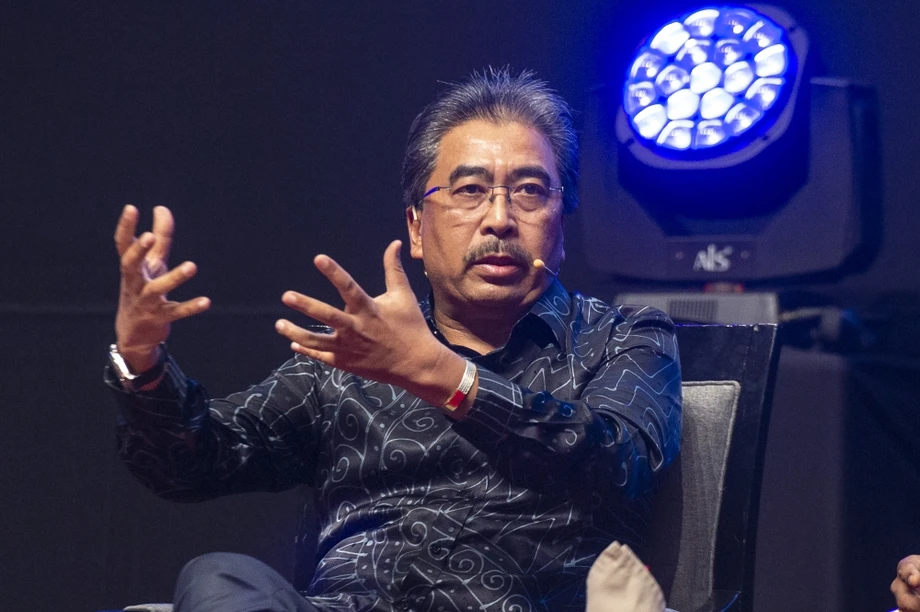
Investment, Trade and Industry Minister Johari Abdul Ghani said on November 12, 2026, that 55 of Malaysia's 117 approved data centre projects had begun operations. Authorities want to know each facility's location, its operators and its hyperscalers, the large technology companies that run computing infrastructure at enormous scale.
The proposed requirements connect two concerns: electricity capacity reserved but left unused, and advanced chips imported for Malaysian facilities that could instead be shipped elsewhere. Johari said monitoring must continue after investment approvals are granted.
Operators will also remain responsible for electricity capacity reserved under supply agreements. Johari used the example of a facility booking 100 megawatts but drawing only 50 megawatts: the unused 50 megawatts would still carry a charge.
The disclosure measure is being developed alongside a review of existing laws governing restricted chip movements. No legislative text, commencement date or detailed reporting schedule was announced.
What operators would have to disclose
Malaysia wants applicants planning data centres to identify who will operate them, where they will be located and how many graphics processing units, or GPUs, they intend to import. Operational monitoring would also cover electricity consumption.
GPUs are processors that handle many calculations at the same time. They are widely used to train and run artificial intelligence systems, making advanced models valuable equipment for companies building large computing facilities.
A data centre can involve several businesses: a property owner, a facility operator and customers renting space for their computers. Collecting their identities would help authorities connect imported hardware with the location where it is supposed to work.
Johari said Malaysia could confirm which facilities were using particular chips if US authorities requested that information. The practical aim is to follow equipment beyond its arrival at the border and check its declared use inside the country.
Why unused electricity capacity still costs money
Electricity suppliers must plan around the capacity promised in supply contracts. A data centre reserving 100 megawatts asks the utility to keep that amount available, even while its servers initially draw much less.
Johari, the minister responsible for investment, trade and industry, explained the billing consequence:
"For example, if a data centre books a capacity of 100 megawatts (MW) but only uses 50MW, they will still be billed for the remaining 50MW not being used," he said.
Capacity measures how much power a facility can draw at a particular moment. Electricity consumption measures how much energy it uses over time. A reservation charge pays for keeping capacity available, while consumption charges relate to electricity actually used.
Johari said some reservations could remain unused for one to three years. During that period, Tenaga Nasional Bhd, Malaysia's electricity utility, must plan infrastructure and leave capacity available for the customer that booked it.
The policy puts the cost of that commitment on the operator. It also gives developers a financial reason to match their bookings more closely to the pace at which they install equipment and attract customers.
A much larger charge for the reservation gap
The connected load charge has reportedly risen from RM8.50 to RM89.64 per kilowatt, an increase of about 10.55 times. The monthly charge applies to the gap between actual maximum demand and the reference maximum demand reserved under the relevant arrangements.
For scale, a chargeable gap of one megawatt equals 1,000 kilowatts. Applying those rates to the same gap gives RM8,500 under the old rate and RM89,640 under the revised rate. The final bill depends on the contractual demand calculation and applicable conditions.
The implementation date remains unconfirmed. Parliament had been informed of an increase without receiving the revised rate or effective date, and TNB's published information still showed the old rate when the increase was reported.
A new tariff category for supply at ultra high voltage also requires developers or operators to bear transmission upgrade costs. These are the costs of strengthening the network that carries electricity to a facility, rather than simply buying the electricity itself.
How large is Malaysia's data centre pipeline?
The 117 approved projects have a combined maximum power demand of about 23,500 megawatts, equivalent to 23.5 gigawatts. That figure describes the scale of the approved pipeline, which includes facilities at different stages of development.
The latest breakdown lists 55 operating projects, 19 under construction, 16 approved but not started and 27 approved for electricity supply outside the national grid. About 24 further applications were awaiting approval.
Operating projects therefore account for roughly 47% of the approved total, calculated as 55 out of 117. More than half of the approved projects are in the other listed categories, making the timing of future electricity needs a central planning concern.
Data centres accounted for RM95.8 billion, or 43.9%, of approved investment in the first half of 2026. The sector represented 0.4% of approved investment in 2021. Those shares show how far the industry has moved toward the centre of Malaysia's investment programme.
For the government, approval is now only the first step. Electricity reservations, construction progress and the arrival of computing equipment determine when an investment announcement becomes an operating facility and when the supporting infrastructure is needed.
Malaysia wants restricted chips used where declared
Johari said imported GPUs should serve the Malaysian facilities for which they were brought into the country. He described cases in which parties rented local data centre space, imported chips and subsequently shipped them out again.
The Digital Ministry is reviewing whether existing laws can be used against such transactions involving chips subject to US restrictions. Johari also said Malaysia lacked a specific law to stop every movement of chips, pointing to the need to examine the legal powers already available.
Malaysia introduced export controls in 2025 on the movement of advanced AI chips of US origin after pressure from Washington to curb their flow to China. The current review concerns how authorities can act when equipment enters Malaysia for a declared local purpose and is later re-exported.
Johari described the government's objective at the press conference:
"If they want to use this country to trade something that is defined as an illegal transaction, we need to make sure that it will not happen in this country," he said.
Re-export means sending an imported item onward to another country. For data centre oversight, the key practical task is to connect import records, the declared Malaysian customer and the hardware actually installed at a facility.
Speedmatrix scrutiny draws different ministerial accounts
Speedmatrix Sdn Bhd, a Malaysian unit of Singapore based cloud computing company Megaspeed International, has come under scrutiny over allegations that Nvidia chips may have been channelled to Chinese users.
Johari was quoted saying the government had no plans to open an investigation into Speedmatrix. He was also quoted on November 12 saying Malaysia would examine whether the company had breached export restrictions and whether GPUs it purchased had been re-exported to China. He said no formal request from foreign authorities had been received.
Johari said the government was prepared to assist an investigation if requested. His comments focused on the destination and use of the hardware, with purchases for a company's own Malaysian data centre treated differently from shipments that breach export restrictions.
Malaysian company records identified Speedmatrix and MSFusion Sdn Bhd as entities linked to Megaspeed. Both were described as businesses providing data processing and hosting infrastructure services, recording losses and listing addresses at the same development in Taman Eko Botani, Iskandar Puteri, Johor.
Megaspeed and its Malaysian units were reported in October 2025 to have bought nearly US$2 billion, or RM8.4 billion, in Nvidia chips. Megaspeed was also reported to be under investigation in the United States and Singapore.
James Tan Yong Pong, Megaspeed's chairman and chief executive, said the company took its US export control obligations seriously and was committed to working constructively with the US government. He set out its position in a statement:
"Megaspeed welcomes appropriate government scrutiny and is committed to demonstrating through concrete actions that it operates responsibly, transparently, and in accordance with applicable US laws," he said.
Power rules are catching up with investment plans
Malaysia's latest disclosure proposal follows its decision to make investors pay for reserved power and upgrades. Johari outlined those conditions in Parliament on October 15, linking the industry's growth to the cost of supplying electricity without placing additional pressure on households and existing businesses.
The government has also approved a 30% renewable energy minimum for data centres. Deputy Prime Minister Fadillah Yusof told Parliament on October 28 that the Energy Commission was developing the framework and guidelines.
Figures presented with that policy showed that, as of August 2026, data centres had contracted for 2,346 megawatts but were drawing 1,374 megawatts. The gap was 972 megawatts, or 41.5% of contracted demand, providing a concrete measure of the difference between booked capacity and actual use.
Google's planned Malaysia expansion illustrates the scale of investment still approaching. Announced on November 4, it involves US$15 billion during 2027 and 2028, three additional data centres, electricity and water projects, and skills programmes.
Google also plans to add more than one gigawatt of clean electricity capacity to the national grid. Its project shows how the next stage of data centre investment increasingly includes infrastructure beyond the buildings housing the computers.
How the measures developed
Malaysia's recent decisions form a sequence of tighter conditions on electricity use, infrastructure costs and chip movements:
- 2025: Malaysia introduced export controls on advanced AI chips of US origin.
- October 15, 2026: Johari outlined requirements for data centre investors to pay for reserved electricity capacity and transmission upgrades.
- October 28, 2026: Fadillah described the approved minimum renewable energy requirement and work on its implementation framework.
- November 4, 2026: Google announced its planned US$15 billion expansion for 2027 and 2028.
- November 12, 2026: Johari described the proposed disclosure requirements and the review of laws covering restricted GPU movements.
Johari made the latest remarks at the launch of MySaham Miti, a mobile application intended to help Bumiputera investors obtain information and manage matters involving Saham Khas Bumiputera share allocations. The ministry described the app as part of efforts to broaden access to corporate equity ownership and improve digital transactions and application management.
For data centre operators, the immediate message is concrete: authorities want accurate information about electricity needs, corporate responsibilities and imported equipment throughout a facility's operation. For the electricity network, more accurate declarations would help match infrastructure commitments to the demand that actually arrives.
Key Points
- Malaysia plans legal requirements for data centres to disclose electricity use, GPU imports, operators and locations.
- Johari said 55 of 117 approved projects were operating; the approved pipeline has maximum power demand of about 23,500 megawatts.
- Operators remain liable for unused reserved electricity capacity, while the reported higher connected load charge awaits a confirmed implementation date.
- The government is reviewing legal powers over restricted chips imported for Malaysian use and subsequently re-exported.
- Johari was quoted both ruling out a planned Speedmatrix investigation and saying possible export breaches would be examined.
- Megaspeed says it welcomes appropriate scrutiny and is committed to complying with applicable US laws.