School experiences shape a wider crisis of belonging
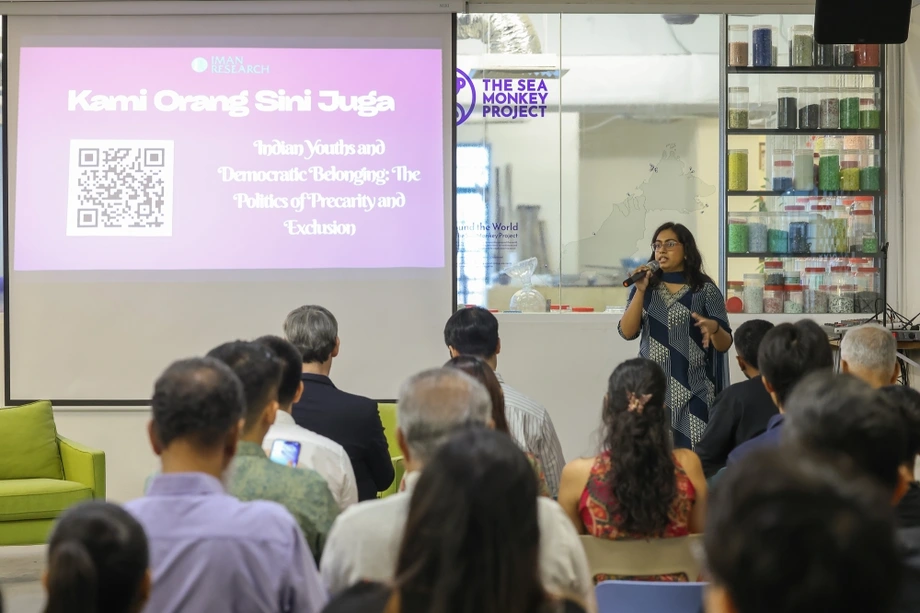
Interviews with 111 Indian youths across Malaysia describe teachers denying leadership opportunities, students facing racial abuse and families struggling with barriers to further education. Iman Research's Indian Youth Report, launched on November 12, 2026, connects those experiences to difficulties finding work and housing, and to growing distrust of political institutions.
Contents
- School experiences shape a wider crisis of belonging
- What the school survey measured
- When teachers become part of the problem
- Why complaints and family status matter
- Shared classrooms do not automatically create inclusion
- Matriculation becomes another point of exclusion
- Rejection continues in work and housing
- Political frustration centres on results
- What the proposed response would address
- Key Points
The findings put schools at the centre of a wider problem: young people described feeling excluded by institutions they expected to help them advance. Some recalled teachers reinforcing stereotypes rather than protecting students from them. Others described rejection continuing into the job and rental markets, where personal contacts could become essential to securing an opportunity.
Iman Research researcher Shaleen Surendra, who presented the findings, warned that leaving these experiences unaddressed would carry political consequences.
"The report unpacks the repercussions of leaving these issues unaddressed, namely political alienation and distrust, which will shape the next election and the political landscape of the country," she said.
The study also draws on a 2021 survey by youth movement Sekolah Semua. That survey collected 2,441 responses nationwide and found that 87 per cent of Indian respondents recalled discrimination in education because of their ethnicity. Together, the interviews and survey describe both the personal cost of exclusion and the difficulty of getting institutions to respond.
What the school survey measured
Sekolah Semua's Discrimination in Education Survey ran from September 1 to 10, 2021. All respondents were at least 18 years old, meaning they were looking back on their education. The 2,441 responses covered the nationwide survey as a whole, rather than only Indian participants.
Among Indian respondents, 74 per cent identified teachers as a source of discrimination and 73 per cent identified peers. Sixty nine per cent reported discrimination linked to skin colour, while 65 per cent cited religion. Fifty four per cent described verbal discrimination, and 40 per cent said their identity had cost them opportunities.
Jason Wee, cofounder of Architects of Diversity Malaysia and manager of Sekolah Semua, described the survey as retrospective and a starting point for further research. Its figures capture adults' recollections of school experiences. Iman Research's later interviews provide detailed accounts of how young people experienced exclusion and understood its effects.
The chronology shows how the discussion developed:
- September 1 to 10, 2021: Sekolah Semua collected 2,441 responses about experiences of discrimination in Malaysian education.
- May 5, 2026: A Kami Orang Sini Juga discussion featuring Shaleen examined Malaysian Indian identity, including the roles of language and class.
- November 12, 2026: Iman Research launched its Indian Youth Report, drawing on interviews with 111 youths nationwide.
When teachers become part of the problem
One interview participant described seeking a leadership role at a school in a partly urban area and being told in advance that the position would be withheld. The respondent recalled teachers repeatedly making them feel inadequate.
The teachers would directly tell me, you can come from this interview, but I'll tell you now itself, I will not give you this position... It really made me feel so inferior in that school. I'm really such a nobody here. I cannot do anything. I cannot grow.
Another participant recalled a Bahasa Melayu teacher using an ethnic slur while separating Indian students into supposedly good and bad groups. The allegation places an adult responsible for students' learning at the centre of the stereotyping they experienced.
Iman Research describes the pressure this creates as "respectability politics": students feel they must behave exceptionally well to avoid having negative assumptions attached to their entire community. An ordinary mistake can then feel larger than one child's conduct, because the student fears it will be used to judge other Indian children too.
Why complaints and family status matter
A participant from a middle class family recalled being physically attacked by a group of peers, then being scolded and blamed by teachers. According to the respondent, the response changed after teachers learned that the student's mother was also a teacher.
"It was five or six versus one. It was a physical fight. I got scolded once the fight ended and blamed, and when the teachers found out they didn't realise at that point that my mum was a teacher, but when they found out then they were like, I remember the teacher apologised for scolding me," the youth said.
The account illustrates the report's finding that a comfortable family income did not necessarily protect a student from discrimination. It also explains why fair treatment matters at the first response: a child seeking protection needs adults to examine what happened, regardless of the family's occupation or connections.
The earlier survey points to a broader problem with complaints. Among Indian respondents who reported discrimination to authorities, 92 per cent said no investigation or action followed. The corresponding figure across all respondents who reported their experiences was 48 per cent, a gap of 44 percentage points.
Across the survey, 61 per cent said they had chosen not to report discrimination because they assumed it would make no difference. For schools, the challenge extends beyond stopping abusive behaviour to making students confident that asking for help will lead to a response.
Shared classrooms do not automatically create inclusion
Indian participants described divisions between social groups that could begin as early as kindergarten. Iman Research says children can learn ideas about who belongs and who does not from their surroundings, including parents and teachers.
National schools bring children into a common institution, but the interviews describe segregation and exclusion continuing within it. Sharing a school building can coexist with unequal access to friendship groups, encouragement and leadership opportunities.
Tamil primary schools offered some participants a temporary sense of safety. The report also raised concerns about access to education in a child's mother tongue. A more welcoming primary school environment, however, leaves the later barriers described in further education, employment and housing still to be addressed.
The May 2026 discussion featuring Shaleen explored diversity within the Malaysian Indian community, including how language and class shape relationships within the community and with others. Those differences help explain why a single response may reach some youths while leaving others without support.
Matriculation becomes another point of exclusion
The matriculation quota system emerged as a major concern for youths seeking higher education. Matriculation is a route of study preparing students for university. The report identifies limited places and inadequate educational resources as sources of frustration among respondents from different states, with particular difficulties for those from families with lower incomes.
For a student who has already faced discouragement at school, restricted access to the next stage of education can deepen the feeling that advancement is beyond reach. Family resources also affect how much help a young person can draw on when opportunities become scarce.
The 2021 survey found that 40 per cent of Indian respondents perceived discrimination in government education policies, compared with 36 per cent of Chinese respondents, 15 per cent of Malay respondents and 23 per cent of other Bumiputera respondents. Bumiputera is a Malaysian policy category covering Malays and other indigenous peoples.
Eighty five per cent of Indian respondents considered exclusion from school admission on racial grounds discriminatory. Iman Research recommends allocating matriculation places according to need, alongside sensitivity training for educators. The proposals address two different problems: access to educational places and treatment inside the classroom.
Rejection continues in work and housing
Young people interviewed by Iman Research described inconsistent standards and outright rejection when seeking jobs and rental accommodation. Their accounts extend the story beyond education into the practical tasks of earning a living and finding somewhere to live.
Some relied on informal networks to navigate those markets. Personal contacts can help someone hear about a vacancy, find a landlord or secure an introduction. The report says youths from families with lower incomes may have less access to those networks, leaving them with fewer ways around rejection.
Income therefore has a complicated role in these findings. A middle class student could still face discriminatory treatment at school, while a young person with fewer financial resources could also lack the contacts needed to manage exclusion later. Iman Research recommends legislation against discrimination in hiring and rental practices.
Political frustration centres on results
Participants expressed frustration with the Malaysian Indian Transformation Unit, known as Mitra, because they felt its impact and reach were limited. Their criticism focused on whether support reached young people and made a practical difference.
Iman Research describes Indian youths as an "under-mobilised constituency" and says they are becoming more alert to representation that produces little action. Participants wanted leaders, regardless of ethnicity, who would defend their rights through concrete measures.
The report links distrust to repeated experiences across institutions: a school complaint that goes nowhere, an educational opportunity that feels inaccessible, or a support programme that appears distant. Its recommendations include youth councils and town halls that bring young people into policy discussions and decisions about budgets.
Greater transparency in government funding and civic education are also proposed. These measures would give youths more information about public decisions and more routes to participate beyond established party networks.
What the proposed response would address
Iman Research warns that youths facing exclusion, particularly young Indian boys without adequate support, may become vulnerable to gang recruitment. The concern is that gangs can attract young people by promising safety and belonging when other institutions leave them isolated.
The recommendations connect that warning to the earlier findings. Educator training would address conduct in schools; allocating matriculation places according to need would address access; legislation would govern discrimination in work and housing; and youth forums would create routes into public decision making.
The publication gives no timetable for adopting those proposals. For the young people described in the study, the practical tests are concrete: whether a complaint receives attention, whether an opportunity is fairly accessible, and whether public support reaches those who need it.
Key Points
- Iman Research's report, launched on November 12, 2026, draws on interviews with 111 Indian youths across Malaysia.
- Participants described exclusion in schools, barriers to further education, and rejection in employment and rental markets.
- A 2021 survey found that 87 per cent of Indian respondents recalled ethnic discrimination in education; 74 per cent identified teachers and 73 per cent peers.
- Among Indian respondents who reported discrimination, 92 per cent said no investigation or action followed.
- Recommendations include matriculation places allocated according to need, educator training, legislation against discrimination, youth councils and greater funding transparency.