What the ferret study found
On November 25, 2026, a University of Tokyo team announced a result that puts an ordinary seasonal flu shot and a nasal spray side by side against a virus from the cattle outbreak in the United States. The Nature Communications study, published the same day, tested a bovine H5N1 virus taken from a human case, A/Texas/37/2024, in female ferrets that had no prior influenza exposure. Its journal record lists volume 17, article 11796. The virus belongs to clade 2.3.4.4b, the branch that has spread through dairy herds, wild birds and mammals.
Contents
- What the ferret study found
- Why bovine H5N1 is being watched
- How the test was set up
- What happened in the nose and organs
- Why the nasal spray did better
- What the fatal cases revealed
- How stockpiled H5N8 vaccines compare
- Where India's vaccine work fits
- What is still unknown
- What changes for vaccine planning
- Key Points
The result was stark. In the unvaccinated group, all seven ferrets died or met humane endpoints by day 6 to 8 after infection, according to the study paper. Humane endpoints are set limits, such as major weight loss, inability to stand or low body temperature, when an animal is euthanized to avoid suffering. The Japanese announcement described the same group as dying on days 4 to 8.
All seven ferrets given the injected inactivated vaccine also died or were euthanized by day 12, but the illness advanced more slowly. The Japanese announcement put that group's deaths on days 8 to 12. By contrast, five of six ferrets given the nasal spray survived to day 14; the one death occurred on day 7. Some of those animals lost weight briefly but recovered. That gap is the central finding of the work.
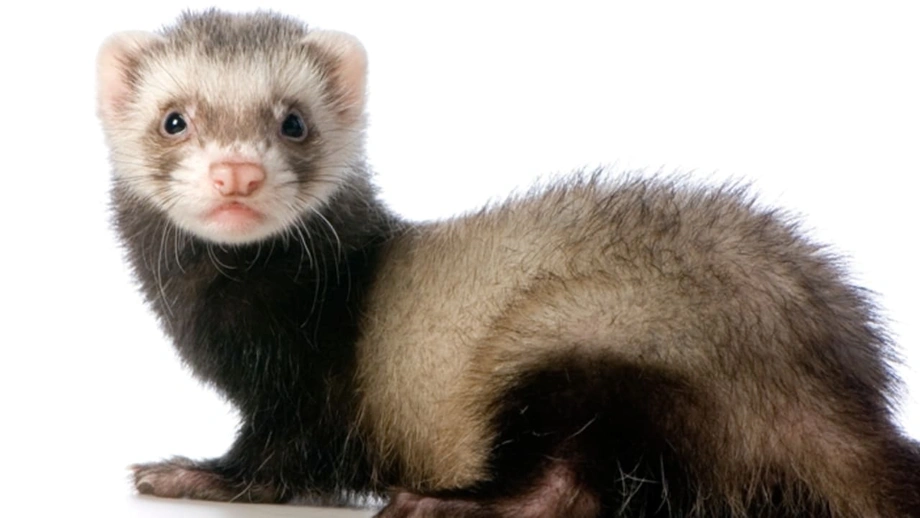
Ferrets are useful in flu research because their respiratory cells and illness patterns resemble human flu more closely than those of mice. They also let scientists track nose, lung and brain virus levels separately. The work was done in high containment conditions because H5N1 is a high pathogenicity avian influenza virus.
Why bovine H5N1 is being watched
The World Health Organization announced on November 24 that three workers at a United States dairy farm had been infected with H5N1. One had an underlying condition and died. Officials described the death as the first believed to be linked to infected dairy cattle. WHO figures put infections linked to cattle at 45 and all United States H5N1 cases at 75 since 2024, a count that includes the more than 30 human infections described in general notices.
H5N1 has circulated in birds for years, but clade 2.3.4.4b has been unusual in its reach. Since 2020, it has spread widely among wild birds and has infected mammals including cattle and seals. The strain studied in ferrets came from the outbreak in United States dairy cattle that began in early 2024 and has affected more than 1,000 herds across 17 states.
A clade is a branch on a virus family tree. Influenza viruses change as they copy themselves, so a new branch can behave differently from older ones. That is why a virus normally associated with birds being found in cattle and people matters to vaccine planning.
Human infections remain rare, but each case in a mammal gives scientists a closer look at how the virus behaves outside birds. The Tokyo team has reported limited respiratory droplet spread between ferrets in earlier work, meaning the virus can move short distances in that model. That finding is one reason scientists watch changes in this clade closely.
The key dates are short and concrete.
- Early 2024: H5N1 clade 2.3.4.4b began spreading in United States dairy cattle.
- November 24, 2026: WHO announced three infected farm workers and one death.
- November 25, 2026: The ferret vaccine results were published.
- Days 3 to 14 after challenge: Vaccine groups diverged in nasal virus levels and survival.
How the test was set up
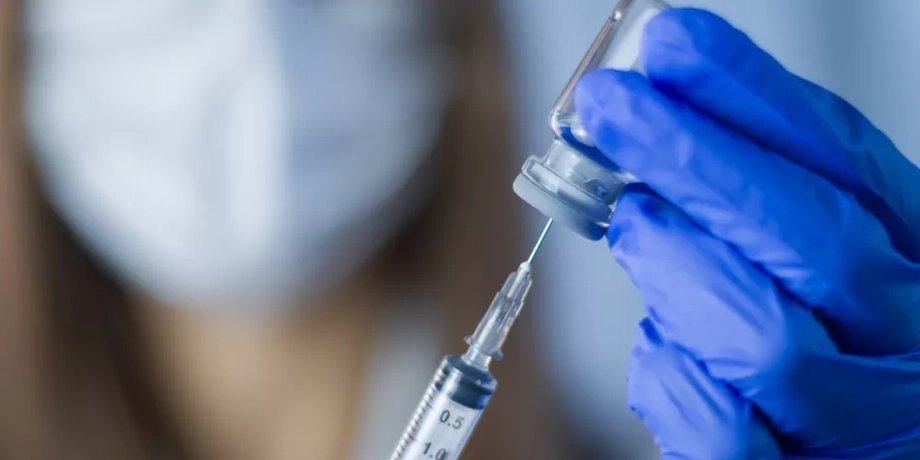
Researchers gave ferrets two doses, four weeks apart, of one of three preparations: a quadrivalent inactivated vaccine, a trivalent live attenuated influenza vaccine known as LAIV, or a control injection. The inactivated vaccine contained 15 micrograms of hemagglutinin from each of four seasonal strains in 0.5 millilitre and was given into muscle. Alhydrogel was added to strengthen the immune signal in animals with no prior flu exposure.
The LAIV was the nasal spray, a vaccine made with weakened live virus that can infect cells in the nose without causing ordinary flu illness. It delivered 10^6.5 to 10^7.5 fluorescent focus units of each of three strains in 0.2 millilitre. Hemagglutinin, often called HA, is the spike a virus uses to enter cells. Neuraminidase, or NA, is the part that helps new virus particles leave an infected cell.
Four weeks after the second dose, the team gave each ferret 100 plaque forming units of A/Texas/37/2024 through the nose. A plaque forming unit is a lab measure of virus that can infect cells and make a visible spot in a culture. The author list included Ryuta Uraki, Kiyoko Iwatsuki-Horimoto, Maki Kiso, Mutsumi Ito, Seiya Yamayoshi, Masaki Imai and Yoshihiro Kawaoka of the University of Tokyo. The work used Biosafety Level 3 containment at the University of Tokyo under ethics protocol A2024PIA006-01, because experiments with high pathogenicity H5N1 require strict controls.
What happened in the nose and organs
Nasal swabs told the first part of the story. No infectious virus appeared on day 1, probably because the challenge dose was only 100 plaque forming units. On days 3 and 5, virus levels in nasal swabs were much lower in both vaccine groups than in the unvaccinated group. By day 7, every surviving ferret in the injected vaccine group still had infectious virus in the nose, while four of six in the nasal spray group had none.
Tissue samples collected on day 3 from four animals in each group showed how far the virus travelled. Every unvaccinated animal had infectious virus in the olfactory bulb, brain, nasal turbinate, lung and trachea. The nasal turbinate is tissue with many folds inside the nose; the olfactory bulb sits at the front of the brain and processes smell. Both vaccines reduced virus in most organs, but the injected vaccine had only limited effect in the nasal turbinate.
Lung tissue from the nasal spray group showed milder alveolar lesions, little bronchiolar involvement and little or no detectable viral antigen. Alveoli are the tiny air sacs where oxygen enters the blood. The injected group varied widely: some animals had little evidence of infection, while two had moderate to severe lung lesions and inflammation around small airways and blood vessels.
Why the nasal spray did better
The team looked for antibodies that could block the H5N1 virus. None were detected in blood or nasal wash samples from either vaccine group. Neutralizing antibodies are the proteins that latch onto a virus and stop it from entering cells. Their absence meant the difference in survival had to be explained somewhere else.
The injected vaccine produced higher levels of antibodies against the seasonal strains in the vaccine, including responses measured by hemagglutination inhibition, a test that shows whether antibodies can stop a virus from clumping red blood cells. It also produced higher binding antibody levels against the H5N1 N1 and NP proteins. Binding is not the same as blocking, and those responses did not match the survival pattern.
The nasal spray induced larger T cell responses, especially against NP, a protein inside the virus that changes less than the outer HA spike. The T cell assays measured interferon gamma, a chemical signal released by activated immune cells, after exposure to H5N1 NP. T cells are immune cells that can find and remove infected cells, like a cleanup crew that works inside the body. The nasal spray group also showed modest NA inhibiting activity in blood; the injected group did not. Taken together, those findings point to T cells and possibly immunity at the nose surface as the main immune features linked to survival.
Yoshihiro Kawaoka, director of the University of Tokyo Research Center for Infectious Diseases of the Next Generation and an author of the study, said the result is useful for planning H5N1 measures. He said the experiment should be seen as guidance for public health decisions, not as a direct measurement of protection in people.
It does not directly show an effect in preventing human infection or severe disease, but it will be useful reference for planning measures against H5N1 virus.
What the fatal cases revealed
The final illness in the unvaccinated group was widespread. At death or euthanasia, virus was found in lungs, nasal turbinates, brains, livers, spleens, kidneys, colons and hearts. That pattern suggests the virus spread through the body, not just through the breathing system. In the injected vaccine group, virus appeared in the brains of three animals numbered 207, 209 and 211, which suggests brain injury may have contributed to some deaths.
Other deaths were harder to explain. Two injected vaccine ferrets, numbered 205 and 208, had no infectious virus in brain or lung when euthanized, yet tissue damage and viral antigen remained in the brain along with lung lesions. A third, numbered 206, had no detectable infectious virus or viral antigen and only minimal lesions; because it was examined on day 12, earlier replication may have ended before the test. The cause of that animal's death was not determined.
The single nasal spray ferret that died had virus in the nasal turbinate, olfactory bulb and liver, but not in the lungs. The team suggested inflammation through the body rather than pneumonia as a possible cause. These careful animal by animal findings matter because lowering virus in the lungs is helpful but does not fully explain survival.
How stockpiled H5N8 vaccines compare
Another Japanese experiment tested a different strategy: a prepandemic H5N8 vaccine stockpiled in Japan. It used A/Astrakhan/3212/2020 from clade 2.3.4.4b and AS03, an adjuvant, which is an ingredient added to make the immune response larger. The work was funded by the Japan Agency for Medical Research and Development and tested mice and ferrets with a virus genetically identical to the human bovine isolate.
In that work, all vaccinated animals survived and all unvaccinated animals died. The stockpiled vaccine induced strong neutralizing antibodies, suppressed virus replication and reduced lung lesions. That contrasts with the seasonal vaccine study, where commercial vaccines came from Denka Seiken and Daiichi Sankyo and no neutralizing activity against the Texas H5N1 virus was found. A vaccine made closer to the target virus can produce a more direct antibody response.
Researchers involved in the stockpile work said it remains unclear whether the vaccine protects people against authentic bovine H5N1 viruses. Neither the stockpile experiment nor the seasonal vaccine study tested the vaccines in humans. The two bodies of work answer different questions: how well a matched H5 vaccine can perform, and whether an existing seasonal vaccine can offer any backup protection.
Where India's vaccine work fits
India has been working on H5N1 from the farm side. The country dedicated India's homegrown H5N1 vaccine for chickens on November 20, 2026, at the ICAR National Institute of High Security Animal Diseases in Bhopal. It is an inactivated vaccine targeting clade 2.3.2.1a, the branch linked to most outbreaks in Indian chickens. It is priced at Rs 1 to Rs 2 a dose. Trials described a single dose protecting chickens for up to six months.
Before that dedication, the planned Bhopal vaccine unveiling was placed against fresh poultry outbreaks, including 35,647 bird deaths in Cuddalore district in Tamil Nadu through November 13. That vaccine is for birds, and the Texas virus in the ferret experiment belongs to another clade, 2.3.4.4b. The two efforts are connected by H5N1, but they serve different animals and different outbreak settings.
What is still unknown
The ferrets in the seasonal vaccine study had never encountered influenza before and received two full doses. Most people have some immunity from earlier infections or vaccinations, so their response to a nasal spray or an injected seasonal vaccine may differ. The study did not include humans, and no date for human testing was given.
Scientists also could not measure all local immune responses in the nose because suitable reagents for ferret IgA were unavailable. IgA is an antibody type that works on surfaces such as the nose and lungs. Some injected vaccine ferrets died late without infectious virus detectable at the time of death, and the study left their exact cause of death unresolved.
What changes for vaccine planning
For planners, the study gives a useful ranking of effects in an animal model. The injected vaccine reduced virus in the lungs, brain and other organs, and delayed death, but all seven animals in that group still died. The nasal spray controlled virus in the nose more effectively, cleared infectious virus from four of six animals by day 7 and left five of six alive at day 14.
For the public, the result is a reason to watch how H5N1 vaccines are chosen, not a reason to treat a seasonal nasal spray as an H5N1 vaccine. Flu vaccines are chosen for the strains they contain and for the way they train immunity. If future work confirms the effect in people with prior flu exposure, the idea that a vaccine given through the nose can protect the surface where H5N1 enters could become part of outbreak preparation.
Key Points
- The nasal spray vaccine protected five of six ferrets against bovine H5N1 from a human case.
- The injected vaccine reduced virus replication and delayed death, but all seven ferrets in that group died or were euthanized by day 12.
- Researchers found no neutralizing antibodies against the Texas H5N1 virus; stronger T cell responses may help explain the nasal spray result.
- WHO announced three infected dairy farm workers, including one death, while United States figures reached 45 infections linked to cattle and 75 H5N1 cases since 2024.
- The study was in ferrets with no prior flu exposure, so protection in people remains untested.