A compliment with a sting: one man cannot carry Hong Kong film
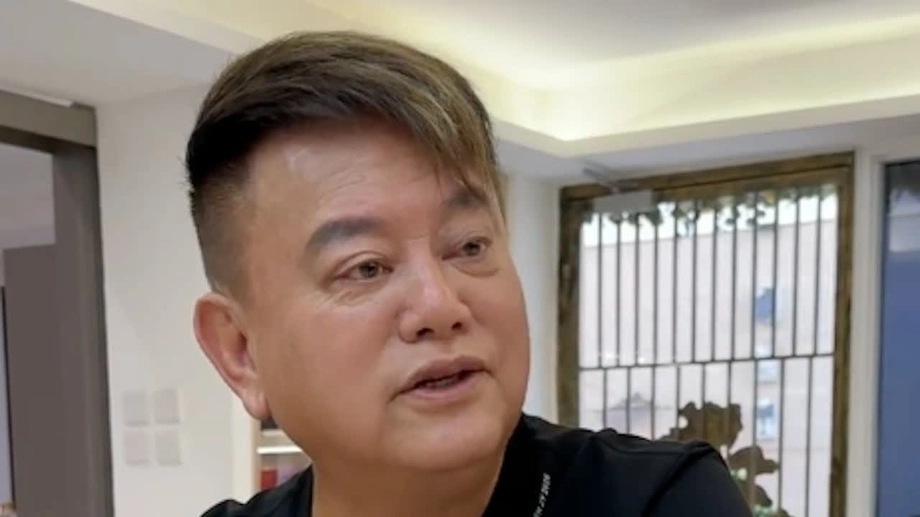
Natalis Chan, the Hong Kong entertainer audiences know as Ah Lek, uploaded a video to a social media platform on November 27 naming Louis Koo as the hardest working figure in the city's film business and then, in the same breath, saying that the effort cannot be enough. Reports on the video appeared that day.
Contents
- A compliment with a sting: one man cannot carry Hong Kong film
- A veteran who no longer works for television
- What a hundred Louis Koos would mean
- Dinner at Ah Lek's house: how Louis Koo came up
- The training ground that stopped producing stars
- Where have the superstars gone?
- Idols as a mirage
- Why speed is the enemy
- From game shows to industry commentary
- Key Points
Chan, aged 76, said Koo, a Hong Kong Film Awards best actor, has been putting his own money and resources behind film production to keep the business standing, and now carries much of the weight of production and of the wider industry. Chan's verdict was that the load is too heavy for one person, and that the business he grew up in would once have spread it across dozens of people doing the same thing.
Speaking in Cantonese, he made the point in a way that has travelled quickly among Hong Kong film fans, praising Koo and measuring the gap in the same sentence:
The hardest working one now is Louis Koo. He is desperately using his own resources to hold it up, but one person's energy cannot do it. Back in our day we had more than a hundred people like Louis Koo.
No figure was attached to the support Chan described, and Koo has not publicly responded to the video.
A veteran who no longer works for television
The praise lands differently because of who is giving it. Chan left TVB, Hong Kong's biggest free to air broadcaster, and has since become one of the sharpest public critics of the business he spent decades in. He has called television a sunset industry, said during a dispute over artist contracts that performers no longer need to depend on the broadcaster, and at the Po Leung Kuk annual charity gala mocked the company's difficulty in booking heavyweight guests.
His favourite target is the company's size. Chan said TVB's market value has fallen to about HK$900 million and that the broadcaster now qualifies as a small company, a jibe he repeated in the same breath as his praise for Koo:
TVB is a small company now.
Market value in this context is the price the stock market puts on a listed company, worked out by multiplying the share price by the number of shares. TVB's shares trade on the Hong Kong exchange under stock code 0511. For a broadcaster that once set the rhythm of Cantonese entertainment across Asia, Chan's figure is his way of saying that the institution's weight in the business has shrunk along with it.
What a hundred Louis Koos would mean
Chan's comparison carries most of the information in the video. In the years he treats as the business's peak, he said, the industry held more than a hundred people willing to work the way Koo works, putting themselves and their own money behind productions. Today he counts one.
The line turns a vague complaint about a talent shortage into something countable. By Chan's own reckoning the gap between the boom years and now is roughly a hundred people, and that shortfall sits in the part of the business that finances and pushes films into cinemas rather than in the part that supplies performers.
Dinner at Ah Lek's house: how Louis Koo came up
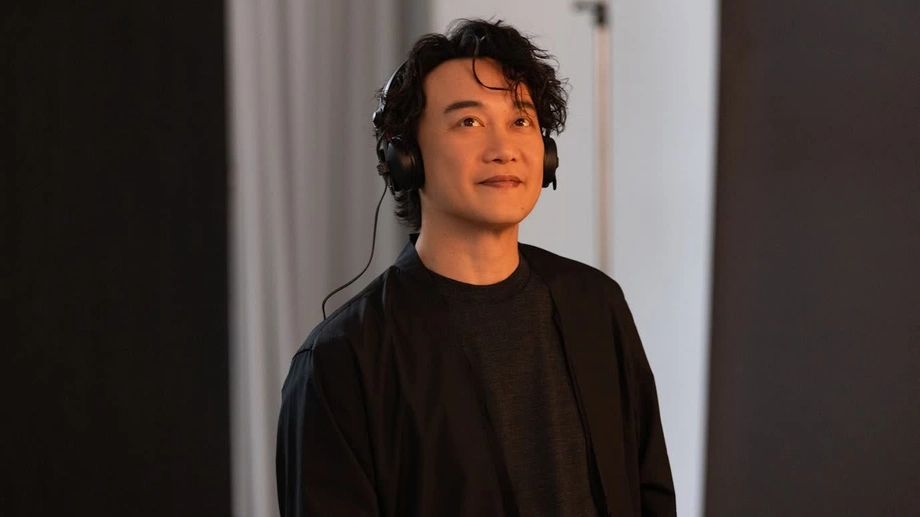
Chan also went back to the years before Koo was famous, when the future best actor was a young man learning the trade alongside older performers. Koo, he said, kept following their group around, and often turned up at Chan's home for meals with a crowd that included the singer Alan Tam, whom Chan calls Ah Lam.
Koo worked with us from when he was very young. He used to come to my house for dinner all the time with Ah Lam and that lot.
The detail gives the compliment a personal edge. The young actor at Chan's dinner table is now the person Chan describes as the one figure trying to keep film production moving in the city, a shift from apprentice to the man carrying the bill.
The training ground that stopped producing stars
Chan traced the shortage to the disappearance of a production line for talent. TVB, he said, no longer turns out people of that kind. The broadcaster ran its own artist training classes and drama operation for decades, and for many Hong Kong actors that system was the first rung of a career, a place to learn camera work, timing and discipline on daily productions.
His judgment on the wider business is bleak. Chan said the film industry has not raised a new generation of capable successors and that he is not optimistic about the future of either the music business or the film business. He directed part of the criticism at the absence of senior figures willing to take on younger performers as protégés, the apprenticeship arrangement that once moved people from small parts to leading roles.
Where have the superstars gone?
Chan's example is Stephen Chow. The comedian and director no longer performs on screen, and Chan argued that this is precisely why a new SuperStar has become so hard to produce.
Stephen Chow does not act on screen any more, so you cannot produce a SuperStar.
The logic is about exposure. A star of that rank is built by audiences seeing the same face year after year in films they pay to watch, and when the biggest names step behind the camera, the space they leave is not filled by anyone the public knows equally well.
Idols as a mirage
Chan applied the same test to the singers and young performers who fill the gap in the meantime. Idol status, he said, is a mirage, borrowing the image of water that appears to lie on a hot road and vanishes as you approach it.
Today you are an idol, tomorrow you are gone.
In his reading the fame now handed to new faces is thin and short lived, sustained by attention that moves on rather than by work that lasts. The metaphor does the explaining: what looks like a career from a distance can disappear when a fan looks closer.
Why speed is the enemy
The second half of Chan's argument is about time. Films, he said, take a long stretch to put down roots, and the business needs years to build experience and train people, while the market around it now moves too fast for that cycle to complete.
This is a practical point about how films are made. A production needs development, financing, shooting and release, and the people who learn to do each step well take years to train, which is why studios once kept staff on payroll through quiet periods. A market that rewards quick turnover struggles to justify that kind of patience, and Chan's complaint is that the pace of the modern business has outgrown the slow work that produces both films and filmmakers.
From game shows to industry commentary
Long before he became a critic of the business, Chan was one of its busiest hosts. He recalled his years fronting the game show "The Funny Money Game" (運財智叻星), and the bookings say something about how the industry has changed.
Faye Wong, a singer known for keeping her distance from television variety, asked to appear on the show herself because she thought it would be fun, Chan said. Jackie Chan, he added, was most afraid of his senior fellow student Sammo Hung, who would challenge him about whether he had been falling asleep. The two men trained together as children in a Peking Opera school, which is where the hierarchy Chan describes comes from.
Chan's punchline was that a programme of that kind could only book top tier stars in those days, a contrast with the present that fits his wider argument about where the famous faces have gone.
Key Points
- Natalis Chan, aged 76, uploaded a video to a social media platform on November 27 naming Louis Koo as the hardest working person in Hong Kong film and saying one person's energy cannot carry the industry.
- Chan said Koo, a Hong Kong Film Awards best actor, spends his own resources to keep film production going and now carries much of the weight of the business.
- He recalled that the industry once had more than a hundred people willing to work as Koo does, and that he now counts one.
- Chan said Koo used to come to his home for dinner as a young actor with a group that included the singer Alan Tam.
- He blamed the shortage on TVB no longer training performers of that kind and on an industry that has failed to raise capable successors.
- Chan cited Stephen Chow's retirement from screen acting as a reason a new SuperStar has become hard to produce, and called idol fame a mirage.
- He said films need a long time to build foundations while the market now moves too fast for that cycle.
- Chan also mocked TVB's market value of about HK$900 million, calling the broadcaster a small company, after earlier describing television as a sunset industry.