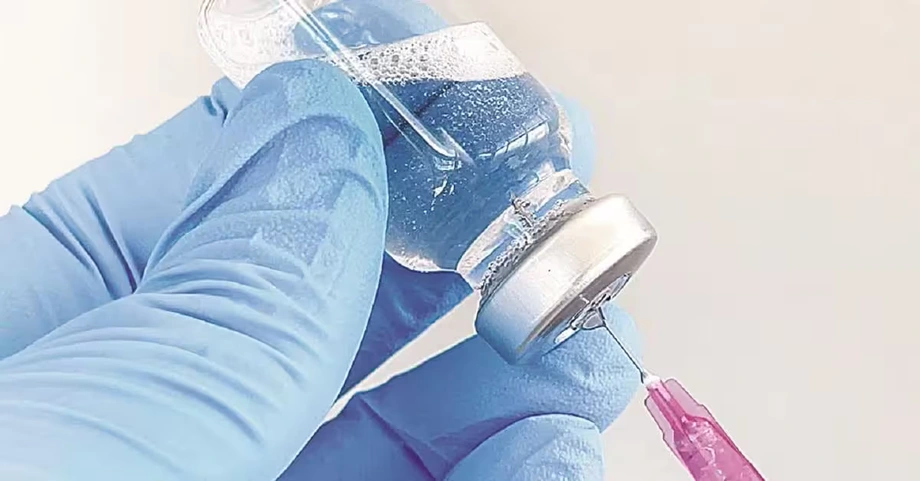
India's first homegrown bird flu vaccine reaches the farm gate
Shivraj Singh Chouhan, the Union Minister for Agriculture and Farmers Welfare, dedicated India's first indigenous vaccine against H5N1 bird flu to the nation on Friday, November 20, 2026, at the ICAR National Institute of High Security Animal Diseases in Anand Nagar, Bhopal. The shot is made for chickens, targets the virus branch known as clade 2.3.2.1a, and is priced at Rs 1 to Rs 2 a dose.
Contents
- India's first homegrown bird flu vaccine reaches the farm gate
- What the vaccine does and what the trials showed
- Eight scientists and months inside a high security laboratory
- Why clade 2.3.2.1a is the target
- Two decades of outbreaks
- The bill for farmers and the poultry trade
- Can bird flu reach people?
- A Rs 300 crore laboratory and the choice of Bhopal
- A wider bill: Rs 56,000 crore a year from animal disease
- What farmers still do not know
- Key Points
For a poultry sector that has lost birds to avian influenza in waves since 2006, the vaccine fills a specific gap. Until now, no commercial vaccine was available in India against H5N1 clade 2.3.2.1a, the group of viruses the Agriculture Ministry links to most outbreaks in Indian chickens. Vaccines existed for less dangerous poultry pathogens, not for this strain.
Chouhan described the shot as the world's first vaccine against this particular variant and said the low price was chosen so that small farms could use it. "The vaccine will cost only Rs 1 to Rs 2 per dose, so that even small poultry farmers can afford it. Animals are moving ATMs for farmers, providing them with a regular source of income," he said. One lakh equals 100,000 and one crore equals 10 million.
"This vaccine is an example of India's self-reliance. Bird flu causes large-scale chicken deaths and huge economic losses to poultry farmers. The indigenous vaccine will strengthen bird flu control in India and protect chickens," Chouhan said.
Madhya Pradesh Sports and Youth Welfare and Cooperatives Minister Vishwas Sarang and Bhopal BJP MP Alok Sharma were among those present at the ceremony, which had first been planned for Delhi.
What the vaccine does and what the trials showed
The vaccine is an inactivated one. Scientists grow the virus in the laboratory and kill it so that it can no longer reproduce, then use the killed material to train a bird's immune system to recognise H5N1. A vaccinated chicken that later meets the live virus is prepared to fight it off instead of falling ill.
Trials at the institute showed that a single dose protected chickens for up to six months and prevented transmission to unvaccinated birds kept in contact with vaccinated ones. The vaccine met sterility, safety and efficacy standards in tests on specific pathogen free layer and grower chickens, and the institute said the technology is ready for industry to take up commercial production.
Layers, the hens kept for eggs, and breeder birds, whose eggs become future flocks, are the first focus. Both stay on a farm far longer than broilers raised for meat, which are usually sold within weeks, so six months of cover fits their production cycle. Losing a laying flock interrupts daily egg supply, while losing breeders interrupts the supply of chicks to other farms.
Eight scientists and months inside a high security laboratory
The project began in September 2025 and was led by principal scientist Dr S Nagarajan. The team named by the minister was Dr Manoj Kumar, Dr C Tosh, Dr H V Murugkar, Dr Aniket Sanyal, Dr Senthil Kumar D, Dr Naveen Kumar and Dr Yogisharadhya R.
Work on dangerous animal pathogens demands strict biosafety routine. Chouhan said the researchers sanitised themselves before and after laboratory work, bathed with roughly 120 litres of water a day as part of the protocol, kept no pets at home while the project ran, and gave up weekends and holidays. He called them the real heroes of the effort and compared their discipline to that of soldiers serving the country.
"This marks a major milestone in safeguarding poultry health, strengthening farm resilience, and advancing Atmanirbharta (self-reliance) in veterinary biologicals," said Aniket Sanyal, director of ICAR-NIHSAD.
Why clade 2.3.2.1a is the target
H5N1 is a subtype of influenza virus that mainly infects birds. A clade is a branch of closely related viruses inside that subtype, much like a branch on a family tree, and the name 2.3.2.1a identifies one such branch. Influenza viruses change as they spread, so a vaccine built around one branch may not cover another. Matching the shot to the branch circulating in Indian sheds is what gives it practical value.
Between 2006 and 2021 India recorded 341 bird flu outbreaks across 24 states, of which 284 were caused by H5N1 and 57 by H5N8. The ministry counts more than 500 combined H5N1 and H5N8 outbreaks since the first case in 2006. Highly pathogenic avian influenza can kill close to 100 per cent of the birds it infects, which is why outbreaks are met with mass culling rather than treatment.
The ministry said infections from this strain have also been detected in several animal species, including mammals, along with three human cases. The ministry did not say where those three human cases were recorded.
Two decades of outbreaks
The pattern of disease in India has repeated itself roughly every few years, and the numbers from each wave show why a vaccine mattered.
- 2006: The first outbreak was reported in Navapur, Maharashtra. Around 10 lakh chickens died, and lakhs more were culled and buried to stop the spread.
- 2021: Around nine lakh chickens died in a fresh wave of infections.
- May 2026: H5N1 struck commercial poultry farms in Navapur, in Nandurbar district of Maharashtra. Nearly 400,000 birds were culled across 13 farms, about 2.16 million eggs and 500 tonnes of feed were destroyed, and containment ran from May 1 to May 8.
- November 18, 2026: More than 18,600 birds were culled in Kerala. In Tamil Nadu, 7,116 chickens, 11,057 ducks and 447 quails were culled.
- 2026 so far: About two lakh chickens died, according to Chouhan.
Winter tends to sharpen the problem, because bird flu usually gathers pace with the onset of cold weather. In Tamil Nadu, animal husbandry authorities in Cuddalore district recorded 35,647 bird deaths through November 13, ordered culling at the affected farm and within a radius of one kilometre, and barred restocking in the area for three months, measures set out when the launch was first announced.
The bill for farmers and the poultry trade
NIHSAD scientists put the value of India's poultry industry at Rs 2.36 lakh crore, with an estimate for 2025 placing it near Rs 2.64 lakh crore. The 2006 outbreak alone caused direct and indirect losses estimated at Rs 2,200 crore to Rs 3,000 crore. Officials have warned that a major outbreak could reduce GDP growth by up to 1.5 per cent and put more than 20 per cent of the national poultry population at risk.
India is the world's second largest egg producer and fourth largest broiler producer. The sector supports more than 60 lakh small and medium farmers, and around 30 lakh rural households keep birds in backyards. For those families a single outbreak means culled flocks, lost income for months and restrictions on restocking.
Outbreaks also bring trade bans on poultry products, which shut export markets and pull down prices for farmers who never had an infection on their own land. Chouhan framed vaccination as protection for household incomes rather than only for industry balance sheets.
Can bird flu reach people?
The World Health Organization counts 1,003 human cases of H5N1 and 479 deaths across 25 countries, including India, since 2003. A joint assessment published in May 2026 by the World Health Organization, the Food and Agriculture Organization and the World Organisation for Animal Health rated the risk to the general public as low, while noting a higher risk for people who work closely with infected animals.
Scientists at the Bhopal institute say timely vaccination of poultry reduces the amount of virus circulating in sheds, which in turn limits the chance of the virus reaching other animals and people. That argument has gained weight as the strain has turned up in mammal species.
A Rs 300 crore laboratory and the choice of Bhopal
Chouhan announced a new animal disease research laboratory in Bhopal at an estimated cost of Rs 300 crore, meant to expand the country's capacity to study high risk animal pathogens and develop vaccines against them. He said the Bhopal institute had become a symbol of India's scientific capability.
He also explained why the ceremony was held in Bhopal rather than the capital. A launch in Delhi had been proposed, and he decided the occasion belonged in the city where the work was done, in front of the scientists who had worked day and night on it. Recalling two COVID-19 vaccines developed in nine months under a task force led by Prime Minister Narendra Modi, he placed the bird flu shot in the same line of scientific work.
Chouhan used part of his speech for a political attack on the Congress party, without naming its leader Rahul Gandhi.
"Those who go abroad and question the capabilities of the country's constitutional institutions, scientists, and military should see India's achievements. The world should see today's self-reliant and developed India. We must not sin by underestimating the country's capabilities," he said.
A wider bill: Rs 56,000 crore a year from animal disease
Figures shared by the minister put the yearly cost of four major animal diseases at about Rs 56,000 crore. Foot and mouth disease accounts for Rs 22,000 crore, lumpy skin disease Rs 20,000 crore, brucellosis Rs 9,212 crore and Peste des Petits Ruminants, which affects sheep and goats, Rs 4,683 crore. Animal husbandry contributes 14 per cent of India's GDP and poultry another 1 per cent, he said.
The National Animal Disease Control Programme, launched by Modi from Mathura, has so far delivered 147.16 crore free doses against foot and mouth disease, and Chouhan said brucellosis has been brought under control. In the 2022 lumpy skin disease outbreak, 32.8 lakh animals were infected and 1.86 lakh died, before scientists at Hisar and Izatnagar developed the Lumpi-ProVacInd vaccine.
NIHSAD had earlier developed indigenous vaccines for Gumboro disease, Brucella abortus S-19 Delta, classical swine fever and African swine fever. The H5N1 shot adds to that list, and the institute holds the technology that companies can license for manufacture.
What farmers still do not know
The announcement fixed a price and a target strain, but not a timetable. No date has been given for commercial availability, no vaccination schedule has been published, and no decision has been announced on which birds will be covered or how doses will reach different states. The institute said industry can adopt the technology for commercial production, which means manufacturing partners must be lined up before farms can place orders.
Vaccination sits alongside testing, surveillance, movement restrictions and farm hygiene, and veterinary authorities will still cull infected flocks. For the coming winter, farmers have biosecurity and culling as their working defences, while the vaccine's reach across the country depends on production volumes and a distribution plan that has not yet been made public.
Key Points
- Chouhan dedicated India's first indigenous H5N1 vaccine at ICAR-NIHSAD, Bhopal, on November 20, 2026.
- The inactivated vaccine targets H5N1 clade 2.3.2.1a and is priced at Rs 1 to Rs 2 per dose.
- Trials showed protection for up to six months and no transmission to birds in contact with vaccinated chickens.
- Eight scientists led by Dr S Nagarajan worked on the project from September 2025 under strict biosafety rules.
- India has recorded more than 500 H5N1 and H5N8 outbreaks since 2006, including around 10 lakh chicken deaths in Navapur that year.
- The May 2026 Navapur outbreak led to nearly 400,000 birds culled across 13 farms and 2.16 million eggs destroyed.
- Four major animal diseases cost about Rs 56,000 crore a year, with foot and mouth disease alone at Rs 22,000 crore.
- A new animal disease research laboratory costing Rs 300 crore was announced for Bhopal.
- Commercial availability, vaccination schedules and distribution plans have not been announced.