A technology gap and a warning against a total cutoff
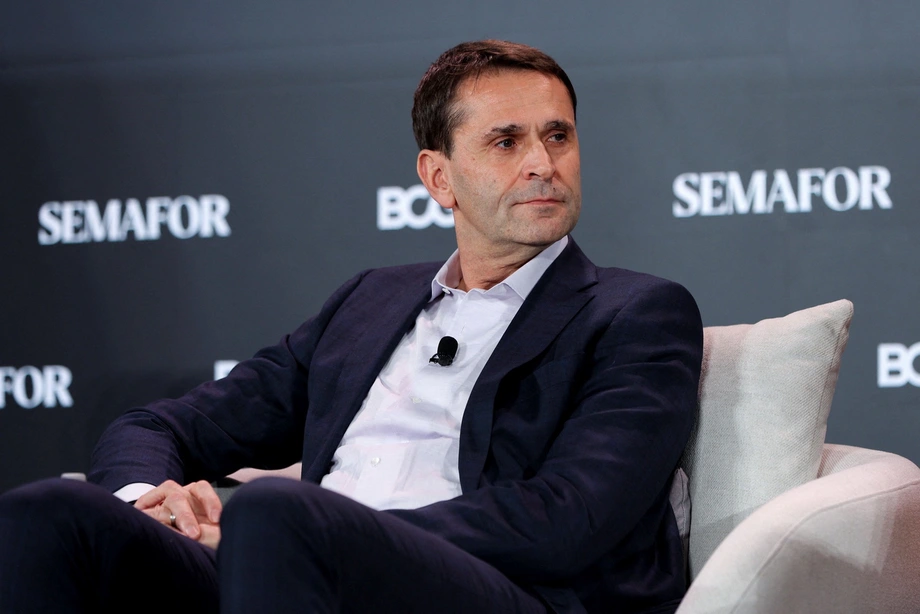
Christophe Fouquet, chief executive of ASML, estimates that China trails the leading edge of extreme ultraviolet lithography by 10 to 15 years. He gave the assessment in an interview lasting 48 minutes and published on Nov. 25, 2026, on the Future Proof podcast. His sharpest warning concerned policy: blocking every Chinese purchase of ASML equipment could push Beijing to develop competing machines much faster.
Contents
- A technology gap and a warning against a total cutoff
- Why is EUV so difficult to replace?
- Why Fouquet wants controls without a complete blockade
- The MATCH Act brings Dutch resistance into the open
- How ASML answered claims that an EUV machine reached China
- Why 2,000 suppliers limit ASML's expansion
- High NA, tenfold AI demand and possible challengers
- Memory shortages connect lithography to consumer prices
- The dates that will test the strategy
- Key Points
ASML is the only manufacturer of extreme ultraviolet, or EUV, lithography systems. It has never delivered one to China and is already barred from doing so. Some older deep ultraviolet, or DUV, equipment can still be sold there. The China-bound tools use a technology platform introduced in 2015, although Fouquet described the specific model being delivered as dating back 13 years. He said ASML had developed eight further generations since producing it.
The estimate of 10 to 15 years specifically concerns EUV, an essential part of manufacturing the most advanced processors efficiently and in large volumes. Fouquet said the distance would be much shorter if Chinese EUV machines were already operating. A gap of only two years, he argued, would mean that such equipment had been running for some time.
The company's market position gives his warning unusual weight. ASML holds roughly 90% of the global lithography equipment market and was valued at about $520 billion at the time of the interview. China was projected to account for around 20% of its revenue in 2026, so a broader ban would carry commercial costs as well as strategic consequences.
Why is EUV so difficult to replace?
Lithography prints circuit patterns onto silicon wafers, building the billions of transistors that allow a chip to calculate or store information. EUV uses light with a wavelength of 13.5 nanometers, compared with 193 nanometers for the previous generation of DUV systems. The much shorter wavelength helps manufacturers print finer features. An EUV machine is approximately the size of a bus and depends on extraordinary precision in its optics, light source and controls.
Manufacturers can compensate for the absence of EUV by exposing a wafer repeatedly with DUV equipment, a process often called multiple patterning. Each additional exposure and processing stage adds time, expense and opportunities for defects. Fouquet said this approach might reach 10 nanometers and possibly 7 nanometers. TSMC produced some 7 nanometer chips with DUV, but could not continue advancing along that route.
At 5 nanometers, Fouquet said, production without EUV becomes extremely difficult. A manufacturer might make a small number of chips, but the yield would be poor and the number of masks required enormous. Yield means the share of chips that work correctly, while masks carry the circuit patterns used during production. EUV is used for the 5, 3 and 2 nanometer generations, where smaller numbers generally indicate more advanced manufacturing processes.
Frank Rohmund, chief executive of Zeiss, has made the same practical argument: repeated patterning on older DUV machines is technically possible, but lower yields and higher costs make it an impractical substitute. Chipmakers can also package larger numbers of chips made on older processes so that they work together. Fouquet said that approach sacrifices efficiency and increases power consumption, leaving the resulting performance below what EUV-based production can achieve.
Why Fouquet wants controls without a complete blockade
Fouquet does not reject export controls. He supports protecting the most advanced technology and named EUV as a clear example. His disagreement is with extending restrictions uniformly to older DUV systems, including equipment that Chinese factories already rely upon.
He explained the distinction by describing how an excessively broad ban could change the behavior of the country being targeted:
You need [export controls] to protect very advanced technology, but you also have to use export control in such a way that you don't completely frustrate a country and invite that country to basically double down or triple down on development.
His preferred policy preserves a deliberate generation gap. Chinese customers would continue receiving equipment from older generations, while ASML retained its newest systems. Fouquet said the company had kept a share close to 100% of China's lithography market for almost 30 years because customers accepted dependence on ASML while believing that access would remain available. Remove that expectation, he argued, and those customers would have much stronger reasons to finance domestic alternatives.
The risk extends beyond losing control of a technology flow. A successful Chinese equipment industry could eventually compete with ASML outside China as well. Fouquet has visited Washington to argue against DUV restrictions, presenting export controls as a strategic instrument rather than a way to fight yesterday's technological battles.
That argument also serves ASML's business interests. A broader ban would close sales channels for older machines, while successful Chinese rivals would reduce future demand for them. Nvidia chief Jensen Huang has similarly criticized restrictions on China. Huawei's comeback after earlier US trade restrictions is frequently cited in the debate as evidence that pressure can coexist with continued Chinese technological progress.
The MATCH Act brings Dutch resistance into the open
A bipartisan US proposal called the Multilateral Alignment of Technology Controls on Hardware, or MATCH Act, could turn that disagreement into a diplomatic conflict. Congress has considered attaching it to the annual defense spending bill in December 2026. The proposal would press allies including the Netherlands and Japan to tighten their controls or face unilateral US restrictions affecting semiconductor equipment.
For ASML, the concern extends to immersion DUV systems, a more advanced form of DUV that uses liquid between the final lens and the wafer to improve resolution. Potential restrictions could cover new sales as well as servicing, repairs and software updates for tools already installed at certain Chinese chip factories. That would affect the usefulness of equipment customers had bought years earlier.
Sjoerd Sjoerdsma, the Dutch Minister for Foreign Trade and Development Cooperation, said the Netherlands would urge Washington not to enforce the legislation if it became law. He warned that it would harm ASML and other European technology companies. He is working with the European Commission, Germany and France to prevent its passage and is examining bilateral and European responses if those efforts fail.
One possibility raised by a trade policy expert is the EU Blocking Statute, which can prohibit European companies from complying with certain foreign laws. The diplomatic discussions followed a visit to Beijing by Dutch Foreign Minister Tom Berendsen, during which China and the Netherlands reaffirmed their commitment to talks on export controls. China has condemned the MATCH Act and warned of countermeasures.
Washington remains divided over whether tighter rules would improve security or accelerate Chinese technological independence. Enforcement is part of that argument. Reported smuggling of advanced Nvidia B300 GPUs into China has been cited by critics as evidence that determined buyers may seek covert channels when legal purchases are closed.
How ASML answered claims that an EUV machine reached China
ASML has also faced an allegation that at least one EUV system entered China. Fouquet denied it, saying the company knows the location of every machine and whether each one is operating. Their size makes a secret transfer especially difficult: moving a single system requires several Boeing 747 aircraft.
Fouquet said ASML responded to questions by sharing its records and machine data. He said the episode ended with acceptance that no such delivery had occurred. The company did not arrange for US government representatives to inspect the machines in person, relying instead on the documentation it supplied.
China's own progress remains a separate issue. In July 2026, a Chinese enterprise owned by the state was reported to have begun manufacturing a domestically developed DUV lithography system. The announcement did not provide public engineering data sufficient to compare its performance with ASML's equipment.
Fouquet said claims about Chinese DUV and EUV prototypes often circulate without accompanying data. ASML's engineers therefore look for operating results before judging how close a machine is to useful production. Building a working demonstration is only one stage; optics, light generation, precise control and stable operation over long periods all have to work together.
Why 2,000 suppliers limit ASML's expansion
Demand for EUV accelerated after relatively quiet conditions in 2024 and 2025. ASML delivered 44 EUV systems in 2025 and expects to deliver about 65 in 2026, an increase of roughly 50%. With annual production until recently around 50 units, orders were already booked through shipments in 2028.
Fouquet plans another increase of 28% to 30% in 2027, with the possibility of more. Applied to the expected 65 deliveries in 2026, those percentages would produce about 83 to 85 machines. The stated target is more than 80, showing how quickly AI-related demand is changing a business whose products take years to prepare.
The principal constraint is neither factory space nor basic recruitment. ASML works with more than 2,000 suppliers. Producing an optical system can take several years from the arrival of raw glass to the point at which it is ready for installation. Inventory provides a limited buffer, but it cannot eliminate those long delivery cycles.
Training a new employee to participate in machine installation takes three to six months, which Fouquet described as manageable. ASML also planned its facilities before the latest surge. Gathering every specialized component on time is harder. Similar constraints affect the memory and logic chipmakers that must expand their own factories before additional ASML machines can produce more chips.
ASML entered this expansion with revenue of 32.7 billion euros for 2025, approximately $35.9 billion, an increase of 15.6% from the previous year. Those figures explain both its capacity to invest and the scale of the commercial interests now intertwined with export policy.
High NA, tenfold AI demand and possible challengers
ASML's next EUV generation increases numerical aperture, a measure related to how much light the optical system can gather and how finely it can resolve a pattern. Current EUV systems have a numerical aperture of 0.33. High NA systems raise it to 0.55, which Fouquet said could approximately triple transistor density.
High NA equipment is intended for the logic industry's 1.0 node and could also serve the next memory generation. Greater density means more transistors on a wafer, providing additional computing power or memory capacity. That makes the technology central to the next round of factory investment.
Fouquet defined Moore's Law as a doubling of transistor density every two years. AI, he said, is now driving demand toward a tenfold increase over the same period. Meeting that demand requires many more logic and memory factories, regardless of whether Moore's Law is described as exhausted or merely forced to run faster.
The interview also addressed technologies that might eventually challenge ASML's approach, including work associated with xLight, free electron lasers and helium atom lithography. A replacement light source would need an economic advantage as well as a technical one, with a cost roughly 30% to 40% below the existing approach. ASML continues research with imec, the Belgian semiconductor research center, and universities in the Netherlands and the United States.
Memory shortages connect lithography to consumer prices
The immediate shortage extends beyond advanced processors. Fouquet said memory chip prices had risen to five to ten times their earlier level. Memory chips store the information that processors use, so AI data centers require enormous quantities alongside their computing chips.
A data center with one gigawatt of power capacity can now cost $50 billion to $60 billion, according to Fouquet. Large cloud companies can still finance those projects, but personal computers, smartphones and electric vehicles have much less room to absorb higher component prices. Consumers can face more expensive products, while manufacturers and retailers may have to accept smaller margins.
Customers are expanding memory production, but most of the additional capacity is not expected to improve conditions until 2028. Fouquet said balancing supply and demand could take several more years. Lower prices would also revive demand from products whose sales had been suppressed, creating another adjustment rather than a simple return to the previous market.
The dates that will test the strategy
December 2026 is the nearest political checkpoint because US lawmakers may decide whether the MATCH Act belongs in the defense spending bill. No date for a final vote was provided.
- 2025: ASML delivered 44 EUV systems and reported revenue of 32.7 billion euros.
- July 2026: A Chinese enterprise owned by the state was reported to have started manufacturing a domestic DUV system.
- Nov. 25, 2026: Fouquet's interview set out the 10 to 15 year EUV estimate and his opposition to a total cutoff.
- December 2026: Congress could consider attaching the MATCH Act to defense legislation.
- 2027: ASML aims to raise EUV deliveries by another 28% to 30%, implying roughly 83 to 85 systems if the 2026 total reaches 65.
- 2028: Existing EUV orders extend through shipments in this year, and much of the new memory capacity is expected to begin improving supply.
Two central uncertainties remain. Governments have not settled the final reach of DUV restrictions, and China has not published enough operating data to establish the capability of its newest domestic lithography equipment. Fouquet's estimate is therefore an engineering assessment from the company with the most detailed knowledge of EUV production, while the political and industrial tests will arrive on separate schedules.
Key Points
- ASML chief executive Christophe Fouquet puts China's EUV technology gap at 10 to 15 years.
- ASML has never delivered an EUV machine to China; some older DUV exports remain permitted.
- Fouquet supports protecting advanced technology but warns that a total cutoff could make China double or triple its development efforts.
- DUV can reach 10 nanometers and possibly 7 nanometers with difficult additional processing, but 5 nanometer production without EUV is extremely hard.
- The proposed MATCH Act could affect Chinese DUV sales, servicing, repairs and software updates, drawing opposition from the Dutch government.
- ASML expects EUV deliveries to rise from 44 in 2025 to about 65 in 2026, with another 28% to 30% increase planned for 2027.
- High NA raises numerical aperture from 0.33 to 0.55 and could approximately triple transistor density.
- Memory prices have reached five to ten times their earlier level, with most new capacity unlikely to improve supply before 2028.