Archives narrow the search for wartime burial sites
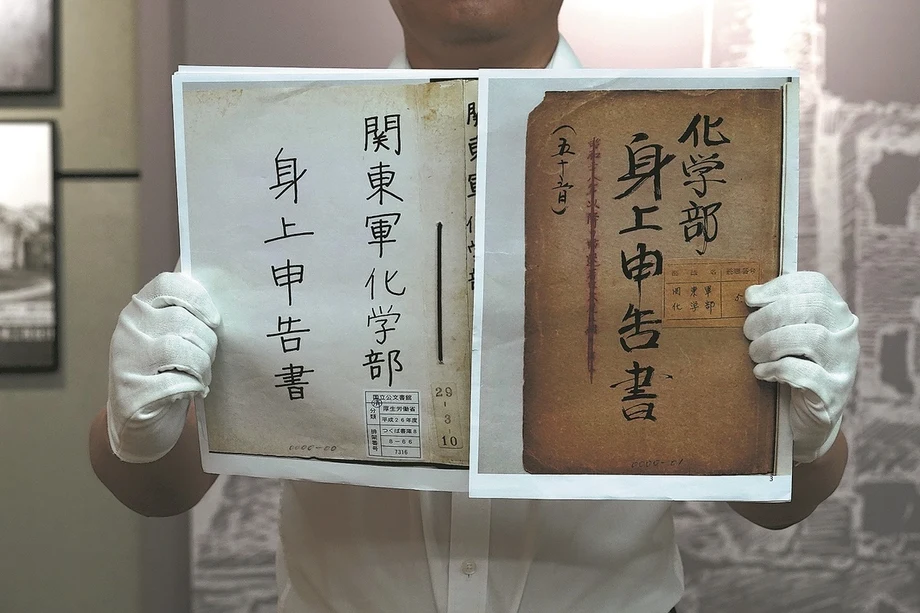
A Japanese army team once thought to have 40 members actually had about 70, according to archival research in Harbin. Its assignment in the final days of World War II was to transport, bury and abandon chemical weapons before the main force withdrew. Files on seven members include their return dates and addresses after the war, giving researchers named individuals and documentary trails to follow.
Contents
- Archives narrow the search for wartime burial sites
- What was Unit 516?
- Why do the abandoned weapons still injure people?
- Why are the burial locations so difficult to reconstruct?
- What do the recovery and destruction figures show?
- Why has destruction missed four deadlines?
- China takes its case to The Hague
- Beijing links the safety demands to history and treaty law
- The dates behind the 2027 deadline
- What to Know
Jin Shicheng, a researcher at the Exhibition Hall of Evidence of Crimes Committed by Unit 731 of the Japanese Imperial Army, said the team belonged to Unit 516, a chemical warfare force based in Qiqihar in Heilongjiang Province. He explained why records kept by the handlers could matter more than a general search of old battlegrounds.
The handlers knew best where the chemical weapons were abandoned and buried.
Jin said tracing the seven members could help locate burial sites and support Chinese demands that Japan meet its destruction responsibilities. The findings did not announce a newly identified burial site, and no date was given for a fresh excavation.
The research arrives in the 81st anniversary year of the end of World War II and China's victory in its War of Resistance Against Japanese Aggression. The 14-year conflict caused 35 million Chinese military and civilian casualties before Japan surrendered in 1945. For communities still finding buried munitions, the anniversary coincides with an active safety problem rather than a closed historical chapter.
What was Unit 516?
Unit 516 was the code name for the Kwantung Army Chemical Weapons Section, a secret Japanese facility in Qiqihar. It operated under Unit 731 and was run by the Kempeitai, the Imperial Japanese Army's military police. Unit 731 is widely associated with Japan's wartime biological warfare program, while Unit 516 specialized in chemical warfare.
Earlier research at the Harbin exhibition hall used Unit 516's personal information registration forms to establish links between the unit and Japanese research institutions. The researchers describe the resulting system as an organized state crime directed from the top down, joining research and development with training and logistical support. The newly assessed handling team adds a more practical detail to that picture: a specific group was assigned to move and conceal weapons as Japanese forces prepared to withdraw.
Estimates of the original scale vary greatly. A Japanese estimate puts the number of chemical weapons produced by Japan and buried in China at 700,000, while a Chinese estimate puts it at 2 million. Both figures concern the suspected wartime total, including weapons that have never been located.
Why do the abandoned weapons still injure people?
Chemical weapons left by Japanese forces have been found at more than 200 sites across 18 Chinese provinces, provincial level cities and autonomous regions. Many more toxic bombs are believed to remain undiscovered. Chinese figures say more than 2,000 people have been directly harmed by the abandoned weapons since the war, with new injuries still occurring.
The danger became visible in Qiqihar, the same city where Unit 516 was based, in August 2003. Buried drums containing mustard gas were found at a construction site and mistakenly taken to a scrap yard. The containers leaked, and 34 people were taken to hospital. The incident showed how an ordinary excavation can turn an old cache into a public emergency.
Sulfur mustard, often called mustard gas, can cause severe skin blisters and injure the eyes and lungs. Lewisite contains arsenic and can damage skin and internal organs. Phosgene can reach the lungs through breathing and cause critical injury. Records associated with the Japanese stock also list hydrogen cyanide, bromobenzyl cyanide, chloroacetophenone, diphenylcyanoarsine, diphenylchloroarsine and arsenic trichloride.
A munition does not need to explode to cause harm. Metal casings can corrode during decades underground, allowing chemicals to escape when a container cracks or is disturbed. Construction crews and nearby residents can then face direct exposure, while leaked agents can threaten soil and water.
Why are the burial locations so difficult to reconstruct?
Japan has refused to disclose exact burial sites, citing the destruction of wartime documents. Chinese researchers say this has slowed investigations, recoveries and destruction. Japan also refused until 1995 to acknowledge that its forces had dumped chemical weapons in the Nen River between Heilongjiang and Hulunbei'er.
The end of the war scattered the documentary trail as well as the weapons. Japanese units buried some stocks, but most were confiscated by the Soviet Red Army, the People's Liberation Army or the Kuomintang Army. Japanese weapons were later found mixed with Soviet and Chinese chemical weapons, making the movement and origin of particular caches harder to reconstruct.
The Japanese National Institute for Defense Studies holds a record of Japanese weapons confiscated by Kuomintang forces, including a list of chemical weapon types. No corresponding confiscation records for Russia or the Republic of China have been found, and no complete record of burial locations has emerged.
This is where the Unit 516 personnel files could become useful. A return date or an address does not itself supply a map coordinate, but it can identify a soldier, connect him to a particular handling team and provide a starting point for further archival work.
What do the recovery and destruction figures show?
Figures from the Organisation for the Prohibition of Chemical Weapons show that 191,124 abandoned Japanese chemical weapon items had been recovered in China by Aug. 31, 2026. The destruction of 165,014 items had been confirmed. That is about 86 percent of the recovered total.
The remaining 26,110 recovered items did not yet have confirmed destruction in those figures. An unknown number of additional weapons remain underground. Recovery therefore measures only part of a larger task that also includes searching for sites, safely removing deteriorated containers and cleaning affected land and water.
China's Ministry of National Defense released a video on Nov. 24 titled A Mission to Clear the Toxic Legacy, the fourth installment in its series Japan's Abandoned Chemical Weapons in China. It showed detection work in remote valleys, excavation of buried caches and destruction through incineration at high temperatures. The ministry described drones carrying hyperspectral sensors, which examine many bands of reflected light for signs of chemical residue, and radar that penetrates the ground, adapted for the fine loess soils found in northern China.
Rugged terrain, forest cover and decaying containers continue to complicate recovery. The ministry also described training for local emergency responders on accidental exposure and coordination with national disposal facilities. Recovered weapons have been gathered at Haerbaling in Dunhua County, Jilin Province, while destruction work proceeds. Japan is also building a destruction facility in China under its treaty commitments; no completion date was given in the November statements.
Why has destruction missed four deadlines?
The Chemical Weapons Convention is an international agreement requiring the elimination of chemical weapons. Signed in 1993, it entered into force on April 29, 1997, and is monitored by the Organisation for the Prohibition of Chemical Weapons. For the weapons in China, the convention places responsibility on Japan as the abandoning state, including the provision of necessary funds, technology, experts, facilities and other resources. It also requires originating countries to destroy covered chemical weapons produced after 1925.
Japan was initially expected to complete destruction by 2007, within 10 years of the convention taking effect. China says four deadlines have since been missed. The latest plan, adopted in 2022, expires in 2027, creating the risk of a fifth failure. Japan acknowledges a responsibility to destroy the weapons and special disposal arrangements exist, but Chinese officials dispute the pace and resources devoted to the work.
The Chinese delegation said Japan's budget for addressing the abandoned weapons in China was cut by 22 percent in 2026 compared with 2025, even as Japan's defense budget continued to rise. Japan has cited shortages of staff and funding when explaining delays.
Xue Jun, director of an office handling Japanese abandoned chemical weapons at a People's Liberation Army academy, said Japan consistently operates only eight excavation teams. He said Chinese preparations had allowed the pace to improve slightly during the past two years, but eight Japanese teams were far from enough.
Disposal expert Li Yan said China has conducted the search for burial clues itself by examining archives, visiting people with knowledge of the sites and checking burial information. He acknowledged that Japan had supplied scattered clues, but said they could not pinpoint burial locations. Most known sites have been found passively, often through accidental discovery. Precise coordinates would instead allow targeted surveys, planned excavations and preparation for treating contaminated soil and water.
China takes its case to The Hague
On Nov. 25, the Chinese delegation hosted a side event during the 31st Session of the Conference of the States Parties to the Chemical Weapons Convention in The Hague. Its title was Current Status and Challenges with Respect to the Destruction of the Chemical Weapons Abandoned by Japan on the Territory of China. More than 100 representatives from over 40 countries attended.
Shen Bo of China's Permanent Representation to the Organisation for the Prohibition of Chemical Weapons said international concern was increasing over the delays and the possibility of another missed deadline.
Concerns are growing over delays in the destruction process, particularly the risk that Japan could miss the 2027 deadline. The international community expects Japan, as the state that abandoned the weapons, to fulfill its obligations under the Convention and accelerate their destruction.
Shen called for substantially more investment in personnel, technology and funding. He also demanded accurate burial site information, more efficient excavation and recovery, and Japanese responsibility for treating contaminated soil and water.
Vladimir Tarabrin of Russia's Permanent Representation to the organisation rejected the idea that destruction depended on Japanese goodwill.
This is not a matter of Japan's goodwill, nor is it an act of charity. It is Japan's legal and moral obligation to rid itself of this legacy of the Second World War as soon as possible.
OPCW Director General Sabrina Dallafior said recovering and destroying the weapons formed part of the international goal of eliminating chemical weapons permanently and completely. She called it a difficult task that had to be accomplished. The Chinese statements from the event did not include a Japanese response or a revised destruction schedule.
Beijing links the safety demands to history and treaty law
One day after the Hague event, Senior Colonel Chen Xi addressed a regular Ministry of National Defense briefing in Beijing. The ministry's press conference transcript records the session on Nov. 26 from 3 p.m. to 4:21 p.m. at the Central Military Commission's Office for International Military Cooperation.
Chen noted that 2026 marks 80 years since the opening of the Tokyo Trial, the postwar tribunal of Japanese leaders, and 29 years since the Chemical Weapons Convention entered into force. He said Japan's pledge of complete and thorough destruction at an early date risked becoming an empty promise. He also accused forces on Japan's political right of claiming that the abandoned weapons had become naturally harmless and that the time limit for pursuing responsibility had expired.
The briefing also discussed Return Our Clean Land, a Chinese documentary released on Nov. 23 and screened during the conference in The Hague. The film uses historical records, witness testimony and reflections or confessions by Japanese personnel. It includes close views of disposal sites processing weapons abandoned more than eight decades ago and presents their destruction as necessary to restore safe land to Chinese communities.
Chen concluded with the operational steps Beijing wants Japan to take.
We urge the Japanese side to provide accurate information on burial sites as soon as possible, increase human resources, and comprehensively accelerate the disposal process.
Foreign Ministry spokesperson Guo Jiakun made a parallel legal argument on the same day. He called prompt and total disposal an international legal obligation under the Chemical Weapons Convention and urged Japan to devote more human and financial resources. Guo attributed the slow progress to what China considers a distorted view of history, insufficient attention to the dangers and inadequate resources.
The dates behind the 2027 deadline
The archival discovery is the latest stage in a dispute that has moved from wartime concealment to excavation, treaty negotiations and repeated deadline extensions.
- 1945: Japanese forces surrendered after teams transported, buried and abandoned chemical weapons during their withdrawal.
- 1993: The Chemical Weapons Convention was signed.
- 1995: Japan acknowledged dumping in the Nen River after refusing to do so until that year.
- April 29, 1997: The convention entered into force, starting the path toward an initial destruction deadline in 2007.
- August 2003: Mustard gas drums leaked after being uncovered in Qiqihar, sending 34 people to hospital.
- 2007 to 2022: China says Japan missed four deadlines, and a new destruction plan was adopted in 2022.
- Nov. 23 to 28, 2026: China released its documentary, presented recovery work, pressed its case in The Hague and Beijing, and announced the new Unit 516 personnel findings.
The next fixed treaty milestone is the expiry of the current plan in 2027. No date has been announced for completing work on the seven personnel files or for excavating a site connected with them. For residents and construction crews, the practical value of a successful trace would be straightforward: survey a location before someone strikes a container by accident, recover it under controlled conditions and address any contamination around it.
What to Know
- Archival research revised a Unit 516 handling team's strength from about 40 members to about 70.
- Seven files contain return dates and addresses after the war, but no new burial site has yet been announced.
- Abandoned Japanese chemical weapons have been found at more than 200 sites across 18 Chinese provincial level regions.
- OPCW figures list 191,124 recovered items by Aug. 31, 2026, with 165,014 confirmed destroyed.
- China says Japan has missed four destruction deadlines since the original 2007 target; the current plan expires in 2027.
- Beijing is demanding precise burial information, more personnel and funding, faster recovery, and treatment of contaminated soil and water.