A small expiring component sits inside a much larger tax debate
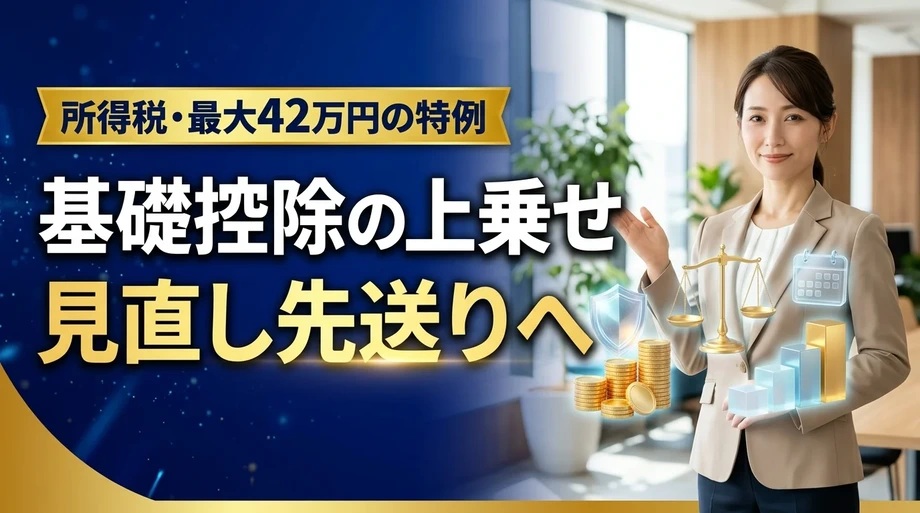
Japan's government and ruling parties have decided to postpone a review of the special additions to the basic income tax deduction until work on the fiscal 2028 tax reform package. The decision, which emerged on Nov. 27, 2026, puts off action that had been expected during fiscal 2027 reform. These deductions help support the 1.78 million yen annual income threshold, the level commonly used in the standard payroll case to explain when a worker starts paying income tax.
Contents
- A small expiring component sits inside a much larger tax debate
- How the deduction produces an income wall
- The political bargain behind 1.78 million yen
- Why the support benefit changed the timetable
- A food tax cut and the benefit share one bill
- What the tax package means for pay
- Resident tax and social insurance keep separate walls
- A broader income tax rewrite will frame the final choice
- The dates that now matter
- Key Points
The delay concerns a much narrower expiry than the headline figure might suggest. Only a 50,000 yen addition for people earning more than 6.65 million yen and up to 8.5 million yen is scheduled to expire at the end of 2027. The 420,000 yen addition available to people with annual incomes up to 6.65 million yen is a permanent measure. The government and ruling parties have not yet decided whether to extend the 50,000 yen component, let it end or replace it with another arrangement.
The 1.78 million yen threshold also reflects the employment income deduction and temporary additions to that deduction. The Democratic Party for the People (DPFP) argues that further extensions are needed where necessary to prevent net income from falling. Its position keeps pressure on the ruling camp even though most of the additional basic deduction is permanent.
Prime Minister Sanae Takaichi had already signalled that she did not want an early conclusion. Speaking at a plenary session of the Upper House on Nov. 11, 2026, she linked the decision to the planned worker support benefit and conditions closer to the expiry date.
We will consider the matter based on the economic and price conditions at that time, including its relationship with the support benefit.
The government and ruling parties now intend to consider the deduction alongside the benefit's design and a broader rewrite of income tax. Fiscal years in Japan begin in April, and the full support benefit is being prepared for introduction in April 2029.
How the deduction produces an income wall
The basic deduction subtracts a set amount from income before income tax is calculated. Its standard amount is now 620,000 yen. An addition of 420,000 yen brings that figure to 1.04 million yen for eligible income bands, before other deductions are considered. This differs from a cash payment: the deduction reduces taxable income rather than handing the same sum to every taxpayer.
- Annual income of 2 million yen or less receives a 420,000 yen addition, which is permanent.
- Annual income above 2 million yen and up to 6.65 million yen also receives the permanent 420,000 yen addition.
- Annual income above 6.65 million yen and up to 8.5 million yen receives a 50,000 yen addition, which is scheduled to expire at the end of 2027.
Annual income in this debate means gross pay before income tax and social insurance premiums are removed. It is not the money deposited into a worker's bank account. The employment income deduction, which provides an allowance against salary income, is combined with the basic deduction and other applicable deductions to calculate the standard threshold. Household circumstances can change the final figure because deductions for dependants, spouses and social insurance premiums vary.
The employment income deduction also has a minimum guaranteed amount, which particularly matters at lower salaries. The latest package raised that minimum from 650,000 yen to 690,000 yen in principle. Together with the additional basic deduction and other temporary measures, this helped move the standard income tax threshold from 1.6 million yen to 1.78 million yen.
Inflation played a direct part in the arithmetic. The fiscal 2026 reform raised the standard basic deduction from 580,000 yen to 620,000 yen and created a mechanism for reviewing it against consumer prices every two years. The Ministry of Finance used combined consumer price increases of about 6.0 percent for 2024 and 2025, calculated from rises of 2.6 percent and 3.3 percent. The resulting adjustment supplied 40,000 yen increases to the basic deduction and the minimum employment income deduction. Without such adjustments, rising prices steadily reduce the real value of a fixed deduction.
The political bargain behind 1.78 million yen
The threshold remained at 1.03 million yen from 1995 through 2024. In December 2024, the secretaries general of the Liberal Democratic Party (LDP), Komeito and the DPFP agreed to keep discussing a move towards 1.78 million yen. The initial tax outline produced a smaller rise to 1.23 million yen, through 100,000 yen increases in both the basic and employment income deductions. Legislation enacted in March 2025 subsequently raised the standard threshold to 1.6 million yen, while the fiscal 2025 reform introduced special additions intended to ease income tax for people on low and middle incomes during high inflation.
A second political agreement came on Dec. 18, 2025, when Takaichi, as prime minister and LDP leader, met DPFP leader Yuichiro Tamaki in the Diet building. They agreed to raise the threshold to 1.78 million yen and expand the additional basic deduction to people earning 6.65 million yen or less, responding to the DPFP's demand that relief reach the middle class. Officials from Nippon Ishin, the LDP's coalition partner, and former partner Komeito confirmed the agreement the same day. The fiscal 2026 tax reform outline followed on Dec. 19.
After that meeting, Takaichi described how widely the additional exemption would reach.
We will take an additional basic exemption measure applying to about 80% of all taxpayers with employment income.
She also said many taxpayers would see an increase in pay after tax. Tamaki said the DPFP would cooperate in passing the fiscal 2026 budget, which the government planned to approve at a Cabinet meeting on Dec. 26. The agreement treated 1.78 million yen as a special level for 2026 and 2027, with future revisions to refer to livelihood protection standards.
The Ministry of Finance estimated the additional tax relief at 650 billion yen a year. The DPFP estimated savings of roughly 27,000 to 56,000 yen per person when the fiscal 2025 changes were included. The final cost is less than one tenth of the 7 trillion to 8 trillion yen estimated for the DPFP's earlier proposal, which would also have covered resident tax. The two parties further committed to reviewing the basic deduction system fundamentally within three years, including a possible tax credit with a cash benefit, while maintaining for the time being the dependant exemption used by parents with children aged 16 to 18.
Why the support benefit changed the timetable
The Worker Burden Reduction Support Benefit is central to the delay because it pursues a similar purpose through a different mechanism. The additional deduction reduces income tax, while the benefit would provide money according to income. Deciding the two separately could produce overlapping relief for some workers and gaps for others. The government therefore wants to settle the benefit amount before deciding whether the expiring deduction should continue.
Takaichi told an Upper House special committee on Nov. 13, 2026, that payments of up to about 25,000 yen would be the basic working assumption for advance implementation in fiscal 2027 and fiscal 2028. Full operation is targeted for April 2029. Eligibility is to be assessed for each individual rather than for an entire household. The intended recipients are people who work and earn above a minimum level, pay some tax or social insurance premiums and remain below an income ceiling based on the previous year. Self-employed people and freelancers are also expected to be included.
The proposed coverage has expanded from more than 30 percent of workers to more than half, equivalent to over 30 million people. Takaichi said an annual income ceiling was also under consideration, but she did not give a figure. A final ceiling and payment schedule have not been published.
The payment formula is intended to preserve incentives to work. The benefit would rise as employment income increased until it reached a set level, remain flat for a range of earnings and then gradually shrink once total income passed another threshold. Eventually it would fall to zero. This structure avoids removing the entire payment as soon as a worker earns one extra yen.
The benefit is also a step towards a refundable tax credit. Under that system, a person who owes tax receives a reduction in the tax bill, while someone whose credit exceeds the tax due, or who owes no tax, can receive the balance in cash. Supporters see this as a way to assist people whose income is too low for an ordinary deduction to provide much value. The fiscal 2028 tax discussion will therefore cover both the 50,000 yen deduction and the shape of this wider system.
A food tax cut and the benefit share one bill
The support benefit has been submitted to parliament in legislation that also temporarily cuts consumption tax on food and beverages. Its formal title is the Bill on the Temporary Reduction of the Consumption Tax Rate on Food and Beverages and the Provision of Worker Burden Reduction Support Benefits to Reduce Burdens from Tax and Social Insurance Premiums. The pairing connects two forms of relief: lower prices at the checkout and payments linked to work and income.
For food and beverages already eligible for the reduced consumption tax rate, the total rate would fall from 8 percent to 1 percent between April 1, 2027, and March 31, 2029. The national component would be 0.78 percent, with local consumption tax bringing the combined rate to 1 percent. The bill provides for the support benefit to be paid annually, with the amount determined by income and the number of dependent children.
Parliamentary arithmetic adds another reason for negotiation. The ruling bloc does not hold a majority in the Upper House, so it needs support from opposition parties. The Constitutional Democratic Party has submitted a separate proposal that would eliminate consumption tax on food and beverages and create a tax credit with a cash benefit. Questioning of Takaichi in the special committee began on Nov. 13 and continued on Nov. 16, 2026.
What the tax package means for pay
Private estimates for the fiscal 2026 changes show how sharply the benefit varies by salary. These figures are guides rather than universal entitlements because family circumstances and other deductions alter each person's tax bill.
- At annual incomes of 3 million yen and 4 million yen, the estimated reduction is around 8,000 yen.
- At 5 million yen, the estimate rises to about 27,000 yen.
- At 6 million yen, it is about 36,000 yen.
- At 8 million yen and 10 million yen, the estimate returns to around 8,000 yen.
The largest reductions under the design fall in the band from 4.75 million yen to 6.65 million yen. The smaller savings at higher salaries reflect the fall in the additional basic deduction from 420,000 yen to 50,000 yen above 6.65 million yen. The DPFP's higher estimate of 27,000 to 56,000 yen per person covers a broader calculation that includes fiscal 2025 measures.
The possible expiry of a 50,000 yen deduction would not automatically reduce net pay by 50,000 yen. It would increase taxable income by that amount, with the actual tax change depending on the applicable rate and personal circumstances. For workers considering extra hours, the separate social insurance thresholds can have a larger effect on net income than this component of income tax.
Resident tax and social insurance keep separate walls
Income tax is only one part of what a worker pays. Resident tax, which funds local government, has its own basic deduction with a maximum of 430,000 yen. The fiscal 2026 reform left that amount unchanged. The Ministry of Internal Affairs and Communications describes resident tax as resembling a membership contribution to the local community, which helps explain why its deduction is lower than the national income tax deduction.
An estimate for a person with annual salary income of 1.5 million yen illustrates the difference. That person can have no taxable income for national income tax while still retaining taxable income for resident tax because of the smaller deduction. The estimated resident tax in that example is about 50,000 yen a year. Dependant deductions also differ, at 380,000 yen for income tax and 330,000 yen for resident tax in the standard comparison.
Some resident tax thresholds will move from fiscal 2027 because of changes to the employment income deduction. The salary guide for liability to the per capita resident levy will rise from 1.10 million yen to 1.19 million yen. The guide at which a person leaves dependant status for tax purposes will rise from 1.23 million yen to 1.36 million yen.
Social insurance creates two further boundaries. Under the 1.3 million yen threshold, a person supported as a dependant generally has to leave that coverage and begin paying premiums independently when annual income reaches the boundary. The limit is relaxed to less than 1.8 million yen for people aged 60 or over and people with disabilities.
The 1.06 million yen threshold concerns employees working limited hours who meet conditions for joining their employer's employee pension and health insurance plans. It corresponds to monthly pay of about 88,000 yen and has mainly affected workers at larger companies. Commuting costs are excluded when assessing the 1.06 million yen boundary but included for the 1.3 million yen boundary. The December 2025 agreement left these social insurance walls in place, and the postponed tax review does not change them. The proposed support benefit includes a limited additional payment intended to address the income wall until a wider solution is adopted.
A broader income tax rewrite will frame the final choice
A Ministry of Finance paper prepared for the Government Tax Commission on Oct. 6, 2026, placed fundamental reform of income tax, including a review of personal deductions, at the head of its issues for discussion. Personal deductions adjust taxable income according to circumstances such as family composition. Other listed subjects include the deduction method, tax rates and the distribution of the tax burden.
The National Council on Social Security has also been examining how benefits and tax credits should fit together. An expert panel was established in March 2026, and the council's interim summary on July 29 recorded strong support for combining benefits with tax credits. It also said consideration was needed for the expert panel's preference for using benefits initially to avoid excessive complexity. Proposals involving tax credits accompanied by refunds of social insurance premiums produced substantial disagreement.
The government's basic policy of Aug. 5, 2026, said it would respect that interim summary. It identified two urgent tasks: increasing net income for people on low and middle incomes in the working generation, and reducing the tendency to limit working hours because of income thresholds. Administrative proposals would give the national government responsibility for common systems while local authorities handled much of the contact with residents.
Material presented to the council compared net burdens across countries and identified heavy social insurance premiums among lower income groups in Japan, alongside relatively limited cash assistance such as family allowances. This explains why the coming debate treats tax and social insurance together when assessing net pay. The fiscal 2028 package is expected to place the expiring 50,000 yen deduction within that wider design rather than considering another extension in isolation.
The dates that now matter
The current policy follows several years of incremental changes and agreements. The next decision point arrives shortly before the scheduled expiry of the smaller additional deduction.
- 1995 through 2024: The standard income tax threshold remained at 1.03 million yen.
- December 2024: Three parties agreed to pursue 1.78 million yen, although the initial outline raised the threshold only to 1.23 million yen.
- March 2025: Legislation raised the standard threshold to 1.6 million yen, and fiscal 2025 reform introduced special deduction additions.
- Dec. 18 and 19, 2025: Takaichi and Tamaki agreed on 1.78 million yen, followed by the fiscal 2026 tax reform outline.
- Oct. 6, 2026: Finance Ministry material placed fundamental income tax reform at the top of the Government Tax Commission's agenda.
- Nov. 11 and 13, 2026: Takaichi linked the deduction review to economic conditions and outlined a possible support benefit of up to about 25,000 yen.
- Nov. 27, 2026: The decision to postpone the review until fiscal 2028 tax reform emerged.
- End of 2027: The 50,000 yen addition for incomes above 6.65 million yen and up to 8.5 million yen is scheduled to expire.
- Fiscal 2028 reform and April 2029: The deduction's future is to be considered alongside benefit design, with full benefit operation targeted for April 2029.
For most workers receiving the 420,000 yen addition, the basic deduction component is permanent. The immediate policy question concerns the smaller expiring component, other temporary measures supporting the threshold and how all of them will interact with the new benefit.
Key Points
- Japan's government and ruling parties will postpone the deduction review from fiscal 2027 to fiscal 2028 tax reform.
- Only the 50,000 yen addition for annual incomes above 6.65 million yen and up to 8.5 million yen is due to expire at the end of 2027.
- The 420,000 yen addition for incomes up to 6.65 million yen is permanent.
- The decision will be aligned with a worker support benefit expected to reach full operation in April 2029.
- Payments of up to about 25,000 yen are the working assumption for advance benefit implementation in fiscal 2027 and fiscal 2028.
- The 1.78 million yen agreement followed a December 2025 deal between Sanae Takaichi and Yuichiro Tamaki, with additional annual relief estimated at 650 billion yen.
- Separate resident tax and social insurance thresholds remain, so a higher income tax threshold does not remove every constraint on net pay.