A judicial appointment meets an unresolved family appeal
Kathmandu, November 1. Janak Pandey's nomination to Nepal's Supreme Court would place him alongside judges responsible for deciding corruption appeals involving his wife and several of her relatives. His wife, Maya Puri (Pandey), was acquitted by the Special Court, but that court also ordered the confiscation of disputed land registered in her name. Both parts of that judgment are now being challenged.
Contents
- A judicial appointment meets an unresolved family appeal
- Eight complaints and dissent within the Judicial Council
- What the two land cases allege
- Land intended for 88 displaced households
- Maya's defence and the Special Court's decision
- Why both sides went to the Supreme Court
- Pandey and former judges disagree on the ethical risk
- How the dispute reached this point
- A wider debate about judicial independence
- Key Points
The Commission for the Investigation of Abuse of Authority (CIAA) wants the acquittals overturned. Maya wants her land returned. Their competing appeals concern public land near the confluence of the Ratuwa and Dipini rivers in Damak, Jhapa, an area locally known as Baluwatar.
Pandey, a judge at the Hetauda bench of the Patan High Court, is one of four nominees awaiting parliamentary scrutiny. Eight complaints had been filed against the four nominees by the previous Friday, with submissions open until November 5. The number concerning each nominee, and whether any address the land dispute, has not been disclosed.
The immediate ethical issue extends beyond Pandey's own participation. He accepts that he cannot hear his wife's case. Former Supreme Court judges say his appointment would also leave colleagues deciding a case involving the family of someone serving beside them.
Pandey argues that other judges can hear the appeals without difficulty. Parliament must now consider his suitability while the Supreme Court separately decides the legal claims involving his family. The appointment process and the appeals have different jobs: one assesses a prospective judge, while the other determines criminal responsibility and ownership of the disputed land.
Eight complaints and dissent within the Judicial Council
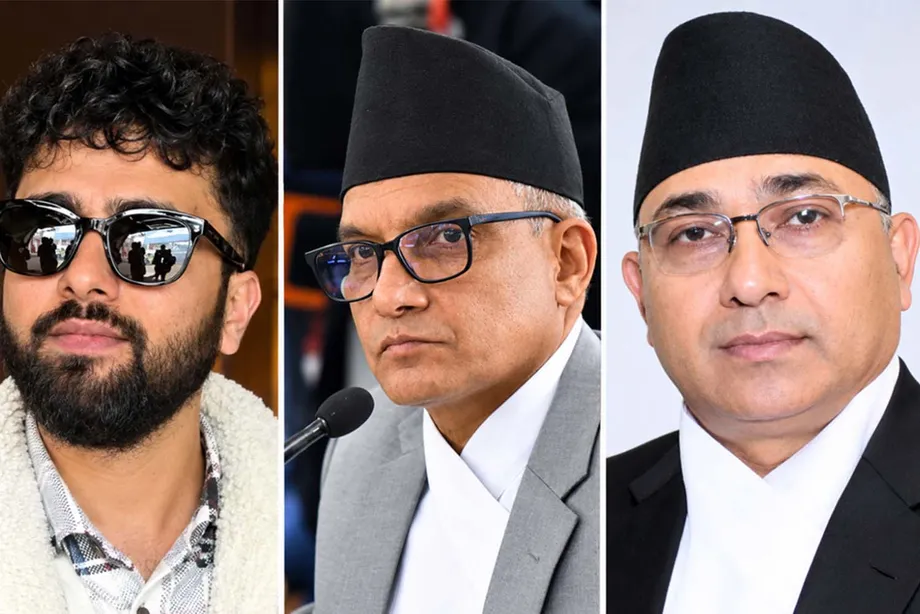
The Judicial Council recommended Ratna Bahadur Bagchand, Chandra Bahadur Saru, Janak Pandey and Gokarna Dangi on October 6. Bagchand is chief judge of the Pokhara High Court. Saru serves at the Patan High Court, while Dangi previously served at the Birgunj temporary bench of the Janakpur High Court.
The recommendations encountered objections inside the council. Supreme Court Justice Sapana Pradhan Malla and council member Mahesh Kumar Nepal submitted notes of dissent.
Pradhan Malla objected that seniority had been overlooked without sufficient justification, that the selection lacked inclusiveness and that the Nepal Bar Association was not represented. She also stated that she neither participated in nor agreed with the entire recommendation process. Nepal specifically opposed recommending Pandey and Dangi.
The Parliamentary Hearing Committee invited public complaints on October 26, asking for clear grounds and evidence. Submissions could be made within 10 days at its secretariat or a District Administration Office. Complainants were asked to provide identifying and contact details, with confidentiality available to those who did not want their identity disclosed.
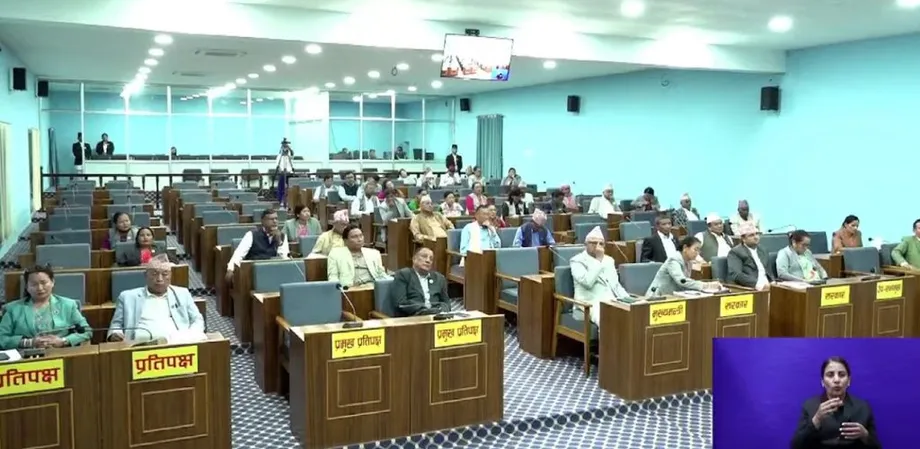
The committee will review the complaints and hear the nominees' work plans before deciding whether to approve them. Pandey's hearing is expected the following week. The objections within the council concern the selection process; the pending family appeals add a separate question about judicial ethics.
What the two land cases allege
The CIAA filed two corruption cases in February 2024 over the alleged registration of public land in private names. One concerned 397 ropanis and the other 384 ropanis. Together, those figures total 781 ropanis, explaining the description of the dispute as involving about 800 ropanis. A ropani is a traditional unit of land area used in Nepal.
The first case named 172 defendants: 28 government employees, 36 alleged encroachers and 108 subsequent purchasers. The second named 187: nine government employees, 65 alleged encroachers and 113 purchasers. Many people appeared in both cases, so adding the defendant counts would count some people twice.
The commission accused officials of abusing their authority to register public property and accused Revataraj, also known as Gagan Puri, and relatives of benefiting from that process. Gagan Puri is a local Maoist leader and Maya's brother. Their mother, Devarupa Puri, and his wife, Keshawati Puri, are also involved in proceedings linked to the transactions.
The CIAA's damages demand is described as Rs 346.65 million, although a second published figure puts it at Rs 34.67 million. The larger amount corresponds to the detailed Nepali figure of 34 crore, 66 lakh and 54 thousand rupees.
Land intended for 88 displaced households
The dispute reaches back to floods in 1981, when the Ratuwa River changed course and displaced a settlement of landless people. Later embankment work redirected the river, leaving land whose registration became the subject of investigation.
According to details attributed to CIAA decision records, a survey in 1982 subdivided land in Damak wards 13 and 14, north of the river confluence, for distribution to 88 displaced households. The Landless Commission was dissolved before ownership certificates were issued, and the land remained unoccupied.
The CIAA received a complaint in Shrawan 2074 BS, corresponding to July and August 2017, alleging repeated surveys and illegal registration in private ownership. Its investigation took nearly seven years.
The commission alleged that public land was registered as swabasi land, meaning land recognised as occupied by individuals. It also challenged procedures used to reconcile older land records with newer surveys. In practical terms, the accusation is that administrative decisions turned public property into private holdings.
Investigators alleged that registration began in 2066 BS, roughly 2009 and 2010, and that Puri's group controlled about 200 ropanis by the beginning of the following Nepali calendar decade. Records described more than 100 subsequent transfers by Puri and members of his family.
Maya's defence and the Special Court's decision
Maya maintained that she obtained her land through purchases from local residents and a gift from her maternal family. In her statement, she described a holding of one bigha and 19 katthas, using the land measurements common in Nepal's southern plains.
Maya said the transactions were lawful and denied including public property in her holding:
I have not committed corruption by including any government or public land in the survey. We obtained the land through the proper government offices, and there was no collusion or vested interest on our part.
The Special Court acquitted Maya and other landowners because malicious intent had not been established. It nevertheless ordered confiscation of disputed land registered in their names under Section 47 of the Prevention of Corruption Act, 2002.
The judgment therefore had two concrete consequences: Maya was cleared of the corruption charge at that stage, but she lost the disputed land under the confiscation order. Her appeal seeks to reverse that loss.
Why both sides went to the Supreme Court
The CIAA challenges the Special Court's treatment of defendants whom it regards as active participants in acquiring, using and transferring the property. It argues that they were more than recipients of a benefit and asks the Supreme Court to overturn their acquittals.
The commission's position is that public money and property were lost when government land was registered privately and then transferred. Maya's position is that her acquisition was lawful and the confiscation should be reversed. The Supreme Court must decide those claims through the evidence and the applicable law.
The CIAA appeal is identified as case 082-CR-1433. It was among 74 related land corruption matters listed together. That number reflects the wider group of proceedings connected to the dispute.
Gagan Puri also faces consequences from separate judgments. The Special Court sentenced him to one year in prison and imposed a Rs 3,152,000 fine in a land corruption case. In a separate money laundering case decided in February 2024, it ordered recovery of Rs 40.3 million. The money laundering case is also pending before the Supreme Court.
Pandey and former judges disagree on the ethical risk
Pandey has acknowledged his wife's prosecution and pointed to her acquittal. He says the pending appeal would not prevent the rest of the Supreme Court from doing its work.
Explaining why he sees his own position differently from that of other judges, Pandey said:
I cannot hear a case involving my own wife, but why should it be a problem for others?
A judge's decision to withdraw from a case because of a personal connection is called recusal. Here, Pandey accepts the need to stay out of his wife's case. The disagreement concerns the pressure, or appearance of pressure, that his colleagues might face.
Former Supreme Court justice Top Bahadur Singh said deciding an appeal involving a colleague's wife could affect perceptions of independence, even when the judges intended to act fairly. He recalled avoiding cases involving neighbours he knew.
Former justice Ekaraj Acharya said judges had applied different personal standards. He cited former justice Trilok Pratap Rana's avoidance of cases involving members of the Rana family, and Singh's caution about cases involving neighbours.
Acharya described the difficulty of deciding how widely recusal should apply:
The main question is how far one should go in maintaining ethical discipline.
For the people involved, the consequences are tangible. Maya seeks the return of land; the CIAA seeks convictions and recovery of public property; and judges may have to decide those claims while working with her husband. The parliamentary hearing gives lawmakers an opportunity to examine that situation before an appointment.
How the dispute reached this point
The land proceedings and the nomination have developed over different periods. The main steps show why a dispute originating decades ago has become an immediate appointment issue:
- 1981: Flooding and a change in the Ratuwa River's course displaced a settlement of landless people.
- 1982: Land was subdivided for 88 displaced households, but ownership certificates were not distributed before the Landless Commission was dissolved.
- 2017: The CIAA received a complaint alleging unlawful surveys and registration.
- February 2024: The Special Court ruled against Gagan Puri in the money laundering case, and the CIAA filed the two land corruption cases.
- October 6: The Judicial Council recommended four Supreme Court nominees, including Pandey.
- October 26: The Parliamentary Hearing Committee invited public complaints.
- November 1: Eight complaints against the four nominees had been recorded by the preceding Friday.
- November 5: The complaint submission period closes.
The committee's next task is to examine objections and hear the nominees. Approval would allow the appointment process to proceed, while the Supreme Court appeals would continue to require judicial decisions.
A wider debate about judicial independence
Nepali Congress president Gagan Thapa said on November 1 that his party was ready to discuss how to preserve the judiciary's independence and integrity. He called for discussions without prejudice, taking account of how institutions are structured and the effects of those arrangements.
His remarks addressed the broader institutional debate rather than the merits of Maya's appeal. The concrete questions in Pandey's nomination are narrower: how his family interests would be disclosed, how he would remain outside connected proceedings, and how colleagues would approach cases involving his relatives.
The committee must assess the nominee while respecting the separate role of the courts. Maya's acquittal is under appeal, her land remains subject to a contested confiscation order, and the CIAA continues to seek a different outcome. Those unresolved proceedings make the timing of the nomination central to the ethical debate.
Key Points
- Janak Pandey is one of four judges recommended for Nepal's Supreme Court.
- His wife, Maya Puri, was acquitted of corruption, but the Special Court ordered confiscation of disputed land in her name.
- The CIAA challenges the acquittals, while Maya seeks the return of the land.
- The two corruption cases concern 397 and 384 ropanis in Damak, a combined 781 ropanis.
- Eight complaints had been filed against the four nominees by the preceding Friday; submissions close November 5.
- Two Judicial Council members dissented from the recommendations, with Mahesh Kumar Nepal specifically opposing Pandey and Gokarna Dangi.
- Pandey accepts that he cannot hear his wife's case. Former justices also raise concerns about colleagues deciding it.