Batam joins a widening search for Indonesia's first nuclear site
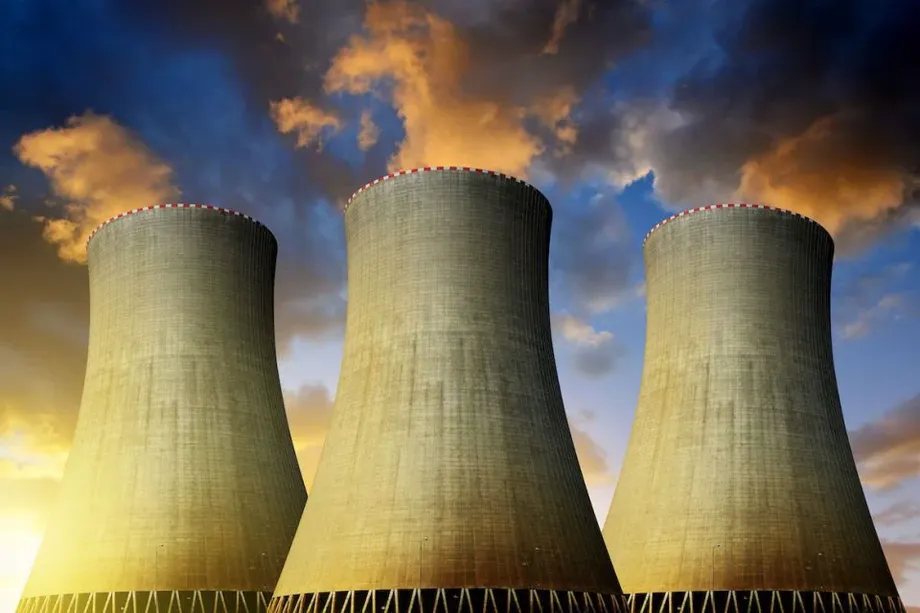
Indonesia is studying Batam in the Riau Islands and locations in Halmahera, Kalimantan and Sumatra for its first nuclear power plant, with a site decision expected by 2027 at the latest. The search brings together several proposals with different capacities and schedules: an initial plant of 250 megawatts targeted for 2032, a national electricity plan allocating 500 megawatts across two regions, and a proposed floating facility of 200 megawatts in North Halmahera.
Contents
- Batam joins a widening search for Indonesia's first nuclear site
- Why 250, 500 and 200 megawatts all appear in the plans
- Twenty eight candidate sites, with more under consideration
- What Russia and the Indonesian investor propose for Halmahera
- Local leaders see electricity and jobs in North Halmahera
- A tight schedule from site selection to electricity supply
- Safety rules and foreign partners remain central
- Nuclear begins as a small part of a much larger expansion
- Domestic research adds another part of the programme
- Key Points
Coordinating Minister for Downstreaming and Energy Transition Bahlil Lahadalia named Batam during remarks at the Energy and Mineral Resources Ministry in Jakarta on October 26, 2026. He said construction decisions would follow feasibility studies, which examine whether a project can work safely, technically and economically at a particular location.
Bahlil said Indonesia had established cooperation with several countries on nuclear development. Describing the search for a location, he said:
The Indonesian government has entered into collaborations with several countries for nuclear power plants. One of the potential sites currently under study is in the Riau Islands.
Batam is therefore a candidate rather than a confirmed construction site. Bahlil also identified Halmahera in North Maluku, Kalimantan and Sumatra as areas under examination, with Russian cooperation being assessed for the Halmahera proposal.
The immediate task is to turn those regional options into a selected site, a project design and an approved development process. Deputy Energy Minister Yuliot Tanjung said the government must establish the site before asking state electricity utility PLN to conduct a tender to select the project contractor.
Why 250, 500 and 200 megawatts all appear in the plans
PLN's Electricity Supply Business Plan for 2025 to 2034, known by its Indonesian abbreviation RUPTL, allocates 250 megawatts of nuclear capacity to Sumatra and another 250 megawatts to Kalimantan. Together, they total 500 megawatts, or 0.5 gigawatts.
Bahlil previously described the intention to begin with a relatively small capacity of 250 megawatts, with construction possibly starting in 2027 and completion targeted for 2032. Yuliot gave a broader window of 2032 to 2034 for connecting an initial 500 megawatts to the electricity grid.
The figures describe different scales within the planning process: 250 megawatts for an initial development and 500 megawatts across the two regional allocations in PLN's plan. The proposed floating plant in North Halmahera has its own design of 200 megawatts, supplied by two units of 100 megawatts each. Officials have yet to explain how that proposal would fit into the Sumatra and Kalimantan allocations.
A megawatt measures the rate at which a plant can produce electricity. Actual electricity supplied over a year also depends on how often the plant operates and when it stops for maintenance or refuelling. The announced capacities therefore describe the proposed size of the facilities, while their eventual output will depend on the designs and operating arrangements chosen.
Twenty eight candidate sites, with more under consideration
Yuliot said on October 22 that the government had prepared 28 candidate sites and was considering additional locations, including options for floating nuclear plants. He named Bangka Island, East Kalimantan and West Kalimantan among the areas already considered.
Bahlil had previously said Sumatra and Kalimantan had undergone feasibility checks and were the provisional priorities. His October 26 remarks widened public attention to Batam and Halmahera while keeping the decision dependent on further study.
The next procedural step is site selection. Under the sequence Yuliot described, PLN would then hold a tender to choose who carries out the project. For communities in the candidate areas, selection would move the proposal toward a specific local development process, including permits and environmental requirements.
The floating options give the search another dimension. Instead of considering only a reactor built on land, the government is also examining facilities installed on floating units. Those proposals still require a defined location and the relevant nuclear safety, security and environmental approvals.
What Russia and the Indonesian investor propose for Halmahera
The North Halmahera proposal has a more specific commercial outline than the broader national site search. Russia's state nuclear company Rosatom and Indonesia's PT Pembangkit Listrik Nuklir signed a cooperation agreement during Russian Energy Week in Moscow on October 16, 2026.
The proposed arrangement would provide two FPU-100 floating power units, each with a capacity of 100 megawatts. Their combined 200 megawatts would supply electricity to northern Halmahera in North Maluku. PT Pembangkit Listrik Nuklir is a separate company from the state electricity utility PLN.
The floating units are planned to use reactors from the RITM series, which has operating experience aboard Russian icebreakers powered by nuclear reactors. A floating nuclear facility produces electricity using a reactor installed on a floating structure, with the power intended for users on shore.
Investor Romo Nitiyudo Wachjo, also known as Haji Robert, is promoting the development through PT Pembangkit Listrik Nuklir. The project still needs feasibility studies, permits, compliance with nuclear safety and security standards, and environmental protections before it can proceed.
Bahlil described cooperation with Russia for Halmahera as being under study. The agreement gives the proposal named companies and a proposed technology, while government approval and the remaining development work will determine whether it is built.
Local leaders see electricity and jobs in North Halmahera
North Halmahera Regent Piet Hein Babua expressed support for the proposed investment on October 26. He argued that nuclear generation could provide a large and stable electricity supply while helping the region meet its longer term energy needs.
Piet highlighted nuclear energy's ability to produce substantial electricity from a small quantity of fuel. In a nuclear plant, energy released inside the reactor produces heat, which is used to generate electricity. The electricity generation process produces no direct carbon dioxide emissions from burning fuel.
Local legislators Iksan Wan of the Gerindra Party and Jumar Mafoloi of the National Mandate Party also supported the investment. Jumar said he hoped it would encourage further investment and create jobs for local people, particularly younger residents.
Those expectations explain the proposal's local appeal: more electricity could support industry and other economic activity. The published plans do not give a project cost, electricity price or number of local jobs, leaving residents without those practical details as the assessment continues.
A tight schedule from site selection to electricity supply
Yuliot estimated that building a nuclear plant would take seven to ten years. His warning that site preparation must begin early places pressure on the timetable, especially where studies and a location decision are still pending.
A construction start in 2027 followed by completion in 2032 would allow about five years. Applying Yuliot's estimate to a 2027 start would instead point to completion between 2034 and 2037. The schedule will depend on the selected project and how officials define the start of construction and the work completed beforehand.
The main dates show how commercial discussions, site preparation and national planning are moving alongside one another:
- May 26, 2025: PLN's electricity supply plan for 2025 to 2034 was approved, including nuclear generation.
- October 15, 2026: Bahlil discussed foreign nuclear technology proposals at an energy security symposium in Tangerang, Banten.
- October 16, 2026: Rosatom and PT Pembangkit Listrik Nuklir signed their cooperation agreement in Moscow.
- October 22, 2026: Yuliot said site selection must precede PLN's project tender and described 28 candidate sites.
- October 26, 2026: Bahlil identified Batam and other regions under study.
- 2027: The government expects to settle the first location by this year at the latest; Bahlil has also mentioned a possible construction start.
- 2032 to 2034: Officials have identified this period for the first nuclear capacity to enter service, with 2032 the earlier target.
Safety rules and foreign partners remain central
Indonesia is discussing nuclear cooperation with countries including Russia, the United States, South Korea and Japan. At the October 15 symposium, Bahlil also identified Germany and Canada among countries that had offered cooperation in nuclear technology.
Bahlil said prospective partners must have tested capabilities and proven experience. His stated approach makes technical and safety evaluations central to both the choice of location and the choice of an international partner.
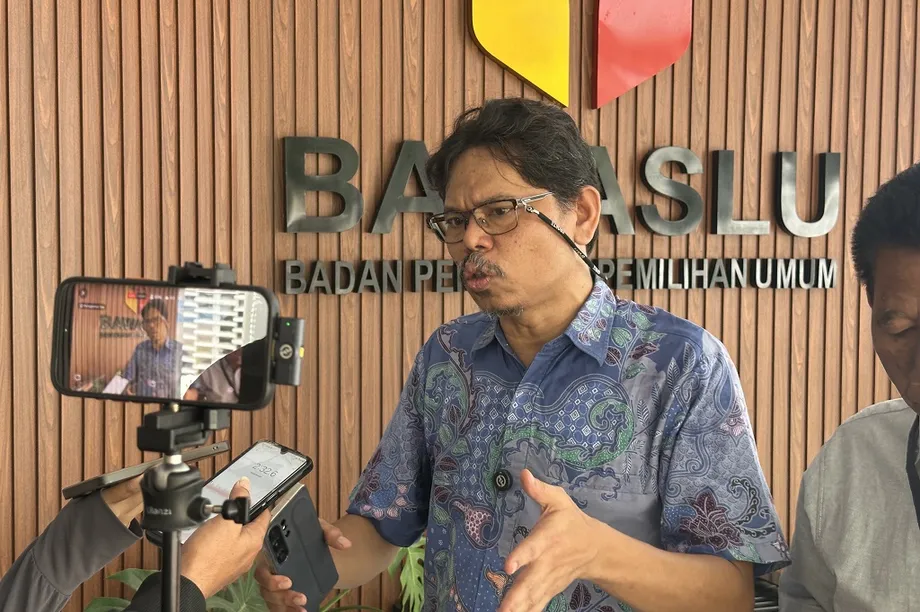
Indonesia's nuclear regulator, BAPETEN, is also involved in preparing the legal framework. Haendra Subekti, its deputy for safety assessment, said the government was revising Law No. 10 of 1997 on Nuclear Energy to address security, preparedness, international cooperation and law enforcement.
Those areas cover different responsibilities. Safety concerns the reliable operation of a facility and protection from accidents. Security concerns protection against deliberate threats, while preparedness covers the ability to respond to an emergency. For Indonesia, developing a plant means preparing these arrangements alongside the physical construction.
Nuclear begins as a small part of a much larger expansion
PLN's plan targets 69.5 gigawatts of additional capacity through 2034. Its stated breakdown is 42.6 gigawatts from new and renewable energy, 10.3 gigawatts of storage and 16.6 gigawatts from fossil fuels. The fossil fuel portion consists of 10.3 gigawatts of gas and 6.3 gigawatts of coal.
The planned 0.5 gigawatts of nuclear capacity equals about 0.7 percent of the 69.5 gigawatts of additions. That comparison shows how small the initial nuclear programme would be within the wider electricity expansion, despite the attention surrounding Indonesia's first plant.
Storage serves a different purpose from a generator. It holds energy produced earlier and releases it when needed. Its inclusion alongside new generation reflects the need to manage when electricity is available as well as how much generating capacity is installed.
The longer term nuclear ambition is much larger. National energy projections envisage 35 to 42 gigawatts of nuclear capacity by 2060, supplying up to 12.1 percent of Indonesia's primary energy mix. Primary energy covers energy before it is converted into electricity or other usable forms, so that percentage uses a broader measure than electricity generation alone.
Reaching 35 to 42 gigawatts would mean nuclear capacity of 70 to 84 times the initial 0.5 gigawatts in PLN's plan. The first projects would therefore begin a much longer expansion requiring further sites, investment and construction.
Domestic research adds another part of the programme
State Secretary Prasetyo Hadi said the National Research and Innovation Agency, BRIN, and other government bodies were directing nuclear research toward energy and health needs. BRIN presented nuclear research and innovations at the Presidential Palace on August 6, including work intended to support a nuclear power plant.
Researchers also described potential Indonesian resources of up to 89,000 tonnes of uranium and 143,000 tonnes of thorium. These materials are relevant to nuclear energy, although turning a resource in the ground into usable reactor fuel requires several industrial stages.
The research effort and the negotiations with foreign partners address different parts of the same programme. BRIN's work concerns domestic scientific and technical capability, while the current power proposals involve selecting sites, obtaining technology, arranging construction and meeting regulatory requirements.
For Batam, Halmahera and the other candidate areas, the next concrete milestone remains the location decision. That choice will establish where detailed project development proceeds and help determine which of the competing schedules and capacities becomes Indonesia's first operating nuclear power plant.
Key Points
- Indonesia is assessing Batam, Halmahera and sites in Sumatra and Kalimantan, with a first location decision expected by 2027.
- PLN's plan allocates 250 megawatts each to Sumatra and Kalimantan, for a total of 500 megawatts.
- Officials have cited 2032 and the broader period from 2032 to 2034 for initial operations.
- Rosatom and PT Pembangkit Listrik Nuklir propose two floating units totalling 200 megawatts for North Halmahera.
- The Halmahera project requires further studies, permits and nuclear safety, security and environmental approvals.
- Indonesia is preparing changes to its nuclear energy law while pursuing a longer term target of 35 to 42 gigawatts of nuclear capacity by 2060.