Dismissals mount as Indonesia confronts meal programme failures
Indonesian President Prabowo Subianto has acknowledged serious shortcomings in his flagship Free Nutritious Meals programme, citing 353 dishonourable dismissals, 13 people named as suspects and thousands undergoing examination as the government faces pressure over corruption allegations and food safety.
Contents
- Dismissals mount as Indonesia confronts meal programme failures
- What the enforcement figures mean
- Cirebon brings the safety problem into focus
- How the problems developed
- Kitchen rules become more demanding
- Egg purchases expose a procurement risk
- A huge reach, with competing budget figures
- Who should run a nutrition programme?
- Counting healthier children, not just meals
- Key Points
Prabowo presented the figures during a closed cabinet meeting at the Presidential Palace in Jakarta on October 21, 2026. His remarks were broadcast by the Presidential Secretariat on October 23. He said the Attorney General's Office was examining 203 people, while the National Nutrition Agency's inspectorate was examining another 2,600.
The announcement coincided with a suspected food poisoning incident in Cirebon, West Java, where 395 people, mostly children, had been affected by October 22. The head of the kitchen involved was removed after an agency investigation found breaches of operating instructions.
Prabowo, who made the meal programme a central promise of his 2024 presidential campaign, told cabinet members that its importance required a stronger response to failures.
MBG is strategic. MBG is vital. We acknowledge there are many shortcomings in the implementation of MBG.
MBG is the Indonesian abbreviation for Makan Bergizi Gratis, meaning Free Nutritious Meals. The programme began in January 2025 and was intended to reach about 83 million people, including school students, pregnant women and nursing mothers.
The government's challenge now reaches beyond delivering more meals. It must protect recipients from unsafe food, prevent money from being diverted and show whether the meals are improving nutrition. Those tasks involve different checks, from inspecting kitchens and purchase records to measuring children's health.
What the enforcement figures mean
Prabowo's figures describe several forms of action: criminal investigations, internal examinations and dismissals. A suspect is someone formally identified in a criminal investigation; a court determines criminal guilt. An inspectorate examines conduct within a government body and can recommend disciplinary action.
The president discussed the figures while addressing MBG, but his statement did not specify the alleged violations behind each total, clarify whether every case concerned the programme exclusively or explain whether the groups overlapped. Adding the numbers together would therefore give an unreliable count of individuals involved.
Prabowo urged the National Nutrition Agency, known as BGN, to remove officials involved in wrongdoing and described the programme as an investment in Indonesian children's future. His message was to continue the programme while correcting its operation.
BGN spokesperson Tysa Novenny said the agency had dismissed kitchen heads and workers found responsible for crimes, violence, corruption or food safety incidents. Her description shows the range of misconduct being addressed, extending from financial abuses to failures affecting the safety of meals.
Cirebon brings the safety problem into focus
Cirebon's suspected poisoning incident provides a concrete example of the risks facing recipients. By 2 p.m. on October 22, 395 people had been affected and had received medical care across 10 hospitals and three community health centres.
Of that total, 218 were admitted to hospital, while 177 received outpatient treatment or had been allowed home. About 55 per cent of those affected required hospital admission, calculated from the 218 admissions among 395 patients. The number still receiving hospital care was declining by the morning of October 23.
Yulian Septa Pratama, head of Cirebon's nutrition service office, said investigators examined the Kalijaga 5 kitchen in Harjamukti district, including its premises, management and daily operations. An SPPG is a nutrition service unit, the local kitchen responsible for preparing programme meals.
Investigators found that the kitchen had ordered ingredients or prepared food through an outside vendor for further processing, an arrangement Yulian said was prohibited under the programme's technical instructions. BGN removed the head of SPPG Kalijaga 5 from the position.
Officials were awaiting results from West Java's regional health laboratory before deciding further action. The laboratory findings would help identify the cause of the suspected poisoning and guide the response beyond the management sanction already imposed.
How the problems developed
Food safety concerns had emerged well before the Cirebon incident. By late September 2025, government figures recorded more than 5,900 cases of food poisoning linked to programme meals, while independent monitors put the number closer to 6,500.
The sequence shows a programme expanding nationally while officials repeatedly adjusted its controls:
- January 2025: Indonesia launched the Free Nutritious Meals programme.
- Late September 2025: Government figures recorded more than 5,900 food poisoning cases linked to the meals.
- October 21, 2026: Prabowo discussed shortcomings and enforcement figures at a closed cabinet meeting in Jakarta.
- October 22, 2026: Cirebon's suspected poisoning tally reached 395 people by 2 p.m.
- October 23, 2026: The Presidential Secretariat broadcast Prabowo's cabinet remarks.
Prabowo had also acknowledged problems in an East Java speech posted on his official YouTube channel on May 16. He defended the programme while calling for its operation to be put in order.
In that speech, the president said ordinary people continued to ask him to preserve the meals because they helped their grandchildren eat. His argument placed the programme's immediate benefit to families alongside the government's obligation to repair its delivery.
Kitchen rules become more demanding
BGN head Sudaryono has warned that personnel who breach standard operating procedures could lose their jobs. Those procedures are the practical rules governing purchases, staffing, cooking and distribution. Their purpose is to make safe handling routine across thousands of kitchens.
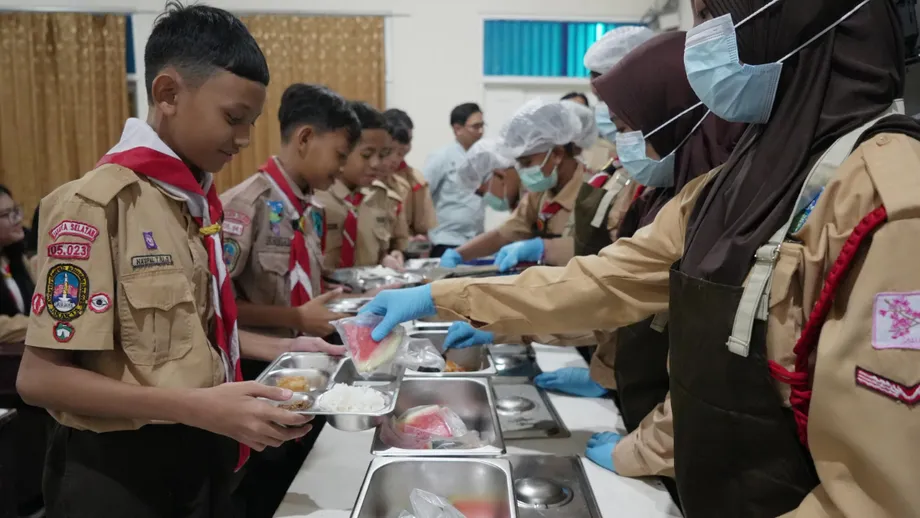
Sudaryono said the agency had closed 833 kitchens for failing to meet its requirements. Kitchens must have sanitation and hygiene certificates and operate under CCTV surveillance. Meals must be consumed within four hours of cooking.
The four hour limit makes preparation and delivery schedules central to safety. A kitchen must coordinate cooking, transport and serving so that recipients eat within the permitted window. Delays at any stage reduce the time available at the next.
Tysa said BGN had also set kitchen heads' working hours at 2 a.m. to 8 a.m. and 5 p.m. to 7:30 p.m., aligning their attendance with kitchen operations. Sudaryono had identified staff absences among the problems under review.
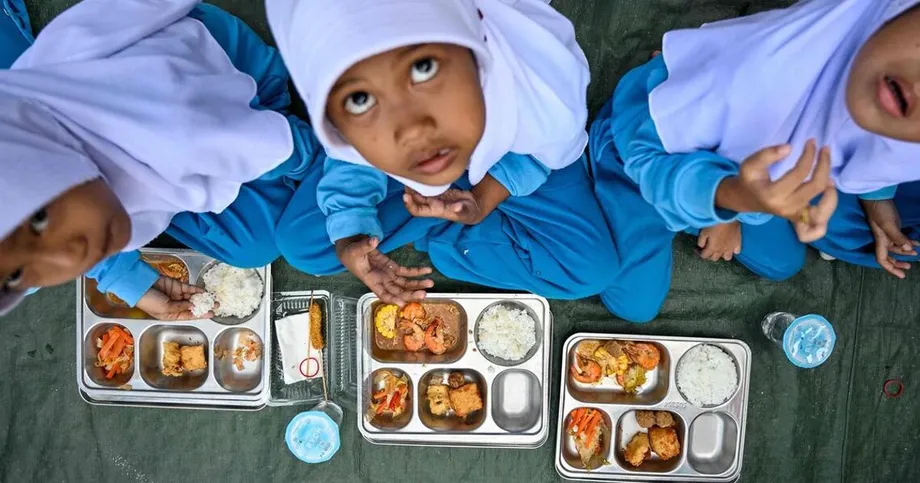
Meal trays must now carry labels stating the consumption deadline and telling recipients to eat on site rather than take food home. For schools and families, that means the meal's timing and location become part of the programme's safety requirements.
Egg purchases expose a procurement risk
BGN is investigating an alleged arrangement involving egg purchases at an SPPG kitchen in Sukoharjo, Central Java. A conversation circulating on social media appeared to describe a supplier charging one price while the foundation responsible for payment was billed more.
In the example under examination, eggs costing Rp21,000 per kilogram would be billed at Rp25,000. The Rp4,000 difference would allegedly be transferred back by the supplier to a company connected with the SPPG.
The proposed difference equals about 19 per cent of the supplier's Rp21,000 price. If carried out, such an arrangement would leave the programme paying more than the underlying purchase cost, with the extra money moving elsewhere.
Sudaryono said the agency was reviewing the allegation. He also described other suspected misconduct, including an SPPG member's alleged involvement in fraud and online gambling, and said sanctions would depend on the severity of the violation.
Indonesia Corruption Watch has separately submitted a complaint to the Corruption Eradication Commission concerning alleged discrepancies of nearly US$50 million in the halal certification procurement budget. The complaint concerned Dadan Hindayana, identified as BGN head at the time. Halal certification checks compliance with Islamic requirements, including those concerning ingredients and food preparation.
A huge reach, with competing budget figures
More than 61 million people had received meals by March, against a government target of 82.9 million. Using 61 million as a baseline, that amounts to roughly 74 per cent of the intended reach. The programme's size makes even small weaknesses in purchasing or kitchen practice costly when repeated across many locations.
The government reduced distribution from six days a week to five in March as it sought savings amid the economic effects of the Middle East war. The projected saving was up to Rp40 trillion. Moving from six service days to five removes one sixth of the weekly distribution days.
Accounts of the programme's finances give different 2026 amounts: Rp268 trillion as its budget and Rp335 trillion as planned funding. The difference is Rp67 trillion, and the relationship between those figures was not explained. The programme's approved 2025 budget was about Rp171 trillion.
Researchers Geo Dzakwan Arshali, Ibnurafi Andapura and Zahra Shaffa Kamila, affiliated with World Order Lab, argued that redirecting resources towards meals put education and health services under pressure. Their analysis estimated a Rp27 trillion shortfall in education services and a risk to as many as 723,000 education sector jobs.
Those figures are estimates of potential costs, rather than announced job losses. They frame a practical budget choice: children need nutritious meals, while schools also need teachers, operating funds and functioning facilities.
Who should run a nutrition programme?
Arshali, Andapura and Kamila also questioned BGN's leadership structure, describing senior ranks as dominated by retired military and police officers and lacking trained public health expertise. They argued that moving food through a large logistics network requires different skills from designing and supervising a nutrition service.
Their proposed changes included appointing leaders with experience in nutrition and public health and concentrating resources on poorer schools or Indonesia's remote, underdeveloped and outermost districts, commonly called 3T areas.
More than one fifth of Indonesian children are affected by stunting, which means their growth has been restricted by prolonged undernutrition and related conditions. That helps explain the programme's focus on children and on nutrition during pregnancy and breastfeeding.
Targeting the groups with the greatest nutritional needs would change the programme's broad national approach. The proposal would concentrate resources where the researchers argue they could do the most good, while requiring a method for deciding which schools and communities receive support.
Counting healthier children, not just meals
Made Natasya Restu Dewi Pratiwi, a social policy researcher at The Indonesian Institute, has called for the government to complete an evaluation system measuring food quality, whether menus meet recipients' needs, changes in nutritional status and healthy eating behaviour.
Natasya said BGN should work with the ministries responsible for health, population and family development, and primary and secondary education. Measuring those outcomes would allow officials to adjust menus and operations based on recipients' needs.
Beneficiary counts answer how many people a programme reaches. Nutrition assessments answer whether the food is suitable and whether recipients become healthier. For MBG, both are necessary: a meal must arrive safely, contain appropriate nutrients and reach people who need it.
Natasya also called for transparency, public participation and explanations of how officials respond to public feedback. For parents, that would mean a clearer route from reporting a concern to learning what action followed.
The immediate work is concrete: complete the Cirebon laboratory investigation, enforce kitchen rules, examine procurement allegations and explain the scope of the enforcement figures. Alongside those actions, measuring recipients' health would give the government a way to judge whether its central promise is being delivered.
Key Points
- Prabowo cited 353 dismissals, 13 suspects, 203 people under examination by prosecutors and 2,600 under examination by BGN's inspectorate.
- His remarks were made at the October 21, 2026 cabinet meeting and broadcast on October 23.
- Cirebon recorded 395 people affected by suspected food poisoning, including 218 hospital admissions, by October 22.
- BGN removed the Kalijaga 5 kitchen head after finding procedural violations; laboratory findings were pending.
- Kitchen controls include hygiene certification, CCTV, consumption deadlines and eating meals on site.
- Researchers want evaluation to measure nutrition and health outcomes alongside the number of recipients.