A quality upgrade becomes a dispute over jobs
Lao Gan Ma says claims that artificial intelligence cost hundreds of pepper sorters their jobs are untrue. Yet a controversy surrounding its factory upgrade has brought two sets of numbers into focus: a reported reduction from more than 600 sorting workers to 48, and company social insurance records showing a substantial decline in registered participants.
Contents
- A quality upgrade becomes a dispute over jobs
- What the cameras do on the factory line
- What the company has denied
- How the controversy unfolded
- What the social insurance figures count
- Revenue recovered while registered participation fell
- Why the reaction matters for the brand
- What China's new AI employment policy says
- What support would mean for affected workers
- Key Points
The Chinese chili sauce maker issued its denial through company staff on October 26, 2026, after comments by Li Xin, its executive deputy general manager and chief quality officer, spread online. At the 2026 Guizhou Quality Development Conference, Li described an AI inspection system at the Guiyang Changming production base and said revenue reached 5.4 billion yuan in 2025.
Li said the system helped reduce the defective product rate in key processes to 0.02%. Discussion online quickly shifted from product quality to the fate of workers, with claims that more than 500 people had been dismissed after machines took over pepper sorting.
The dispute comes alongside a new national policy. On October 16, the State Council General Office issued guidance calling for careful deployment of AI in industries employing large numbers of people, advance notice for affected workers and support for moving into other jobs.
Lao Gan Ma's case brings those goals down to a concrete workplace: a conveyor belt where cameras now inspect peppers. Consumers are asking how the people who previously performed that work fit into the company's production changes.
What the cameras do on the factory line
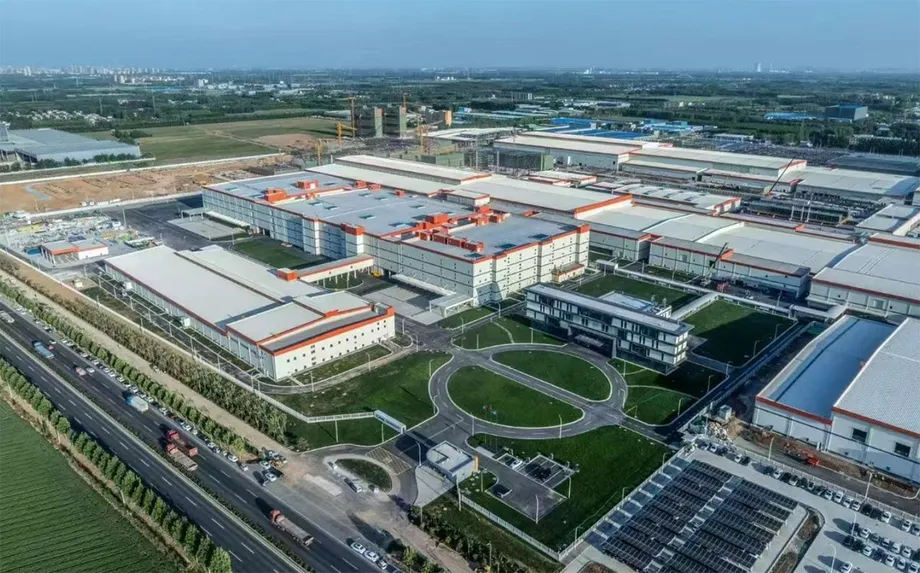
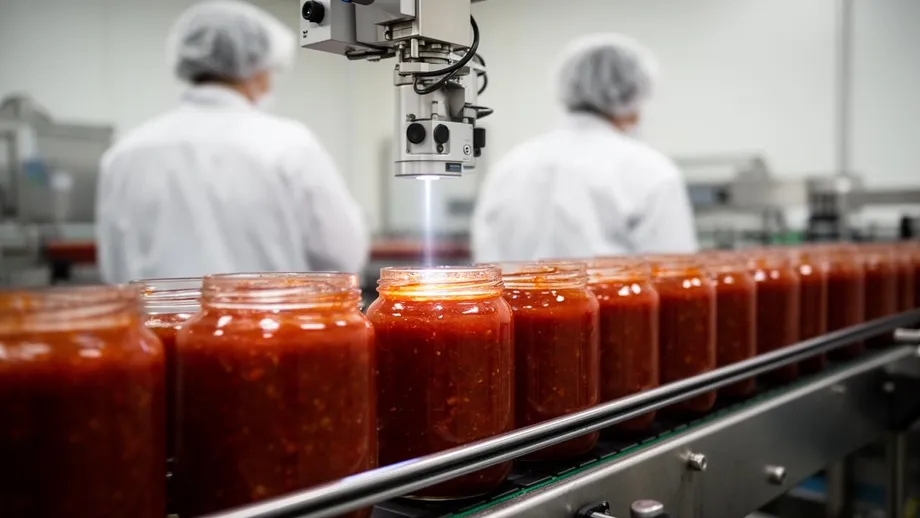
At the Guiyang Changming base, the inspection system uses an industrial camera to scan the conveyor belt every 0.3 seconds, according to Li's conference presentation. It identifies moldy peppers and peppers with black spots so they can be removed from production.
Visual inspection means checking an item by how it looks. Here, AI performs a task previously carried out by people looking repeatedly at peppers moving past them. Li described fatigue during long periods of manual sorting as a source of missed defects.
The reported defective product rate of 0.02% is equivalent to two defective products in every 10,000 at the key processes measured. Li did not give an earlier rate in the figures cited, so the size of the improvement cannot be calculated from those numbers.
Lao Gan Ma human resources staff confirmed that AI quality inspection had been introduced at its production base. The disagreement concerns staffing decisions associated with that change, rather than whether the technology is operating.
What the company has denied
Li was reported to have said that the production line previously had more than 600 pepper sorters and retained 48 after the system began operating. Those figures became the basis for social media claims that Lao Gan Ma had dismissed more than 500 employees.
Lao Gan Ma hotline staff said on October 26 that the information about AI layoffs was untrue and that the company had never released such information. Human resources staff also denied a personnel adjustment on the scale circulating online.
An unnamed member of the company's human resources department challenged the starting figure in the staffing claim:
we have never employed so many workers
The central gap is a detailed staffing account: Lao Gan Ma has not publicly explained in the cited responses how many people worked in the relevant sorting operation before and after installation, or how many moved into other roles, left voluntarily or had their employment ended.
Using 600 as the starting point, the change to 48 would mean 552 fewer positions, a reduction of 92%. The reported wording was more than 600, making 552 the calculation that drove public discussion rather than a precise count of affected employees. A full company explanation would need to reconcile the conference figures with its subsequent denial.
How the controversy unfolded
The events developed over several dates in October, bringing a factory technology presentation, national employment policy and consumer reaction into the same debate.
- October 16, 2026: The State Council General Office issued its guidance on AI development and employment.
- Mid October: Li discussed AI inspection and Lao Gan Ma's 2025 revenue at the Guizhou Quality Development Conference.
- From October 22: Third party tracking showed lower daily sales on one e-commerce platform during the controversy.
- October 26: Company hotline and human resources staff rejected the circulating claims about AI layoffs.
Online reactions included calls to stop buying Lao Gan Ma products. Other users defended automation as a way to improve inspection and keep product quality consistent. The sharpest disagreement concerned the company's responsibility toward employees as it changes production methods.
What the social insurance figures count
Business information records cited in the reporting show that social insurance participants at Guiyang Nanming Laoganma Flavor Food Co., Ltd. fell from 2,912 in 2022 to 1,783 in 2023, 941 in 2024 and 740 in 2025.
Across those years, the main company's recorded total fell by 2,172 people, or about 74.6%. Branch participant counts also declined, from 1,279 to 793 over the cited period, a decrease of 486.
Adding those decreases produces 2,658 fewer recorded participants. That arithmetic explains the online claim that the company and its branches had lost more than 2,600 social insurance participants.
Social insurance participation is an administrative count of people registered for coverage through a particular employer. The figures cited generally cover employees whose insurance is paid directly by the company. Workers supplied by outside contractors or labor agencies, seasonal staff and employees registered through subsidiaries or cooperating businesses fall outside that count.
Employment arrangements can change through outsourcing, contracts ending without renewal, voluntary departures or changes in production organization. The records describe a substantial change in insurance registration across the business; understanding the workforce change requires a breakdown by workplace, job and employment arrangement.
Revenue recovered while registered participation fell
Lao Gan Ma's revenue figures show a business recovering from an earlier decline. The Guizhou Top 100 Enterprises 2025 list recorded revenue of 5.26 billion yuan in 2022, 5.381 billion yuan in 2023 and 5.391 billion yuan in 2024.
Li put the 2025 figure at 5.4 billion yuan. Compared with 2022, that represents an increase of 140 million yuan, or about 2.7%. Over the same period, the main company's recorded social insurance participation fell from 2,912 to 740.
The two trends explain why the employment figures attracted attention: revenue was rising while fewer people were registered for insurance through the main company. Calculating sales per worker would require a complete workforce count, including people working through other employment arrangements.
Revenue means money received from sales before costs are deducted. Lao Gan Ma still has to pay for ingredients, packaging, wages, distribution and other expenses. The 5.4 billion yuan figure describes sales, while profit is the amount left after expenses.
The business had recorded revenue of 5.403 billion yuan in 2020 before falling to 4.201 billion yuan in 2021. Its subsequent recovery therefore began before the 2026 presentation about AI inspection.
Why the reaction matters for the brand
Lao Gan Ma occupies a large place in China's condiment market. Retail monitoring data from Ma Shang Ying put its share of the chili sauce segment at around 55% from 2022 to 2025, and its share of the broader flavored sauce market at about 16%.
Founder Tao Huabi's personal story is also central to the brand. She sold snacks in Guiyang in the 1980s, and her homemade chili sauce became popular with customers. She established a factory in Longdongbao, Guiyang, in 1996, and the company was registered in 1997.
Tao's portrait on the jars connects a mass market product with an individual who built a business from modest beginnings. That history helps explain why some consumers see the treatment of ordinary workers as part of what they expect from Lao Gan Ma.
The controversy has also drawn attention to online sales. Third party tracking on one e-commerce platform showed daily sales of 1,000 to 5,000 yuan from October 22, compared with a previous typical range of 5,000 to 10,000 yuan.
Lao Gan Ma relies heavily on traditional offline distribution. Assessing the commercial effect across the business would require sales figures covering those channels as well as its online stores.
What China's new AI employment policy says
The State Council General Office's AI employment guidance, issued as document No. 29 of 2026, sets out a national approach that combines technological development with employment protection. It calls for reducing the displacement of workers while supporting new jobs and better working conditions.
The document asks authorities and businesses to manage the scope, intensity and pace of AI adoption carefully in industries that depend heavily on labor. It gives priority to applications in jobs where workers are scarce or working conditions are dangerous.
For businesses introducing AI on a large scale, the guidance encourages advance notice to affected workers and help with changing roles or finding other employment. It also encourages companies to explore a buffer period for unemployment, allowing time to prepare for the transition.
The wording matters for employees and employers. The document encourages companies to explore that buffer arrangement; it does not set a fixed number of days or a universal payment amount. Its direction is to make preparation for workers part of the technology rollout.
The guidance also calls for employment risk assessments. For projects in market access reviews that could have a large effect on jobs, the employment assessment should take place alongside the review. Other AI applications should be assessed according to their circumstances.
What support would mean for affected workers
The national policy gives practical examples of assistance for eligible workers affected by AI: career guidance, skills training, job recommendations and help with starting a business. It also calls for timely and full payment of unemployment insurance benefits to eligible insured people.
Training is another major part of the document. Local authorities are encouraged to organize courses around actual demand for digital skills and to use public and company training facilities. The policy names young people, migrant workers and unemployed people among those encouraged to participate.
For a pepper sorter, useful transition support would connect training to a specific available role, with clear information about pay, hours, location and entry requirements. The national guidance favors cooperation between people and machines in traditional industries, alongside the development of new occupations related to AI.
Lao Gan Ma's public response would be more informative with figures showing the original workforce, current assignments and any departures, together with details of training and assistance. Those measures would address the employment question in terms workers and consumers can understand.
The government document also calls for ongoing monitoring of jobs created, jobs replaced and changes in skill needs. Its approach treats employment as something to track throughout AI adoption, alongside production quality and business performance.
Key Points
- Lao Gan Ma denied on October 26 that AI inspection had led to layoffs on the scale claimed online.
- Li Xin said cameras scan the pepper conveyor every 0.3 seconds and the defective product rate in key processes fell to 0.02%.
- A reported change from more than 600 sorters to 48 remains unreconciled with the company's denial.
- The main company's social insurance participant count fell from 2,912 in 2022 to 740 in 2025; branch counts also declined.
- Lao Gan Ma reported revenue of 5.4 billion yuan for 2025, compared with 5.26 billion yuan in 2022.
- China's October 16 guidance calls for careful AI deployment, advance notice, employment risk assessments and transition support for affected workers.