
A first regional title after a night of late turns
Indonesia claimed the first FIFA ASEAN Cup on Monday, beating Thailand 4-2 on penalties after a 2-2 draw that lasted 120 minutes at Gelora Bung Karno Stadium in Jakarta. Goalkeeper Emil Audero saved Thailand’s fourth attempt, sealing a long-awaited senior men’s trophy for the hosts in front of a crowd of more than 60,000.
Contents
The final swung repeatedly. Indonesia scored late in normal time, Thailand equalized while a player down, then took the lead in extra time. Elkan Baggott brought Indonesia level again five minutes later, setting up the shootout. Indonesia converted all four of its penalties; Thailand’s captain Sarach Yooyen hit the post before Audero denied Nattapong Sayriya.
President Prabowo Subianto and FIFA president Gianni Infantino watched from the stadium and presented the trophy to Indonesia captain Kevin Diks. The result made Indonesia champions of the new competition and ended a decade-long run without a victory over Thailand.
How the final turned into a contest of nerve
Thailand defended in numbers through a largely cautious first half, while Indonesia had more of the ball but struggled to create clear chances. Efforts from Mitch Baker and Calvin Verdonk went wide, and goalkeeper Saranon Anuin kept the match scoreless at halftime.
The match opened up after Thailand defender Nicholas Mickelson received a second yellow card in the 81st minute. Indonesia made its numerical advantage count three minutes later. Dean James sent a free kick toward goal, and the ball deflected off Thai substitute Iklas Sanron before beating Anuin.
Thailand responded despite having 10 players. In the 87th minute, Seksan Ratree sent a cross into the area, where Iklas volleyed the ball past Audero to make it 1-1. The goal sent the final into extra time and changed the task for Indonesia: it now had to break down a compact defense while guarding against counterattacks.
Thailand then produced another surprise. Anan Yodsangwal won the ball from Baggott and released Peeradol Chamrasamee, who scored in the 111th minute to put Thailand ahead. Indonesia had little time to recover, but did so five minutes later. Rizky Ridho’s ball reached Baggott, whose close-range effort went in off the underside of the crossbar.
Neither side scored again. The 2-2 draw sent the championship to a penalty shootout, where every Indonesian taker scored. Kevin Diks, James, Baggott and Shayne Pattynama converted. Thailand scored through Manuel Tom Bihr and Waris Choolthong, but Sarach’s shot struck the post and Audero saved Nattapong’s attempt.
Audero’s save seals the championship
Audero’s decisive save capped a performance shaped by patience as much as reflexes. He had to stay alert through long stretches when Thailand sat deep and looked for openings in transition, then faced a high-pressure penalty after 120 minutes of play.
A penalty shootout is a sequence of separate kicks rather than a continuation of open play. Each taker has one attempt from the penalty spot, with the goalkeeper trying to read the direction and timing of the shot. A miss or save can change the pressure on the next player, especially when one team has already taken the lead in the sequence.
Indonesia’s four successful kicks gave Audero room to decide the contest with his save. Thailand’s players had shown resilience throughout the match, equalizing and then taking the lead despite playing short-handed. Yet the shootout ended the final on Indonesia’s terms, with the home players and staff rushing toward Audero as the stadium erupted.
The result also broke an unusually stubborn run in the rivalry. Indonesia had gone eight matches and roughly 10 years without beating Thailand, according to FIFA’s tournament coverage. Thailand had also beaten Indonesia in several previous regional finals, making this victory a particularly satisfying reversal for Indonesian supporters.
What the trophy means for Indonesian football
The championship ended a 35-year wait for Indonesia’s senior men’s team to win a major title. Its previous senior football gold came at the 1991 Southeast Asian Games, when Indonesia beat Malaysia on penalties. Indonesia later won SEA Games football gold in 2023, but that competition is for under-23 teams, so the ASEAN Cup represents a senior-level achievement.
Indonesia had reached the final of the AFF Championship, Southeast Asia’s previous leading senior national-team competition, six times without winning it. The new FIFA-backed tournament therefore gave the team an immediate chance to claim a regional title, and the final against Thailand placed that opportunity against one of its most familiar rivals.
President Prabowo called the win a source of national pride and praised the players for continuing to fight until the end. He described it as possibly Indonesia’s first victory in an international FIFA tournament match. Erick Thohir, chair of the Indonesian Football Association, congratulated the players, coaches and officials, and thanked supporters for continuing to believe in the team.
Head coach John Herdman also described the result as a proud moment for Indonesia and credited the players and staff for their work. His side’s route to the final had included a 9-2 win over Bangladesh in the last group match. That result helped Indonesia finish ahead of Malaysia on goals scored after the teams were level on points and goal difference. Baker scored five times in that match and finished as the tournament’s top scorer with five goals.
The tournament’s first edition was jointly hosted by Indonesia and Hong Kong, China. Teams from Malaysia, the Philippines, Singapore, Thailand, Vietnam, Bangladesh and Pakistan joined Indonesia in matches held in Indonesia. FIFA launched the competition to give national teams more meaningful matches and strengthen football ties across Southeast Asia.
Thailand’s response and the regional rivalry
Thailand coach Anthony Hudson congratulated Indonesia and said the winners had good players and were moving in the right direction. He said he was disappointed with the result but proud of his team’s effort after Mickelson’s dismissal. Hudson described penalties as a lottery and said he did not blame his players for the shootout loss.
Thailand goalkeeper Saranon Anuin also expressed disappointment, saying the team had come close to the title, while thanking his teammates for their effort and congratulating Indonesia. Thailand’s ability to stay competitive with 10 players, equalize late and take the lead in extra time underscored how narrow the margin was between defeat and a championship.
The result adds a new chapter to a history of difficult finals for Indonesia. Thailand had defeated Indonesia in multiple AFF or Tiger Cup title matches, including the 2000 and 2021 finals. Indonesia had also lost the 2002 final to Thailand on penalties. This time, after another 2-2 draw and a shootout, Indonesia prevailed.
The final also drew attention to the makeup of Indonesia’s starting lineup. Thai media coverage highlighted that many of the starters were born outside Indonesia, including several born in the Netherlands. Indonesia has used naturalized players and players with mixed heritage as part of its national-team strategy. Birthplace alone does not determine eligibility: players must meet FIFA’s rules for representing a country, which can include citizenship and qualifying links such as ancestry or residence.
That discussion sits alongside the team’s on-field achievement. A national team is assembled under eligibility rules, while supporters often debate how recruitment, player development and local football structures shape its identity. Indonesia’s victory gives the country a first ASEAN Cup title, while the wider conversation about how to build a strong and sustainable team remains part of regional football.
From a packed stadium to the next test
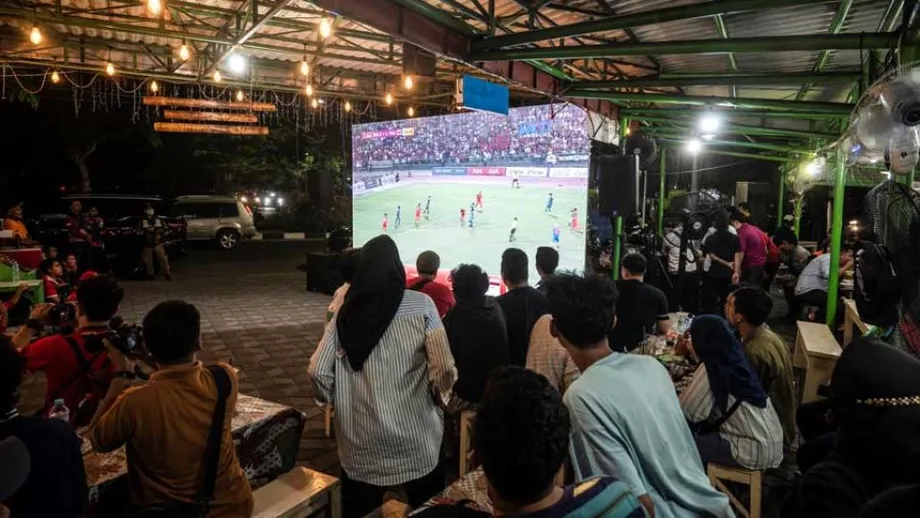
Security and crowd movement were major preparations for the final. Jakarta police said more than 10,000 joint personnel were assigned to the match, including at routes, entrances, stands and gathering areas around the stadium. Authorities also planned to adjust traffic around Senayan according to conditions. The stadium was packed, with reported ticket sales reaching 67,000.
The competition’s wider value will depend on the quality and regularity of the matches it provides. National teams in the region often have fewer opportunities to play high-level competitive games than their counterparts in larger football markets. A dedicated tournament can provide meaningful fixtures, but its value is ultimately measured by how it supports development and sustains strong competition among participating teams.
Indonesia and Thailand are set to meet again in Group F of the 2027 AFC Asian Cup in Saudi Arabia, alongside Japan and Qatar. Indonesia’s next meeting with Thailand will bring a different setting and a different prize, but the final in Jakarta has already given the rivalry a fresh reference point.
Key Points
- Indonesia beat Thailand 4-2 on penalties after a 2-2 draw in the FIFA ASEAN Cup final.
- Emil Audero saved Thailand’s fourth penalty after Sarach Yooyen hit the post.
- Dean James and Elkan Baggott scored for Indonesia; Iklas Sanron and Peeradol Chamrasamee scored for Thailand.
- The title is Indonesia’s first senior men’s regional championship and its first senior football title since 1991.
- Indonesia ended an eight-match, decade-long winless run against Thailand.
- The teams are scheduled to meet again in the 2027 AFC Asian Cup in Saudi Arabia.