
October Fuel Deal Follows Anger in Ulaanbaatar
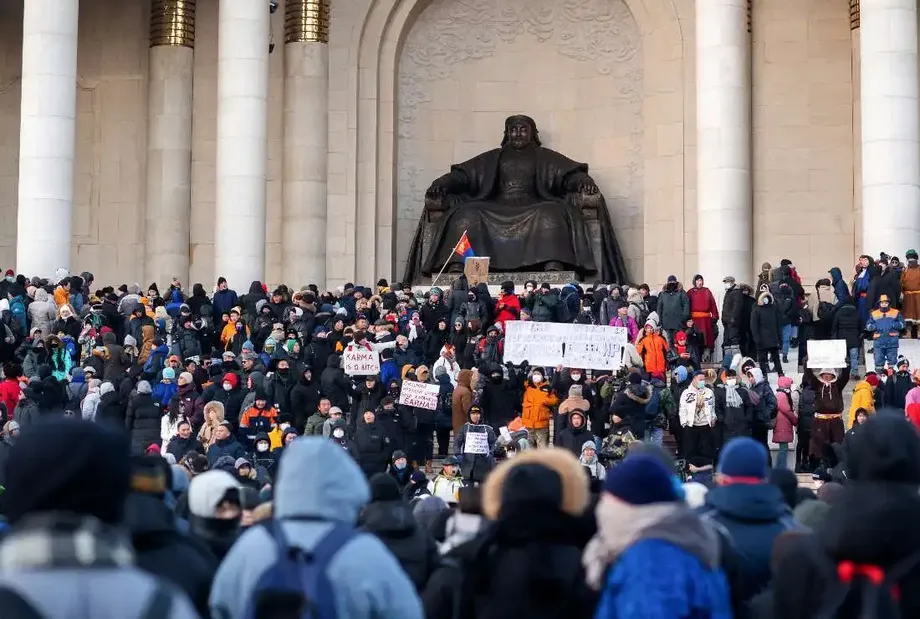
Mongolia has contracted to buy 78,000 tonnes of fuel from Russia for October after two months in which gasoline imports fell well below normal consumption. The agreement, announced by Industry and Mineral Resources Minister Damdinnyam Gongor on October 5, 2026, followed a demonstration at Sukhbaatar Square where hundreds of people protested shortages, higher prices and growing pressure on household finances.
Contents
- October Fuel Deal Follows Anger in Ulaanbaatar
- From Empty Pumps to Household Pressure
- Rationing Has Not Guaranteed Access
- How Much Relief Could October Imports Bring?
- Russia Dependence Limits the Alternatives
- Prices and Distribution Face Separate Scrutiny
- A Tourism Exemption Draws Attention to Fairness
- Rural Water Supplies and Freight Are Also at Risk
- Key Points
The figures explain why filling stations have struggled. Mongolia consumes about 75,000 tonnes of AI-92 gasoline each month, but imported approximately 54,000 tonnes in August and 62,000 tonnes in September. Across those two months, imports were 34,000 tonnes below estimated consumption, equivalent to about 45% of one month's usual demand. AI-92 is a gasoline grade, with the number indicating its octane rating.
The new Russian contract offers potential relief, but a purchase agreement is not the same as fuel arriving at a pump. Delivery timing, distribution and the rebuilding of depleted stocks will determine whether motorists see shorter queues. The announced 78,000 tonnes is only 3,000 tonnes above normal monthly AI-92 consumption, if the contracted volume consists entirely of that grade.
The October 1 protest also exposed a wider dispute over living costs and fairness. Drivers lined both the eastern and western sides of Sukhbaatar Square in Ulaanbaatar, stepped out of their cars and stood in protest. Some repeatedly sounded their horns. Students, elderly people and other residents joined them, bringing grievances that extended beyond the immediate difficulty of finding fuel.
From Empty Pumps to Household Pressure
Demonstrators complained about taxes, rising food prices, increases in electricity, heating and water tariffs, declining household incomes and what they considered excessive government spending. Some accepted that international events could partly explain the shortage, while arguing that external pressures did not fully account for the crisis.
For motorists, the shortage has become a recurring loss of time and money. Some have spent nights sleeping in their vehicles or waiting in long queues at filling stations. Others said they had bought fuel from resellers at inflated prices. Government assurances that it was taking all necessary measures have not removed the pressure from rising everyday costs.
An account published on September 8 described pensioner Nasanjargal waiting five hours at a station in Bagakhangai, still 10 vehicles away from the pump. He had driven about an hour and a half from Ulaanbaatar in the hope that fuel would be easier to obtain outside the capital.
Nasanjargal, a former police officer who uses one name, described the lack of alternatives:
Fuel is unavailable, there are huge queues everywhere.
That September account documents serious queues before another account dates their formation to late September. The evidence therefore points to shortages already affecting drivers earlier in the month, with further disruption before the October protest, rather than a crisis that began only in its final days.
Rationing Has Not Guaranteed Access
On August 4, the Emergency Headquarters introduced restrictions in Ulaanbaatar that assigned fuel purchase days according to vehicle licence plate numbers and prohibited the use of portable petrol containers. Other measures included daily purchase caps and a ban on stockpiling.
The Government of Canada's Mongolia travel advice confirms nationwide shortages and describes fuel availability as limited and unpredictable. It says local authorities have used licence plate schedules and limits on purchase quantities, and warns that disruptions may occur with little notice.
Rationing can spread limited deliveries across more customers, but it cannot replace missing imports. A driver reaching a station on an assigned day may still face an empty pump or a long wait. The Canadian government warns that shortages could disrupt both land transportation and air travel, advises avoiding demonstrations and large gatherings, and recommends confirming flights before travelling.
The main developments span several months:
- August 4: Authorities introduced fuel purchase restrictions in Ulaanbaatar based on licence plate numbers and banned portable petrol containers.
- August 7: The Ministry of Industry and Mineral Resources announced an exemption for tourism businesses travelling outside the capital.
- August and September: AI-92 imports totalled approximately 116,000 tonnes, against estimated consumption of 150,000 tonnes.
- October 1: Hundreds gathered at Sukhbaatar Square to protest shortages and rising living costs.
- October 5, 2026: Minister Damdinnyam announced the Russian fuel agreement at a Government Palace briefing.
How Much Relief Could October Imports Bring?
For October, Mongolia plans to import 260,000 to 270,000 tonnes of petroleum products, including confirmed orders for 77,000 to 78,000 tonnes of AI-92 gasoline. Normal monthly consumption of all petroleum products, including gasoline and diesel, is approximately 230,000 tonnes.
If the full programme arrives, total imports would exceed a normal month's consumption by 30,000 to 40,000 tonnes, or about 13% to 17%. That could provide room to replenish supplies. The total covers different fuels, however, so it cannot be treated as gasoline available to ordinary motorists.
The gasoline figures are tighter. Planned AI-92 imports exceed typical monthly demand by only 2,000 to 3,000 tonnes, far less than the combined 34,000 tonne gap between imports and estimated consumption in August and September. That gap does not establish the precise remaining shortage, because stock levels and changes in actual demand have not been quantified.
Accounts of the Russian agreement also differ in precision. One describes the 78,000 tonnes as gasoline, while another calls it fuel. The separate October import plan specifies 77,000 to 78,000 tonnes of AI-92. These figures should not be added together as though they represent separate shipments.
Officials are also arranging winter diesel supplies. No detailed delivery timetable, current national stock figure or date for ending rationing has been announced in the accounts of the October briefing. Expectations that the contract will resolve shortages therefore remain dependent on delivery and distribution.
Russia Dependence Limits the Alternatives
Mongolia has historically imported more than 95% of its petrol from Russia. Ukrainian strikes on Russian oil facilities have disrupted supplies in recent months, while Russia's increased focus on domestic consumption has reduced the volume available to Mongolia. Those pressures have exposed the risks of relying so heavily on one supplier.
At the October 5 briefing, Damdinnyam, the minister responsible for industry and mineral resources, described the geographical constraint on finding alternatives:
However, regardless of where we purchase it globally, it must transit through Russia or China.
Officials are examining supplies from China, South Korea and other countries, and have begun discussions about fuel and aviation fuel imports from Belarus. Independent energy policy analyst Telmen Altanshagai said Mongolia had discussed petroleum trade with Kazakhstan and had already imported fuel from South Korea and China during the crisis.
Damdinnyam also said the United States had banned diesel exports and that China had decided on October 1, 2026, to ban exports of all petroleum products. Those statements were the minister's explanation of international supply pressures, not independently established policy details. The reported Chinese restriction also leaves uncertainty over how Mongolia's efforts to source fuel there would proceed.
Purchasing from a wider range of countries could reduce reliance on a single seller. It would not remove Mongolia's dependence on transport routes through its two neighbours. Telmen likewise distinguished finding new suppliers from ending dependence on foreign fuel.
Prices and Distribution Face Separate Scrutiny
The government is investigating whether distribution practices are worsening the shortage. The Emergency Task Force instructed agencies to monitor filling stations and examine whether large quantities allocated under the names of contracted organizations were being resold.
That instruction is evidence of an investigation, not proof that any particular organization diverted fuel. It addresses a concern also voiced by motorists who said they had been forced to pay inflated resale prices. Damdinnyam said fines were being imposed on companies that refused to dispense fuel at night.
On pricing, the minister said Mongolia uses the average global market price of a petroleum product over the preceding 14 to 25 days to calculate domestic prices. He contrasted that approach with Russia's subsidies for its oil refineries. The explanation describes how prices are calculated, but does not quantify how much of any recent increase came from international prices, scarcity or resale.
Truck driver Enkhbayar Myanganbayar, 25, gave a concrete example of the burden on freight operators. He described diesel prices increasing over just 15 days:
Previously, it cost around 4,000 to 4,200 tugrik ($1.11-$1.17, per litre), but now it's over 4,600 and pushing close to 4,700 tugrik.
Using his upper figure of 4,700 tugrik, the increase from the earlier range would be approximately 12% to 18%. This was one driver's account, not a national price index. It nevertheless shows how quickly higher fuel bills can squeeze transport businesses and add pressure to the cost of delivering goods.
A Tourism Exemption Draws Attention to Fairness
The August 7 tourism exemption allowed businesses travelling outside Ulaanbaatar to buy fuel without ordinary limits by presenting industry identification. It put the allocation of scarce fuel under scrutiny, particularly alongside reports of uninterrupted luxury recreation at Khyargas Aurum Resort on Khyargas Lake.
The resort announced its opening on July 9, 2026. Social media posts during July and August showed yachts, jet skis, recreational vehicles and helicopter travel. Images posted on August 9, five days after rationing began, included a helicopter outside the terrace and a yacht being moored. The land is registered for use as a tourism camp.
Those images suggest that fuel consuming activities continued while ordinary drivers faced restrictions. They do not establish how much fuel the resort used, where it obtained supplies or whether it relied on the tourism exemption. Publicly unanswered requests for rates and reservations also leave uncertainty about whether it operated as a conventional resort open to general visitors.
The property has been linked through family and corporate connections to fuel importer Jononbayar Erdenesuren and companies associated with the alleged $1.1 billion Lex Oil fuel fraud scandal. Seven of 34 fuel import licences issued in 2025 and 2026 reportedly went to companies connected to his network, roughly one fifth of the licences. That is not a measure of their share of imported fuel.
Good Future LLC reportedly obtained possession rights to the resort land in 2021 through a project selection process following an application window of about 30 hours. The rights run to 2041, with an annual payment reported at $110. Officials involved later faced charges in a separate land allocation case. Those charges do not establish wrongdoing in the resort allocation, and the alleged corporate connections do not prove that the resort or its owners caused the fuel shortage.
Rural Water Supplies and Freight Are Also at Risk
Fuel scarcity reaches beyond commuting. Mining, coal transportation, agriculture, construction, public transport and goods distribution all depend on reliable supplies. In rural areas, gasoline can also determine whether herders can operate the pumps that provide water.
Munkhchuluun Samdannyam, governor of Dundgovi province, said tourists and herders were his local government's first priority. He explained the practical reason for protecting herders' access:
Under Gobi (Desert) conditions, herders do not draw water from wells by hand. They mostly use motors and pumps.
For drivers, a public online platform collecting updates on fuel availability, prices and waiting times offers a way to locate supplies. It cannot compensate for closed stations or exhausted stocks. Some pumps have restricted service to emergency vehicles, illustrating how scarcity forces choices among competing needs.
Mongolia's first domestic oil refinery is targeted to begin operations in 2028. That project offers a possible source of future domestic supply, but cannot relieve the immediate October shortage. Telmen also argued for electrifying transport, while pointing to limited charging infrastructure in Ulaanbaatar and across the sparsely populated countryside.
The immediate test is more concrete: whether contracted fuel arrives, whether stations dispense it reliably and whether restrictions can be eased. The October purchase addresses import volumes. The protest showed that restoring public confidence also requires answers about prices, access and the treatment of different users.
Key Points
- Hundreds protested at Sukhbaatar Square on October 1 over fuel shortages and rising living costs.
- August and September AI-92 imports were approximately 34,000 tonnes below estimated consumption.
- The government announced a contract for 78,000 tonnes of Russian fuel on October 5, 2026.
- October petroleum imports are planned at 260,000 to 270,000 tonnes, but delivery timing and current stock levels remain unspecified.
- Authorities have imposed rationing and ordered scrutiny of possible resale and filling station practices.
- A tourism exemption and reports of luxury resort activity have brought fuel allocation fairness into focus, without establishing illegal conduct.
- The first domestic oil refinery is targeted to start operating in 2028, leaving imports central to immediate relief.