A rescue in Gangjin, a deadline across South Korea
More than 70 dogs have been saved from a farm in Gangjin, South Jeolla Province, in Humane World for Animals' final large rescue operation from South Korea's dog meat industry. The September 29, 2026, operation came just over four months before the country fully prohibits breeding, slaughtering, distributing and selling dogs for human consumption on February 7, 2027.
Contents
- A rescue in Gangjin, a deadline across South Korea
- What rescuers found inside the farm
- A public tip led to months of preparation
- Conflicting records complicate the remaining count
- What the law changes, and when
- Farm closures have outpaced rescue placements
- Why shelters cannot absorb every dog
- From transport crates to possible homes
- Inspections will test the final transition
- Key Points
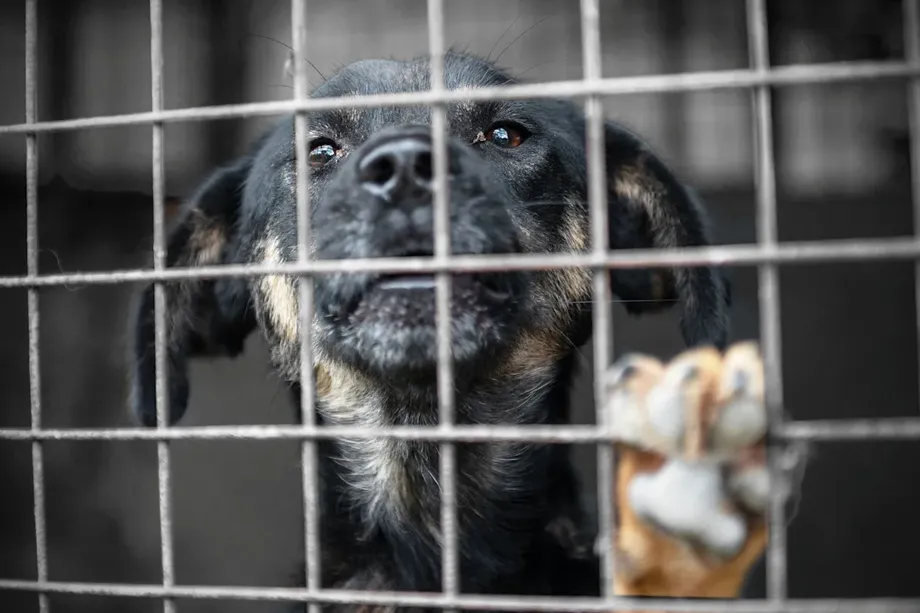
The farm once bred and slaughtered as many as 1,000 dogs a year, according to the organization. Its remaining animals lived in rusting wire cages without adequate food, water, shelter or veterinary care. Some approached rescuers and wagged their tails. Others stayed pressed into corners, frightened or too weak to move.
Humane World for Animals has rescued nearly 3,000 dogs from South Korean farms since 2015. The Gangjin operation ends that large rescue program, while its work in the country shifts toward monitoring enforcement of the ban.
Across South Korea, the industry has contracted sharply. Agriculture Ministry figures for September 21 showed that 1,339 of 1,537 registered dog farms had closed, leaving 198 operating. Around 7,600 dogs remained, compared with approximately 468,000 recorded in August 2024.
Those numbers mark a steep retreat for the trade. Government records also show that most dogs on farms that closed during the transition were slaughtered rather than placed in homes or shelters. Gangjin brings those two developments together: an industry approaching its legal end, and individual animals still needing somewhere safe to go.
Some rescued dogs have already reached North America for treatment and eventual adoption. Mothers and puppies too young to travel remain in South Korea while arrangements continue.
What rescuers found inside the farm
The Gangjin dogs included Jindos, German shepherds, Welsh corgi mixes, husky mixes and Spitz mixes. Lee Hye-won, a team leader at Humane World for Animals Korea, said many were under two years old and accustomed to contact with people.
Conditions varied from cage to cage, but neglect was widespread. Waste had accumulated beneath the raised enclosures, while bones and abandoned collars lay around the property. Some dogs needed urgent veterinary attention for malnutrition or skin infections.
Ranger, a corgi mix aged three, was among the animals removed. Rescuers placed dogs into transport crates bearing individual names, preparing them for the journey away from the farm.
The organization says the entire Gangjin rescue saved more than 70 dogs, including mothers and puppies moved earlier. Counts for the September 29 removal vary: 38 and 46 dogs were reported, while another description put the number at around 40. The total operation covered more animals than the final collection alone.
Lee Sang-kyung, the organization's campaign manager in South Korea, described both the relief of saving these dogs and concern for those elsewhere in the industry.
The dogs we are rescuing today will see a new future -- they have a chance to find their homes and families. But for other dogs still remaining in the industry, we are quite sad about their future.
A public tip led to months of preparation
A member of the public alerted a domestic animal protection group to the Gangjin farm earlier in 2026. That group contacted Humane World for Animals Korea, and the conditions were reported to local authorities.
Officials found violations of the Animal Protection Act involving the care and management of animals. The owner, aged 80, eventually transferred ownership of the remaining dogs to the rescue organization and signed a commitment to leave the dog meat industry.
Ownership was a crucial step. South Korean law treats animals as property, and rescue groups generally need an owner to surrender them before taking permanent responsibility for their care. At Gangjin, the transfer allowed the organization to arrange treatment and transport.
Preparations took several months. Dogs needed health checks and vaccinations, while staff organized quarantine requirements and shipping documents. Newborn puppies were moved to the group's shelter before the final collection because of the poor conditions on the farm.
Rescuers also said the owner disposed of some dogs before surrendering ownership. Their destinations were not specified.
Conflicting records complicate the remaining count
The Gangjin farm exposed problems with establishing how many dogs remain in the trade. Lee Sang-kyung said its closure plan declared only 20 dogs, while rescuers found more than 60; another description of the initial inspection put the number at around 80.
The Agriculture Ministry responded that the farm's July 2024 implementation plan listed 140 dogs. Those figures concern different records and visits, leaving the precise sequence of population changes unresolved.
The ministry said it conducts monthly inspections to track dog populations and separately monitors businesses that did not formally register. Animal protection groups remain concerned about animals outside the official register.
Other incidents illustrate the difficulty of finding them. In late May, Korea Animal Rights Advocates said it found 29 unreported dogs at a slaughterhouse in Pyeongtaek and alerted authorities. Earlier that month, WEACT said it rescued seven dogs from an illegal slaughterhouse in Suncheon with help from local officials.
Lee warned that small operations could continue after February 2027. Inspectors will therefore have to check both whether registered farms have closed and whether breeding, slaughter or trading has moved into less visible premises.
What the law changes, and when
The National Assembly passed the Special Act on Ending the Slaughter, Distribution and Breeding of Dogs for Consumption in January 2024. The law created a transition period so farms and other businesses could close or change their work before criminal penalties begin.
Parts of the law took effect in 2024, including the framework for reporting businesses and preparing closure plans. The full prohibition on the industry begins on February 7, 2027. During the transition, dogs have continued to move through the trade.
- January 2024: The National Assembly passed the legislation unanimously.
- February 6, 2024: The law was formally enacted, with provisions taking effect on August 7.
- September 21, 2026: Ministry figures recorded 1,339 registered farms closed and 198 still operating.
- September 29, 2026: Rescuers carried out the final collection at the Gangjin farm.
- November and December 2026: The ministry plans special inspections of dog farms nationwide.
- February 7, 2027: The full prohibition on breeding, slaughter, distribution and sale for consumption begins.
Slaughtering dogs for food after the prohibition begins will carry a maximum sentence of three years in prison or a fine of 30 million won. Breeding, distributing or selling dogs for consumption will carry up to two years in prison or a fine of 20 million won.
The government has offered farm owners closure payments ranging from 225,000 to 600,000 won per dog, with higher payments for earlier exits. Eligible businesses can also receive support to move into other livelihoods.
Farm closures have outpaced rescue placements
The Agriculture Ministry recorded 5,898 dog meat businesses when the law passed: 1,537 farms, 221 slaughterhouses, 1,788 traders and 2,352 restaurants. Closing the industry involves that entire chain, from breeding animals to serving meat.
By May 2026, 1,265 registered farms had closed and 272 remained. The September 21 count recorded another 74 closures, bringing the total to 1,339, or about 87% of registered farms. The ministry said this exceeded its cumulative target of 1,030 closures by about 30%.
The registered dog population fell by more than 98%, from approximately 468,000 in August 2024 to around 7,600. Records describing what happened to dogs on closed farms show that rescue accounted for only a small share.
Agriculture Ministry data released through lawmaker Seo Cheon-ho recorded 346,313 dogs at 1,072 farms closed by the end of August 2025. Of those animals, 334,648, or 96.6%, were slaughtered. Another 9,308 went to other farms, 1,806 died during breeding, 166 became pets or guard dogs, and 385 were adopted or placed through arrangements made before sale.
A later tally covering nearly 394,000 dogs on farms closed by December 2025 put slaughter or distribution at roughly 97%. About 1,100 were adopted or transferred to public shelters, while approximately 9,400 moved to other farms.
For placements through May 2026, a ministry figure of 1,121 dogs adopted or transferred to public shelters was also reported; another tally put dogs taken into care or adopted at around 800. Both figures are small beside the hundreds of thousands recorded on farms during the transition.
Why shelters cannot absorb every dog
South Korea's animal protection system was already caring for thousands of animals before the farm closures accelerated. Figures accompanying the government's 2024 transition plan listed 228 animal protection centers with space for about 21,000 animals. Roughly 15,000 were already in care.
That left around 6,000 places across the system at that point, before allowing for new arrivals or the different needs of individual animals. Municipal shelters rescue about 100,000 dogs each year, meaning spaces must also serve animals found abandoned or lost outside the meat industry.
Dogs leaving farms may need treatment, vaccinations and time to become comfortable around people. Larger dogs can be particularly difficult to place, according to Humane World for Animals. A cage becoming available is only one part of providing suitable care.
The pressure was visible in Charm's shelter rescue, when volunteers arranged veterinary care and foster placement for a Chihuahua found in traffic in Seoul. Her pregnancy added another animal to the care effort. The same practical demands grow much larger when an entire farm closes.
The uncertainty surrounding dogs awaiting farm closures has now narrowed to a much smaller registered population. The need for ownership transfers, treatment, shelter space and lasting homes remains.
From transport crates to possible homes
Nearly 30 Gangjin dogs had reached New York by early October, according to Humane World for Animals. They were to receive care at its rehabilitation center in Maryland before being placed for adoption. Another 12 were transferred to Montreal.
Rehabilitation means helping animals recover physically and become comfortable with ordinary life around people. Health examinations and behavior assessments help staff decide what treatment, support and type of home each dog needs.
Some dogs approached rescuers readily at the farm, while others resisted handling or retreated into corners. Their care will need to reflect those individual responses rather than follow a single timetable.
Mothers and young puppies will stay in South Korea until they can travel safely. Descriptions of the arrangements place their departure in early 2027, with one specifying after February. No single departure date has been announced.
The organization has not said that every rescued dog already has an adopter. Treatment and assessment come before placement with families in the United States and Canada.
Inspections will test the final transition
The Agriculture Ministry plans special inspections in November and December, checking whether closed farms have resumed raising dogs and whether remaining businesses are following their closure plans.
Officials will also examine compliance with population controls, including preventing unauthorized breeding and keeping males and females apart. Farms that fail to meet their duties can face corrective orders or closure orders.
The ministry is preparing arrangements for dogs left behind when owners surrender them. Those plans are intended to account for breed, size, age and comfort around people. Detailed guidance is still being developed with relevant agencies.
Public attitudes helped make the legal change possible. A December 2023 survey by the Seoul animal welfare group Aware found that about 82% of respondents supported a ban and more than 93% did not intend to eat dog meat in the future.
Wendy Higgins, Humane World for Animals' director of international media, said the pace of change exceeded her expectations.
I thought it would take a lot longer," Higgins said. "I am really proud of how responsive this South Korean government has been when there was a real turning point in public opinion.
Humane World for Animals will continue monitoring implementation in South Korea while supporting locally led efforts against the dog and cat meat trade elsewhere in Asia, including work in Vietnam, India, Indonesia and China. For the 198 registered Korean farms still operating in September, the immediate tasks are closure and care for the animals that remain.
Key Points
- Humane World for Animals saved more than 70 dogs during its final major farm rescue in South Korea, including animals removed before September 29.
- The organization has rescued nearly 3,000 dogs from Korean farms since 2015 and will now focus on monitoring the ban.
- By September 21, 1,339 of 1,537 registered farms had closed. Around 7,600 dogs remained on operating farms.
- Government records show that most dogs on farms closed during the transition were slaughtered, while a small share entered homes or shelters.
- Rescued Gangjin dogs are receiving care in North America, while some mothers and puppies remain temporarily in South Korea.
- Special farm inspections are planned for November and December before the full prohibition begins on February 7, 2027.