A 2027 Deadline for Farms, Families and Half a Million Dogs
South Korea's ban on the dog meat industry has set a deadline for ending the trade, but the fate of an estimated 500,000 dogs remains uncertain. With the law due to take full effect in February 2027, the country must find a way to close farms, support people losing their livelihoods and protect animals that its crowded shelters cannot easily accommodate.
Contents
- A 2027 Deadline for Farms, Families and Half a Million Dogs
- How Public Attitudes Changed
- What the Law Changes, and When
- Why Finding Homes Is So Difficult
- What the Government Is Offering Farmers
- Enforcement Extends Beyond Closing Farms
- The Risk Facing Dogs That Cannot Be Placed
- Overseas Adoptions Save Dogs, but Numbers Remain Small
- What Will Determine Whether the Transition Works
- Key Points
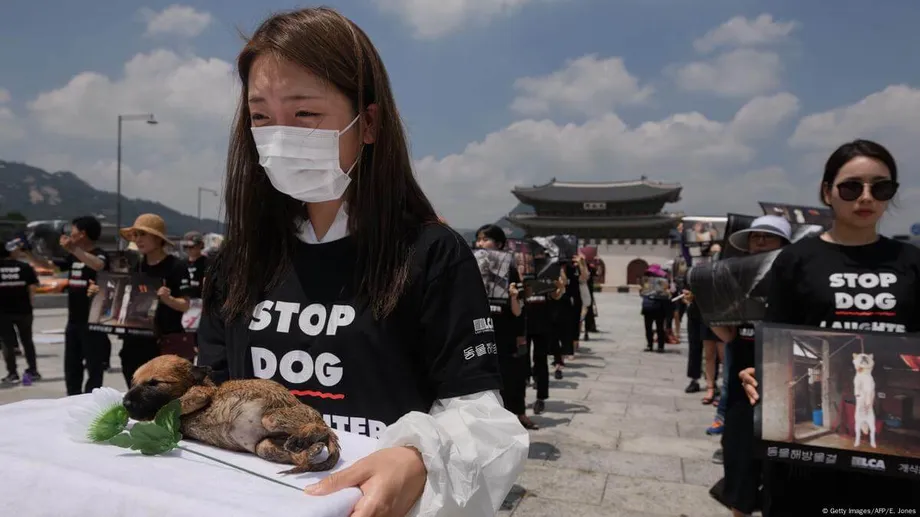
The National Assembly unanimously passed the law in January 2024, banning the breeding, slaughter, sale and distribution of dogs for human consumption after a grace period of three years. Animal welfare advocates celebrated the decision as a historic change in a country where attitudes toward dogs have shifted sharply.
As of June 26, 2025, the difficult work is turning that legal decision into a workable transition. More than 1,500 farms hold dogs bred for meat, while farmers, butchers and restaurant owners face the loss of their businesses. Rescue groups are finding homes for some animals abroad, but the numbers involved far exceed what those operations can handle.
The government has pledged to rehome as many dogs as possible, offer financial support and help businesses move into other work. Farmers argue that the payments are too small, while animal welfare organizations warn that shelter space and adoption demand are insufficient.
The central challenge is practical as well as ethical: ending an industry does not immediately provide a home for every animal or a replacement income for every person who depends on it.
How Public Attitudes Changed
Dog meat has never been a staple of the Korean diet, although its consumption gained popularity during the 20th century. Dishes such as Bosintang, a dog meat soup, were particularly associated with summer, when some people believed they could boost stamina.
South Korea's modernization and growing pet ownership have changed that relationship. About a quarter of households now have dogs, and younger generations increasingly regard them as family members rather than livestock.
A 2024 government poll found that 8% of respondents had eaten dog meat during the previous year, compared with 27% in 2015. That represents a decline of 19 percentage points. Surveys by the 2020s also showed that the vast majority of South Koreans had never eaten dog meat, leaving continued consumption concentrated among a small minority.
Domestic and international animal welfare campaigns helped drive the debate. Graphic footage of dog farms and slaughterhouses spread on social media, prompting outrage and demands for reform. Before adopting the comprehensive ban, authorities took smaller steps, including prohibiting public slaughter and closing major dog meat markets.
For decades, some defenders of the practice presented it as a matter of tradition and national identity, particularly when criticism came from abroad. Growing pet culture, generational change and global animal welfare movements have since transformed the discussion within South Korea itself.
What the Law Changes, and When
The January 2024 vote established a transition rather than an immediate end to the industry. The grace period gives affected businesses three years to prepare before the ban takes full effect in February 2027.
The law covers the commercial activities that sustain the trade: breeding dogs for human consumption, slaughtering them, selling the meat and distributing it. Its penalties include up to three years in prison or fines of up to 30 million won, about $22,000, for violations.
The key dates show how much of the transition still lies between passage and enforcement:
- 2015: The comparison figure for dog meat consumption was 27% of respondents.
- January 2024: The National Assembly unanimously passed the dog meat ban.
- 2024: A government poll put consumption during the previous year at 8%.
- June 26, 2025: Farmers, authorities and rescue organizations were still working through the transition.
- February 2027: The ban is scheduled to take full effect after the grace period.
President Yoon Suk Yeol's administration made animal welfare a policy priority. First Lady Kim Keon Hee, a vocal animal lover, was also a prominent supporter of the ban.
International organizations welcomed the decision and see it as a possible model for other countries where dog meat is consumed. Within South Korea, however, the law also faces criticism from people who consider it an intrusion into personal dietary choices or question why it targets a minority practice while other farmed animals continue to suffer.
Why Finding Homes Is So Difficult
An estimated half a million dogs are being raised for meat across more than 1,500 farms. Rehoming that many animals would require space, care and willing adopters on a scale that existing shelters cannot readily provide.
Park Beom-su, South Korea's vice agriculture minister, said the government did not intend to resolve the problem through mass euthanasia or by allowing the dogs to be consumed during the transition:
Although many are concerned the remaining dogs might be euthanized or a lot of them could be processed for consumption over the next three years, I can certainly say, that is not our plan.
South Korea's shelters are already overcrowded. Dogs rescued from meat farms also face a social stigma that can make adoption harder, especially for larger breeds.
Tosa Inu dogs face an additional barrier because they are classified as "dangerous" and require special permits. For prospective adopters, that adds a legal requirement to the decision to take in a large dog.
Lee Sangkyung, campaign manager at Humane World for Animals Korea, described the shortage of shelter capacity:
There is no way animal shelters can take in that huge number of dogs.
The government has promised to rehome as many animals as possible, but a destination for every dog has not been settled. Without enough homes or shelter places, many remain at risk of euthanasia.
What the Government Is Offering Farmers
The government has allocated approximately 100 billion won, about $75 million, to support the transition. Its measures include financial incentives of up to 600,000 won, about $450, for each dog surrendered.
Farmers and other industry workers argue that the assistance does not match their losses. Many say the grace period is too short to establish another source of income, particularly when they are already carrying debt.
Reverend Joo Yeong-bong, president of the Korean Association of Edible Dogs, described the financial distress facing people in the industry:
People are suffering. We're drowning in debt, can't pay it off, and some can't even... find new work. It's a hopeless situation.
Some farmers have threatened to resist the ban and are seeking compensation of up to 2 million won, about $1,500, per dog, as well as a longer grace period. Their requested payment is more than three times the government's maximum incentive of 600,000 won.
Support also includes loans at low interest rates and retraining programs for people willing to move into other agricultural businesses. Those measures are intended to help replace an income, rather than simply pay for the closure of a farm.
Farmers remain skeptical that the assistance will be enough. Butchers and restaurant owners also face disruption, making the transition a question of livelihoods throughout the industry, not just the closure of breeding facilities.
Enforcement Extends Beyond Closing Farms
Local governments are responsible for monitoring farms, dismantling facilities and ensuring compliance. That work will require officials to track what happens during the transition as well as enforce the ban once it is fully in force.
Animal welfare groups are concerned that some farmers could breed additional dogs in the short term to increase compensation payments. Others fear that illegal slaughterhouses could continue operating in secret after the deadline.
An underground trade would make it harder for authorities to monitor businesses and could expose dogs to worse conditions. Some farmers have also raised the possibility that the trade will move out of sight rather than disappear.
Close ties between local officials and business owners could complicate enforcement. Animal welfare organizations have called for strict oversight and transparency to prevent abuses and protect both animals and people during the transition.
The government has established a dedicated committee that includes representatives from all stakeholder groups to oversee the process and address emerging problems. Its work sits alongside the responsibilities of local authorities, which must manage the practical task of closing facilities and checking compliance.
The Risk Facing Dogs That Cannot Be Placed
The government's rejection of euthanasia as a planned solution has not removed concern about what happens when an individual dog has nowhere to go. Overcrowded shelters, limited resources and a shortage of adopters remain immediate constraints.
Cho Hee-kyung, head of the Korean Animal Welfare Association, warned about the outcome if dogs left behind enter the system for lost and abandoned animals:
If remaining dogs become 'lost and abandoned animals' then it's heartbreaking but they will be euthanized.
Her warning puts the focus on the arrangements needed before farms close. Dogs require somewhere to live while adoption is organized, and rescue organizations need the capacity to care for and rehabilitate animals awaiting homes.
Public willingness to adopt former meat farm dogs is therefore part of the practical challenge. Reducing stigma, particularly toward larger dogs, would help connect rescue efforts with households prepared to take them in.
The tension between the government's promise and the limits of the shelter system explains why animal welfare groups are pressing for resources and oversight throughout the grace period. A legal deadline can stop commercial activity, while each animal still needs an individual care arrangement.
Overseas Adoptions Save Dogs, but Numbers Remain Small
International rescue organizations have stepped in to help close farms and find homes for some of the dogs. Humane World for Animals and Humane Society International have worked with Korean authorities to transport rescued animals abroad.
Since 2015, more than 2,700 dogs have been rehomed through these efforts, with many going to North America and Europe. Destinations include the United States, Canada and the United Kingdom, where adoption rates are higher and the stigma attached to dogs from meat farms is less pronounced.
In one recent operation, 50 dogs rescued from a South Korean farm arrived in the United States to begin new lives. Such transfers provide a route to adoption for individual animals while demonstrating the international reach of the rescue effort.
Daniel Henney, a Korean American actor and advocate, participated in a recent rescue and adopted a golden retriever named Juliette. He has used his public platform to encourage adoption and compassion toward dogs rescued from the industry.
The scale remains daunting. The figure of more than 2,700 dogs rehomed since 2015 is small beside the estimated 500,000 currently being raised for meat. International adoption helps individual dogs, while the much larger task requires domestic capacity for rescue, rehabilitation and adoption.
Those efforts also seek to change perceptions of dogs that survive meat farms. Preventing further overbreeding remains part of the same challenge, because additional births would increase the number of animals needing care.
What Will Determine Whether the Transition Works
South Korea's ban brings together several goals that must advance at the same time: ending the commercial trade, helping people leave it and finding humane arrangements for the dogs already in it.
Enforcement must prevent illegal breeding, slaughter and sales. Financial and practical assistance must help farmers and other businesses find replacement livelihoods. Shelters and rescue groups need enough capacity to receive animals, while adoption efforts must reach people willing to give them homes.
Public education and international cooperation can support those tasks. Overseas rescues provide help, and efforts within South Korea can reduce the stigma that makes some dogs harder to place.
Critics also worry that demand could shift to other meats. Black goat has already seen a price increase, adding another dimension to the debate about changes in eating habits and the treatment of farmed animals.
The ban reflects a major cultural change, but its success will be judged through concrete outcomes: whether farms close, whether workers can move into other employment and whether dogs receive care. The period before February 2027 is the time available to put those arrangements in place.
For the government committee, local authorities, businesses and rescue organizations, the task is to make those goals work together. Ending the dog meat industry humanely requires attention to the animals still on farms and the people whose incomes depend on them.
Key Points
- South Korea unanimously passed its dog meat ban in January 2024, with full implementation scheduled for February 2027.
- An estimated 500,000 dogs on more than 1,500 farms face an uncertain future amid crowded shelters and adoption barriers.
- The government has allocated about 100 billion won for the transition and offers up to 600,000 won per dog surrendered.
- Some farmers are demanding up to 2 million won per dog and more time to find other work.
- The government says euthanasia is not its plan, while animal welfare groups warn that dogs left without homes remain at risk.
- International efforts have rehomed more than 2,700 dogs since 2015, but domestic rescue and adoption capacity remain central to the transition.
- Local enforcement, support for affected businesses and care for the remaining dogs will determine how the ban takes effect.