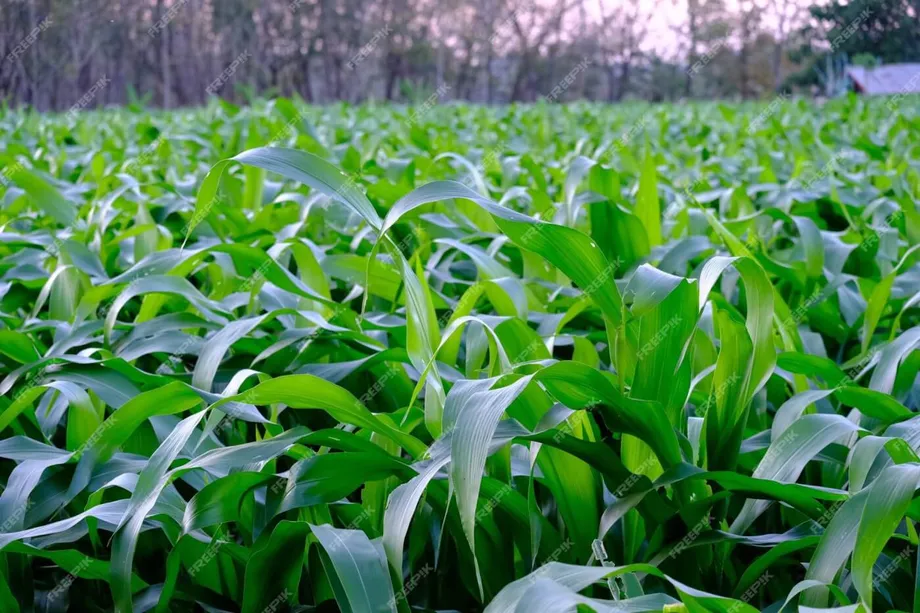
Seven Million Rai Feeding a Growing Meat Industry
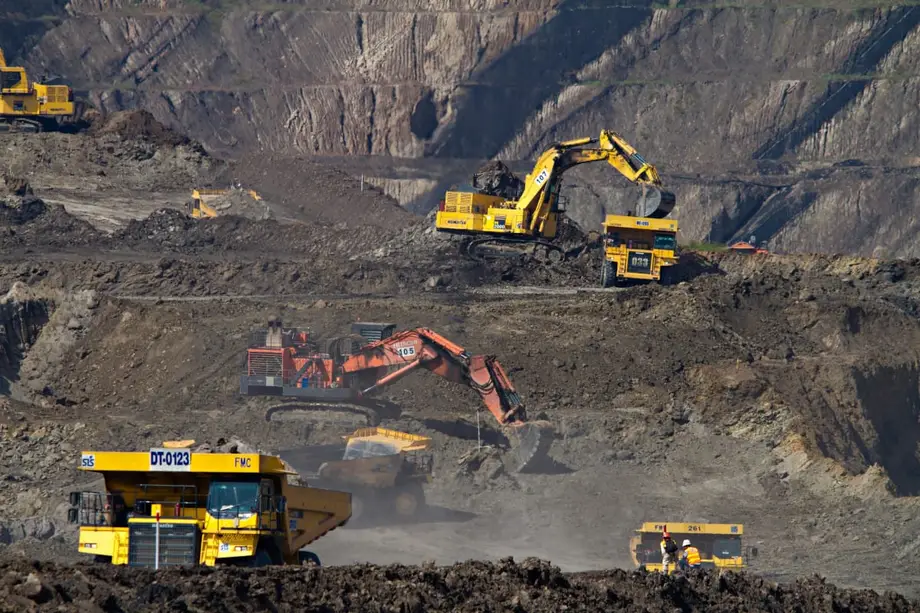
More than 7 million rai, about 1.1 million hectares, of Thailand's land is devoted to maize, the country's fourth most grown crop. Much of it supplies feed for chickens and pigs rather than food for people. Across the Mekong Basin, Greenpeace estimates that 1.88 million hectares of forest were converted to maize cultivation between 2015 and 2023, much of it in Thailand, Myanmar and Laos.
Contents
- Seven Million Rai Feeding a Growing Meat Industry
- Why Meat Demand Is Expanding Maize Fields
- How Harvested Fields Become Seasonal Haze
- Forest Loss Changes Water, Soil and Climate
- Smoke Crosses Borders, Accountability Often Stops
- Farmers Carry the Costs of Dependence
- What Agribusiness Pledges Cover
- Government Support Sends Competing Signals
- Changing Protein Production Could Reduce Pressure
- Community Alternatives Need Income Behind Them
- A Regional Food System Built Around Feed
- The Essentials
Those figures connect two landscapes that consumers rarely see together: the maize fields spreading across northern Thailand's hills and the industrial farms supplying meat to domestic and overseas markets. Thailand is Southeast Asia's largest protein producer and the world's leading exporter of processed chicken. Its position in that trade depends on a steady supply of animal feed.
In the highlands around Doi Inthanon, fields have replaced places where villagers once gathered wild mushrooms and grazed buffalo. Similar changes extend into Myanmar's Shan State and northern Laos. Land that once supported forests, rice paddies and several crops is increasingly devoted to a single crop, a farming system called monoculture.
The consequences reach beyond the fields. Burning maize remains after harvest contributes to seasonal haze, while forest clearance removes wildlife habitat and leaves slopes exposed to erosion. Farmers face rising costs, weakening soils and limited bargaining power. Large food companies, meanwhile, face pressure to show where their feed comes from and whether its production involved burning or deforestation.
As of June 26, 2025, Thailand's response combines price protection for maize farmers, proposals to restrict imports associated with burning, and efforts to encourage other crops. The central challenge is that policies supporting maize production sit alongside attempts to reduce its environmental damage. Farmers need an income now, while restoring forests and changing production take time.
Why Meat Demand Is Expanding Maize Fields
Thailand's maize acreage is concentrated mainly in the north and northeast. Its expansion reflects rising demand for poultry and pork, government promotion of maize as a cash crop, agribusiness investment in reliable feed supplies, and contract farming arrangements that connect smallholders to buyers.
Asian meat consumption is projected to rise by 78% by 2050. In Thailand, meat consumption per person has nearly doubled since 1990, with similar trends in China, Vietnam and Indonesia. More animals raised for meat require more feed, making maize a central ingredient in a food system whose final products may be sold far from the farms growing the grain.
Government support and commercial demand give farmers reasons to plant maize repeatedly. A cash crop is grown primarily for sale, so the farmer's ability to meet household expenses depends on its market price and production costs. Contract arrangements can provide access to seeds and other inputs, but they also link farmers to the terms set by buyers and middlemen.
Greenpeace's maize land use analysis puts the resulting forest conversion at 1.88 million hectares across the Mekong Basin between 2015 and 2023. The expansion has replaced diverse landscapes with fields supplying the livestock industry, bringing losses of traditional livelihoods alongside deforestation and declining soil quality.
How Harvested Fields Become Seasonal Haze
Northern Thailand and its neighbours face an annual haze season from January to April. Farmers burn maize stubble, the stalks and other plant material left after harvest, to clear fields for another planting. The fires release fine particles known as PM2.5, which can enter deep into the lungs and contribute to respiratory and cardiovascular disease.
Agricultural burning is identified as Thailand's largest source of PM2.5 in the crop burning health estimates. During the burning season, pollution levels can reach three times the national standard. An estimated 34,000 premature deaths annually are linked to air pollution from crop burning, with projections reaching 361,000 by 2050 if current trends continue.
Those health costs include asthma, other respiratory illnesses and cardiovascular disease. Northern Thailand has the country's highest rates of lung cancer and mortality associated with air pollution. For residents, the maize supply chain therefore carries a cost that reaches into homes, schools and hospitals, well beyond the price paid for grain or meat.
During the 2023 haze crisis, Chiang Mai's air quality ranked among the worst in the world, and thousands of people were hospitalised with respiratory problems. The smoke travels across borders, affecting Laos, Myanmar and parts of southern China. A field fire in one country can become an air quality problem for communities in another.
Forest Loss Changes Water, Soil and Climate
Forest conversion removes wildlife habitat and reduces biodiversity, the variety of plants and animals living in an area. On upland slopes, the change also leaves soil more vulnerable to being washed away. Erosion takes fertile material out of fields, reducing their productivity over time.
Flooding and landslides are another concern, with recent disasters in Chiang Mai and Chiang Rai illustrating the risks facing northern communities. Forest loss and exposed slopes increase those risks while making farming itself less secure. Declining soil fertility can leave farmers needing more chemical inputs to keep growing the same crop.
Maize production also releases greenhouse gases through land clearance, fertiliser use and the burning of crop residues. A maize emissions study published in the International Journal of Life Cycle Assessment found average emissions of 429 kilograms of carbon dioxide equivalent per tonne of grain produced in Thailand, with the highest emissions during the dry season.
Carbon dioxide equivalent expresses the warming effect of different greenhouse gases using a common measure. The study's figure makes it possible to describe the climate cost of producing a tonne of maize even when several gases are involved. Chemical fertilisers and burning add to that burden, while forest clearance removes vegetation that stores carbon.
Smoke Crosses Borders, Accountability Often Stops
Satellite data analysed by Greenpeace and others indicate that more than 40% of transboundary haze in the lower Mekong region comes from fires in industrial maize plantations. That connects a large share of the region's cross border smoke to the production of grain for commercial supply chains.
Thailand, Laos and Myanmar have pursued regional agreements and established hotlines to respond to the haze crisis. These measures provide ways for governments to communicate, but activists and experts argue that they leave deeper problems unresolved: agribusiness dominance, limited information about where maize is grown, and the financial pressures that lead farmers to burn fields.
Traceability means being able to follow a product back through its supply chain to its origin. For maize, knowing the seller or the country of origin provides less detail than knowing the actual cultivation area. That difference matters when buyers want to check whether a crop came from cleared forest or a field where burning occurred.
The regional scale of maize production makes that task more demanding. Thailand's feed industry draws on a farming economy extending into neighbouring countries, while smoke moves across the same borders. Responses focused on local fires therefore operate within a much wider system of buyers, traders, farmers and meat producers.
Farmers Carry the Costs of Dependence
Smallholders in northern Thailand often receive seeds and agricultural inputs through middlemen and large companies that also set buying prices and contract terms. These arrangements connect farmers to a market, but many have little power to negotiate when costs rise or crop income falls.
Repeated maize cultivation can reduce soil fertility, while spending on chemical inputs increases. Farmers then face pressure to produce enough grain to cover existing debts as well as the costs of the next planting. The maize boom has enriched major agribusinesses while leaving many smallholders in a financially precarious position.
Studies using the Food and Agriculture Organization's Sustainability Assessment of Food and Agriculture Systems tool, known as SAFA, have found the contract farming system in highland maize monoculture to be socially unsustainable. Farmers report declining incomes, weak bargaining power and greater reliance on chemical inputs.
The World Bank estimates that 79% of Thailand's poor live in rural areas, while farm incomes have persistently decreased over the past decade. Those conditions help explain why an instruction to stop burning or switch crops can be difficult to follow without financial support.
A farmer in Mae Chaem district described the immediate pressure of making ends meet:
We cannot imagine the next five years or 10 years, just only this year, about how we can survive.
What Agribusiness Pledges Cover
Charoen Pokphand Group, known as CP Group, Betagro and Cargill dominate Thailand's meat and animal feed industry. Together, these companies control the majority of chicken meat production and feed manufacturing in the country. CP Group is the world's largest animal feed producer, with operations spanning 17 countries.
The companies have made public commitments to source maize sustainably and avoid purchases linked to deforestation or burning. Enforcement and transparency remain limited, however, and their reported traceability measures cover different parts of the supply chain.
CP Foods says it uses satellite technology to monitor burning and issues warnings to farmers, but less than half of its maize is fully traceable. Betagro reports 100% traceability to vendors and countries of origin, with only partial coverage of cultivation areas. A supplier record can therefore be complete while information about the field remains incomplete.
Rattanasiri Kittikongnapang, a campaigner with Greenpeace Southeast Asia, argues that accountability requires full transparency and public access to supply chain data. Consumers need that information to understand whether the meat they buy is connected to environmental damage at the feed production stage.
Government Support Sends Competing Signals
Thailand's government has set a minimum maize price to protect farmers from market fluctuations and requires feed mills to prioritise locally produced maize. These policies support farmers' earnings and provide a market for their grain, while also encouraging continued cultivation.
Other measures seek to reduce the damage associated with maize production. The government promotes alternative crops and more sustainable farming in areas prone to burning, and has proposed bans on maize imports from land where burning has occurred. Crop diversification programmes remain underfunded and inconsistently enforced.
A proposed clean air bill would establish air quality standards and regulate pollution sources. It had yet to become law as of June 26, 2025. Its passage and the proposed import restrictions were still undecided, with no next decision date given.
Proposals for helping farmers change course include support for coffee, macadamia and avocado cultivation, and programmes that pay farmers to leave land fallow so soil can recover. Researchers and campaigners also propose carbon markets that reward reforestation, along with more direct relationships between farmers and companies to provide fair prices and technical assistance.
Changing Protein Production Could Reduce Pressure
Thailand's livestock sector produces greenhouse gases through both animal husbandry and the production of feed. Feed production releases hundreds of kilograms of carbon dioxide equivalent per tonne, with maize and soybean meal among the main contributors. Changing what the food industry produces could therefore change the amount of land and grain it needs.
Research by Madre Brava and Asia Research Engagement suggests that shifting 50% of meat and seafood production to proteins made from plants by 2050 could prevent more than 100,000 premature deaths from air pollution. The same scenario projects 1.3 million new jobs and $37 billion in added economic value.
The research also projects a 79% reduction in national greenhouse gas emissions and the release of up to 2.17 million hectares of farmland from production, reducing pressure on forests. Those figures describe a modelled transition requiring coordinated decisions by government, industry and consumers.
Suggested measures include financial support for farmers, incentives for food production using plant proteins, and public purchasing of meals made with those proteins for schools and hospitals. The approach would link changes in diets and food manufacturing with changes in feed demand, rather than relying solely on restrictions imposed at the farm.
Community Alternatives Need Income Behind Them
Farmers need workable alternatives to burning and monoculture, according to activists and researchers calling for greater community control over economic decisions. Crop rotation, payments for leaving land fallow, and locally directed diversification can help reduce dependence on maize while supporting rural livelihoods.
Thailand's One Tambon One Product initiative, known as OTOP, is one example of community economic diversification raised in these proposals. The aim is to give communities other sources of earnings rather than make household survival depend on a single crop and its buyers.
World Animal Protection Thailand has organised art contests and public campaigns drawing attention to the environmental costs of maize grown for animal feed. Researchers at Chiang Mai University are exploring ways for farmers to earn money from carbon stored through reforestation, combining a potential income source with ecosystem restoration.
These proposals address the same practical problem expressed by the Mae Chaem farmer: a household struggling to survive this year has limited room to fund a transition whose returns may come later. Payments, technical support and dependable buyers are therefore part of the proposed change, alongside different crops and farming methods.
A Regional Food System Built Around Feed
Thailand's maize expansion belongs to a wider Asian shift. Rising incomes and urbanisation have encouraged diets containing more meat, turning a crop once relatively minor in the region into a central ingredient of animal feed. The rise of Asian maize mirrors its earlier expansion in the West, with benefits for production accompanied by environmental and social costs.
The United States Department of Agriculture identifies Southeast Asia as the world's fastest growing importer of feed ingredients such as soybean meal and maize. Vietnam, Indonesia and Malaysia are rapidly increasing imports to supply expanding livestock industries. Demand in one country can therefore change land use and trade elsewhere.
The main dates and projections show how the change has developed:
- Since 1990: Thailand's meat consumption per person has nearly doubled.
- 2015 to 2023: Greenpeace estimates that 1.88 million hectares of Mekong Basin forest were converted to maize cultivation.
- 2023: Chiang Mai experienced some of the world's worst air quality during the haze crisis, with thousands hospitalised for respiratory problems.
- 2050: Asian meat consumption is projected to rise by 78%, while research models a possible shift of half of meat and seafood production to proteins made from plants.
Thailand's choices connect farm incomes, food exports, public health and forests across the region. The proposals already identified range from more transparent purchasing and stronger regional cooperation to compensation for farmers, crop diversification and changes in protein production. Each addresses a different part of the chain linking demand for meat to land used for feed.
The Essentials
- Thailand grows maize on more than 7 million rai, about 1.1 million hectares, mainly to supply animal feed.
- Greenpeace estimates that 1.88 million hectares of Mekong Basin forest became maize fields between 2015 and 2023.
- Crop burning contributes to severe seasonal haze, with an estimated 34,000 premature deaths annually linked to its air pollution.
- Smallholders face debt, declining soil fertility, rising input costs and limited bargaining power.
- Major agribusinesses have sustainability pledges, but information tracing maize to cultivation areas remains incomplete.
- As of June 26, 2025, the clean air bill had not become law, and restrictions on maize imports associated with burning remained proposals.
- Proposed responses include farmer support, alternative crops, reforestation payments, transparent supply chains and a greater role for proteins made from plants.