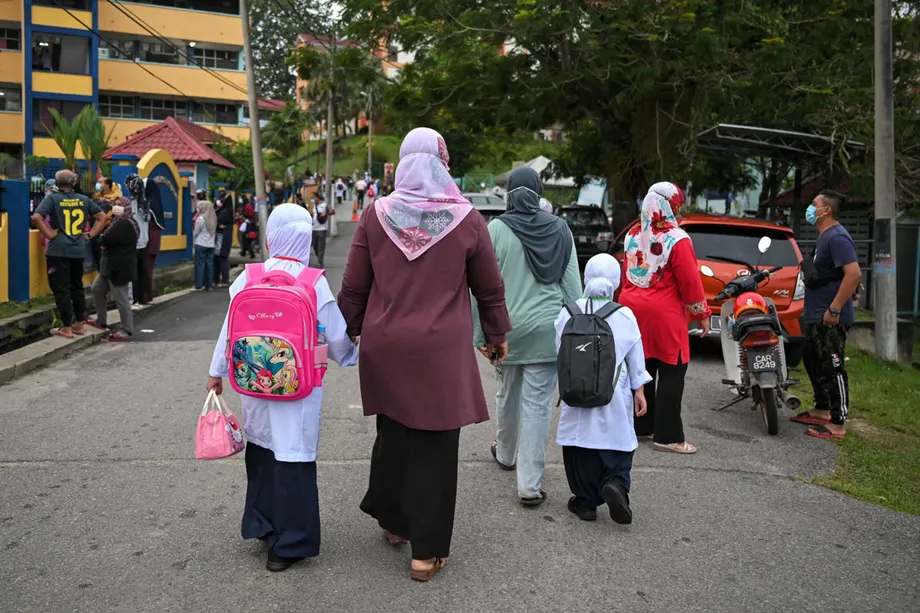
Births fall by 18,743 as population growth slows
Malaysia recorded 396,175 live births in 2025, a decline of 18,743 from the previous year, as its total fertility rate fell to 1.5 children per woman. Births dropped by 4.5%, while deaths rose slightly to 199,807, narrowing the gap that adds people to the population through births.
Contents
- Births fall by 18,743 as population growth slows
- Two consecutive declines bring births below 400,000
- What a fertility rate of 1.5 means
- Fertility patterns differ across communities
- Terengganu and Penang mark opposite ends
- Penang links treatment access with family support
- Deaths rise slightly as natural increase narrows
- How the birth figures are counted
- Smaller birth cohorts change future planning
- Key Points
The Department of Statistics Malaysia (DOSM) released the figures in its Vital Statistics, Malaysia, 2026 report on October 15, 2026. All states and major ethnic groups recorded lower crude birth rates, a measure of births relative to the size of the population.
Malaysia still recorded almost twice as many births as deaths. Its natural population increase, calculated by subtracting deaths from births, nevertheless fell to 196,368 people in 2025 from 215,926 in 2024. That was a reduction of 19,558 people, or about 9.1%.
The national figures also conceal wide geographical differences. Terengganu recorded a fertility rate of 2.5 children per woman, compared with 1.1 in Penang. In Penang, the state government is expanding access to fertility treatment and family support while examining the financial pressures affecting decisions about having children.
Two consecutive declines bring births below 400,000
DOSM's 2025 vital statistics release, published on October 16, 2025, covers births and deaths in 2024. It recorded 414,918 live births, down from 455,761 in 2023. The newer 2026 report covers the further decline during 2025.
Across those two years, annual births fell by 59,586, or about 13.1%. The decline was smaller in 2025 than in 2024, when births dropped by 40,843, or 9.0%. Even with that slower pace of decline, the annual total moved below 400,000.
The sequence shows how both the number of babies and the fertility rate have moved downward:
- 2023: Malaysia recorded 455,761 live births and a total fertility rate of 1.7 children per woman.
- 2024: Live births fell to 414,918 and the fertility rate declined to 1.6.
- 2025: Live births fell again to 396,175 and the fertility rate reached 1.5.
- October 15, 2026: DOSM released its report covering the 2025 results.
The crude birth rate followed the same direction, falling from 13.6 births per 1,000 people in 2023 to 12.2 in 2024 and 11.6 in 2025. This means births declined in relation to the population as well as in absolute numbers.
What a fertility rate of 1.5 means
DOSM's national fertility rate dataset records a total fertility rate of 1.60 for 2024 and 1.50 for 2025. The measure combines birth rates for women in different age groups to describe the pattern of childbearing in a particular year.
Put simply, a rate of 1.5 means that a hypothetical woman would have an average of 1.5 children over her reproductive years if she experienced that year's birth rates at every age. It describes current birth patterns through an imagined lifetime, rather than counting the completed families of women alive today.
The calculation uses births registered with the National Registration Department, including the mother's age, and DOSM's population figures. Birth rates for each group of women are combined to produce the national figure.
Malaysia's rate is below the replacement benchmark of approximately 2.1 children per woman. That is the level generally needed for a population to replace itself over the long term without migration. The 2025 rate is 0.6 children below that benchmark.
Birth totals and fertility rates answer different questions. The total counts babies born during the year. The fertility rate helps describe childbearing patterns while accounting for the number of women at different reproductive ages. Population growth also depends on deaths and migration.
Fertility patterns differ across communities
Malays recorded the highest fertility rate among the major ethnic groups in 2025, at 1.9 children per woman aged 15 to 49. That figure was unchanged from 2024, although it remained below the replacement benchmark.
The fertility rate among Other Bumiputera fell from 1.6 to 1.5, while the Indian rate remained at 1.1. Chinese fertility declined from 0.9 to 0.7, the lowest rate among the major groups.
The Other Bumiputera category includes indigenous communities in Sabah, Sarawak and Peninsular Malaysia. DOSM's earlier publication describes a broad grouping that includes communities such as Kadazan/Dusun, Bajau, Murut, Iban, Bidayuh and Melanau.
DOSM, the national statistics department, described the change in crude birth rates in its statement accompanying the latest figures:
CBR for all major ethnic groups recorded a decrease in 2025 as compared to 2024.
Malays recorded the highest crude birth rate, at 14.9 births per 1,000 people, while the Chinese population recorded the lowest, at 5.0. Malay fertility remained steady even as its crude birth rate fell because the measures use different population bases: fertility rates focus on women of reproductive age, while crude birth rates use the entire population.
Terengganu and Penang mark opposite ends
Terengganu recorded the highest state fertility rate in 2025, at 2.5 children per woman, followed by Kelantan at 2.3 and Pahang at 1.8. Penang recorded the lowest, at 1.1, down from 1.2 in 2024.
The comparison with DOSM's 2024 figures shows that Terengganu's rate fell from 2.6 to 2.5, Kelantan's remained at 2.3, and Pahang's declined from 1.9 to 1.8. Terengganu and Kelantan remained above the replacement benchmark, despite the lower national figure.
Terengganu also had the highest crude birth rate in 2025, at 18.7 births per 1,000 people, down from 19.3 in 2024. Penang had the lowest at 9.3, compared with 10.1 a year earlier.
Terengganu's crude birth rate was roughly twice Penang's, using the 2025 figures of 18.7 and 9.3. Its fertility rate was also more than twice Penang's. These differences matter for local planning because the demand for maternity services, childcare and school places depends on where families live and children grow up.
Penang links treatment access with family support
Penang recorded 18,174 live births in 2024, down 7.2% from 19,579 in 2023. Its latest fertility and crude birth rates place it at the lowest end of the national state comparisons.
Lim Siew Khim, the state executive councillor responsible for welfare, social development and non-Islamic affairs, has described efforts covering fertility treatment, affordable childcare, working conditions suited to families, career flexibility and support for parents.
Under the BuAI fertility treatment and infertility advocacy programme, eligible couples with household income below RM10,000 a month can receive funding for intrauterine insemination, or IUI. This treatment places prepared sperm directly into the uterus to improve the chance of fertilisation. Funding covers a maximum of one treatment cycle a year and two over a lifetime.
Consultation, counselling, screening and treatment are available at the National Population and Family Development Board's Penang Family Centre in Bertam, Kepala Batas. The centre also houses the Northern Zone Subfertility Centre.
Lim said a study conducted with Universiti Sains Malaysia identified financial pressures and economic conditions among the main factors influencing couples' decisions about children. Living expenses, childcare costs and family commitments can lead couples to delay a birth or plan smaller families.
The state has also described efforts to bring childcare centres, kindergartens and care centres into registration so that children attend premises meeting safety and quality requirements. Penang has set no specific fertility target. Its initial priorities are awareness, access to screening and treatment, and data collection to assess programmes over the medium and long term.
Deaths rise slightly as natural increase narrows
Malaysia recorded 199,807 deaths in 2025, an increase of 815, or 0.4%, from 198,992 in 2024. The crude death rate remained at 5.8 deaths per 1,000 people.
Indians recorded the highest crude death rate among the major ethnic groups, at 8.2 per 1,000 people, while Other Bumiputera recorded the lowest at 5.7. The Chinese rate declined from 7.6 in 2024 to 7.5 in 2025.
Perak recorded the highest state crude death rate, at 8.2, unchanged from the previous year. Putrajaya recorded the lowest at 2.6, compared with 2.5 in 2024. Crude death rates count deaths across the whole population, so a place's age structure helps shape the figure.
Falling births accounted for most of the reduction in natural population increase. Of the 19,558 decrease between 2024 and 2025, 18,743 came from fewer births and 815 from additional deaths. Migration is counted separately when calculating changes in the total population.
How the birth figures are counted
DOSM's annual state births dataset defines a live birth as a delivery showing signs of life, even briefly. Its figures come from births registered with the National Registration Department.
State totals follow the mother's usual place of residence. A mother who lives in Penang and gives birth in a hospital in another state would therefore have that birth assigned to Penang in the residence based statistics.
Births that are not registered with the National Registration Department are excluded. The dataset identifies both that department and DOSM as its data sources, connecting the published totals to the registration process.
The state births and fertility datasets were updated on October 15, 2026, and list their next update for October 31, 2027. DOSM's fertility series extends back to 1958; the department says figures for 2010 to 2019 will be revised in future updates.
Smaller birth cohorts change future planning
The 396,175 babies born in 2025 form a smaller group than the 455,761 born in 2023. As those children grow, the difference will move through demand for childcare, school places, training and eventually entry into the workforce.
Employers and public agencies therefore face a planning issue that develops over decades. Fewer births can eventually mean fewer new workers, making productivity, workforce participation and the use of technology more consequential for maintaining economic output.
Lower fertility can also contribute to an older population over time, increasing the need to plan healthcare, retirement funding and care for older people. The timing and size of those pressures depend on how births, survival and migration develop.
Penang's response illustrates the range of issues involved. Fertility treatment addresses medical barriers for eligible couples, while childcare, work arrangements and household finances affect the practical conditions in which families decide whether to have children. Malaysia's latest figures give national and state planners a more precise measure of the change already taking place.
Key Points
- Malaysia recorded 396,175 live births in 2025, down 4.5% from 414,918 in 2024.
- The total fertility rate fell from 1.6 to 1.5 children per woman, below the replacement benchmark of about 2.1.
- Annual births declined by 59,586, or about 13.1%, between 2023 and 2025.
- Terengganu had the highest state fertility rate at 2.5; Penang had the lowest at 1.1.
- Deaths rose to 199,807, while natural population increase fell to 196,368.
- Penang is pursuing fertility treatment access and family support without setting a specific fertility target.