March Detentions Put Panama's Shipping Flag at the Centre of a Diplomatic Clash
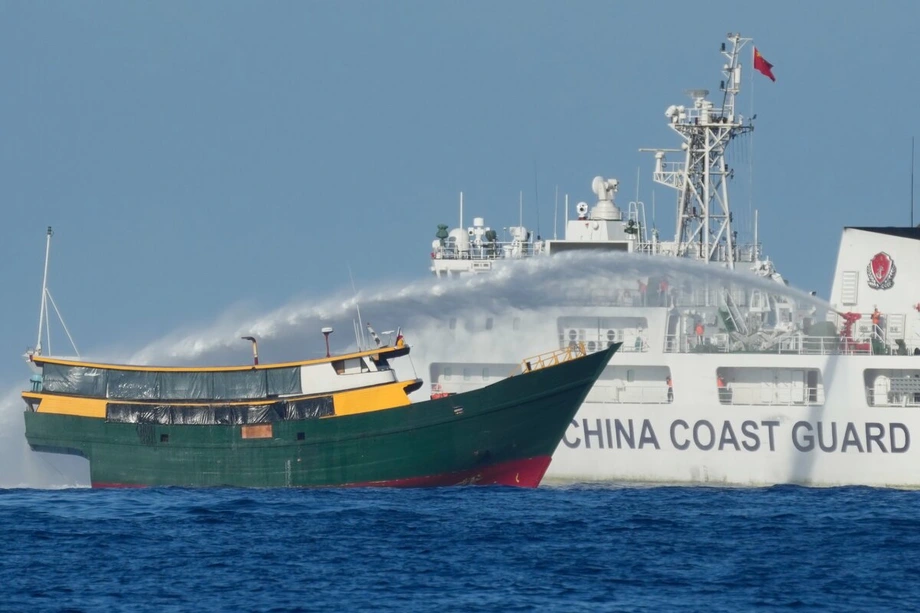
Chinese port authorities detained 91 vessels flying Panama's flag in March 2026, accounting for roughly 74 percent of all ship detentions across the Asia Pacific region that month. The surge followed Panama's decision to replace the operators of two terminals at the entrances to the Panama Canal, turning a dispute over port contracts into a confrontation over shipping, sovereignty and economic pressure.
Contents
- March Detentions Put Panama's Shipping Flag at the Centre of a Diplomatic Clash
- Why the Inspection Numbers Have Drawn Attention
- The Court Ruling Behind the Terminal Takeover
- How the Dispute Developed
- Washington and Regional Governments Condemn the Pressure
- China Says the Inspections Are Routine
- Mulino Defends the Ruling While Seeking Calm
- Arbitration and a $23 Billion Deal Face Uncertainty
- Why Shipping Delays Matter Beyond Panama
- When Safety Enforcement Becomes a Political Dispute
- Key Points
Chinese authorities detained 32 ships flying Panama's flag in March 2025 and 13 in March 2024. The March 2026 total of 91 was nearly three times the figure a year earlier and seven times the figure two years earlier. Figures attributed to the Tokyo Memorandum of Understanding on port state control put the March 2026 count at 93, rather than 91, after approximately 20 to 23 detentions per month in January and February. Of 20 vessels detained during the first four days of April, 11 flew Panama's flag.
The United States and regional governments have accused China of using maritime inspections to punish Panama for removing a subsidiary of Hong Kong conglomerate CK Hutchison Holdings from the Balboa and Cristobal terminals. China rejects that accusation and says its authorities are carrying out routine inspections under international maritime conventions and domestic law.
By May 4, the confrontation had spread beyond the two terminals. It involved international arbitration, a planned transaction worth $23 billion, shipping operations, Chinese investment in Panama and warnings about disruption to American trade. Panama's president, Jose Raul Mulino, was trying to preserve relations with Beijing while defending the court decision that set the dispute in motion.
Why the Inspection Numbers Have Drawn Attention
The Tokyo Memorandum of Understanding, commonly called the Tokyo MOU, is the regional system for port state control across the Asia Pacific. Port state control allows authorities at a port to inspect visiting foreign ships for compliance with safety, environmental and labour standards. A ship can be detained while problems are addressed.
Chinese inspections officially cited technical deficiencies, including problems with fire control systems and pollution prevention. Those are subjects maritime authorities normally examine. The controversy concerns the timing and concentration of the detentions, particularly their increase after the change in operators at Panama's canal terminals.
Vessels flying Panama's flag have typically accounted for between 21 and 42 percent of detentions under the regional regime. Their share rose above 70 percent in March 2026. Western regulators view that concentration, alongside the port concession dispute, as evidence of informal instructions targeting Panama.
Laura DiBella, chair of the United States Federal Maritime Commission, said the intensified inspections were being carried out under informal directives and appeared intended to punish Panama after the transfer of Hutchison's port assets. The commission's public challenge brought the dispute directly into the regulation of international shipping.
Ships flying Panama's flag carry a substantial portion of American containerised trade. Delays at Chinese ports can therefore affect United States importers and exporters even when the immediate dispute concerns contracts in Central America. A vessel's flag identifies the country under whose registration it operates, which makes Panama's shipping registry the point through which pressure can reach a much wider trading network.
For shipping companies and cargo owners, the delays have averaged one to four days, with some detentions lasting longer. A delayed vessel can miss its next scheduled arrival, complicate port operations and disrupt the movement of goods through supply chains. Those costs can eventually reach consumers through higher prices.
The Court Ruling Behind the Terminal Takeover
Panama's Supreme Court ruled on January 30, 2026, that the legal framework supporting a concession agreement dating from 1997 was unconstitutional. The decision removed the basis for Panama Ports Company, a CK Hutchison subsidiary, to operate Balboa on the Pacific side of the canal and Cristobal on the Atlantic side.
CK Hutchison had controlled the terminals for nearly three decades. Their location gives them strategic importance beside a waterway that carries approximately five percent of global maritime trade. The dispute centres on the terminals flanking the canal and the commercial rights to operate them.
Washington had been pressing Panama to curb Chinese influence over the waterway. That pressure intensified after President Donald Trump returned to office in January 2025. Trump accused Beijing of effectively operating the canal and suggested that the United States might take back control, despite the transfer of the waterway to Panamanian sovereignty in 1999.
Within days of the Supreme Court ruling, Panama moved to install interim operators under contracts lasting 18 months. Maersk's APM Terminals, part of the Danish shipping group, assumed control of Balboa. Terminal Investment Limited, part of the Mediterranean Shipping Company, took over Cristobal.
The appointments shifted operations from a company based in Hong Kong to Western operators. Panama presented the takeover as the consequence of the court's constitutional ruling, while CK Hutchison challenged it as an unlawful seizure of assets.
How the Dispute Developed
The confrontation unfolded across several dates, moving from political pressure and a court ruling to shipping detentions and a regional diplomatic response. The March increase in inspections came after the change in terminal operators.
- 1997: The concession agreement later challenged in Panama's Supreme Court established the framework for Panama Ports Company's terminal operations.
- 1999: The Panama Canal passed to Panamanian sovereignty.
- January 2025: Donald Trump returned to office, and United States pressure over Chinese influence around the canal intensified.
- January 30, 2026: Panama's Supreme Court annulled the legal framework supporting the concession.
- Within days of the ruling: Panama moved to appoint APM Terminals and Terminal Investment Limited as interim operators under contracts lasting 18 months.
- March 2026: Detentions of ships flying Panama's flag rose sharply. China's Ministry of Transport also summoned representatives of Maersk and MSC to Beijing.
- April 1 to 4, 2026: Eleven of 20 detained vessels flew Panama's flag.
- April 29, 2026: The United States, Bolivia, Costa Rica, Guyana, Paraguay, and Trinidad and Tobago issued a joint statement condemning China's actions.
The legal proceedings and diplomatic exchanges were continuing as of May 4. No timetable for an arbitration decision or an end to the inspection dispute had been given.
Washington and Regional Governments Condemn the Pressure
The April 29 statement brought together the United States and five named regional partners: Bolivia, Costa Rica, Guyana, Paraguay, and Trinidad and Tobago. The governments accused China of applying targeted economic pressure through the detention of vessels flying Panama's flag.
The six governments described the campaign as a blatant attempt to politicise maritime trade and infringe on the sovereignty of nations in the hemisphere. Their statement called Panama a pillar of the maritime trading system that must remain free from undue external pressure.
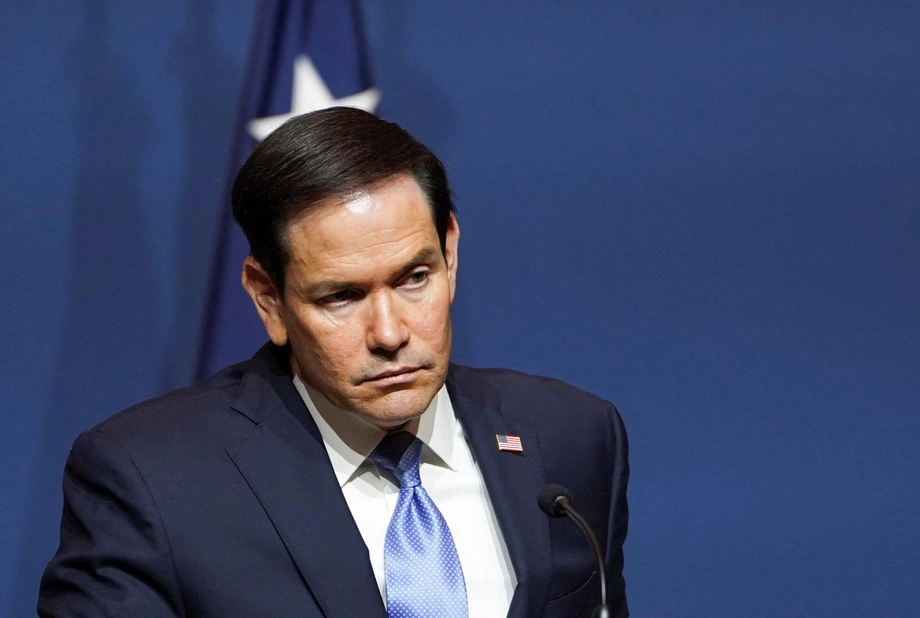
Marco Rubio, the United States secretary of state, framed the dispute as a matter of regional sovereignty. He declared:
The sovereignty of our hemisphere is non-negotiable.
The joint response broadened Washington's position beyond a confrontation between the United States and China. It placed the shipping dispute within a regional argument about Panama's right to make decisions without outside economic pressure.
Costa Rica's Ministry of Foreign Affairs issued a separate statement expressing deep concern and its firmest condemnation of inspections it described as arbitrary and unjustified. The ministry said the inspections put global trade at risk and reaffirmed unconditional support and solidarity with the people and government of Panama.
Costa Rica also invoked commitments under the United Nations Convention on the Law of the Sea. Its response connected the immediate treatment of ships with the international rules governing maritime activity.
China Says the Inspections Are Routine
China's Foreign Ministry spokesperson Lin Jian rejected the accusations at a press briefing in late April. He called them completely unfounded and a deliberate distortion of facts, while accusing Washington of using the port dispute for political purposes.
Lin pointed to the history of United States involvement in Panama. He accused the United States of having long occupied the canal, launched armed invasions against Panama, and wantonly trampled on the country's sovereignty and dignity.
The Chinese Embassy in Washington said the inspections were being conducted under established rules. Its statement set out Beijing's position:
Chinese competent authorities conducted routine inspections of vessels in accordance with laws and regulations. The allegations are completely unfounded and merely a distortion of facts.
Chinese officials argue that Washington pressured Panama into stripping Hutchison of its concessions. Lin placed responsibility for turning the ports into a security dispute on the United States:
It is the United States that has politicized and securitized the issue of ports.
Lin also described Washington's approach in these terms:
The one who has politicized and over-securitized the issue of ports is the United States.
The competing positions concern the purpose of the inspections. Beijing describes ordinary enforcement of maritime requirements. Washington and its regional partners describe selective enforcement intended to impose an economic cost on Panama.
Mulino Defends the Ruling While Seeking Calm
President Jose Raul Mulino has defended Panama's handling of the terminals while saying the country maintains a positive relationship with China. He described Panama's position between the world's two largest economies:
We are, in a way, being carried along like a tide by the outcome of a problem between two major powers, the United States and China.
Mulino said the Supreme Court decision required a response because the terminal operations had lost their contractual foundation. He explained his government's position:
We did not expropriate the ports, we took over the ports because they were left without a contract.
Mulino also acknowledged receiving a message from a senior level in Beijing that the dispute would be resolved through international arbitration rather than conflict between the two governments. He interpreted that message as a friendlier approach.
The president nevertheless warned in early April that Panama would not accept the ship detentions indefinitely. He said:
We do not want problems with China, but we will not allow these things to continue indefinitely.
Panama has also announced sanctions against a Chinese consortium working on a major bridge spanning the canal. The government cited alleged labour and contractual violations, saying the consortium had breached the terms of the infrastructure project. That action added another point of friction alongside the shipping and terminal disputes.
Arbitration and a $23 Billion Deal Face Uncertainty
CK Hutchison has launched international arbitration against Panama and is seeking more than $2 billion in damages. The company characterises the terminal takeover as an unlawful seizure of assets. Arbitration places the dispute before an international process for deciding commercial claims.
The company has also initiated arbitration against Maersk. That proceeding adds a legal dispute involving one of the new operators to the confrontation with Panama's government, complicating the transition at the terminals.
CK Hutchison's planned sale of a majority stake in its global port business to a consortium led by BlackRock and MSC is also in doubt. The proposed transaction is worth $23 billion and would have included the Panama assets now under dispute.
The arbitration and diplomatic standoff create legal and operational complications for that transaction. The uncertainty extends beyond the value of the two canal terminals because they formed part of a much larger planned sale.
Chinese state owned enterprises have reportedly received instructions to halt new investments in Panama. COSCO, the world's fourth largest shipping line by market share, suspended operations at Balboa following the transfer to Maersk management.
China's Ministry of Transport summoned representatives of Maersk and MSC to Beijing for discussions with senior officials in March 2026. The summons was widely interpreted as pressure on the companies connected to the new terminal operators. Together, the investment instructions, COSCO's suspension and the meetings show how the commercial dispute has spread across several business relationships.
Why Shipping Delays Matter Beyond Panama
The Panama Canal serves trade between Asia and the United States East Coast, commerce between the coasts of South America, and European routes to the west coast of South America. Its role in approximately five percent of global maritime trade gives developments around its terminals an audience far beyond Panama.
David Smith, an associate professor at the University of Sydney's US Studies Centre, said the confrontation exposed the vulnerability of global supply chains to targeted interference. He described the assumptions behind ordinary shipping and the pressure governments can apply:
We have taken for granted that the world runs on container ships just freely sailing around the world. What we're seeing now is that states know how vulnerable shipping is. They know they can cut shipping lanes off if necessary.
The Panama dispute has drawn comparisons with other maritime chokepoints. Iran has effectively closed the Strait of Hormuz to much commercial traffic following military action by the United States and Israel. In the Red Sea, Houthi attacks have forced vessels to reroute around Africa.
Analysts have described this pattern as the Hormuz effect: geopolitical tensions turn commercial chokepoints into strategic battlegrounds. In Panama's case, pressure is being applied through terminal operations, investment relationships and the inspection of ships at Chinese ports.
Ferdinand Rauch, an economics professor at the University of St Gallen in Switzerland, warned that disruption to the Panama Canal could cause temporary supply bottlenecks, stock market volatility and upward pressure on inflation. A prolonged disruption, he said, could measurably dampen global gross domestic product, the value of goods and services economies produce.
Shipping schedules connect vessels, cargo owners and successive ports. A detention lasting several days can affect more than the shipment immediately on board because the vessel is also expected elsewhere. That helps explain why inspections in China can have commercial consequences for businesses trading through Panama or relying on ships registered there.
When Safety Enforcement Becomes a Political Dispute
Port state control is designed to keep shipping safe and ensure that vessels meet environmental and labour requirements. Applied uniformly, inspections protect crews, ports and the sea. Applied selectively, the same powers can operate as economic pressure through delayed departures and disrupted trade.
The mechanism is central to this dispute because it uses an established maritime regulatory process. Unlike a publicly announced tariff or sanction, an inspection can be presented as an ordinary response to a technical deficiency. That gives authorities room to deny a political purpose while shipping companies absorb the cost of delays.
China says its inspections comply with international conventions and domestic laws. Western regulators point to the sharp rise in detentions and their concentration on vessels flying Panama's flag after Hutchison lost its terminal concessions. Panama is seeking to defend its court's decision without allowing that disagreement to overwhelm relations with Beijing.
The immediate confrontation therefore has three connected parts: the constitutional basis for the port contracts, the commercial claims arising from their removal, and the treatment of Panama's registered ships abroad. Each carries consequences for businesses and governments that depend on maritime trade.
Key Points
- Chinese authorities detained 91 vessels flying Panama's flag in March 2026, roughly 74 percent of regional detentions. Tokyo MOU figures also cited a March total of 93.
- The March count rose from 32 in March 2025 and 13 in March 2024. Eleven of 20 vessels detained in the first four days of April flew Panama's flag.
- Panama's Supreme Court annulled the legal framework supporting CK Hutchison's terminal concession on January 30, 2026.
- APM Terminals took over Balboa and MSC's Terminal Investment Limited took over Cristobal under interim contracts lasting 18 months.
- The United States, Bolivia, Costa Rica, Guyana, Paraguay, and Trinidad and Tobago condemned China's actions in an April 29 statement.
- China denies targeting Panama and says the inspections are routine enforcement under maritime conventions and domestic law.
- CK Hutchison is seeking more than $2 billion from Panama through arbitration and has also initiated arbitration against Maersk.
- The dispute has complicated a planned $23 billion port business sale, while COSCO suspended operations at Balboa.
- The Panama Canal handles approximately five percent of global maritime trade, making prolonged disruption a concern for shipping schedules, prices and economic activity.