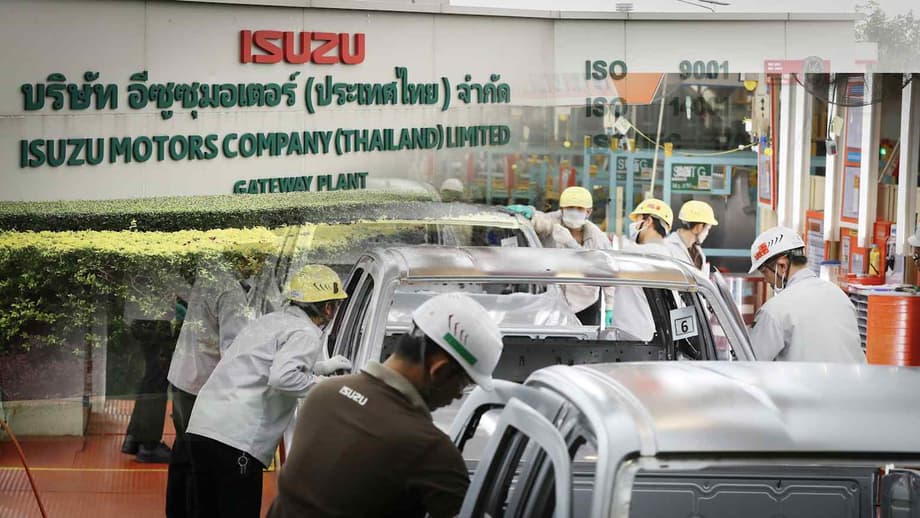
Japanese Expatriates Leave Thailand in Droves
For decades, Thailand stood as a premier destination for Japanese corporate expansion. Factories and regional headquarters filled industrial estates around Bangkok, while expatriate communities flourished in neighborhoods along the Chao Phraya River and in central districts of the capital. Japanese managers, engineers, and their families built comfortable lives in the kingdom, supported by generous housing allowances and tuition for international schools paid by their employers. These postings represented the peak of a stable, globally minded career.
- Japanese Expatriates Leave Thailand in Droves
- Thailand Confronts Slow Growth and Recession Risk
- Global Energy Chaos Deepens Asian Crisis
- Rising Costs Force Tokyo to Tighten Budgets
- Rivals Reshape Southeast Asian Investment
- Local Communities Feel the Expat Drain
- Bangkok Struggles to Stabilize Its Economy
- Key Points
Today, those arrangements are coming apart rapidly. Japanese companies have begun sending expatriate staff home in significant numbers as part of aggressive cost cutting campaigns. This exodus reflects a strategic retreat from a market that no longer guarantees the returns it once did. Employers now grapple with a local economy battered by slow growth, a strong Thai baht that raises operational expenses, and mounting competition from Chinese firms that have expanded their regional footprint with cheaper financing and aggressive pricing.
The shift marks a dramatic reduction in the Japanese expatriate presence inside Thailand. Where Japanese conglomerates once maintained layers of overseas staff to oversee joint ventures and local partnerships, many now prefer leaner teams or remote management from Tokyo. The change signals more than temporary belt tightening. It points to a fundamental reassessment of the role of Thailand in Japanese corporate strategy at a moment when both nations face severe fiscal pressures and volatile global markets.
The human impact is already visible. Enrollment at international schools serving Japanese families has started to decline, and real estate agents report shrinking demand for high end rentals in districts long favored by expatriates. Local businesses that catered to these communities, from specialty grocers to golf clubs, are seeing quieter dining rooms and thinner receipts. Corporate veterans describe the current wave of recalls as the sharpest they have witnessed in two decades. For the individuals affected, the recall orders arrive as an abrupt end to an era of generous overseas assignments and a significant disruption to carefully laid career plans.
Thailand Confronts Slow Growth and Recession Risk
The decision to recall staff does not rest solely on corporate spreadsheets. The domestic economy of Thailand has weakened considerably, removing the confidence that once justified large foreign payrolls. KKP Research, the economic research unit of the Kiatnakin Phatra Financial Group, lowered its forecast for gross domestic product growth in 2026 to 1.3 percent from 1.8 percent. The research unit also raised its headline inflation projection to 3.0 percent from 0.2 percent, warning that a prolonged oil shock could push the country toward recession.
Vulnerability extends far beyond imported crude oil and liquefied natural gas. Shipping disruptions in the Middle East threaten to worsen shortages of fertilizers, which would hit agricultural output, and petrochemical feedstocks that feed plastics and textile industries. Household balance sheets, already stretched thin after the pandemic, offer little buffer against rising prices. Unlike the inflation surge of 2022, which was softened by demand that built up after the pandemic, the current downturn leaves consumers entering the shock with weaker finances and dimmer prospects.
Tourist arrivals, a cornerstone of Thai economic planning, are sliding. KKP Research projects foreign visitors will fall to 31.2 million in 2026, down from 35.1 million, as higher travel costs erode demand. Reports from early this year already showed a nine percent year on year drop in tourist arrivals, while hotels in major sites reported occupancy rates as low as ten percent. Exports are also suffering from rising shipping costs and weaker demand in key markets including the United States, China, Europe, and Japan.
Public debt adds another layer of risk. Weaker growth and the cost of consumer subsidies could push the public debt to GDP ratio of Thailand beyond the seventy percent ceiling sooner than planned, leaving the government with limited fiscal space to respond. The picture that emerges is of an economy struggling to maintain momentum against powerful external and internal headwinds.
Global Energy Chaos Deepens Asian Crisis
The energy crisis gripping Asia has amplified the economic troubles of Thailand. In the wake of military conflict involving Iran, the Strait of Hormuz has been effectively closed to much commercial shipping. This narrow channel carries one fifth of global seaborne crude oil, one fifth of liquefied natural gas shipments, and about one third of worldwide trade in urea, the most common fertilizer. For Thailand, which relies on imports for the bulk of its energy needs, the closure represents an existential economic threat.
Joseph Capurso, head of global economics at the Commonwealth Bank of Australia, offered a stark assessment of the situation.
“Of all the possible Middle East scenarios, the current state of play is one of the worst for the global economy. We expect the situation to escalate before it de escalates.”
The fallout has been immediate across the region. Oil futures closed near ninety five dollars per barrel, and Gulf countries have seen production drop by roughly ten million barrels per day compared with levels in March 2025. The amount of oil passing through Hormuz has plummeted to less than ten percent of pre war levels. Thailand responded by banning all petroleum exports and drawing on a national fuel fund to protect motorists. Anutin Charnvirakul asked officials in the government to conserve energy by taking stairs instead of elevators, while state agencies were told to work from home to curb fuel demand.
The disruption has also stranded Thai exports. Rice shipments bound for the Middle East have stalled at Bangkok port, with vessels carrying eighty thousand tons stopped in their tracks. Higher shipping insurance costs and canceled aviation routes are rippling through supply chains, raising the price of everything from semiconductors to vacation packages. Economists warn that if oil prices remain elevated, Thailand could see economic growth halved within months. As energy prices climb, Bangkok faces the prospect of stagflation, where inflation rises while growth stalls.
Rising Costs Force Tokyo to Tighten Budgets
While Thailand wrestles with imported inflation and currency pressures, Japan is fighting its own cost of living battle. The Bank of Japan raised its benchmark interest rate to around 0.75 percent, the highest level in three decades, as inflation excluding food and fuel hit 3.0 percent in November. The move reflects a historic shift after nearly three decades of ultra loose monetary policy, but it also raises the cost of government borrowing at a time when Tokyo is managing massive public liabilities.
New Prime Minister Sanae Takaichi has made reducing inflation a top priority, though her earlier criticism of rate hikes as “stupid” suggests tension with the central bank. Higher interest rates tend to strengthen a currency, but the yen remains relatively weak against the dollar and euro, continuing to push up import costs. For Japanese corporations, this combination of domestic inflation, costlier credit, and a fragile currency makes overseas operations look like an easy place to trim spending.
Shigeto Nagai, head of Japan economics at Oxford Economics, explained that the central bank is moving carefully.
“The BOJ will need time, probably around six months, to monitor the impact of the rate hike on the real economy before it makes its final move.”
That uncertainty translates directly into corporate caution. Companies are less willing to fund expensive expatriate packages when domestic margins are shrinking and shareholder demands for efficiency are rising. The recall of staff from Bangkok is therefore part of a broader Japanese retrenchment, one that treats overseas postings as discretionary luxuries rather than strategic necessities. Traditionally, Japanese firms rotated senior employees through foreign offices to build global experience, but that rotation system is now being scaled back dramatically across every major market. Even mid level managers who once expected overseas assignments as a standard promotion step are now told to manage regional accounts from domestic headquarters.
Rivals Reshape Southeast Asian Investment
The retreat from Thailand is not happening in a vacuum. Across Southeast Asia, investment patterns are shifting as Chinese firms expand their presence with state backed financing and aggressive pricing. The economic footprint of Beijing in Bangkok, Phuket, and Kuala Lumpur has grown, creating a more crowded marketplace where Japanese enterprises find it harder to defend market share. The resulting price wars squeeze margins, making large expatriate management teams harder to justify.
At the same time, Vietnam has become increasingly indispensable to Japanese corporate strategy. According to consulting firm ABeam, Vietnamese labor now powers large segments of the industrial output of Japan, even as long term threats from artificial intelligence, rising local costs, and policy bottlenecks cloud the horizon. Japanese manufacturers have poured investment into factories in Ho Chi Minh City and Hanoi, redirecting capital that once might have expanded Thai operations.
This reallocation reflects a cold eyed calculation of risk and return. The strong baht makes exports from the kingdom less competitive, while the tourism dependent service sector looks fragile amid fuel shortages and falling visitor numbers. Chinese technology and infrastructure firms, supported by state financing, have undercut Japanese bids for major infrastructure contracts, further eroding the competitive position of conglomerates based in Tokyo. Chinese airlines may have cut flights to Bangkok and Phuket due to soaring jet fuel prices, but Chinese industrial and technology companies remain committed to the region, intensifying competition. For headquarters in Tokyo and Osaka, the math increasingly favors consolidation over expansion in the kingdom. The result is a regional landscape where Japan is no longer the default foreign investor in Thai manufacturing or retail. Japanese executives visiting regional headquarters now increasingly favor short trips to Ho Chi Minh City over extended stays in Bangkok.
Local Communities Feel the Expat Drain
The departure of Japanese families carries consequences that extend beyond boardrooms. For years, expatriate spending supported a network of local businesses, from Japanese language preschools and restaurants serving authentic cuisine to upscale apartment complexes and golf clubs. As the population of corporate assignees shrinks, these establishments are facing an uncertain future. Real estate agents in central Bangkok report that demand for premium condominiums and three bedroom rentals in districts long favored by Japanese residents has softened noticeably, forcing landlords to lower rents or accept shorter leases.
International schools with large Japanese student bodies are already adjusting budgets and class sizes, while neighborhood grocers that specialized in imported seafood and rice wine are seeing fewer regular customers. The exodus also affects Thai staff who worked as drivers, household helpers, and administrative assistants within expatriate households. Many of these workers now face reduced hours or outright termination as households downsize or close. Service staff who cooked, cleaned, and provided childcare for these households are now searching for work in a tightening labor market. Even charity golf tournaments and corporate social responsibility initiatives have seen participation drop as familiar faces leave the country.
The human dimension of this corporate pullback highlights a simple truth. When multinational employers decide that a market has become too expensive or too risky, the shock spreads quickly through the local service economy. Japanese expatriates may be returning to Osaka or Nagoya, but the ripples of their departure are being felt in retail streets and suburban shopping malls across the capital. Longstanding cultural exchange programs and business association events that bridged Thai and Japanese communities are also scaling back, thinning the social fabric that connected the two nations at the grassroots level. Some community leaders worry that once these institutional ties weaken, rebuilding them will require years of renewed investment and trust. Japanese language classes in local universities are also reporting smaller enrollment numbers.
Bangkok Struggles to Stabilize Its Economy
Faced with these overlapping pressures, the government of Thailand has launched relief measures designed to ease the burden on ordinary citizens. Prime Minister Anutin Charnvirakul recently opened the Thai Helps Thai campaign, a nationwide effort to distribute discounted essential goods through mobile vendor vehicles, community shops, and Thailand Post service points. The project aims to cover more than four million households and reduce public expenses by no less than two hundred and eighty million Thai baht over a month long period.
Speaking at the launch event, Anutin described the initiative as a direct response to market pressures. He said the mobile vendors sell goods cheaper than general market prices, and he encouraged citizens to buy as much as they need without worrying about quality changes. The project runs through a network of over three thousand mobile vehicles and hundreds of postal sales points, bringing fourteen essential consumer goods from twelve operators to remote areas where access to affordable products is difficult.
While these measures offer short term relief, they do little to address the structural forces driving Japanese firms away. A temporary discount on palm oil and detergent cannot reverse a strong currency, reopen the Strait of Hormuz, or restore investor confidence overnight. Analysts caution that without meaningful reforms to improve competitiveness and energy security, Thailand risks watching more foreign capital migrate to neighbors with lower costs and fewer logistical bottlenecks.
The convergence of a domestic inflation fight in Japan, an energy crisis radiating from the Middle East, and intensifying regional competition has created a uniquely challenging environment for the kingdom. Whether policymakers in Bangkok can pivot quickly enough to retain the status of Thailand as a premier hub for Japanese investment remains an open question, but the current trajectory favors caution and contraction over optimism and expansion.
Key Points
- Japanese companies are recalling expatriate staff from Thailand as part of sweeping cost cutting measures driven by economic pressure in both nations.
- Thailand faces a potential recession, with 2026 GDP growth forecasts cut to 1.3 percent and tourism numbers expected to fall sharply amid global energy shocks.
- The closure of the Strait of Hormuz has sent oil prices soaring and disrupted Thai exports, including rice shipments bound for Middle Eastern markets.
- The central bank of Japan raised interest rates to a thirty year high while inflation hovers at 3 percent, prompting corporations to slash overseas spending.
- Chinese firms are expanding their regional footprint, intensifying competition and prompting Japanese investors to reconsider Thailand as a primary hub for Southeast Asian operations.
- Local businesses and international schools in Bangkok are experiencing declining demand as the Japanese expatriate community shrinks rapidly.