Seoul Faces a Rival Moving Beyond Catching Up
South Korea faces a projected shortage of at least 580,000 professionals in advanced technology fields by 2029, just as Chinese competitors are gaining ground across the industries that powered its economic rise. Industry forecasts place China ahead in steel, general machinery, secondary batteries, displays, automobiles and parts. The Federation of Korean Industries projects that South Korea could trail Chinese rivals by 2030 even in semiconductors and electronics, where it still holds a slender lead.
Contents
- Seoul Faces a Rival Moving Beyond Catching Up
- How China's Industrial Strategy Changed the Relationship
- Why Setting Standards Matters
- Memory Chips Remain Korea's Strongest Position
- Samsung Also Faces Pressure From TSMC
- The Workforce Gap Behind the Factory Competition
- Warmer Ties Meet a Difficult Security Balance
- Where Korean Companies Could Find New Customers
- A Trade Agreement for More Complicated Supply Chains
- What the Next Lee Xi Summit Could Address
- What to Know
For decades, Korean semiconductors, smartphones, automobiles and displays set benchmarks for quality and reliability, winning customers from Berlin to Bangkok. The change now confronting Seoul goes beyond cheaper competing products. Chinese companies increasingly have the technology, manufacturing scale and ambition to help determine how future industries operate.
At a recent Beijing forum jointly hosted by Renmin University and the South Korean embassy, speakers warned that China's technological gains and aggressive prices were weakening the profitable industrial partnerships that had connected the two economies. Korean companies once supplied advanced components that Chinese manufacturers needed. Those customers are increasingly becoming capable competitors.
Seo Bong kyo, head of Samsung Global Research China, urged industries in both countries to assess their strongest capabilities and build a cooperative, interdependent global supply chain. His remarks, published in an event summary by the Chinese organizer, reflected growing urgency among Korean business leaders. Interdependence means that companies on each side retain useful capabilities that their partners need, giving both a reason to keep working together.
As of May 10, 2026, Seoul's challenge is to protect its remaining technological advantages while finding new ways to earn revenue in China. President Lee Jae Myung's administration has announced plans to invest billions of dollars in semiconductors, batteries, biotechnology and artificial intelligence. Turning that spending into durable industrial strength will also require skilled workers, access to customers and room to operate between competing American and Chinese priorities.
How China's Industrial Strategy Changed the Relationship
China launched Made in China 2025 in 2015 to move its manufacturing economy beyond inexpensive assembly and close technological gaps. After 2020, growing trade tensions with Washington accelerated the drive for technological independence. Beijing directed subsidies, tax breaks and investment toward domestic capabilities.
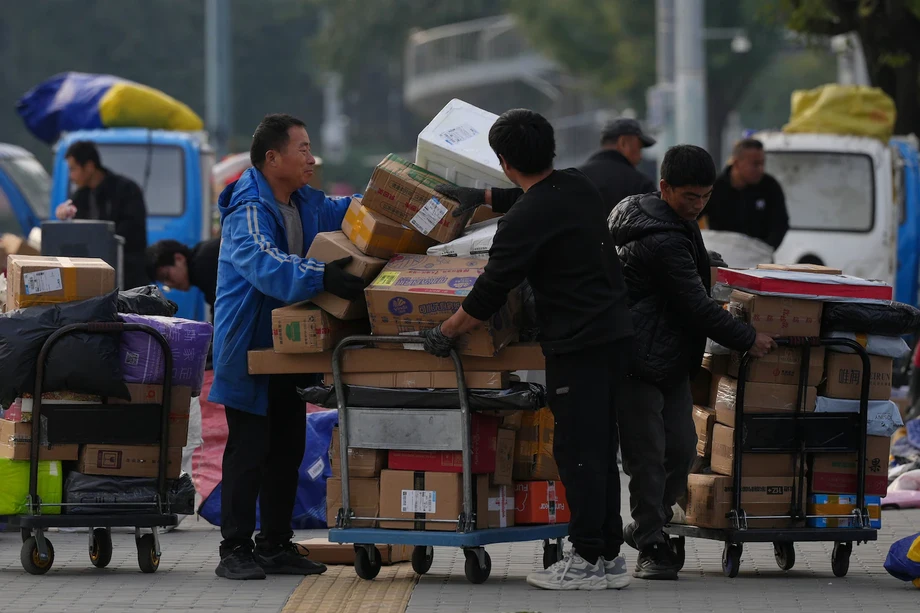
China's population of 1.4 billion gave its manufacturers a vast market in which to test products, improve them and increase production. Large amounts of capital and an enormous pool of skilled engineers supported that process. Companies able to sell at scale could refine their products quickly while competing on price.
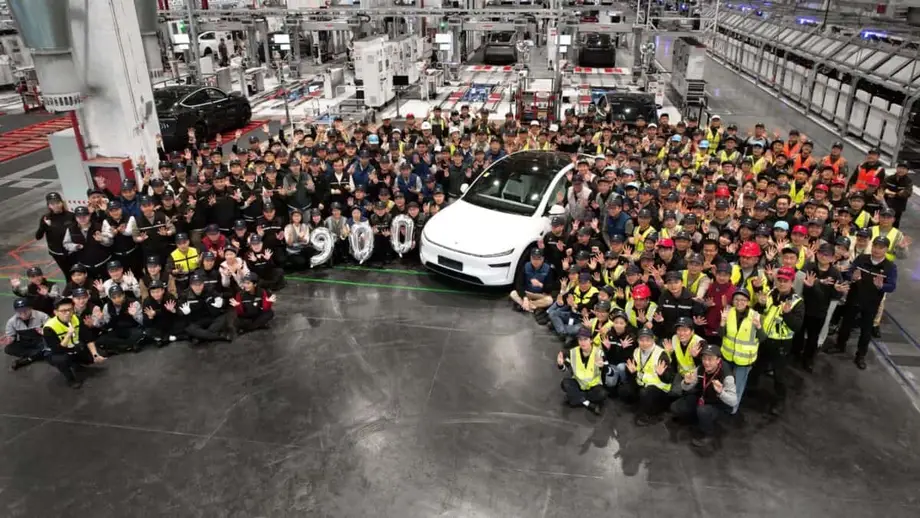
The change is visible in several industries. BYD has surpassed Tesla as the largest electric vehicle maker by sales. CATL holds the leading share of the global battery market and supplies major automakers around the world. DJI controls roughly 70 percent of the global drone market. Huawei continues to dominate 5G network equipment despite years of American sanctions.
Several dates help explain how industrial competition and political relations reached their present position:
- 2015: Beijing introduced Made in China 2025 to upgrade manufacturing and close technology gaps.
- 2017: South Korea's deployment of the Terminal High Altitude Area Defence battery, known as THAAD, triggered a downturn in relations with China.
- After 2020: Trade tensions with Washington accelerated China's push for technological independence.
- 2019 to 2024: The Korea International Trade Association found that China surpassed South Korea and Japan in machinery, chemicals, automobiles and steel.
- January 2026: President Lee Jae Myung visited Beijing as relations began warming.
- 2029 and 2030: Korean projections point to a major advanced technology workforce shortage and further losses of industrial competitiveness.
For Korean manufacturers, this sequence has changed the commercial calculation. A Chinese customer may still buy Korean components, but it may also develop a domestic substitute or compete directly for the same overseas buyer. Maintaining the old division of labor is becoming harder.
Why Setting Standards Matters
China's ambitions now extend from making its own technology to shaping the technical rules used by others. Under initiatives described as China Standards 2035, Chinese enterprises are competing to define frameworks in 5G, artificial intelligence and the Internet of Things, the networks that connect devices so they can exchange information.
Kim Heung kyu, director of the institute for United States and China policy at Ajou University, described the shift from closing technology gaps to setting the terms of future competition.
The premise has already changed; it is no longer about whether China can catch up. China is now seeking to define global standards in future industries.
Technical standards determine how products connect and work together. A company with influence over those standards can also gain influence over supply chains, licensing and compatibility. For South Korea, protecting market share therefore involves more than manufacturing a better device. It also involves retaining a voice in the rules that manufacturers and customers follow.
China's combination of scale, engineering talent and successful technology companies gives that ambition commercial weight. Korean firms face a competitor that can sell at lower prices while increasingly influencing the systems around which new products are built.
Memory Chips Remain Korea's Strongest Position
Semiconductors remain South Korea's most important technological stronghold. Memory chips, particularly high bandwidth memory, account for most of Seoul's remaining trade surplus with Beijing. High bandwidth memory allows large amounts of data to move quickly, making it a valuable part of the advanced memory business in which Korean companies retain an edge.
Chinese manufacturers are catching up more quickly in older chip products and general purpose segments. Industry data describes Chinese foundries, including SMIC and Hua Hong, as having reached the 7 nanometer node, roughly comparable to capabilities offered by Taiwan Semiconductor Manufacturing Company around 2019. A foundry manufactures chips, while a node identifies a generation of manufacturing technology.
The milestone allowed Huawei to reclaim the leading position in China's 5G smartphone market in 2025. The performance gap has narrowed enough that the main drawback is higher silicon consumption per device, rather than speed or efficiency shortcomings large enough to discourage domestic buyers. In simple terms, achieving comparable functions can require more chip material.
South Korea's advanced memory advantage remains valuable, but the pressure differs across the semiconductor business. Chinese competition is advancing in established products, while the most advanced contract manufacturing market is dominated by a Taiwanese rival. Korean companies must defend their strengths while competing in both directions.
Samsung Also Faces Pressure From TSMC
Yole Group estimates that the global semiconductor foundry industry reached $402 billion in 2026. Within that market, TSMC holds roughly 95 percent of the leading edge 3 nanometer segment. Samsung primarily supplies wafers made using 7 nanometer and 5 nanometer technology to outside customers.
Samsung's early deployment of 2 nanometer technology for its own smartphone division shows that it remains competitive in advanced manufacturing. Its internal use of that technology sits alongside TSMC's dominance in the lucrative advanced market for outside customers. The distinction matters because developing a manufacturing process and winning a large share of customer orders are different business tasks.
For Korean foundries, the result is a crowded competitive field. TSMC commands the most advanced commercial segment, while Chinese manufacturers are making progress in other parts of the industry and adding price pressure. The Federation of Korean Industries' projection for 2030 captures the concern that even today's remaining advantages could narrow.
South Korea's response must therefore address more than the amount of money invested in factories. Its companies also need the people who develop manufacturing processes, improve products and turn technical capabilities into sales. That connects the semiconductor contest directly to the country's growing shortage of scientific and engineering talent.
The Workforce Gap Behind the Factory Competition
China produces between 3.5 million and 4 million graduates in science, technology, engineering and mathematics each year, compared with roughly 140,000 in South Korea. Those figures put China's annual output at about 25 to 29 times Korea's. The scale difference gives Chinese industries a much larger pool from which to recruit researchers and engineers.
Beijing has also used government incentives to recruit overseas researchers back to China. Combined with domestic graduates, that recruitment adds to the country's capacity to develop technology and expand production. Korea is moving in the opposite demographic direction, with the lowest fertility rate among OECD countries and a workforce that is aging rapidly.
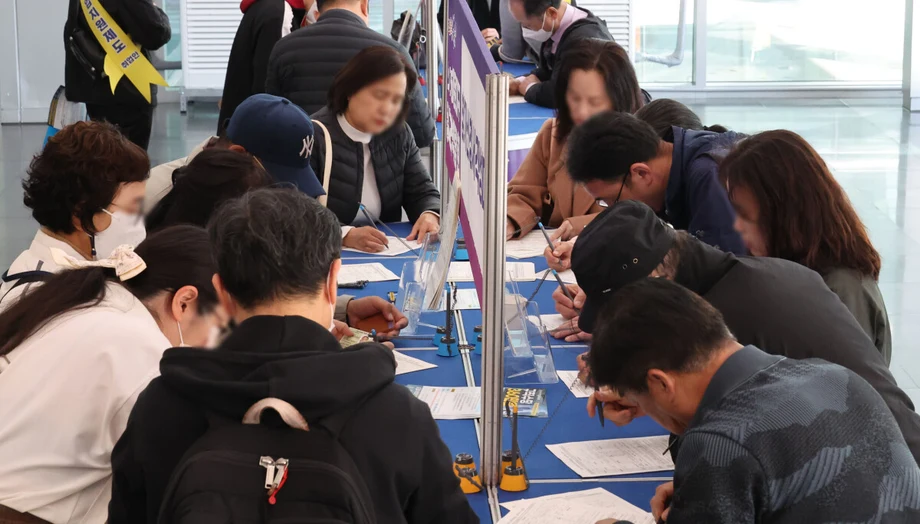
Korean technology employers face another problem: the country's brightest students are increasingly choosing medicine over science and engineering, attracted by greater income security and social status. A smaller younger population and a shift in career preferences are squeezing the supply of people available to work in advanced industries.
A December report by the Korea Chamber of Commerce and Industry projected a shortage of at least 580,000 talented professionals in fields including artificial intelligence and big data by 2029. Big data refers to the large collections of information that organizations analyze to identify patterns and support decisions.
The chamber attributed the shortage to a shrinking population of children of school age, caused by low birth rates, and a sharp decline in the inflow of highly skilled science and engineering professionals. It called for steps to ease the concentration of students in medical schools, expand the number of STEM graduates and attract more professionals from overseas.
Lee's planned investment in chips, batteries, biotechnology and AI therefore meets a practical constraint. Factories and research programs need qualified people to operate them. Government financing is already part of the competitive response; cultivating and recruiting the workforce needed to make that financing productive is the harder task.
Warmer Ties Meet a Difficult Security Balance
South Korea's industrial decisions are closely tied to its political position between Washington and Beijing. It depends on the United States for its military alliance while maintaining deep economic links with China. Relations with Beijing have gradually recovered from the downturn following the 2017 THAAD deployment.
Lee's January visit to Beijing signaled a warming trend. China became the leading destination for South Koreans traveling abroad in the first quarter of 2026, pointing to renewed warmth in personal ties as well as official contacts.
Donald Trump's return to the White House has added uncertainty to Seoul's security calculations. His transactional approach to alliances has reopened discussions about sharing their financial burden and renewed concern about the reliability of American extended nuclear deterrence. That term refers to the protection an ally expects from the American nuclear commitment.
Trump has also suggested that the United States could be well served by withdrawing troops from the Korean Peninsula. For Seoul, such a possibility reaches into the foundations of its security arrangements. At the same time, Washington is pressing South Korea to join a more assertive strategy across the wider Pacific aimed at countering Beijing.
Seoul remains cautious because its companies operate within a deeply established Chinese industrial ecosystem. China's combination of competitive production costs, extensive supply networks and enormous domestic demand is difficult to replace. Korean chipmakers and battery companies must navigate American export controls that restrict their business in China while continuing to depend on Chinese customers for revenue.
The resulting balance is commercial as well as diplomatic. South Korea wants a place in supply chains led by the United States for advanced semiconductors, but it also needs access to Chinese demand to help finance its industrial development.
Where Korean Companies Could Find New Customers
Seo Bong kyo identified China's effort to expand domestic demand as an opening for Korean businesses in markets for products and services with greater value. Capturing that opportunity requires adapting to a country that increasingly needs less Korean technology, even as Korean companies continue to need its consumers.
Jin Furong, a professor at Incheon National University and an expert in the Chinese economy, argued that access to China's market remains essential for Korean companies. She urged deeper commercial engagement despite the accelerating technological competition.
Cooperation with China remains indispensable. Korean companies need to penetrate more deeply into China's domestic market. Even though China is rapidly catching up in technology, cooperation with China is still essential for Korea.
Jin identified consumer goods, services, tourism and health care as areas where collaboration could grow. Political sensitivities are lower in those fields, and the two economies retain strengths that can complement each other. She also said no alternative production base or market could replace China's industrial ecosystem and massive domestic demand.
Her proposed strategy shifts attention from simply staying ahead of China to understanding its market well enough to compete within it and collaborate with local partners. Korean businesses would need deeper commercial knowledge and cultural fluency to identify customers, adapt products and manage relationships in an intensely competitive environment.
The travel recovery offers one example of renewed contact between the countries. The larger business opportunity depends on converting that warmer relationship into access for Korean goods and services, rather than relying on the component exports that supported the previous industrial partnership.
A Trade Agreement for More Complicated Supply Chains
The Beijing forum proposed building interdependent industrial ecosystems in growing sectors such as batteries and artificial intelligence. The aim is to give businesses in both countries useful roles within shared networks, rather than allowing every relationship to become a contest between interchangeable suppliers.
That proposal reflects the weakening of the former division of labor. Korean companies once supplied premium components to Chinese manufacturers. Chinese businesses can now often match or exceed Korean quality at lower prices, reducing the space available for traditional component exports.
Delegates called for advancing negotiations toward an upgraded trade agreement that would clarify rules of origin, reduce barriers in services and protect investment in emerging technologies. Rules of origin determine where a product is considered to come from when applying trade arrangements. They become more complicated when its parts and assembly pass through several countries.
Chinese components can move through ASEAN assembly plants before reaching Korean factories, while Korean inputs can travel through similar networks in the other direction. Trade rules need to account for those routes as well as direct exchanges between China and South Korea.
The Korea International Trade Association's finding that China surpassed both Korea and Japan in machinery, chemicals, automobiles and steel between 2019 and 2024 shows how quickly the competitive balance has shifted. Updating commercial rules would give companies a clearer framework for working within that changed balance.
Seo's call for cooperation and Jin's focus on understanding Chinese customers lead to a shared conclusion: Korea cannot sever its economic links with China without damaging its own business interests, and its companies cannot depend on yesterday's advantages to sustain them through the next decade.
What the Next Lee Xi Summit Could Address
Attention is turning to an upcoming summit between Lee Jae Myung and Chinese President Xi Jinping. Economic cooperation is expected to feature prominently, with Seoul seeking room to develop industries that generate greater value alongside China's industrial advance. No date for the meeting was given.
Kim Heung kyu argues that the summit should focus on cooperation that gives South Korea and neighboring countries space to develop advanced industries without being squeezed between American technology restrictions and Chinese market dominance.
The proposed agenda includes guarantees for Korean firms serving China's expanding domestic demand, joint research frameworks in batteries and AI, and arrangements to protect commercial ties from geopolitical turbulence. Such measures would turn the forum's idea of interdependence into a more durable framework for companies.
A failure to secure that framework could push the relationship further toward direct competition, with costs for both economies. Seoul's immediate challenge is to preserve access to Chinese customers, maintain its place in American technology supply chains and recruit enough skilled people to support new investment.
South Korea is confronting those tasks at the same time. Chinese competition is advancing, the projected workforce shortage is approaching in 2029, and forecasts point to further industrial losses by 2030. Its response depends on matching investment with talent and negotiating partnerships that reflect the capabilities China now possesses.
What to Know
- Industry forecasts place China ahead of South Korea in steel, general machinery, secondary batteries, displays, automobiles and parts.
- The Federation of Korean Industries projects that Korea could fall behind Chinese rivals even in semiconductors and electronics by 2030.
- China is pursuing greater influence over technical standards in 5G, artificial intelligence and the Internet of Things.
- Korea retains an advantage in advanced memory, while Chinese chipmakers are progressing and TSMC holds roughly 95 percent of the leading edge 3 nanometer market.
- China produces 3.5 million to 4 million STEM graduates annually, compared with about 140,000 in Korea.
- The Korea Chamber of Commerce and Industry projects a shortage of at least 580,000 advanced technology professionals by 2029.
- Forum speakers urged cooperation in batteries and AI, deeper access to Chinese consumers and an upgraded trade agreement.
- An upcoming Lee Xi summit is expected to address economic cooperation as Seoul balances Chinese commercial ties with its American security alliance.