Only 8,817 Teslas sold in China as exports take 87% of shipments
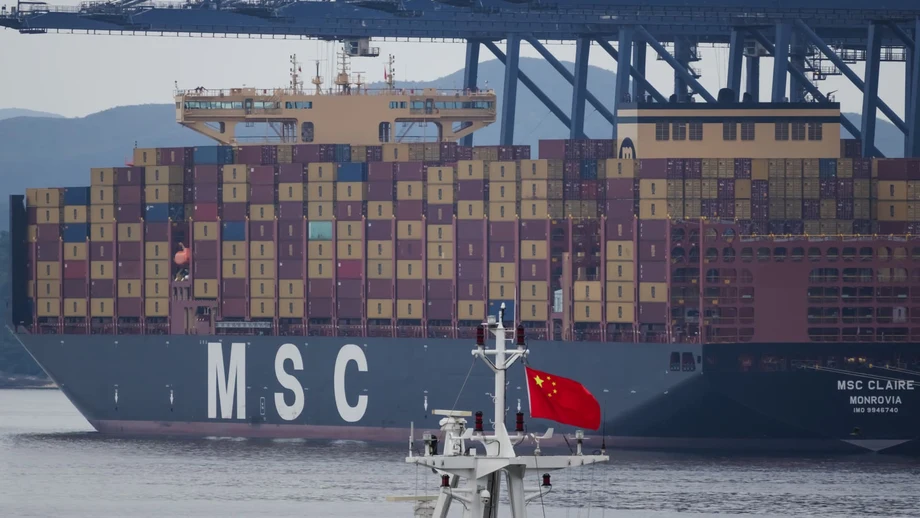
Tesla sold 8,817 vehicles to buyers in China in October 2026, down 66.1% from a year earlier and its lowest monthly total since July 2022. At the same time, its Shanghai factory shipped 59,012 vehicles overseas, sending a record 87% of its monthly wholesale volume to export markets.
Contents
- Only 8,817 Teslas sold in China as exports take 87% of shipments
- How domestic sales fell while wholesale shipments grew
- Model Y carries most of the domestic decline
- Export scheduling offers part of the explanation
- Tesla's market share falls faster than electric car demand
- Chinese competitors hold the leading positions
- Discounts and financing target buyers before year end
- Shanghai becomes more dependent on overseas demand
- Electric vehicles gain share in a shrinking market
- Key Points
The figures from the China Passenger Car Association (CPCA) show two sharply different developments within the same business. Domestic deliveries fell steeply, while overseas shipments increased enough to lift Tesla China's combined wholesale sales by 10.3% from October 2025, to 67,829 vehicles.
The Model Y suffered the biggest numerical decline at home. Dongchedi's sales rankings put its October retail deliveries at 7,807, down from 50,359 in September, sending it from first place to 66th among vehicle models. Model 3 deliveries fell to 1,010 from 14,478, and its ranking dropped from 10th to 291st.
October was Tesla's fifth consecutive month of declining China retail sales compared with a year earlier. Across January through October, domestic deliveries fell 15%, even as exports more than doubled. The combination leaves Shanghai increasingly dependent on overseas shipments while Tesla loses ground in China's crowded electric vehicle market.
How domestic sales fell while wholesale shipments grew
Tesla's monthly figures become easier to follow when the two destinations are separated. Wholesale shipments cover vehicles dispatched for both China and export markets. Domestic retail measures vehicles sold to buyers within China. Subtracting October's 59,012 exports from 67,829 wholesale shipments leaves the 8,817 vehicles sold domestically.
October 2025 had a much more balanced split: 35,491 exports and 26,006 domestic sales, for a combined 61,497 vehicles. A year later, exports had increased by 23,521 vehicles while domestic sales had fallen by 17,189. The export gain exceeded the domestic loss by 6,332 vehicles, accounting for the rise in total wholesale shipments.
Overseas shipments represented about 58% of Tesla China's wholesale volume in October 2025, compared with 87% this October. The latest share surpassed the previous record of 76.01% in October 2022. Domestic buyers accounted for just 13% of October's total.
September provides another useful comparison. Tesla China shipped 95,366 vehicles wholesale that month, including 30,529 exports and 64,837 domestic sales. In October, exports nearly doubled from September, but domestic retail fell 86.4%. Combined wholesale shipments consequently dropped 28.9% from September's peak for the year.
Model Y carries most of the domestic decline
Model Y deliveries fell 84.5% from September, while Model 3 deliveries dropped about 93%. Together, the two models accounted for Tesla's entire October domestic retail total. The Model Y still represented about 89% of that total, calculated from its 7,807 deliveries out of 8,817.
September had been an unusually strong month for the Model Y compared with its recent performance. Domestic sales rose from 22,990 in April to 38,654 in June, fell to 25,158 in July, then recovered to 29,260 in August before reaching 50,359 in September.
The Model 3 also showed large monthly swings. Its domestic deliveries ranged from 2,091 in July to 20,787 in August, followed by 14,478 in September. October's 1,010 deliveries extended that uneven pattern to a new low within those months.
Shanghai's October wholesale mix was less tilted toward the Model Y than its domestic sales were. Total shipments comprised 38,567 Model Ys and 29,262 Model 3s. Both models therefore continued moving through the factory's sales network in substantial numbers, with most of the combined volume heading abroad.
Export scheduling offers part of the explanation
Tesla showroom sales staff attributed the sharp monthly decline partly to the company's delivery schedule. An unnamed salesperson said vehicles made during the first month of each quarter, January, April, July and October, are mainly allocated to export markets, reducing deliveries within China.
Another explanation from sales staff combined the National Day holiday, September promotions and deliveries scheduled for November and December. A showroom salesperson also said the store had no vehicles immediately available, with waits of one to three weeks for the base Model Y and three to five weeks for other versions.
Tesla China had not issued a corporate response explaining October's retail decline by publication. The scheduling explanation came from unnamed sales staff. One salesperson described annual sales as stable, while the CPCA figures show domestic retail down 15% across the first ten months and combined wholesale shipments up 21.42%.
Tesla has discussed regional production scheduling before. In August 2022, Elon Musk's Weibo account described making vehicles for export during the first half of each quarter and for local buyers during the second. That October, Tesla said it had begun moving toward a more even regional mix each week. For October 2026, the shipment figures show how heavily the balance shifted toward exports.
Tesla's market share falls faster than electric car demand
China's car market was weak in October, but Tesla's domestic decline was much steeper than the fall across electric vehicles. CPCA figures put passenger vehicle retail sales at 1.643 million, down 27.1% from a year earlier. Sales of new energy vehicles fell 13.7% to 1.109 million.
New energy vehicles, or NEVs, include cars powered entirely by batteries and plug-in hybrids, which can use both electricity and fuel. Tesla competes with both groups for customers, although its own cars run entirely on batteries. Within the narrower battery electric category, October retail sales fell 5.3% to 770,000.
Tesla's 66.1% domestic decline therefore exceeded the fall in both categories. Its share of China's NEV retail market dropped to 0.80%, from 2.03% in October 2025 and 5.98% in September 2026. Its share of battery electric sales fell to 1.15%, compared with 3.20% a year earlier and 8.48% in September.
Both shares reached their lowest levels since April 2022. Across January through October, Tesla held 4.4% of China's NEV retail market, placing it seventh in the cumulative ranking after it had stood fifth at the end of September.
Chinese competitors hold the leading positions
BYD led October's NEV retail ranking with 250,301 vehicles, followed by Geely with 131,708 and Leapmotor with 83,573. Tesla dropped out of the monthly top ten after ranking fourth in September. It also left the top ten for the broader passenger vehicle market.
Xiaomi Auto sold 50,123 vehicles, placing sixth among NEV manufacturers. Xpeng took tenth with 36,911. Below the top ten, Nio recorded 34,030 retail sales and Li Auto 27,018, both well above Tesla's 8,817.
The competition was uneven rather than universally strong. BYD's October NEV sales fell 15.4% from a year earlier and Geely's fell 19.8%. Leapmotor grew 31.1%, while Xiaomi rose 3%. Tesla faced a shrinking market in which some rivals were still finding growth.
Chinese domestic brands also increased their position across the wider passenger vehicle market. They sold about 1.21 million vehicles in October and held a 73.8% share, up 4.8 percentage points from a year earlier. Mainstream joint venture brands sold 320,000, down 38%. American brands collectively held 2.7% of retail sales.
Discounts and financing target buyers before year end
Tesla entered the autumn sales period with price incentives. On September 7, it announced cash discounts of 5,000 yuan on available Model 3 inventory and 10,000 yuan on available Model Y inventory. Those incentives brought starting prices to 222,500 yuan and 253,500 yuan respectively.
On October 30, Tesla introduced financing that lowered the minimum down payment on selected Model 3 and Model Y versions to 39,900 yuan, about half the previous level, for loans carrying no interest over five years. The announced order window ran from October 30 through November 30.
Customers could choose arrangements with or without a balloon payment. A balloon payment is a larger amount left until the end of the loan, allowing smaller payments earlier while leaving a final sum to settle. Lowering the initial payment reduces how much cash a buyer needs when placing an order.
November offers included final payment discounts of 10,000 yuan for the Model 3 and 4,000 yuan for the Model Y. Buyers therefore faced a different advertised discount mix from September, when the larger cash incentive applied to the Model Y.
The recent sequence helps explain why the next domestic delivery figures matter:
- September 7: Tesla announced cash incentives on available Model 3 and Model Y vehicles.
- September: Domestic retail reached 64,837 vehicles, including 50,359 Model Ys.
- October: Domestic retail fell to 8,817 as exports reached 59,012.
- October 30: Tesla announced the lower down payment financing program.
- November 5: Tesla disclosed that Shanghai's local parts sourcing rate had reached 98%.
- November 30: The announced ordering window for the financing program closes.
Shanghai becomes more dependent on overseas demand
Tesla China's exports reached 420,984 vehicles during January through October, up 101.28% from a year earlier. Domestic retail totalled 389,905, down 15%. Adding the two gives wholesale shipments of 810,889, an increase of 21.42%.
Exports accounted for 51.92% of those shipments, compared with 31.32% a year earlier. October pushed cumulative overseas shipments above domestic retail by 31,079 vehicles. Shanghai was serving more buyers abroad than at home across the first ten months.
The factory's sourcing network remains heavily rooted in China. Tesla disclosed on November 5 that its local parts sourcing rate had reached 98%. Its Model 3 and Model Y operations connect that Chinese supplier base with both domestic buyers and overseas markets.
Other manufacturers were also relying more heavily on exports. China's passenger vehicle exports, including complete vehicles and kits sent abroad for assembly, reached 928,000 in October, up 68.5%. They represented 35% of manufacturer sales, compared with 19% a year earlier. Tesla's 87% export share was far above that industry figure.
Electric vehicles gain share in a shrinking market
China's NEV retail share reached a record 67.5% in October, up from 57% a year earlier. That happened even though the number of NEVs sold fell. Electric vehicles and plug-in hybrids took a larger slice because sales of conventional fuel vehicles contracted faster.
CPCA figures show conventional fuel vehicle retail sales fell about 45%, while pure gasoline models declined 51%. Across January through October, total passenger vehicle retail sales fell 22.3% to 14.978 million, compared with a 12.9% decline in NEV retail to 8.869 million.
CPCA Secretary-General Cui Dongshu expected a mild recovery from October to November rather than a concentrated surge. Tesla's next monthly results will capture more of the period covered by its latest financing offer and the deliveries that sales staff said were scheduled for November and December.
The central issue for Tesla is whether domestic deliveries recover alongside continued overseas shipments. October left its Shanghai wholesale business larger than a year earlier, but with a much smaller position in China's retail market. The first ten months show that export growth and domestic weakness have extended beyond a single month's delivery schedule.
Key Points
- Tesla sold 8,817 vehicles in China in October 2026, down 66.1% from a year earlier and the lowest total since July 2022.
- Shanghai exported 59,012 vehicles, a record 87% of its monthly wholesale shipments.
- Model Y domestic deliveries fell to 7,807, dropping the model from first to 66th in the monthly sales ranking.
- Tesla's China NEV retail share fell to 0.80%, and the company left the monthly top ten.
- January through October domestic sales fell 15%, while exports rose 101.28% and exceeded domestic deliveries.
- Tesla's announced financing offer covers eligible orders placed through November 30.