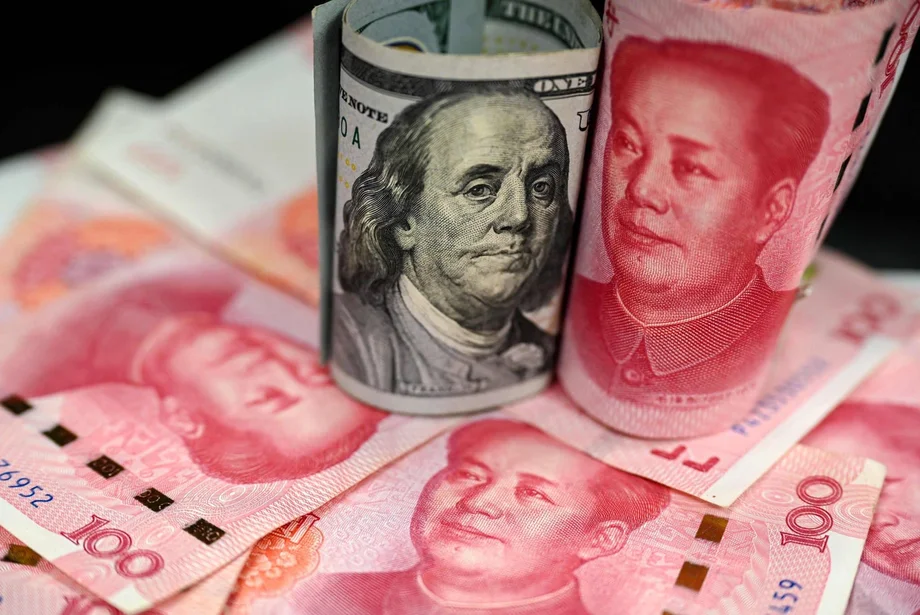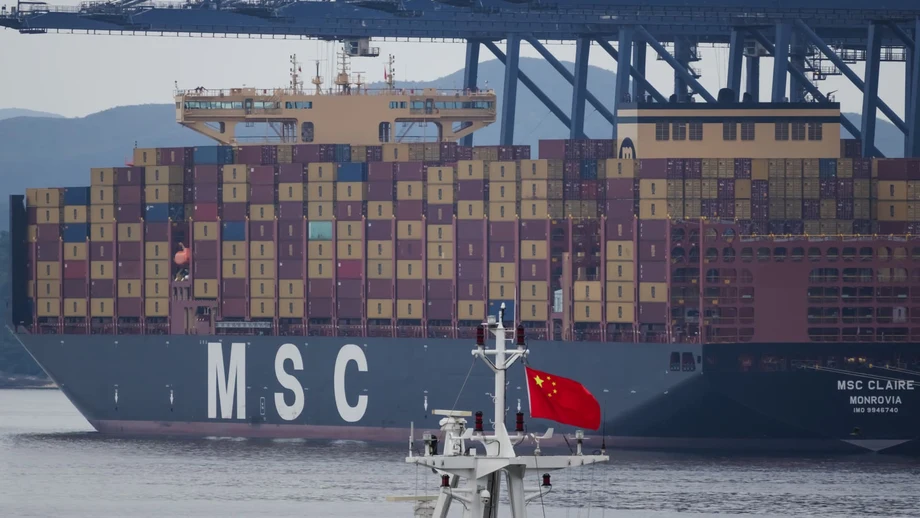
Imports gather speed as trade reaches 44.81 trillion yuan
China's goods trade reached 44.81 trillion yuan in the first 10 months of 2026, up 20% from a year earlier, as purchases from abroad accelerated alongside strong overseas demand for Chinese technology products. Figures released by the General Administration of Customs on November 10 showed growth picking up from 18.8% in January through September.
Contents
- Imports gather speed as trade reaches 44.81 trillion yuan
- What changed in October?
- Technology demand links exports and imports
- Energy purchases add a complicated signal
- Strong annual growth meets softer factory signals
- Export success brings pressure on businesses
- Europe's trade gap grows as vehicle limits approach
- US trade rebounds ahead of Shenzhen talks
- AI investment and trade barriers shape the outlook
- Key Points
Exports totaled 25.99 trillion yuan, an increase of 17.6%, while imports rose faster, climbing 23.6% to 18.82 trillion yuan. Both imports and exports had registered growth in double digits for six consecutive months through October, according to customs.
China also accumulated a goods trade surplus of $1.04 trillion during January through October, crossing $1 trillion a month earlier than in 2025. A trade surplus is the amount by which a country's exports exceed its imports. Last year's full annual surplus reached a record $1.2 trillion.
October brought two developments at once: China's cumulative surplus moved beyond a major milestone, while its monthly surplus narrowed as imports accelerated. The monthly gap fell to $105.3 billion from $133.5 billion in September, a reduction of $28.2 billion, or about 21%.
Demand for computer chips, servers and networking equipment used in artificial intelligence helped sustain exports. At home, subdued household spending and a prolonged property downturn continued to weigh on the economy. Overseas orders are supporting factories while also drawing greater attention from governments concerned about competition from Chinese goods.
What changed in October?
October goods trade totaled 4.87 trillion yuan, up 31.2% from a year earlier. Exports reached 2.79 trillion yuan, rising 28.7%, while imports increased 34.7% to 2.08 trillion yuan.
Measured in US dollars, October exports rose 35.2% to $412.3 billion and imports jumped 41.6% to $307.1 billion. The yuan and dollar growth rates reflect the currency used to value the transactions, with exchange rate movements affecting the comparison.
Dollar export growth eased from September's 36.3%, although it exceeded economists' forecast of 33.5%. Import growth accelerated much more sharply, from 31% in September, and beat the expected increase of 32%. The faster rise in purchases from abroad helped reduce October's surplus.
China's January through October surplus was already about 87% of the $1.2 trillion recorded during all of 2025. Matching that annual record would require another $160 billion over November and December. Maintaining October's monthly surplus for those two months would take the annual total beyond the previous record, although monthly trade can fluctuate.
Technology demand links exports and imports
Artificial intelligence investment is supporting demand for Chinese chips, data centre servers and networking equipment. Data centres are buildings filled with computers that process and store information. Expanding them requires processors, equipment connecting those processors, and large amounts of electricity.
China's technology trade also involves substantial purchases from overseas. The value of imports classified as high technology products rose 72% in October from a year earlier. Tianchen Xu, a senior economist at the Economist Intelligence Unit, identified technology goods, copper and energy supplies as key drivers of import growth.
Imported components and equipment can enter Chinese factories before finished products are sold domestically or exported. Consequently, stronger industrial activity can lift both sides of the trade account, even when household purchases remain weak.
The latest figures extend the technology surge visible in China's record export quarter. Third quarter exports exceeded 8 trillion yuan for the first time, while integrated circuit exports rose 99.1% during January through September and electric vehicle exports increased 72.3%.
Access to advanced foreign processors remains subject to government decisions. About 600,000 Nvidia H200 chips were reportedly awaiting mainland import approval in Hong Kong in early November, while some smaller shipments had entered mainland China. For companies building computing capacity, permission to obtain particular chips remains a practical constraint alongside demand and financing.
Energy purchases add a complicated signal
Energy imports were another major contributor to October's import spending. The value of crude oil purchases rose about 41%, liquefied natural gas about 50%, and coal about 60% from a year earlier.
Oil import figures also included a 13.3% annual decline, alongside shipments reaching their highest level since March. The measurement basis for that decline was not specified, leaving an unresolved difference alongside the increase in crude oil import value.
Import spending depends on both the amount bought and the price paid. Higher fuel prices can raise a country's bill even when it buys fewer physical units. Shipments can also recover from recent monthly lows while remaining below the level recorded a year earlier.
Chinese buyers were seeking supplies after the US and Israeli war on Iran disrupted Middle Eastern energy flows. For factories and transport businesses, energy purchases affect production costs as well as the total import bill.
Strong annual growth meets softer factory signals
China's export figures show a large increase from October 2025, but some measures of more recent business activity were weaker. Nguyen Hoang Nam, China economist at Capital Economics, estimated that exports fell 2% from September after adjusting for normal seasonal patterns.
Nam described the change in momentum:
Momentum looks to have slowed,
Seasonal adjustment removes recurring effects such as holiday timing, helping economists compare neighbouring months. An annual comparison instead measures the distance from the same month a year earlier. The two measures can move in different directions when the starting points differ.
China Beige Book found slower new domestic and export orders in October compared with a year earlier. The official purchasing managers' index also showed factory activity contracting during the month as overseas orders cooled. The index uses surveys of manufacturers to track changes in business conditions.
September retail sales grew just 1.1%. Domestic vehicle sales then recorded a 12th consecutive monthly decline in October, while vehicle exports continued growing. Those figures show why manufacturers have been looking abroad for customers as household spending at home remains subdued.
Export success brings pressure on businesses
China's official economic growth target for 2026 is 4.5% to 5%. Exports have helped support that goal while weakness in property has weighed on household wealth and confidence. Inflation has also remained below the official target of about 2%.
Zhiwei Zhang, president and chief economist at Pinpoint Asset Management, described the contribution from manufacturers selling overseas:
Exporters have been the key driving force behind China's economy this year,
Zhang expected exporters to continue performing well and anticipated little change in China's broad economic policy stance during the remainder of the year. Dave Chia, an economist at Moody's Analytics, also expected electronics and automobiles to support exports through the end of 2026.
Businesses still face pressure on prices. Cinders Zhou, who sells eyewear for a manufacturer in Linhai in Zhejiang province, described intense competition among companies selling similar products. Her company makes frames and lenses for customers in China and overseas.
Alicia Garcia-Herrero, chief economist for Asia Pacific at Natixis, identified excess production capacity, high domestic savings and weak domestic demand as forces pushing Chinese goods into foreign markets. For manufacturers, additional overseas orders can keep production moving, while competition over prices can squeeze the money retained from each sale.
Europe's trade gap grows as vehicle limits approach
China's trade surplus with the European Union reached $310.7 billion during January through October, compared with $241.6 billion in the same period of 2025. The increase of $69.1 billion amounts to about 28.6%.
October exports to the bloc rose 24.4%, while imports from it fell more than 4%, leaving a monthly surplus of $33.4 billion. European governments face pressure from industries competing with Chinese products, while Beijing faces calls to buy more from its trading partners.
EU trade chief Maros Sefcovic and Chinese Commerce Minister Wang Wentao reached an agreement in Beijing in October to limit Chinese hybrid vehicle shipments to Europe. The restrictions are scheduled to take effect on December 1, giving manufacturers a reason to bring forward deliveries.
Brad Setser, a senior fellow at the Council on Foreign Relations and former US Treasury official, highlighted how the proposed annual cap compares with recent trade. A limit of 350,000 vehicles exceeds the approximately 300,000 Chinese hybrids exported to Europe last year, but falls well below the annual pace of 800,000 indicated by the latest three months of shipments.
The cap is therefore about 17% above last year's exports, while allowing less than half the volume suggested by the recent pace. Its effect depends heavily on whether demand and deliveries would otherwise continue at that faster rate.
US trade rebounds ahead of Shenzhen talks
China's exports to the United States rose 32.9% in October from a year earlier, while imports increased nearly 35%. China's monthly surplus with the United States narrowed to $32.71 billion from $34.01 billion in September.
Exports to the United States were up 12.1% during January through October. Part of the rebound reflects the depressed comparison with 2025, when shipments fell 20% amid sharp tariff increases. A low starting point makes subsequent annual growth look larger.
Beijing announced on November 9 that its trade truce with Washington, previously due to expire on November 10, would be extended by two months into January. China has tied expanded purchases of American agricultural products to implementation of the agreed arrangement for reciprocal tariff reductions.
Following September talks in Washington, the two sides proposed a package covering $60 billion in reciprocal tariff cuts, including roughly $17 billion in American agricultural goods. Implementation matters directly to farmers seeking orders and companies calculating the cost of goods crossing the Pacific.
The next scheduled steps bring trade negotiations and new restrictions close together:
- November 9: Beijing announced the extension of the US trade truce.
- November 10: Customs released the January through October trade figures.
- November 18 to 19: The APEC summit is scheduled in Shenzhen, where Xi Jinping and Donald Trump are expected to meet.
- December 1: The agreed limits on Chinese hybrid vehicle exports to Europe are due to begin.
- January 2027: The extended US trade truce reaches its next expiry period.
AI investment and trade barriers shape the outlook
China's export outlook now depends heavily on continued investment in artificial intelligence infrastructure and access to foreign markets. Macquarie analysts expect exports to accelerate in the fourth quarter of 2026 before beginning to slow in the first quarter of 2027.
Joe Peissel, lead macroeconomist at Trivium China, warned that expanding overseas sales could bring further restrictions:
The risk of additional tariffs and other trade barriers will remain elevated in 2027, particularly as Chinese manufacturers continue expanding their presence in overseas markets,
Chia identified another risk: a slowdown in AI investment could reduce both the prices of chips and electronics and the volume shipped. That combination would affect exporters through fewer orders and lower revenue per product.
Chinese officials maintain that Beijing wants more balanced global trade rather than a larger surplus. October's faster import growth moved the monthly figures in that direction, even as the cumulative surplus crossed $1 trillion.
For factories, the immediate benefit is continued overseas demand for technology and vehicles. For households, the domestic figures remain weaker. For trading partners, the combination of a vast surplus and rapidly expanding Chinese industrial sales keeps market access, tariffs and competition near the centre of negotiations.
Key Points
- China's goods trade rose 20% to 44.81 trillion yuan in January through October 2026.
- Imports grew 23.6%, faster than the 17.6% increase in exports, measured in yuan.
- The cumulative trade surplus reached $1.04 trillion, crossing $1 trillion a month earlier than in 2025.
- October's monthly surplus narrowed to $105.3 billion as imports accelerated.
- AI equipment and electronics supported trade, while household spending and domestic vehicle sales remained weak.
- Xi Jinping and Donald Trump are expected to meet at the November 18 to 19 APEC summit in Shenzhen.
- Limits on Chinese hybrid vehicle exports to Europe are scheduled to begin December 1.