Global Cities Converge on Tokyo for Sustainability Summit
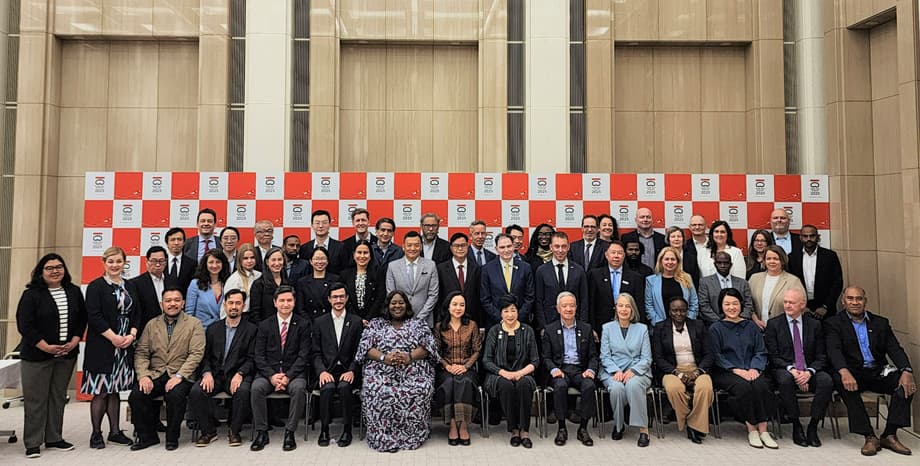
Global leaders from 49 cities across five continents gathered in Tokyo this week for the third G-NETS Leaders Summit, a high level forum focused on forging concrete solutions to climate change, natural disasters, and urban sustainability. The event, which runs from April 27 to 29, 2026, represents the largest convening to date of the Global City Network for Sustainability (G-NETS), an initiative launched by the Tokyo Metropolitan Government in 2022 to facilitate knowledge exchange among major urban centers.
- Global Cities Converge on Tokyo for Sustainability Summit
- Realigning Urban Policy for Climate and Disaster Resilience
- When Startups Meet City Halls
- Real World Lessons from Glasgow and Los Angeles
- Strengthening Ties Across Continents
- Site Inspections and Cultural Exchange
- Startup Competitions and Global Visibility
- Key Points
The summit coincides with SusHi Tech Tokyo 2026, Asia’s largest innovation conference, creating a unique intersection of municipal governance and technological entrepreneurship. Participants include representatives from Los Angeles, Paris, Rome, Singapore, Kuala Lumpur, Glasgow, and Jakarta, among others, who will share insights on disaster preparedness, artificial intelligence integration, and sustainable urban development. The convergence of municipal leaders with startup founders and venture capitalists marks a deliberate effort to move beyond theoretical policy discussions toward implementable technological solutions for urban crises.
Tokyo Governor Yuriko Koike, who established G-NETS in 2022, has positioned the network as a response to what she describes as an era of profound global turbulence. Her vision emphasizes that sustainable cities cannot be built in isolation, requiring instead capital flows, policy coordination, and cross border collaboration among diverse metropolitan areas facing similar environmental and social pressures. This year’s gathering builds upon previous summits held in 2023 and 2024, which produced broad commitments to inclusive societies and environmental protection, but shifts focus toward specific operational challenges of climate adaptation.
Realigning Urban Policy for Climate and Disaster Resilience
This year’s summit marks a strategic realignment for G-NETS, narrowing its focus to two critical pillars: “Urban Resilience to Climate Change and Natural Disasters” and “Well-being in Cities.” The thematic shift reflects an urgent recognition that cities worldwide face increasingly severe weather events, from flash flooding to wildfires, that threaten infrastructure and civilian safety. According to official Tokyo Metropolitan Government documentation, this realignment consolidates previous broad themes into actionable frameworks designed to produce measurable outcomes in disaster preparedness and quality of life metrics.
Tokyo Governor Yuriko Koike stressed the timeliness of this focus during the opening ceremony. She framed the conference against what she termed a period of “profound turbulence,” citing volatile international conditions, increasingly frequent natural disasters, disruptions in energy supplies, and the rapid acceleration of artificial intelligence. Her remarks underscored that the summit aims not merely to showcase futuristic technology, but to address immediate practical challenges facing urban populations. In her statements, Koike highlighted the importance of using technology to build sustainable cities capable of withstanding rapidly changing global conditions and natural disasters.
The 2026 gathering builds upon previous joint statements in which member cities pledged to create inclusive societies regardless of disability or gender, build secure communities, and implement aggressive environmental policies. This year, however, the dialogue has sharpened to address specific operational challenges, moving from broad commitments to concrete crisis management protocols and infrastructure hardening strategies. The shift mirrors a global trend among municipal governments to prioritize adaptive resilience over aspirational sustainability targets.
When Startups Meet City Halls
The integration of G-NETS with SusHi Tech Tokyo creates a distinctive ecosystem where municipal leaders interact directly with the startup community. SusHi Tech Tokyo 2026, now in its fourth iteration, has grown to accommodate 750 startup exhibitors from 60 countries, with more than 10,000 facilitated business meetings expected over three days. The conference focuses on four technology domains reshaping urban life: Artificial Intelligence, Physical AI and Robotics, Resilience (including climate tech and cyber defense), and Entertainment.
Corporate partners including Sony, Google, Microsoft, and Mizuho participate in reverse pitching sessions, seeking startup collaborators to address municipal challenges. This structure allows city officials to witness live demonstrations of humanoid robots, autonomous vehicles, and flood management technologies that could potentially address their own urban vulnerabilities. Prime Minister Sanae Takaichi reinforced the national importance of this approach during her keynote address, stating that “the realization of a strong economy requires excellent scientific and technological capability as its foundation.” She noted that startups currently account for 4% of Japan’s nominal GDP, with their contribution growing by 32% over the past two years.
Real World Lessons from Glasgow and Los Angeles
The summit features frank discussions about recent catastrophic events, with city leaders sharing hard won lessons from climate driven disasters. Susan Aitken, leader of Glasgow City Council, detailed her city’s two decade struggle with intensifying rainfall. She described Scotland’s climate with characteristic directness:
Scotland is a very green country, and we are a very green country because we are a very wet country. But even for a city accustomed to rain, climate change is bringing heavier rain and more monsoon type rainfall events.
Aitken warned that these changes threaten hundreds of thousands of homes in the Glasgow area. She described the Metropolitan Glasgow Strategic Drainage Partnership, a collaborative effort spanning 20 years among Scottish Water, the city council, and environmental regulators. She highlighted the White Cart flood prevention project, which has protected communities previously inundated by waist deep water, and the Shield Hall tunnel, an underground infrastructure project capable of storing water equivalent to 36 Olympic swimming pools during storms before recycling it through treatment facilities.
Los Angeles Deputy Mayor Dilpreet Kaur Sidhu presented a starkly different but equally pressing challenge: the January 2025 wildfires that destroyed nearly 7,000 structures in Pacific Palisades. Driven by drought and Santa Ana winds exceeding 100 miles per hour, the fires burned for nearly a month. Sidhu described the devastation in emotional terms:
It was homes, it was businesses, it was schools. It was an entire community.
She explained that Los Angeles responded with emergency executive orders to expedite debris removal, consolidate permit processes, and waive certain zoning regulations to encourage resilient rebuilding. Long term priorities include upgrading grid resilience and improving workforce preparedness for wildfire response.
Strengthening Ties Across Continents
Beyond crisis management, the summit serves as a diplomatic platform for expanding city to city cooperation across regions not previously highlighted in G-NETS discussions. Governor Koike specifically noted strengthening cooperation with Gulf Cooperation Council countries, including Saudi Arabia and the United Arab Emirates, which are participating in various capacities through memorandums of understanding focused on economic revitalization.
Southeast Asian representation has also expanded significantly. Jakarta Governor Pramono Anung is addressing the summit as part of a broader Asian tour that includes Shenzhen and Seoul. He arrives with a mandate to position Jakarta as a “living laboratory” for urban transformation, viewing climate challenges, flooding, and congestion not as obstacles but as catalysts for innovation. His participation signals Indonesia’s commitment to elevating its capital into the Top 50 Global Cities by 2030 through international partnership.
Malaysian participation was secured through diplomatic engagement in late 2025, when Kuwabara Atsushi, Special Advisor to Governor Koike on International Affairs, extended a formal invitation to Kuala Lumpur Mayor Datuk Fadhlun Mak Ujud. The courtesy call outlined G-NETS’ three core themes of inclusive societies, safe cities, and environmental protection, emphasizing the network’s multi layered approach that includes working level staff, senior officials, and mayoral leadership.
Site Inspections and Cultural Exchange
The summit agenda extends beyond conference rooms to include practical site visits demonstrating Tokyo’s own urban management systems. On Wednesday, participants will tour the newly reopened Edo-Tokyo Museum in Sumida Ward, which underwent extensive renovations before reopening in March 2026. The visit serves dual purposes: educating international visitors about the historical foundations of modern Tokyo, and supporting the metropolitan government’s ongoing campaign to have the city’s Edo period culture and history designated as a UNESCO World Heritage cultural asset.
More critically for the summit’s technical mission, delegates will inspect the floodgates at the Storm Surge Management Center in Koto Ward. This facility represents Tokyo’s front line defense against coastal flooding, a pressing concern as sea levels rise and typhoon intensity increases across the Pacific Rim. The visit follows a series of preliminary working group inspections conducted throughout 2025, including visits by Tokyo officials to Amsterdam, Rotterdam, and Berlin to study urban resilience strategies, and reciprocal visits by staff from 11 cities to examine Tokyo’s transport energy initiatives.
These site visits complement months of preparatory work conducted through G-NETS working groups, which held online thematic meetings between September and October 2025. Working level staff from 10 cities participated in a November 2025 urban greening tour of Ohashi Sato no Mori and Azabudai Hills, while eight cities sent representatives to study coastal disaster prevention at the Tatsumi Pump Station and Storm Surge Countermeasure Center in September.
Startup Competitions and Global Visibility
Parallel to the municipal governance discussions, SusHi Tech Tokyo 2026 hosts the SusHi Tech Challenge, a startup competition that has attracted 820 applications from 60 countries. Twenty semifinalists presented on April 27, with seven finalists advancing to the main event on April 28. The Grand Prix winner receives ¥10,000,000 in funding and automatic entry into the TechCrunch Disrupt Startup Battlefield Top 200, bypassing the traditional competitive application process.
This partnership between the Tokyo Metropolitan Government and TechCrunch signals Tokyo’s ambition to serve as a bridge between Asian innovation ecosystems and global venture capital. The arrangement provides the winning startup with access to one of the tech world’s most coveted pitching stages, historically associated with the launch of companies like Dropbox, Mint, and Yammer. For the broader tech community, the collaboration underscores Tokyo’s evolving role from a traditional industrial center to a hub for sustainable technology and deep tech innovation.
The conference also addresses cultural sustainability through its Entertainment domain, exploring how Tokyo’s anime, music, and gaming industries are integrating AI powered creation tools. This tracks with the summit’s broader examination of digital transformation, as cities grapple with how to preserve cultural heritage while using artificial intelligence for urban management and creative industries.
Key Points
- The third G-NETS Leaders Summit convened 49 city leaders in Tokyo from April 27 to 29, 2026, focusing on urban climate resilience and disaster preparedness.
- The summit is integrated with SusHi Tech Tokyo 2026, Asia’s largest innovation conference, featuring 750 startups and 60,000 attendees exploring AI, robotics, and climate technology.
- Participating cities include Los Angeles, Glasgow, Paris, Rome, Singapore, Kuala Lumpur, and Jakarta, representing five continents.
- Glasgow shared 20 years of flood management experience, while Los Angeles detailed recovery strategies from the devastating January 2025 wildfires.
- Tokyo is expanding partnerships with Gulf countries including Saudi Arabia and the UAE, as well as Southeast Asian capitals like Jakarta and Kuala Lumpur.
- Delegates will inspect Tokyo’s Storm Surge Management Center floodgates and visit the reopened Edo-Tokyo Museum as part of practical knowledge exchange.
- The SusHi Tech Challenge offers startups ¥10 million in funding and automatic entry into the TechCrunch Disrupt Battlefield Top 200 competition.
- The event marks a strategic shift for G-NETS toward concrete operational solutions for climate change adaptation rather than broad policy statements.