The 26-Hour Revolution
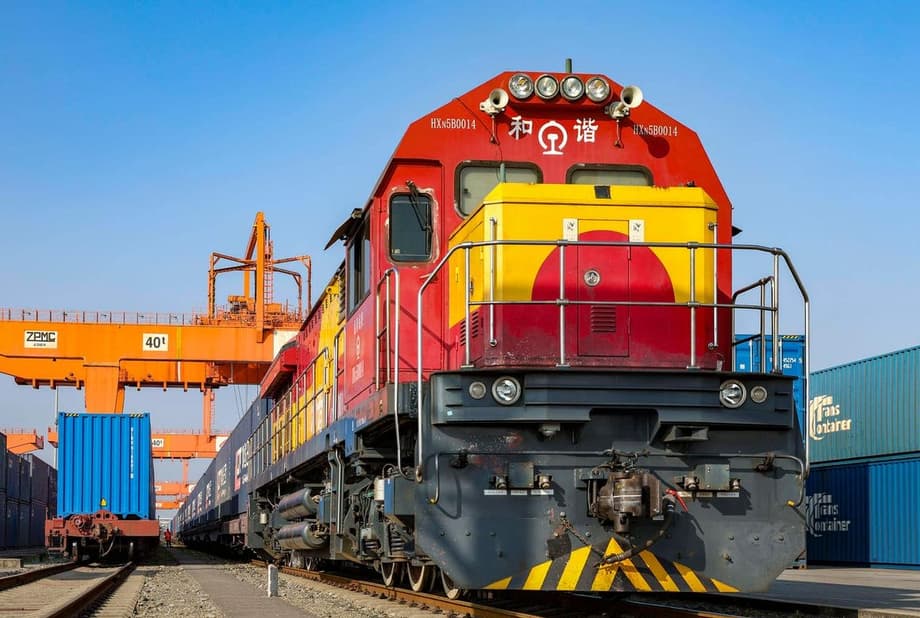
Every morning at the Hongyun International Logistics Port in Kunming, capital of southwest China Yunnan Province, a precise logistical ballet unfolds. The Lancang-Mekong Express freight train arrives punctually, having completed its cross border journey in just 26 hours, carrying precious cargo from Thailand orchards. These are not ordinary shipments. Loaded with Thai durians entering their peak harvest season, these refrigerated containers represent a fundamental shift in how Southeast Asia agricultural products reach the largest market in the world.
The China-Laos Railway, stretching 1,035 kilometers from Kunming to Vientiane, has established itself as what industry insiders describe as a golden passage for tropical fruits. As peak season intensifies through mid to late April, the railway is handling unprecedented volumes. Thailand alone is currently exporting 1,500 refrigerated containers of durians to China daily, with varieties from Laos and Malaysia also entering the supply chain. The efficiency of this route ensures that consumers across more than 30 Chinese cities, including Shanghai, Chengdu, Guangzhou, Zhengzhou and Shenyang, can receive fresh durians within 48 hours of the train arrival in Kunming.
This rapid transit system marks a dramatic departure from traditional logistics that previously dominated the trade. Before the railway opened in December 2021, exporters relied on maritime and road transport that could consume more than 20 days, leaving shipments vulnerable to weather delays and spoilage. The new rail corridor has effectively collapsed these timelines, creating a competitive advantage that is reshaping agricultural export patterns across the ASEAN region. The surge in traffic has been particularly notable this year, with daily arrivals becoming the norm rather than the exception as the railway proves its capacity to handle sensitive perishable goods at scale.
Scaling Operations for Peak Demand
To accommodate the surge, railway authorities have orchestrated a dramatic expansion of services. The frequency of Lancang-Mekong Express freight trains has increased from two daily departures to six, reflecting the insatiable demand from Chinese consumers who account for more than 96 percent of Thailand durian export volume. This operational escalation requires precise coordination between Chinese and Lao railway authorities, who have streamlined border clearance procedures to maintain flow.
He Ruiqi, a staff member at China Railway Kunming Group, outlined the stringent operational standards governing this trade.
We have opened a green channel for durian transport, prioritising unloading, transshipment, dispatch and clearance. After the trains arrive, we strictly follow the operational standard of completing vehicle unloading and container transfer within 90 minutes.
The railway adherence to this rapid turnaround is critical for perishable goods where every minute affects quality and shelf life.
The technical infrastructure supporting this expansion is formidable. China Railway Kunming Group has deployed more than 4,000 specialised refrigerated containers specifically for durian transport. These units maintain precise temperature controls throughout the journey, ensuring that fruit picked at optimal maturity arrives in pristine condition. The railway authorities of both nations provide whole process cold chain services, creating a seamless link from Thai orchards to Chinese markets.
Quality and Market Transformation
The economic implications extend far beyond simple logistics improvements. In 2022, China imported $3.09 billion worth of Thai durians, and current pricing reflects the enhanced quality that rail transport enables. Importers report that crates weighing approximately 17 kilograms, which previously sold for around 500 yuan, now command prices near 800 yuan. This price appreciation benefits the entire supply chain, from Thai farmers to Chinese distributors, while delivering superior product to consumers.
Shao Yichao, a durian quality inspector in Kunming with eight years of experience, confirmed that he has observed more Thai durians harvested at advanced maturity stages this season, resulting in exceptional sweetness and flavor depth. Liu Yudong, a Yunnan based importer, noted that the predictability of rail transport has eliminated the risk of entire truckloads being discarded due to transit delays. He explained that due to the unpredictable nature of road and sea transportation, he used to import only mid ripe durians. Previous instances required discarding entire truckloads due to delays. Now we can import durians with a higher grade of maturity as problems in transportation and clearance procedures have been eliminated thanks to the railway.
Volume projections indicate continued explosive growth. As of August 2025, the railway had already transported 150,000 tonnes of durians to China, representing a 91 percent annual increase compared to the previous year. For 2026, local railway authorities estimate total tropical fruit transport via the line will exceed 200,000 tonnes, encompassing not only durians but mangosteens, longans and other seasonal fruits.
Beyond the King of Fruits
While durians dominate current headlines, the railway impact transcends this single commodity. Since opening in December 2021, with international passenger services commencing in April 2023, the line has facilitated more than 800,000 cross border passenger trips from over 120 countries and regions. This dual use infrastructure creates synergies between tourism and trade, with cross border travel times reduced to nine hours and 36 minutes. Destinations such as Xishuangbanna have become important regional hubs for international tourism along the railway.
However, the transformation is creating complex ripple effects in regional agriculture. In Malaysia, mangosteen prices have actually surpassed durian prices due to supply constraints, as farmers have reportedly removed mangosteen trees that blocked sunlight from durian roots to capitalize on the booming Chinese demand. This agricultural pivot illustrates how consumption patterns in China are reshaping land use and farming practices throughout Southeast Asia.
Kanokwan Suwankanit, director of freight service at the State Railway of Thailand, noted that freight volumes have grown from 500 to 600 TEUs in 2019 to 2,000 TEUs in 2022, with projections exceeding 3,000 TEUs. Natee Chuansanit, executive director of the Thailand Institute of Business Economics Research and Development, emphasized that expanding Chinese consumer access to premium quality durians strengthens the Thai position in its most important export market.
Infrastructure Integration and Future Routes
The railway does not operate in isolation. A new direct air link connecting Wuhan with Vientiane, launched recently by China Eastern Airlines, complements the rail corridor by facilitating business travel and offering alternative freight capacity for ultra perishable goods. Additionally, five combined rail and road transport routes now connect Laos with southwestern China Sichuan Province, enabling rapid distribution to secondary markets including Beijing, Xi’an and Lhasa.
For small and medium sized enterprises, the railway offers consolidation options previously unavailable. Chen Bin, sales director of Guangxi Xiannong International Trade Co. Ltd., explained that the pre sale system of his company benefits from rail transport reliability. By choosing railway transportation, we can deliver the goods in time according to the actual order, he stated, highlighting how the infrastructure supports modern digital retail models that require precise inventory management.
Wang Jian, general manager of an agricultural product trading company in Hunan province, summarized the operational advantage. Transport via the railway means faster clearance, shorter transit times and lower losses. With Thai durian output expected to rise by about 30 percent this year, shipments to China will continue to grow.
The Bottom Line
- The China-Laos Railway has reduced durian transport time from over 20 days via road and sea to under three days from orchard to Kunming, with the cross border rail segment taking just 26 hours.
- Thailand exports 1,500 refrigerated containers of durians daily to China during peak season, with total 2026 tropical fruit volumes projected to exceed 200,000 tonnes via the railway.
- Railway authorities increased freight train frequency from two to six daily and deployed over 4,000 specialised refrigerated containers to meet demand.
- A green channel prioritises durian shipments with strict 90 minute unloading standards at Kunming logistics port.
- Enhanced logistics allow harvest at higher maturity levels, improving quality and commanding premium prices of 800 yuan per 17 kilogram crate versus 500 yuan previously.
- China accounts for over 96 percent of Thai durian exports, valued at $3.09 billion in 2022.
- The railway has facilitated 800,000 plus cross border passenger trips since 2023, reshaping both tourism and trade patterns across the region.