From Packed Parking Lots to Empty Showrooms
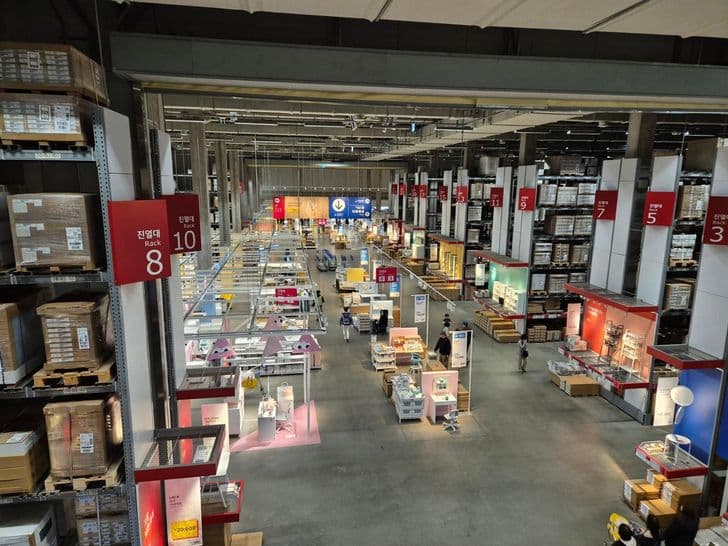
On a Tuesday afternoon at IKEA’s Gwangmyeong store on the outskirts of Seoul, the cavernous showroom floor tells a story of transformation. Lee, a thirty-something father visiting with his wife and toddler, moves methodically through the furniture displays, camera phone in hand. He is not shopping. He is browsing, gathering visual inspiration for his child’s bedroom redesign. “I will probably look online first to see if there are cheaper options with similar designs,” he admits, pushing an empty cart past the Billy bookcases. “I am not buying anything today.”
- From Packed Parking Lots to Empty Showrooms
- The Rise and Sudden Stall
- When DIY Culture Clashed with Korean Convenience
- The Digital Onslaught
- An Identity Crisis in the Middle
- Location Woes and the Generation Gap
- Behind the Scenes: Labor Unrest
- The Strategic Pivot: From Suburban Boxes to Urban Infiltration
- Survival or Withdrawal?
- Key Points
This quiet observation speaks volumes about the current state of IKEA in South Korea. A decade ago, when the Swedish furniture giant first opened its Gwangmyeong location in December 2014, thousands of eager customers queued outside for hours, creating traffic jams that stretched for kilometers. The store generated 308 billion won in revenue during its first fiscal year, immediately ranking third in the domestic furniture industry despite being the company’s sole Korean outlet. Today, the atmosphere is markedly different. Office workers type on laptops in the restaurant, mothers gather for coffee, and shoppers photograph display setups, but few carts contain the flat-pack furniture boxes that built IKEA’s global empire. Most purchases are limited to small “loss leader” items under 30,000 won, a far cry from the comprehensive home furnishing solutions the company promotes.
The Rise and Sudden Stall
IKEA’s initial Korean breakthrough seemed to validate every assumption about the global appeal of Scandinavian design. The company disrupted a domestic market notorious for opaque pricing, where identical furniture pieces could carry wildly different price tags depending on the neighborhood or negotiation skills of the buyer. By introducing transparent, fixed pricing and the do-it-yourself assembly model, IKEA offered Korean consumers something they had rarely experienced: the ability to furnish homes without haggling or relying on expensive white-glove delivery services.
The showrooms themselves became destinations, offering immersive experiences where customers could test sofas, open drawers, and visualize entire room setups before committing to purchases. The Nordic aesthetic, previously accessible only to affluent elites who could import designer pieces, suddenly became available to middle-class families seeking modern, minimalist interiors. Revenue climbed steadily, reaching a peak of 687.2 billion won in 2021 as pandemic lockdowns drove home improvement spending.
That peak proved to be a cliff. Sales declined for the next two years, with revenue falling to roughly 630 billion won even after the company opened a new outlet. The profit picture collapsed more dramatically. Operating profit dropped from approximately 30 billion won in 2021 to 21 billion won in 2022, then plunged 88 percent to just 2 billion won in 2023. While 2024 saw a partial recovery to around 18 billion won, profits fell again to approximately 10 billion won last year. For the first time since entering the market, IKEA Korea posted a fiscal-year net loss of $4.019 million in the period ending September 2023.
When DIY Culture Clashed with Korean Convenience
The fundamental disconnect between IKEA’s business model and Korean consumer expectations centers on the very feature that once defined the brand’s value proposition: self-assembly. The company’s “selling inconvenience” strategy, which trades customer labor for lower prices, has run aground against Korea’s intense convenience culture and demanding work schedules.
Korean consumers have grown accustomed to e-commerce platforms that bundle delivery, assembly, and after-sales support into seamless transactions. The IKEA alternative requires driving to suburban locations on weekends, navigating massive warehouses, transporting unwieldy flat-pack boxes, and spending hours deciphering assembly instructions. For a population accustomed to same-day delivery and service-oriented retail, this DIY approach feels increasingly anachronistic.
IKEA’s strategy has traditionally been to lower prices while offering customers a sense of engagement and enjoyment through self-assembly. But looking at the lifestyles of Korean consumers, many are busy and exhausted. It is not an environment where that strategy can easily drive rapid growth.
While IKEA does offer assembly services, the additional fees erode the price advantage that draws customers to the brand in the first place. The result is a lose-lose proposition for time-pressed professionals who find themselves paying premiums for convenience at traditional furniture stores or turning to online alternatives that offer better service at competitive prices.
The Digital Onslaught
The shift toward online shopping following the COVID-19 pandemic delivered the first significant blow to IKEA’s large-format retail strategy. Domestic e-commerce platforms such as Coupang and Ohouse have perfected furniture retail models that IKEA struggles to match. These competitors offer lower prices, free delivery, and professional installation services, effectively neutralizing IKEA’s historical advantages.
Compounding the challenge, online marketplaces now overflow with “knockoff IKEA” products, furniture that mimics the clean Scandinavian aesthetic at fraction of the cost. Consumers can recreate the Instagram-worthy IKEA look without the hassle of Allen keys and instruction manuals. The domestic furniture industry has also adapted, with many traditional retailers adopting transparent pricing and modern design sensibilities to compete with the Swedish interloper.
The real estate downturn and high interest rates have further dampened furniture demand, as housing transactions, the primary driver of home furnishing purchases, have slowed dramatically. Even when apartment sales increased, high borrowing costs kept overall housing market activity subdued, preventing the rebound in furniture spending that IKEA had anticipated.
An Identity Crisis in the Middle
Perhaps IKEA’s most pressing challenge is its ambiguous market positioning. The brand has become trapped in a no-man’s land between low-cost online competitors and premium domestic furniture chains. It is no longer particularly cheap compared with value-for-money products sold online, yet it lacks the prestige positioning of high-end brands.
IKEA is not particularly cheap compared with value-for-money products sold online, but it is not positioned as a premium brand either. It has ended up with an ambiguous market position.
The Korean market has polarized between budget-conscious consumers seeking rock-bottom prices and affluent buyers pursuing luxury goods. Companies that thrive have clearly defined their targets at either extreme. IKEA’s attempt to occupy the middle ground has left it vulnerable to competitors on both flanks, unable to command the loyalty of price-sensitive shoppers or status-seeking design enthusiasts.
Location Woes and the Generation Gap
IKEA’s physical retail strategy has also misaligned with demographic realities. The company’s signature “blue box” stores occupy sprawling suburban plots in Gwangmyeong, Goyang, and Giheung, locations that assume customers own vehicles and enjoy weekend shopping excursions. Yet the millennial and Generation Z consumers the brand desperately wants to attract, the so-called “MZ Generation” (millennials born 1981-1995 and Generation Z born 1996-2012), increasingly live in compact urban studios and rely on public transportation or ride-sharing services.
The showroom design itself has become a liability. The mandatory maze-like path that guides shoppers through every product category before reaching the checkout creates what industry observers call “shopping fatigue.” Younger consumers accustomed to the instant gratification of mobile commerce find the hour-long walk through IKEA’s carefully curated journey exhausting rather than engaging.
The disconnect extends to lifestyle realities. When IKEA prepared to enter Korea, marketing research identified a population suffering from “performance pressure,” the intense social competition extending from kindergarten through university and career. The company initially positioned itself as offering accessible comfort for those seeking happiness through home design. However, the brand failed to recognize that these same pressures leave little time for furniture assembly projects, undermining the core value proposition.
Behind the Scenes: Labor Unrest
While customers debate the merits of flat-pack furniture, IKEA’s workforce has been raising alarms about deteriorating conditions. The Mart Workers’ Union, representing IKEA Korea employees, has documented chronic understaffing and insufficient rest breaks that contradict the company’s celebrated corporate culture.
A survey of 211 store employees revealed that 88.2 percent strongly agreed that paid rest breaks were necessary, citing the need for pauses during continuous repetitive tasks and high physical workloads. Workers report being rotated every 15 minutes between checkout, serving, and customer support duties, making it difficult to take full meal breaks or utilize the Swedish “Fika” coffee break tradition that the company promotes as central to its identity. While office staff enjoy regular Fika breaks, 91.4 percent of store workers reported unequal access to this benefit.
The union has criticized these conditions under the leadership of CEO Isabelle Puig, suggesting that cost-cutting measures have extended beyond store hours to employee welfare. The company reduced operating hours at the Gwangmyeong flagship in late 2023, delaying weekday opening to 11 a.m. and closing at 8:30 p.m., but workers argue that staffing levels have not adjusted to meet remaining demand.
The Strategic Pivot: From Suburban Boxes to Urban Infiltration
Faced with these accumulated challenges, IKEA has abandoned plans for a major logistics center in Pyeongtaek and is instead betting on a dramatic strategic transformation. The company is shifting from its iconic standalone suburban warehouses to smaller, urban-integrated locations that prioritize accessibility over scale.
The IKEA Gangdong store, which opened in April 2024 inside Seoul’s Gangdong I-Park The River shopping complex, represents this new approach. Unlike the isolated blue boxes that defined the brand’s first decade in Korea, this 25,000-square-meter location sits within a mixed-use development containing cinemas, grocery stores, and restaurants. It is the first IKEA embedded in a shopping complex rather than operating as a standalone destination, and it targets the car-less urban millennials the company previously struggled to reach.
The store features 44 model rooms designed with single-person households and young families in mind, reflecting Seoul’s demographic reality where 84 percent of households contain three or fewer people. Six “dream home” displays were created by popular YouTube influencers in an explicit attempt to engage digital-native consumers. The location also includes a buy-back service and circular hub, emphasizing sustainability alongside convenience.
This physical transformation accompanies a digital overhaul. IKEA has introduced remote consultation services through real-time video calls, allowing customers to receive layout advice without visiting stores. Automated warehouses utilizing artificial intelligence robots have reduced delivery times, while the company has invested heavily in online infrastructure to compete with domestic e-commerce leaders.
We are investing 300 million euros that coming three years to see how we actually create new formats that can bring IKEA closer to where people live, work or socialize in order to complement the existing blue boxes that we have.
Despite the financial setbacks, parent company Ingka Group has committed $326 million to Korean expansion through 2026, including pop-up stores at major department stores and shopping malls in Gwangju, Yeongdeungpo, and Pangyo. The company has also cut prices on over 1,000 items to compete with online rivals, accepting reduced profitability to maintain market share.
Survival or Withdrawal?
Rumors of IKEA’s impending withdrawal from Korea have circulated online, fueled by the dramatic profit declines and store hour reductions. These rumors remain unfounded, and evidence suggests the opposite trajectory. The substantial investment commitments, the RECO waste management partnership demonstrating long-term operational integration, and the aggressive urban expansion all indicate that IKEA intends to fight for the Korean market rather than retreat.
The company’s global unlisted structure allows for such long-term thinking without shareholder pressure for quarterly results. As one executive noted, when the economy eventually turns, IKEA hopes to stand on a much larger customer base built through current affordability investments.
Whether this strategy succeeds depends on whether IKEA can truly adapt its DNA to Korean realities without losing the identity that made it distinctive. The challenge is not merely logistical but cultural: convincing time-pressed, convenience-oriented consumers that the IKEA experience is worth the effort, or alternatively, convincing them that the brand can deliver Scandinavian design without the traditional hassles of self-assembly and suburban pilgrimage.
Key Points
- IKEA Korea’s operating profit plummeted 88 percent in 2023, falling to roughly 2 billion won from 21 billion won the previous year
- The company’s do-it-yourself assembly model conflicts with Korean consumer expectations for convenience and full-service delivery
- Domestic e-commerce platforms like Coupang and Ohouse have eroded IKEA’s price advantage while offering superior logistics and installation services
- IKEA has abandoned plans for a Pyeongtaek logistics center in favor of urban store formats, opening its first Seoul location in Gangdong District in April 2024
- Despite financial struggles, parent company Ingka Group has committed $326 million to Korean expansion through 2026
- Workers have reported deteriorating labor conditions including denied breaks and chronic understaffing under current management
- The brand faces an identity crisis between low-cost online competitors and premium domestic furniture retailers