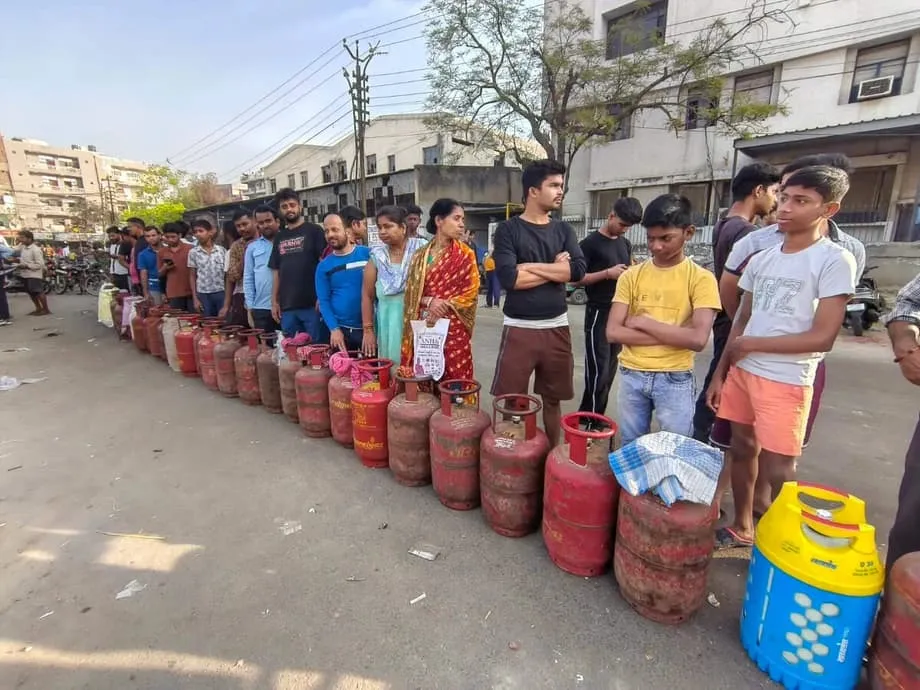
A Shipping Crisis Reaches Indian Households
Delhi's price for a 14.2 kg household LPG cylinder rose by Rs 60 to Rs 913 on March 7. Two days later, Brent crude reached $117 a barrel, the rupee hit 92.33 against the US dollar, and India's main stock indices fell nearly 3%. By March 12, commercial cooking gas shortages were threatening restaurant closures and disrupting the food delivery business.
Contents
- A Shipping Crisis Reaches Indian Households
- Why Hormuz Matters So Much
- How the Disruption Unfolded
- Restaurants Cut Menus and Consider Closures
- Household Cylinders Cost More
- Oil Prices Push Up Inflation
- The Rupee, Markets and Government Finances
- Farms, Factories and Medicines Face Disruption
- Airlines Lose Flights and Burn More Fuel
- Government Gives Essential Gas Uses Priority
- Alternative Oil Supplies and the Limits of Reserves
- Pakistan's Measures Show a Different Level of Stress
- Summer Demand and Political Pressure
- Key Points
The war involving the United States, Israel and Iran has effectively closed the Strait of Hormuz, the narrow sea passage carrying nearly half of India's crude oil imports. New Delhi is roughly 2,500 kilometers from Tehran, yet the economic effects are reaching kitchens, factories, farms and airline schedules.
India imports more than 89% of the crude oil it needs, with approximately 2.6 million barrels a day passing through Hormuz. Brent surged more than 25% to $117 on March 9, taking its increase since hostilities began to about 50%. DBS Bank analysts project prices between $100 and $150 if shipping through the strait remains heavily disrupted.
Madan Sabnavis, chief economist at Bank of Baroda, identifies gas availability as the main domestic concern. Restaurants struggling to obtain cooking fuel may raise prices, putting the pressure directly on middle class customers. Wedding catering and daily meals bought from hotels face similar disruption.
The immediate problem has two parts: energy costs more, and some supplies are harder to obtain. A household can face a higher cylinder bill while a restaurant nearby struggles to secure a cylinder at all. India's response therefore involves both managing prices and deciding which consumers receive scarce fuel first.
Why Hormuz Matters So Much
The Strait of Hormuz carries roughly 20% of the world's oil shipments. India's exposure extends beyond crude to liquefied natural gas (LNG), used by industry and gas networks, and liquefied petroleum gas (LPG), used for cooking.
In 2025, India imported approximately $70 billion of crude oil and petroleum products from West Asia. Crude alone accounted for $50.8 billion, or 48.7% of India's total crude imports. The region also supplied 68.4% of LNG imports, valued at $9.2 billion, and 46.9% of LPG imports, totaling $13.9 billion.
India's crude stockpiles cover less than 30 days of consumption, while LPG reserves last about two weeks. Officials also describe a broader stock of more than 250 million barrels of crude and refined products as providing seven to eight weeks of buffer across the energy system. The broader figure includes refined products as well as crude, while cooking gas has its own shorter reserve period.
Petronet LNG suspended LNG deliveries to GAIL from March 4, citing restrictions on vessel movement through contested waters affecting supplies from Qatar. Natural gas shortages can reach fertilizer plants, power stations using gas, and city distribution networks supplying compressed natural gas (CNG) for vehicles and piped natural gas for household cooking.
How the Disruption Unfolded
The pressure developed across transport, energy supplies and financial markets over less than two weeks. Several measures intended to protect domestic consumers followed the first delivery disruptions.
- February 28 to March 8: Approximately 2,600 flights were cancelled, representing roughly 45% of international flights.
- March 4: Petronet LNG suspended deliveries to GAIL because of vessel movement restrictions.
- March 7: Household LPG prices rose by Rs 60, taking Delhi's cylinder price to Rs 913.
- March 9: Brent reached $117 a barrel, the rupee fell to 92.33 against the dollar, and the Sensex and Nifty lost nearly 3%.
- March 10: Restaurant operators issued conservation advice, while the Centre revised priorities for allocating domestic natural gas.
- March 12: Eternal and Swiggy shares fell more than 4% amid concerns about fuel costs and restaurant operations.
The sequence shows how quickly a shipping interruption can move into everyday spending. Gas delivery problems appeared before the full effect of more expensive oil had worked through household and business budgets.
Restaurants Cut Menus and Consider Closures
The National Restaurant Association of India (NRAI), representing 500,000 members, issued urgent advice on March 10. It recommended shorter operating hours, suspending dishes requiring lengthy simmering or deep frying, and using lids while cooking to conserve gas.
In Bengaluru, P C Rao, honorary president of the Bangalore Hotels Association, said only about 10% of hotels and restaurants received LPG deliveries on Monday, March 9. The interruption threatened thousands of people who rely on these establishments for daily meals, as well as the businesses serving them.
The Bangalore Hotels Association warned that the abrupt halt in commercial cylinder supplies could force establishments to stop operating from Tuesday, March 10. Its statement described the immediate threat:
Hotels in Bengaluru may shut operations from Tuesday after commercial LPG cylinder supply stopped abruptly,
In Mumbai, the Indian Hotel and Restaurant Association (AHAR) indicated that more than half of the city's hotels could close within days unless supplies resumed. Commercial gas shortages also threatened restaurant operations in Chennai.
Coimbatore's Annapoorna restaurant announced a limited menu centered on essential items, with some products available only at particular times. Such changes allow kitchens to ration fuel, though customers have fewer choices and businesses have less opportunity to sell.
JM Financial research warned that persistent LPG disruption could raise costs, weaken sales and force menu changes across the quick service restaurant sector, including McDonald's, Domino's Pizza and KFC.
Delivery partners working through Swiggy and Zomato reported that fuel shortages and rising LPG prices were squeezing earnings. Restaurant interruptions also threaten the flow of orders through delivery networks. Shares in Eternal Ltd. and Swiggy Ltd. declined more than 4% on March 12 as investors weighed these operational pressures.
Household Cylinders Cost More
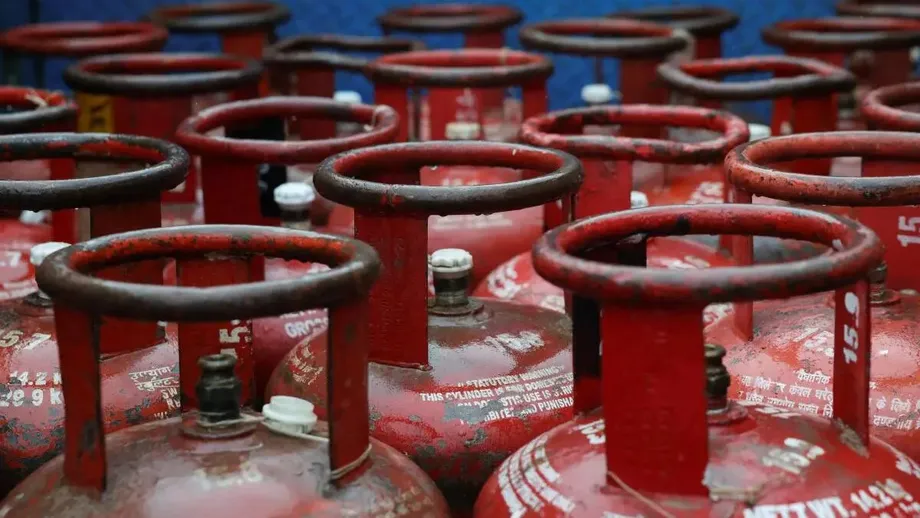
Oil marketing companies increased the price of non subsidized domestic LPG cylinders weighing 14.2 kg by Rs 60 across major cities from March 7. Delhi's new price of Rs 913 means the previous price was Rs 853, an increase of about 7%.
Authorities extended the minimum interval for booking domestic refills from 21 days to 25 days to discourage hoarding. Officials said a typical household uses six to seven cylinders annually, with refills generally needed every 50 to 55 days.
Households face higher cylinder bills alongside longer queues at gas agencies and uncertainty about future fuel costs. People buying prepared meals may also encounter higher restaurant charges, while commercial shortages are forcing wedding caterers to reduce menus or scale down events.
Oil Prices Push Up Inflation
Aditi Nayar, chief economist at ICRA, estimates that every 10% rise in crude prices could increase Wholesale Price Index (WPI) inflation by 80 to 100 basis points and Consumer Price Index (CPI) inflation by 40 to 60 basis points, assuming the increase is fully passed into retail fuel prices. Finance Minister Nirmala Sitharaman gives a lower estimate, saying a 10% crude increase typically adds about 30 basis points to inflation.
A basis point is one hundredth of a percentage point. An increase of 40 to 60 basis points therefore means an inflation rate rising by 0.4 to 0.6 percentage points. WPI measures price changes at the wholesale stage, while CPI tracks prices paid by consumers.
ICRA's forecasts for the 2026/27 financial year (FY27) are 2.7% WPI inflation and 4.0% CPI inflation. Sustained expensive crude could push both higher, depending on how much reaches consumers through petrol, diesel and LPG prices.
The Reserve Bank of India's inflation target is 4%, while January CPI inflation stood at 2.75%. That gives some room before rising prices require a policy response. A sustained oil price of $100 a barrel could add 40 to 60 basis points to inflation, moving it toward the upper end of the central bank's comfort band.
Crude prices also affect goods through transport and packaging. Consumer goods companies are considering higher prices or smaller packs because plastic packaging uses materials derived from oil. Shrinkflation describes selling a smaller quantity for the same price, so customers receive less even when the amount paid stays unchanged. Detergents, paints and plastic household goods face related cost pressures.
The Rupee, Markets and Government Finances
The rupee fell to an all time low of 92.33 against the dollar on March 9. The Sensex and Nifty dropped nearly 3%, reaching their lowest levels in 11 months. In subsequent sessions, the Sensex lost more than 500 additional points and the Nifty slipped below 23,700.
Oil is priced in dollars, so a weaker rupee makes each barrel more expensive in Indian currency. India can therefore face a double increase: a higher dollar price for crude and more rupees needed to buy those dollars.
Moody's warned that costly energy imports could weaken the rupee further, raise inflation, worsen the current account balance and complicate monetary and fiscal policy, particularly if subsidies expand. Monetary policy concerns borrowing costs and inflation; fiscal policy concerns government spending and revenue.
ICRA projects that oil averaging $100 a barrel in 2026/27 could widen India's current account deficit to 1.9% to 2.2% of gross domestic product (GDP), compared with a projected 0.7% to 0.8%. A current account deficit means the country pays more abroad through trade and other current transactions than it receives.
Elara Securities estimates that the same oil price scenario could raise annual federal expenditure by Rs 3.6 trillion, approximately $39 billion. The fertilizer subsidy bill alone could increase by Rs 200 billion.
State Bank of India research projects GDP growth of 6.6%, compared with forecasts above 7%, and inflation of 4.1% if oil stays near $100 through the next financial year. At $130 a barrel, it estimates growth could fall to 6%.
The government faces a choice over who absorbs higher costs. Retail fuel increases would squeeze household budgets and carry political costs. Holding prices down could strain oil company balance sheets, increase demands for public support and put pressure on the fiscal deficit, the gap between government expenditure and revenue.
Farms, Factories and Medicines Face Disruption
Approximately one third of globally traded urea passes through Hormuz. Persian Gulf natural gas is a low cost input for ammonia production, which supports fertilizer manufacturing. India imported $3.7 billion of fertilizers from West Asia in 2025, including $2.2 billion of mixed fertilizers containing nitrogen, phosphorus and potassium (NPK), and $1.5 billion of nitrogen fertilizers.
Interrupted deliveries could delay the arrival of fertilizers containing nitrogen, reduce crop yields and increase government subsidy spending. Gas shortages also affect domestic fertilizer production, connecting the shipping crisis to both imported supplies and Indian factories.
India's diamond industry, concentrated in Surat, Gujarat, imported $6.8 billion of rough diamonds from West Asia in 2025, or 40.6% of total rough diamond imports. Indian businesses cut and polish these stones before exporting them. ICRA said flight cancellations in early March delayed shipments by two to three days. A prolonged conflict threatens further losses because West Asia is also an important market for diamonds.
Manufacturers depend on several other regional inputs. India imported $1.2 billion of polyethylene polymers from West Asia, accounting for 35.6% of total imports. These materials go into packaging, plastic pipes and films used in agricultural irrigation.
Construction depends on $483 million of limestone and $129 million of gypsum from the region, representing 68.5% and 62.1% of India's respective imports. Both support cement production. Steelmakers depend on $190 million of direct reduced iron, or 59.1% of imports, while regional copper wire imports worth $869 million account for 50.7% of the total and support power transmission and renewable energy infrastructure.
Pharmaceutical manufacturers reported an approximately 30% increase in the cost of active pharmaceutical ingredients (APIs) over the preceding two weeks. APIs are the ingredients that make medicines work. Shortages of container ships disrupted raw material movement from China, India's largest API supplier, forcing importers to pass higher costs to manufacturers and potentially to consumers through medicine prices.
Airlines Lose Flights and Burn More Fuel
Jet fuel accounts for 30% to 40% of Indian airline expenses. Higher crude prices therefore affect a large part of operating costs, while airspace restrictions create a second burden.
Approximately 2,600 cancellations between February 28 and March 8 represented roughly 45% of international flights. Aircraft taking alternative routes to avoid West Asian airspace burn additional fuel, making journeys more expensive even when flights operate.
Kinjal Shah of ICRA said a prolonged conflict could push airline net losses beyond the Rs 17,000 crore to Rs 18,000 crore already projected for the 2025/26 financial year (FY2026). The combined pressure comes from expensive fuel, cancelled services and longer routes.
Government Gives Essential Gas Uses Priority
The Centre issued a gazette notification on March 10 changing the allocation framework for domestically produced natural gas. LPG production received the highest priority alongside CNG and piped cooking gas, with full supplies allocated to these uses before other consumers.
Fertilizer production received second priority, with at least 70% of average demand guaranteed. Tea plantations and manufacturing units fell into the third category, receiving 80% of previous consumption.
The government invoked the Essential Commodities Act, 1955, to control the production, supply and distribution of petroleum products and natural gas. The law gives authorities tools to deter hoarding, manage distribution and protect essential supplies during the crisis.
Refiners were directed to maximize production of C3 and C4 hydrocarbon streams, including propane, butane, propylene and butenes, and channel them into the LPG supply pool. C3 and C4 describe molecules containing three or four carbon atoms. The resulting output was reserved exclusively for domestic consumers.
Prime Minister Narendra Modi convened a senior review meeting with Petroleum Minister Hardeep Singh Puri to assess supply disruption and contingency plans. External Affairs Minister S. Jaishankar engaged counterparts in Russia, the European Union and West Asian countries to protect Indian interests and stabilize energy flows.
India secured alternative LPG supply agreements with the United States, Algeria, Norway and Canada. Those supplies involve longer transit times, leaving a gap between arranging purchases and receiving fuel.
Alternative Oil Supplies and the Limits of Reserves
India has expanded its crude supplier base from 27 countries to 40 across six continents. A wider purchasing network reduces reliance on any single shipping passage and gives refiners more options when established routes are disrupted.
Russian crude purchases increased to offset interruptions to Middle Eastern supplies. Russia remained India's largest crude supplier in February 2026. The United States granted India a waiver lasting 30 days for Russian oil purchases to help stabilize global supply, while Indian officials maintained that procurement decisions require no external approval.
Officials resisted calls to release strategic petroleum reserves, saying those stocks are intended for supply disruption rather than price management. The government also indicated that it had no immediate plans to raise retail petrol and diesel prices despite global crude reaching $120 a barrel, leaving oil marketing companies to absorb higher costs temporarily.
Supplier diversification and reserves provide breathing room, but cooking gas availability, delivery times and persistent crude prices remain central to the response. As of March 12, no firm date had been given for normal shipping or commercial LPG deliveries to resume.
Pakistan's Measures Show a Different Level of Stress
Pakistan faced an acute fuel crisis, with petrol reaching Pakistani Rs 321.17 per litre and high speed diesel Rs 335.86 per litre after an increase of about 17% in recent weeks.
Islamabad introduced emergency austerity measures including a working week of four days for government employees, rotations with 50% working from home, school closures and salary reductions of 25% for legislators. It was seeking to secure fuel stocks covering 28 days.
Both countries depend heavily on imported energy, but Pakistan's limited foreign exchange reserves add to its vulnerability. India's larger strategic reserves, broader supplier network and stronger fiscal position have helped it avoid an immediate increase in retail petrol and diesel prices, despite domestic LPG increases and commercial shortages.
Summer Demand and Political Pressure
Summer will bring greater air conditioning demand and additional pressure on power generation, including stations using gas. The wedding season is already exposing catering and transport businesses to fuel shortages, smaller menus and events being scaled down.
Congress leader Rahul Gandhi accused Modi of avoiding parliamentary debate on the economic consequences of the conflict. He linked falling stock markets, higher LPG prices and rising global crude prices to pressure on ordinary citizens, and alleged that the prime minister was compromised and unable to protect Indian interests.
Sitharaman's estimate of a smaller inflation effect reflects government confidence in existing buffers. Economists' forecasts place much of the risk in how long high oil prices last and how completely those costs reach consumers.
For households, the pressure is already visible in cylinder bills, restaurant spending and uncertainty about fuel costs. For the government, the task is to maintain supplies while deciding how much of a prolonged international energy shock businesses, consumers and public finances can absorb.
Key Points
- The effective closure of Hormuz threatens a route carrying approximately 2.6 million barrels a day of India's crude imports.
- West Asia supplied 48.7% of crude imports, 68.4% of LNG imports and 46.9% of LPG imports in 2025.
- Brent reached $117 a barrel on March 9, about 50% above its level when hostilities began.
- Domestic LPG prices rose by Rs 60, while commercial shortages threatened restaurants and catering businesses.
- The rupee reached 92.33 against the dollar, and the Sensex and Nifty fell nearly 3% on March 9.
- The government prioritized LPG production, CNG and piped cooking gas, invoked the Essential Commodities Act and arranged alternative supplies.
- Fertilizers, diamonds, manufacturing, medicines and aviation face supply disruption or higher costs.
- India has 40 crude supplier countries, but prolonged expensive oil could slow growth and increase inflation and public spending.