A Reversal in Health Workforce Planning
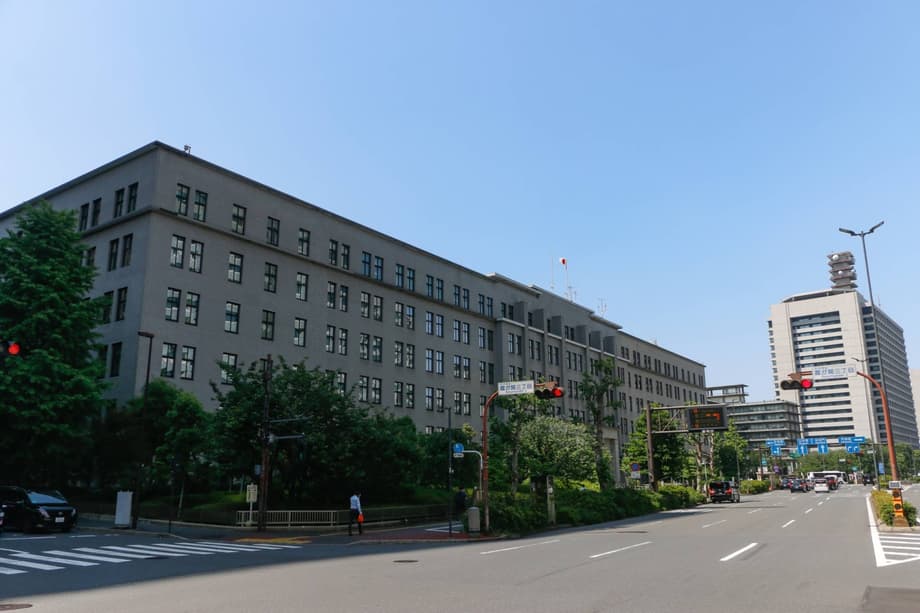
Japan’s Finance Ministry has proposed a dramatic reduction in medical school enrollment quotas, warning that the nation faces an inevitable oversupply of physicians as the population shrinks and health care delivery becomes more efficient. The recommendation, presented Thursday to the Fiscal System Council, an advisory panel to the finance minister, marks a significant shift in health workforce planning for the world’s fastest aging society. Currently, medical schools across Japan maintain an annual enrollment capacity fluctuating around 9,000 students. The ministry projects that if this number remains unchanged, the ratio of doctors per 100,000 people will surge from 274 in 2022 to 340 by 2040, creating a surplus that could strain the health care system and public finances in unexpected ways for a country already burdened by the costs of an aging society.
The proposal arrives as Japan confronts demographic headwinds that are reshaping virtually every sector of its economy. With birth rates continuing to fall and the population declining at an accelerating pace, demand for medical services is expected to contract even as the proportion of elderly citizens remains high. The Finance Ministry calculates that the supply and demand for physicians will reach equilibrium between 2029 and 2032, after which the market will tilt decisively toward oversupply. This timeline creates particular urgency because medical education requires six years of training, meaning students entering school this April will not become practicing physicians until fiscal 2032 at the earliest, creating a fixed pipeline that cannot be adjusted quickly.
During the council meeting, officials stressed that reducing enrollment quotas represents what one member described as “an urgent issue from the viewpoint of the optimal allocation of scarce human resources in society.” The same official noted that such reductions would prove key to optimizing medical costs, suggesting that an oversupply of physicians could drive up health care expenditures through overutilization of services or increased competition for clinical positions in a market that is already showing signs of saturation in urban areas where most medical schools are concentrated.
The Mathematics of Medical Oversupply
Understanding the proposed cuts requires examining the specific demographic projections driving the policy change. Japan’s total population peaked at roughly 128 million in 2010 and has been declining steadily since, with projections suggesting a fall below 100 million by mid century. While an aging population typically increases health care demand, the overall contraction in the number of citizens, combined with technological advances and efficiency improvements in medical service delivery, is expected to reduce the per capita need for physicians.
On the supply side, medical school graduates enter a system where retirement rates among existing doctors remain relatively low, and international emigration of Japanese physicians is minimal. This creates a cumulative effect where annual additions of roughly 9,000 new doctors build upon an existing workforce that is not shrinking commensurately with the population. The result is a steady inflation in the doctor to patient ratio that health economists warn could lead to underemployment, increased health care costs due to unnecessary procedures, or geographic maldistribution as competition drives physicians toward urban centers.
A Regional Contrast: South Korea’s Expansion
While Japan moves toward contraction, neighboring South Korea has adopted the opposite strategy, announcing plans to increase medical school admissions by 3,342 seats through 2031. The Korean government finalized a plan to expand enrollment by an average of 668 students annually, with increases strictly limited to 32 medical schools located outside Seoul. This approach aims specifically to address health care disparities between the capital region and rural areas, where doctor shortages have created significant gaps in medical access.
The Korean expansion begins with 490 additional seats in the 2027 academic year, raising total intake to 3,548 from the 2024 baseline of 3,058. By 2030, annual admissions will reach 3,871 students. Unlike Japan’s market driven surplus concerns, Korea faces acute shortages in specific regions and specialties. To ensure retention in local communities, students recruited under the regional program receive government financial support during their education but must commit to 10 years of service at public health institutions or regional facilities after graduation.
The divergence highlights different demographic and geographic challenges. While Japan anticipates a broad, national surplus of physicians relative to its shrinking total population, South Korea struggles with maldistribution, where doctors cluster in urban areas despite overall national shortages. Korean Minister of Health and Welfare Jeong Eun kyeong stated that the government will prioritize smaller national universities to allow them to function as regional medical hubs, a strategy that stands in sharp contrast to Japan’s proposed across the board reductions.
Implications for Medical Education Infrastructure
The proposed enrollment cuts raise significant questions about the future of Japan’s medical education infrastructure. Universities have invested heavily in medical school facilities, faculty, and teaching hospitals based on current enrollment levels. A drastic reduction, potentially cutting the current 9,000 annual intake by significant margins, could force consolidation among the nation’s medical schools or require universities to absorb fixed costs across fewer students.
Furthermore, the timing creates a pipeline problem. Because medical education spans six years, any reduction in enrollment will not affect the physician supply for nearly a decade. This means Japan will continue producing doctors at current rates until at least 2032, even if enrollment quotas are slashed immediately. The Finance Ministry recognizes this lag, noting that the supply of doctors is unlikely to decrease significantly before fiscal 2032, creating a period where the oversupply will intensify before any corrective measures take effect.
The proposal also intersects with broader trends in Japanese higher education. The nation has faced declining domestic enrollment in doctoral and specialized programs across multiple disciplines, prompting increased reliance on international students to maintain institutional viability. While the medical school proposal specifically targets Japanese domestic enrollment, it reflects a wider reassessment of human resource planning as the population contracts and universities compete for a shrinking pool of qualified applicants.
International Context and Workforce Strategy
The medical enrollment debate occurs against a backdrop of shifting international education policies. Japan’s Ministry of Education, Culture, Sports, Science and Technology (MEXT) has faced criticism for recent proposals to limit living expense support for international doctoral students, particularly affecting Chinese scholars who constitute roughly one third of recipients in programs like SPRING (Support for Pioneering Research Initiated by the Next Generation).
These policy shifts reveal tension in Japan’s approach to global talent. While the government promotes highly skilled migration to counteract labor shortages, restrictions on scholarships and support programs suggest a retrenchment in educational investment. Chinese students, who make up approximately 37 percent of Japan’s international student population, have historically filled gaps in doctoral programs, particularly in humanities and sciences.
The medical workforce presents a different calculation, as Japanese medical practice requires domestic licensure and proficiency in the Japanese language, limiting the ability to import physicians to address shortages. Unlike nursing or elder care, where foreign workers have been recruited through economic partnership agreements, medicine remains largely closed to international practitioners. This insularity makes the domestic supply of medical school graduates the primary determinant of physician availability, heightening the importance of accurate enrollment planning.
Fiscal Pressures and Defense Priorities
The Fiscal System Council meeting that produced the medical enrollment proposal also addressed efforts to strengthen defense capabilities, signaling broader fiscal pressures on the Japanese government. With planned revisions to the country’s three key security related documents expected later this year, competition for government spending is intensifying. The suggestion that medical cost optimization requires reducing physician production indicates that finance officials view health care expenditure control as essential to freeing resources for other priorities, including military modernization.
This fiscal triage reflects difficult choices facing an aging society with a shrinking tax base. Maintaining current medical school enrollment would produce a doctor to population ratio of 340 per 100,000 by 2040, significantly higher than most developed nations. While some might view abundant medical personnel as beneficial, health economists warn that physician oversupply correlates with increased health care utilization, potentially driving up costs for a social security system already strained by pension and elder care obligations.
Key Points
- Japan’s Finance Ministry proposes drastic cuts to medical school enrollment, currently around 9,000 students annually, due to projected physician oversupply
- The doctor to population ratio is projected to rise from 274 per 100,000 in 2022 to 340 per 100,000 by 2040 if enrollment remains unchanged
- Supply and demand for physicians will reach equilibrium between 2029 and 2032, followed by inevitable oversupply as the national population declines
- South Korea is expanding medical school seats by 3,342 through 2031 to address regional shortages, adopting the opposite strategy of Japan
- Medical education requires six years, meaning cuts implemented today will not affect physician supply until fiscal 2032 at the earliest
- The proposal reflects broader fiscal pressures as Japan balances health care costs with defense spending priorities and demographic decline