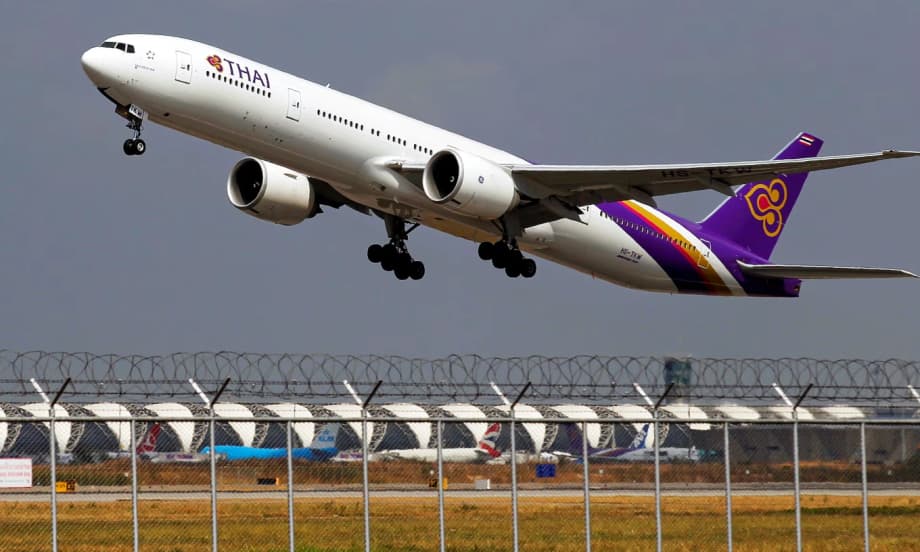
Thai Airways Slashes 46 Flights as Fuel Crisis Grips Asian Aviation
Thai Airways International, Thailand’s national flag carrier, has announced sweeping reductions to its flight schedule for May 2026, cancelling or reducing 46 domestic and international services as the airline confronts a perfect storm of soaring jet fuel prices and weakening travel demand. The cuts, which affect routes across Asia and Europe, represent approximately 10% of the carrier’s total capacity and signal growing distress across the region’s aviation sector.
The Bangkok-based airline detailed the extensive schedule adjustments in a notice issued to ticket agents on April 17, citing sharply higher oil costs alongside softer passenger demand during the traditionally slower mid-year period. The move follows a tripling of jet fuel prices since February, driven by ongoing geopolitical tensions in the Middle East that have disrupted global energy supplies.
From the bustling Suvarnabhumi Airport hub, Thai Airways will reduce frequencies to key Asian business and leisure destinations. The Bangkok-Singapore route, one of the busiest corridors in Southeast Asia, will see daily flights reduced from five to four throughout May. Services to Phnom Penh will drop from 14 weekly flights to 11, while the carrier will suspend operations to Kaohsiung, Taiwan entirely from May 8 through month-end.
North Asian routes bear the heaviest burden of the reductions. Seoul’s Incheon International Airport will experience the most dramatic cut, with Thai Airways slashing service from three daily flights to just one between May 8 and May 31. Beijing and Shanghai will each lose one daily departure, dropping from two flights per day to single daily services for most of the month. Tokyo’s Narita Airport will see frequencies fall from three daily flights to two, while Taipei reduces from three to two daily and Hong Kong drops from four to three daily departures.
South Asian operations face similar constraints. The airline will reduce Mumbai service from two daily flights to one, while Delhi sees a modest reduction from 22 weekly flights to 21. Hyderabad, a growing tech hub connection, will operate five weekly flights instead of daily service.
European Network Trims and Domestic Adjustments
Long-haul services to Europe have not escaped the austerity measures. Thai Airways will trim frequencies on several premium routes, converting daily operations to five weekly flights on services to Frankfurt, Munich, Copenhagen, Stockholm, Oslo, and Istanbul. These adjustments effectively remove two weekly departures from each destination, consolidating traffic onto remaining days while maintaining network presence.
Domestic Thai routes experience parallel reductions. The airline will cancel specific flight numbers between Bangkok and Udon Thani entirely throughout May, while reducing frequencies to Khon Kaen from four daily flights to three. Ubon Ratchathani will see service drop from 14 weekly flights to 12, with cancellations scheduled for Tuesdays and Thursdays.
Chief Executive Officer Chai Eamsiri emphasized that these adjustments represent temporary operational responses rather than permanent network withdrawals. Speaking at the Transport Ministry on April 24, he confirmed that Thai Airways maintains all route authorities and destinations in its portfolio, choosing instead to modulate capacity through frequency reductions and aircraft downsizing.
The adjustments for May represent about 4 to 5% of the airline’s total schedule and are short term. We have established a war room to monitor demand on a daily basis and respond quickly. Flight frequencies could be restored during peak travel periods if demand rebounds.
The Strait of Hormuz Fuel Crisis
The immediate catalyst for these aviation disruptions traces to the closure of the Strait of Hormuz, the critical maritime chokepoint through which approximately 21% of global seaborne oil supplies travel. Following military actions in the Middle East in late February 2026, the blockage has triggered a supply crisis that has sent jet fuel prices spiraling from approximately $90 per barrel to peaks near $240, fundamentally altering the economics of air travel.
Aviation analysts note that Asian carriers face particular vulnerability to this fuel shock compared to their European and American counterparts. The region’s airlines traditionally maintain weaker fuel hedging programs, leaving them exposed to spot market volatility when crude and refined jet fuel surge simultaneously. Industry estimates suggest that at least 400,000 barrels per day of jet fuel normally produced in Asia-Pacific from Hormuz-transiting crude have been affected by the supply disruption.
Mayur Patel, Asia Pacific commercial lead at aviation data specialist OAG, described the scale of disruption as significant and worsening. He noted that while European carriers like Lufthansa announced 20,000 flight cuts and SAS cancelled 1,000 April flights, Asian airlines confront structurally different challenges.
Asia’s exposure differs from Europe and the US because fuel hedging is weaker across the region, leaving more carriers directly exposed when crude and jet fuel surge. Once jet fuel moved from $85 to $90 per barrel to approaching $200, the impact on operating economics was immediate.
Regional Carriers Follow Suit
Thai Airways hardly stands alone in implementing emergency capacity reductions. The fuel crisis has forced systematic cuts across Thailand’s aviation sector and beyond. Thai AirAsia, the country’s dominant low-cost carrier, announced a 30% reduction in overall seat capacity for May and June 2026, suspending routes to destinations including Shanghai, Riyadh, Guwahati, Kathmandu, and multiple domestic sectors from Suvarnabhumi Airport.
Thai AirAsia X, the long-haul low-cost subsidiary, has suspended Bangkok-Shanghai services entirely since mid-April and halted Riyadh operations through June 30. Chief Executive Officer Pattra Boosarawongse characterized these as difficult but necessary decisions responding to the prolonged surge in global aviation fuel prices.
Elsewhere in Southeast Asia, the pattern repeats. Batik Air Malaysia reduced domestic capacity by 35%, representing the sharpest single-carrier domestic reduction in the region. Vietnam Airlines announced a 2% capacity reduction between mid-May and June, with potential cuts of up to 18% of international flights if fuel conditions worsen. Vietjet Air has removed nearly 20% of international departures on 24 routes, while Bamboo Airways implemented 30% capacity reductions.
The crisis extends to premium carriers as well. Hong Kong’s Cathay Pacific and HK Express will operate reduced schedules from May through June. In Australia, Qantas faces an estimated $800 million fuel bill increase, prompting suspensions of routes including Hamilton Island-Melbourne and Darwin-Gold Coast. Virgin Australia confirmed a 1% capacity reduction, which in the concentrated Australian domestic market represents thousands of removed seats.
Financial Impact on Travelers
Passengers face financial consequences extending beyond reduced flight options. Thai Airways will nearly double fuel surcharges on tickets issued from May 1, 2026, with the fees included directly in ticket prices. The increases vary by route and cabin class, with economy surcharges on European routes climbing from $275 to $524, and business class fees rising from $510 to $982 on return tickets to destinations like London, Milan, and Paris.
Regional routes see proportional increases. The Bangkok-Singapore economy surcharge rises from $49 to $93, while Tokyo and Seoul services see economy fees jump from $152 to $292. Even short-haul sectors like Bangkok-Yangon experience increases from $49 to $93 in economy class.
Travel industry analysts warn that reduced seat availability combined with higher operating costs will inevitably drive base fares upward. Singapore-based aviation analyst Brendan Sobie noted that low-cost airlines face particularly harsh choices because their business models depend on cheap fares, quick turnarounds, and high aircraft utilization. When fuel shocks push fares up 15 to 20%, price-sensitive travelers simply stay home.
Kasikorn Research Center forecasts a 9.2% drop in foreign arrivals to Thailand during the second quarter as these factors weigh on travel demand. The reduction in flight services is expected to have a profound impact on tourism across the region, with hotels, tour operators, and local businesses facing challenges as connectivity weakens.
Operational Strategy and Passenger Guidance
Thai Airways has established alternative arrangements to assist affected passengers, with the airline contacting travelers directly regarding schedule changes. Passengers holding tickets issued before April 30 will retain existing fuel surcharge rates even for travel dates after May 1, providing a narrow window for cost avoidance.
The airline’s operational strategy focuses on consolidating flights to improve load factors while maintaining network integrity. CEO Chai Eamsiri explained that lower passenger loads have paradoxically increased available cargo capacity, offering revenue opportunities through high-value goods and medical shipments where demand remains robust.
For travelers planning Thailand visits during the summer, industry guidance remains consistent: book early. With capacity tightening across multiple carriers and fare levels rising, early reservation provides the best protection against limited availability and price spikes. Passengers with existing bookings should monitor itineraries closely, particularly on routes where frequency reductions have been announced.
Broader Implications for Asian Aviation
The current crisis may accelerate structural changes within Asian aviation. OAG analysis suggests the fuel shock could trigger consolidation among weaker carriers while strengthening the case for direct long-haul services that bypass traditional Gulf hubs. Airlines operating fuel-efficient long-range aircraft like the Airbus A321XLR and A350-1000 possess structural advantages in a landscape where Gulf transits can no longer be assumed.
Changi Airport has emerged as an alternative routing hub, with bookings on Singapore-London and Hong Kong-London rising sharply as Gulf carrier capacity contracts. Singapore Airlines has notably maintained Bangkok services unaffected, offering reliability while Thai carriers retrench.
However, the crisis poses existential questions for some operators. With Asian airlines historically operating on thin margins, approximately 3% in 2025, sustained fuel prices above $200 per barrel threaten viability for less-capitalized competitors. Analysts warn that prolonged conflict increases the likelihood of carrier collapses, though the industry has demonstrated resilience through previous disruptions.
What to Know
- Thai Airways will cancel or reduce 46 flights across domestic, Asian, and European routes throughout May 2026, affecting approximately 10% of total capacity
- Jet fuel prices have tripled since February 2026 due to Middle East conflict and Strait of Hormuz closure, which affects 21% of global seaborne oil supply
- Major reductions include Seoul-Incheon (3 daily to 1), Singapore (5 daily to 4), and suspension of Kaohsiung service entirely
- European routes to Frankfurt, Munich, Copenhagen, Stockholm, Oslo, and Istanbul reduce from daily to five weekly flights
- Fuel surcharges on Thai Airways tickets issued from May 1 will nearly double, with economy fees to Europe rising from $275 to $524
- CEO Chai Eamsiri confirms all reductions are temporary adjustments, not permanent route cancellations, with daily monitoring through a dedicated operations center
- Thai AirAsia, Thai AirAsia X, and other regional carriers have implemented parallel cuts averaging 30% capacity reductions
- Kasikorn Research Center predicts 9.2% decline in foreign arrivals to Thailand during Q2 2026 due to reduced connectivity and higher costs
- Passengers with existing bookings issued before April 30 retain lower surcharge rates regardless of travel dates
- Industry analysts expect further capacity adjustments across Asia-Pacific if fuel prices remain elevated or supply constraints worsen